Apple latkes a sweet change

There is no particular history associated with apple latkes that I can find, but they make a great accompaniment to any Hanukkah meal. Here are a few of my favourite recipes.

DAIRY APPLE LATKES
(makes 12)

2 large tart, unpeeled, cored apples cut into 1/2-inch chunks
1/4 cup brown sugar
1/4 tsp cinnamon
1 1/2 cups flour
1 tbsp sugar
1 tsp baking powder
1 beaten egg
1 cup milk*
1 tbsp melted butter*

1. In a bowl, combine apples, brown sugar and cinnamon.

2. In another bowl, mix flour, sugar and baking powder.

3. In another bowl, combine egg, milk or non-dairy creamer and butter or margarine. Stir into flour mixture to form a thin batter. Fold in apple mixture.

4. Heat oil in a large frying pan. Pour 1/4 cup batter for each latke. Flatten with a spatula and fry until lightly brown. Turn.

5. Drain on paper towels.

6. Serve with sour cream, or a bowl filled with one tablespoon of cinnamon combined with half a cup of sugar.

(*To make this pareve, substitute with non-dairy creamer and pareve margarine.)

APPLE PANCAKE
(This recipe came from Aliza Begin, the wife of Menachem Begin, with the compliments of the Prime Minister’s Bureau in the 1970s.)

2 large tart apples
2 eggs
2 tbsp flour
dash sugar
dash cinnamon
oil

1. Peel and grate apples coarsely into a bowl.

2. Beat eggs slightly in another bowl and add to apples with eggs, flour, sugar and cinnamon. Mix well.

3. Heat oil in a frying pan. Pour batter into pan. Fry until golden on both sides.

4. Sprinkle powdered sugar on top and serve warm.

APPLE LATKES
(This recipe came from Light Jewish Holiday Desserts by Penny Wantuck Eisenberg and appeared in the Kansas City Jewish Chronicle many years ago. It makes 24 pancakes.)

1 large apple, peeled, cored and cut into large hunks
1 lemon, halved
1 cup flour
4 tbsp sugar
4 large egg whites
1/2 cup skim milk
1 tbsp canola oil

1. Place apple pieces in a shallow bowl and squeeze lemon juice over.

2. Finely chop apples in a food processor. Measure 2 cups, and place in a bowl.

3. Place flour and three tablespoons sugar in processor and pulse to blend. Add two egg whites, milk and oil and process until smooth. Stir in apples.

4. Beat the other two egg whites in a mixer bowl until foamy. Add one tablespoon sugar and beat until stiff peaks form. Fold batter into egg whites.

5. Spray a frying pan with cooking spray and heat. Make two-inch pancakes from batter by tablespoon. Cook 40 seconds, turn, press down and cook until pancakes are cooked through.

6. Drain on paper towels. Sprinkle with sugar and serve. 

Sybil Kaplan, z”l, was a Jerusalem-based journalist and author. She edited/compiled nine kosher cookbooks and was a food writer for North American Jewish publications, including the Jewish Independent. We communicated regularly, but mostly in the leadup to a holiday issue. Not having heard from her in advance of this Hanukkah paper, we reached out, getting the sad news that Sybil recently passed away. It was a pleasure working with her for these past 20+ years and we will miss her. She always provided more stories than we could use, so, in this issue, we run a few we had yet to publish, honouring her in our way. May her memory be for a blessing.

Appetizers for the holidays

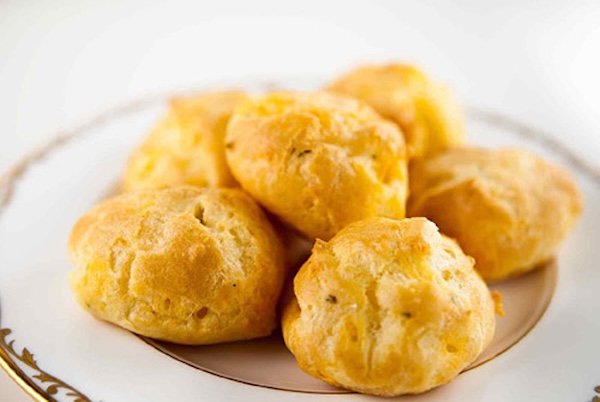
Cheese puffs (photo from jewishlink.news)

For a Hanukkah night gathering or on Dec. 31, as we move into a new secular year with a celebration, small or large, appetizers are a wonderful addition to any party. Here are some quick and easy recipes for appetizers when you’re hosting – or contributing to a potluck.

CHEESE PUFFS
(makes 40)

1 cup water
6 tbsp butter, cut into small pieces
salt and pepper to taste
1/2 cup flour
1 tbsp Dijon mustard
4 large eggs
1 cup coarsely grated kosher Swiss cheese

1.  Preheat oven to 425°F. Prepare several large cookie sheets with vegetable spray and flour.

2. In a saucepan, combine water, butter pieces, salt and pepper. Bring to a boil, add flour and stir vigorously about two minutes with a wooden spoon until mixture forms a ball and is firm. Remove from heat.

3. Beat in mustard, eggs and cheese.

4. Drop by heaping teaspoons onto cookie sheets one-and-a-half inches apart.

5. Place one sheet in top third of oven and one in bottom third of oven. Bake for 15 minutes.

6. Reverse position of sheets and bake five minutes more or until puffs are golden brown. Serve hot.

ARTICHOKE CHEESE SQUARES
(makes 8 servings)

2 six-ounce jars marinated artichoke hearts
1 small finely chopped onion
4 eggs
6 crushed crackers
2 cups kosher shredded sharp cheddar cheese

1. Preheat oven to 325°F and grease a large baking dish.

2. Drain artichoke hearts, reserving two tablespoons of marinade. Place in a bowl.

3. Place reserved marinade in a frying pan and sauté onions.

4. Remove from heat and add artichokes. Add eggs, crackers, cheese. 

5. Pour into baking dish and bake 35-40 minutes.

6. Cut into one-inch squares. Serve immediately or reheat before serving.

photo - Garlic bread “fries”
Garlic bread “fries” (photo from jewishlink.news)

GARLIC BREAD “FRIES”
(Grace Parisi is a well-known chef, and she created this party snack for Food & Wine. It makes 8-10 servings)

4 tbsp unsalted butter
1/2 cup olive oil
3 large minced garlic cloves
1/2 cup chopped flat leaf parsley
1 large split and halved baguette
1/2 cup freshly grated Pecorino-Romano or a sheep’s cheese

1. Preheat oven to 350°F.

2. In a frying pan, melt butter in olive oil. Add garlic and cook one minute.

3. Remove from heat and add parsley.

4. Place bread on baking sheet cut sides up. Spoon garlic butter on top, sprinkle with cheese and bake 10 minutes.

5. Turn on broiler and broil one minute.

6. Cut bread into half-inch “fries” so they look like bread sticks.

MARINARA “KETCHUP”

1/4 cup olive oil
3 peeled, halved garlic cloves
1 tbsp tomato paste
35 ounces canned, whole, peeled Italian tomatoes
salt and pepper to taste
pinch of sugar
2 sprigs basil

1. Heat olive oil in a saucepan. Add garlic and cook, stirring, five minutes.

2. Add tomato paste and cook one minute. 

3. Add tomatoes, crushing them with the back of a spoon. 

4. Add salt and pepper.

5. Stir in sugar and basil and bring to a boil. Simmer until sauce is reduced to three cups and thick. Discard basil and garlic. 

Sybil Kaplan, z”l, was a Jerusalem-based journalist and author. She edited/compiled nine kosher cookbooks and was a food writer for North American Jewish publications, including the Jewish Independent. We communicated regularly, but mostly in the leadup to a holiday issue. Not having heard from her in advance of this Hanukkah paper, we reached out, getting the sad news that Sybil recently passed away. It was a pleasure working with her for these past 20+ years and we will miss her. She always provided more stories than we could use, so, in this issue, we run a few we had yet to publish, honouring her in our way. May her memory be for a blessing.

A fresh take on Hanukkah

Chicago a cappella in June 2022. The ensemble released Miracle of Miracles: Music for Hanukkah last month. (photo by Kate Scott)

The CD Miracle of Miracles: Music for Hanukkah arrived at the Jewish Independent unsolicited. The album, released last month by Cedille Records, features a range of songs from the American Jewish musical tradition, performed by Chicago a cappella vocal ensemble. As someone who spent a good portion of her teenagehood in a choir at a Conservative synagogue and about a decade singing in another Conservative synagogue choir later in life, I have been happily singing along to this recording, enjoying the fresh take on songs with which I am mostly quite familiar.

Miracle of Miracles will appeal most, I think, to someone like me, who grew up in a Conservative Judaism milieu where a cantor and choir formed a large part of the service, or someone who appreciates classical music, as Chicago a cappella are classically trained A-listers, who perform a repertoire of music from the ninth to the 21st centuries. The current artistic director is John William Trotter, and Miracle of Miracles was recorded over a few days last January at Northeastern Illinois University in Chicago.

image - Chicago a cappella CD coverThe CD opens with an arrangement of “Oh Chanukah / Y’mei Hachanukah” by Robert Applebaum that the liner notes describe as “modern versions of the song form from the confluence of at least two streams, the first springing from Hebrew lyrics, the second flowing together from Yiddish and English sources. Turning again to [composer] Harry Coopersmith’s mid-20th-century collection … to create something of a mash-up of ‘Oh Chanukah’s’ popularity.”

There are several Applebaum arrangements. His “Haneirot Halalu” (“These Lights We Light”) mixes English translation and commentary into the traditional Hebrew lyrics, and his “Maoz Tzur” is a cantor-choir interplay that comprises elements most of us will recognize and be able to join initially, but then becomes more complex. His finger-snapping arrangement of Samuel E. Goldfarb’s well-known “I Have a Little Dreidl” – called “Funky Dreidl” – is in English with the Hebrew “nes gadol haya sham,” “a miracle happened there,” as a kind of chorus. It’s followed on the CD by a lively rendition of Mikhl Gelbart’s Yiddish “I Am a Little Dreidl (Ikh bin a kleyner dreidl).”

Other Yiddish offerings are Mark Zuckerman’s arrangement of “O, Ir Kleyne Likhtelekh” (“O, You Little Candle”), the lyrics of which were written by poet and lyricist Morris Rosenfeld, and an arrangement by Zuckerman of “Fayer, fayer” (“Fire, Fire”) by Vladimir Heyfetz, about burning the latkes while frying them.

Applebaum’s jazzy “Al Hanism” (“For the Miracles”) is one of three versions of the song on this recording. There is also an arrangement by Elliott Z. Levine that is the traditional, fast-paced version I’ve sung countless times and love, and the expansive, movie soundtrack-sounding arrangement by Joshua Fishbein.

Levine also contributes “Lo v’Chayil” (“Not by Might”), based on text from the Book of Zechariah, which is not a Hanukkah song per se, but, as the liner notes say, “rather the more transcendent spirit that underlies the commemoration of Hanukkah.” Translated from the Hebrew, the verse is: “Not by might nor by power, but by My spirit, saith the Lord of Hosts.”

Other composers/arrangers whose work is featured on this CD are Steve Barnett (“S’vivon” / “Little Dreydl”), Gerald Cohen (“Chanukah Lights”), Daniel Tunkel (four movements of his “Hallel Cantata”), Jonathan Miller (“Biy’mey Mattityahu” / “In the Days of Mattityahu”).

Two bonus tracks are included: an arrangement by Joshua Jacobson of Chaim Parchi’s Hanukkah tune “Aleih Neiri” and Stacy Garrop’s take on the prayer for peace “Lo Yisa Goy”: “Nation shall not lift up sword against nation, neither shall they learn war any more.”

In the program notes, Miller, who is Chicago a cappella’s artistic director emeritus, talks about the limited number of Hanukkah songs that are appropriate for an ensemble to perform, commenting that “Jewish choral music is a recent phenomenon, begun in earnest only about 200 years ago in Berlin, so there’s a simple quantity issue: we have much less repertoire to peruse than in other choral traditions. Given all of this, we are especially grateful for the composers and arrangers whose persistence and skill have given us the works found here.”

photo - Chicago a cappella artistic director John Trotter
Chicago a cappella artistic director John Trotter. (photo from Cedille Records)

Despite the dearth of Hanukkah choral music, Trotter, the ensemble’s current artistic director, observes that the CD comprises “a sprawling variety of styles.”

“There are at least two reasons for this breadth,” he writes. “On the one hand, we are in debt to the fertile imaginations of our composers, who envisioned so many different sound worlds and so many different ways to clothe these texts. But there is also the nature of Hanukkah itself, which offers so many different modes of personal, social and spiritual practice. Consider just three of these. Hanukkah offers the chance to reflect on the historical significance of the Maccabean revolt, with its consequences echoing through to the present day. It invites quiet contemplation of the candle flames, set aside from any utilitarian purpose. And it provides an opportunity to gather with family and have a really great party with really great food.”

Miracle of Miracles would provide a perfect acoustic background for a Hanukkah gathering. To purchase a CD or buy or stream the music digitally, visit cedillerecords.org/albums/miracle-of-miracles.

Cookies and muffins for fall

Peanut cookies are so good, it’s hard to keep a batch around once you get a whiff of them. (photo by Shelley Civkin)

I’m definitely my happiest when it’s blueberry season in Vancouver. You know what I’m talking about – those huge, sweet, juicy blueberries grown in British Columbia in July and August. I can’t get enough of them, and end up putting them in salads, quinoa dishes, smoothies, breakfast foods and, of course, desserts. I often get overzealous and buy several pounds of them at once. Since there are only two of us to feed, I end up freezing loads of them, knowing that they’ll be reincarnated into something delicious in the months to come. Enter one of my faves.

LEMON BLUEBERRY CORNMEAL MUFFINS

1/2 cup butter, softened
3/4 cup sugar
2 eggs
1/2 tsp vanilla extract
1 tbsp lemon juice
1 tbsp grated lemon zest
1 1/4 cup flour
1/4 cup cornmeal
1 tsp baking powder
1/2 tsp baking soda
1/2 cup milk
3/4 cup blueberries

Preheat oven to 350ºF. Cream the butter and sugar. Add eggs, one at a time, and beat well after each addition. Beat in vanilla, lemon juice and lemon zest. The mixture may look curdled, but that’s OK.

In a separate bowl, reserve one tablespoon of flour for the berries later on. Combine remaining flour, cornmeal, baking powder and baking soda.

Add dry ingredients to butter mixture alternately with milk, beginning and ending with dry ingredients.

Toss reserved tablespoon of flour with berries and stir it into batter gently.

Pour batter into muffin tins (use cupcake liners) and bake for 25 to 30 minutes, or until golden brown on top. Test for doneness using a toothpick.

These have always been a crowd pleaser and, even though they’re nothing fancy, they’re really yummy, especially served warm – with a big glob of butter. They freeze nicely, too. Pair it with a London Fog tea and you’re all set.

My next favourite snack is not exactly fancy-shmancy, but who cares. Call me plebeian, but I’m a sucker for a peanut butter cookie. They’ve got a lot going for them besides the protein that the peanut butter provides (that’s my nutritional pronouncement and I’m sticking to it). They’re dead easy to make and everyone loves them. Well, except people who have peanut allergies. Grill your guests before serving.

PEANUT BUTTER COOKIES

1 1/2 cup all-purpose flour
1/2 cup butter, unsalted (or substitute margarine)
1 cup peanut butter
1/2 cup brown sugar
1/2 cup white sugar
1 tsp vanilla extract
1 large egg, at room temperature
3/4 tsp baking powder

Preheat oven to 350ºF. Sift flour and baking powder together then whisk to combine.

Cream butter and sugars together. Add peanut butter and mix until incorporated. Mix in egg and vanilla extract then add flour mixture and beat until incorporated.

Roll dough into one-inch balls and place on a baking sheet lined with parchment paper. Flatten cookies with a fork in a criss-cross pattern.

Bake cookies for 12 to 14 minutes, depending on whether you like them soft or crispy. Allow cookies to cool completely on the baking sheet, as they need to set before being transferred to a plate – or your mouth.

Peanut cookies are probably one of the oldest, most basic cookie recipes around, but they’re just so darn good, it’s hard to keep a batch around once you get a whiff of them. Pair them with a glass of milk, and you’ve got perfection right there in front of you.

My next cookie recipe is a bit unusual, and not terribly sweet, but, once you eat a couple of them, you’re addicted. A former colleague gave me the recipe for these tahini cookies.

TAHINI COOKIES

1 cup butter
1/2 cup white sugar
1 tsp vanilla extract
1/2 cup tahini
1 1/4 cup all-purpose flour
1/2 tsp baking powder
A couple of dashes of cinnamon (optional)

Preheat oven to 325ºF. Cream together butter and sugar until fluffy. Add vanilla and tahini and mix until well combined.

In a separate bowl, sift together the flour and baking powder, then stir it into the butter mixture. Drop tablespoon-size dough onto a baking sheet lined with parchment paper. Flatten the dough out a bit. If you make them too thick, they tend to taste doughy.

Bake until they turn golden brown, anywhere from 15 to 25 minutes. Cool on cookie sheet for 10 to 15 minutes before removing them to a wire rack or plate.

The flavour is somehow more sophisticated than, say, a chocolate chip cookie, so they might not appeal to a younger palate. Or they might, who knows. The minimal sugar, coupled with the nuttiness of the tahini, produces a seductively addictive cookie. Don’t say I didn’t warn you.

My husband recently pointed out that, since the weather has cooled, I’ve started nesting. Consequently, we’ve been eating a lot more soups, homemade challah and desserts. Not that he’s complaining. My waistline, on the other hand, is putting up a gallant (but losing) fight. I’m just plain weak-willed when it comes to homemade baked goods. I console myself with the fact that winter hibernation will be that much easier with extra poundage on board. Luckily, my new jeans have Lycra in them.

While I’ll be busy stuffing my pie-hole with cookies, I’ll be flipping through Netflix looking for the next K-drama series to binge watch. Have I mentioned that I might have a teeny-tiny addiction to K-dramas and K-romances? If you haven’t yet been introduced to Korean TV series on Netflix, do yourself a favour and try some. The acting is superb, the storylines are satisfying, and there is very little sex (unlike American TV and movies), which I find quite refreshing. The romance is chaste and sweet.

The Israeli student who I tutor English to online via Zoom introduced me to K-dramas, and the rest is history. We talk about them each week and swap suggestions for new series to watch. Not exactly what I thought I’d be talking to my student about, but it seems to work, and she gets to practise her English conversation skills. Win-win.

Allow me to recommend a few of my favourite K-dramas: Our Blues; Prison Playbook; The Good Bad Mother; Itaewon Class; It’s Okay to not be Okay; Extraordinary Attorney Woo; Hometown Cha-Cha-Cha; D.P.; King the Land; Something in the Rain; Divorce Attorney Chin; Crash Landing on You; One Spring Night; and Run On. Enjoy your fressing and viewing. You’re welcome.

Shelley Civkin, aka the Accidental Balabusta, is a happily retired librarian and communications officer. For 17 years, she wrote a weekly book review column for the Richmond Review. She’s currently a freelance writer and volunteer.

Recovery from surgery

Don’t let anybody tell you that recovery from knee replacement surgery is a walk in the park. It’s more like a hobble through hell. A very slow, frustrating, hobble with plenty of hurdles, pain and frustration. But, also, gradual victories and milestones.

My journey started off a bit rocky. One week before my knee surgery, I was diagnosed with severe sleep apnea and had to get a CPAP machine. Getting used to that is like getting used to having someone hold a pillow over your face while you sleep. And the apparatus itself – think Hannibal Lecter. Three weeks after my knee surgery, I had a bowel obstruction and landed back in the hospital for a couple of days.

As for the actual knee surgery, I had a spinal anesthetic and a nerve block. They also gave me conscious sedation, which, quite frankly, was my new best friend. Until I felt the surgeon cut into my leg, heard the electric saw they use to cut the thigh and shin bones, and felt the hammering. An unnerving experience, to say the least, and not one I’d care to repeat.

After surgery, in the recovery room, a young woman with black-and-green hair came over and announced that she was going to take an X-ray of my knee. As she leaned over me, the lanyard around her neck swung near my face. The strap on the lanyard said “Vancouver City Morgue.”  I looked around, paused for a second, and said: “So, is this what hell looks like?” She corrected the misunderstanding and said the lanyard was a joke. I suggested she might want to remove it, lest she scare the next unsuspecting patient.

As for the process of recovery – I realize that each person’s journey is different and the most important piece of advice I can give someone going into knee surgery is this: do not, I repeat do not, compare your progress to others. While some well-meaning physiotherapists and other medical professionals suggested I might want to join a Facebook support group for people who’ve had knee replacement surgery, I strongly advise against this. There are people who will boast that they achieved a 90-degree bend in their knee two days after surgery, while others will bemoan the fact that it’s been 12 weeks and they still don’t have a 90-degree bend. Everyone heals differently and comparing yourself to others will only make you feel crummy. I speak from experience. Don’t do it.

Full recovery from a knee replacement is slow – they tell you it takes anywhere from six months to a year. If you’re an impatient patient like I am, it can be hard. Take the wins where you can, be thankful for every small step forward, celebrate the successes along the way.

Part of every knee replacement is the post-surgery physiotherapy. If I had to compare it to something, it would be like having a 350-pound bodybuilder sit on your newly operated knee, while bench pressing a Ford F-150 full of cement. It is the polar opposite of a pleasant experience. My physiotherapist happens to be a tiny but extremely muscular and strong woman. She’s only doing what she’s been trained to do but, from my perspective, it’s pure torture. Her goal is to get you mobile, bending your knee and active as quickly as possible. Even if that means making you cry and scream during your half-hour sessions. I always thought I had a fairly high pain threshold, but she blew that theory out of the water right at the get-go.

To be clear, I am the most compliant patient anyone could ask for. If my physiotherapist tells me to exercise two to four times a day at home, I do it. Sometimes, it pays off, sometimes it doesn’t. That’s where the frustration comes in. But then you get to a certain point where you wake up one morning and you think, “Hey, I can do the stairs more easily now. How did that happen?” To be sure, there are countless ups and downs during the recovery. The trick is to keep your eye on the prize and know that, at the end of it all, you’ll have a knee that no longer locks or gives out on you.

Recovery would have been much harder had I not had an incredibly devoted husband who did nothing but take care of my every need for more than two months. From helping me shower to doing all the grocery shopping, cooking, cleaning, laundry, driving me to physio and doctor appointments, running errands, and taking care of many other things, Harvey was my rock. He never complained but, not surprisingly, he was exhausted. He’s 74 years old and has some medical issues of his own. More than once I suggested we get a cleaning lady, or do more food takeout, but he wouldn’t hear of it. He recently relented on the food takeout, I’m happy to report.

Here are a few things I’ve learned from this whole experience:

  • Give people what they need and want; not what you think they need and want.
  • Always express your gratitude for kind gestures, large and small.
  • Pay the kindness forward wherever and whenever you can.
  • Use whatever resources are available to keep calm, distracted and positive during the recovery process.
  • You don’t need to fight every fight. Choose your battles and conserve energy.
  • Help others as you would want to be helped.
  • Struggle is optional.

At age 67, I feel like the past few years, with their accompanying health challenges, have been one long audition for old age. Turns out there’s good news and bad news. The good news is that the audition is over. The bad news is that I got the starring role.

Shelley Civkin, aka the Accidental Balabusta, is a happily retired librarian and communications officer. For 17 years, she wrote a weekly book review column for the Richmond Review. She’s currently a freelance writer and volunteer.

Rockower win leads to NOLA

Israeli artist Ya’acov Agam’s Holocaust memorial is located in Woldenberg Park. (photo by Adina Horwich)

On Friday, June 2, about 20 minutes before Shabbat candlelighting, I checked my email. I saw one from Cynthia Ramsay, editor of the Jewish Independent. We’ve been in touch for more than two years. The subject line read, “Congratulations, you are an AJPA Rockower Award Winner!”

It reminded me of the messages we all receive at one time or another, telling us we have won a million dollars, give or take. I opened it gingerly and my eyes widened in disbelief. “Adina, I have great news. You have won a Rockower award.” Several lines down, I read there is to be an American Jewish Press Association conference and awards banquet in July, in New Orleans. I immediately shot back, “Cynthia, are you serious?!” I decided right then, I am going to this. I am to be honoured for an article I submitted in March 2022, recounting my aliyah story – I live in Jerusalem – and paralleling it with that of an Israeli couple’s similar, and different, experiences with immigration to Vancouver.

The event was in four weeks’ time: July, high season, crowds, lines. I pushed past every sane reason not to go and spent the next two weeks organizing an itinerary. I registered for the banquet and reserved my room, throwing in a long weekend to Toronto before the conference to see my elderly parents and a few relatives.

As I lit Shabbat candles, I broke down in tears. Of elation and joy. It had been a long while since I cried. This meant so much to me. I was going on an ego trip! My very own!

After a 20-plus-hour ordeal getting to New Orleans from Toronto, I saw the light of day dawning on NOLA, as the city is affectionately called, combining the abbreviation for New Orleans with that of its home state, Louisiana. I was in my hotel room shortly after 9 a.m., then went downstairs to find the AJPA conference. I was warmly welcomed by Taylor and Jessica, head office personnel, who handed me a gift bag and offered me breakfast, for which I was very grateful.

I entered the assembly room and listened to a session in progress, then took a walk to get acquainted with my immediate surroundings. I later rested and prepared for the moment I’d come all this way for: the Rockower Awards Ceremony and Banquet Night. Around 5:30 p.m., I descended to the lobby, decked out in my finest, high heels and all (last time I wore those shoes was eight years ago, at my son’s wedding) and traipsed (hobbled) across the street to the Louisiana Pavilion of the National WWII Museum.

In the entrance hall, tables and chairs had been set up. Jazz musicians played a selection of local repertoire. Cocktails and hors d’oeuvres were plentiful. We were encouraged to have a look around the museum. Eventually, we took our places at the tables for dinner, during which, Alan Smason, AJPA president, read off the names of the winners. I could barely touch my food as I waited to hear my name. In the end he just said, “The Vancouver Jewish Independent” and Taylor came over to hand me my honourable mention certificate. I relaxed and finished dinner, the best part being the dessert: a thick slice of bread pudding, doused in a super-sweet, rum-flavoured glaze. The evening wound up with several participants heading to a bar somewhere, while others, including me, went up to Rosie’s on the Roof, right in our hotel. There, we chatted together with other journalists, from St. Louis, Dallas, Houston, Albuquerque and more.

photo - Docent Diane Cohen in front of the aron kodesh (left) of Touro Synagogue on St. Charles Avenue
Docent Diane Cohen in front of the aron kodesh (left) of Touro Synagogue on St. Charles Avenue. (photo by Adina Horwich)

The next day, I took the tram to a meeting I’d arranged with docent Diane Cohen, a lifelong New Orleanian, at the Touro Synagogue on St. Charles Avenue. Cohen and I sat in the front row of the sanctuary, elegant and in pristine condition, as was the entire building, which was built in 1908 – the congregation’s history goes back to 1828! She shared with me some of that history and the community’s origins and growth. Later, she showed me around the lobby, chapel and office. We had a good discussion and I felt so touched to have spent about two hours in this remarkable venue, which continues to thrive, housing an active, vibrant, welcoming community. (See tourosynagogue.com.)

photo - The aron kodesh of Touro Synagogue
The aron kodesh of Touro Synagogue. (photo by Adina Horwich)

From there, Cohen drove me to a Walgreens where I bought a bus pass. Then I bussed down Canal Street towards Bourbon. As it was midday, things were not quite hopping, but it was enough to give me an idea of the many shops, restaurants, tourist sights and traps. I could conjure up an image of what night life and Mardi Gras celebrations must be like.

The bus driver let me off, suggesting I head down to the Riverfront, where I could hop on the ferry that crosses to the other side of town. After walking about 10 minutes to the wharf, the heavens burst open with a huge shower of warm rain. I boarded the next ferry. The ride was all of five minutes, but it afforded me a skyline view of the city and, hey, I can say I sailed down the Mississippi River.

I stayed on for the return ride, then meandered along the Woldenberg Park boardwalk, happening upon a colourful panel structure created by Israeli artist Ya’acov Agam, who designed it as a Holocaust memorial, a gift to New Orleans. From any which way one views it, light glistens through the menorah and Star of David symbols, panels ever shining, even in rain, honouring the victims.

Further along, I was treated to the sight of a characteristic of the region, a paddlewheeler riverboat. Staying on course, I found my way to the French Quarter. Having lived my adolescence in Montreal, it was warming to see French street names and other remnants of the French period there. I saw a woman in a candy store washing Granny Smith apples, preparing them for dipping in a variety of sugary coatings, reminding me of the taffy apples of my childhood. The fleur-de-lis emblem was everywhere, including on the bathroom floor tiles at my hotel and the chairs in the lobby.

I returned to the St. Charles Avenue tram line, getting off a stop before my hotel to visit the Museum of the Southern Jewish Experience (msje.org). Well, what an experience, indeed. After showing my AJPA participant’s badge, Abbey allowed me in, and Jim showed me around the small but charming and interesting museum. Visitors see the historic beginnings of Jewish settlement in the Southern states, how communities formed, often with just a handful of individuals. Meetings and gatherings were held in homes, rented rooms, sometimes even at churches. Land for cemeteries was purchased. Hebrew schools instructed children. Sisterhoods held functions, raised money to support these efforts. From peddlers to grocers, small dry goods shops opened, which later flourished into department stores.

photo - Visitors to the Museum of the Southern Jewish Experience learn about the historic beginnings of Jewish settlement in the Southern states
Visitors to the Museum of the Southern Jewish Experience learn about the historic beginnings of Jewish settlement in the Southern states. (photo by Adina Horwich)

Jews were involved in cotton and other agricultural production. Trade ties were woven between the various populations, be they French, Spanish, British or Indigenous. The slow, but steady influx of Jews led to the formal establishment of synagogues and community facilities and institutions. Jewish presence figured prominently and was largely welcomed. Both Sephardi and Ashkenazi Jews gravitated to this region. Various levels of observance and traditions added to the fabric, and tension. It took time to determine a way to blend customs and decide how prayers would be led. Most congregations became affiliated with Reform Judaism – as many could not afford a full-time rabbi, either visiting clergy would come once every few weeks or lay members would lead services. Many a personal story is told. Families were close.

As I moved from room to room, I imagined the hardships, resourcefulness and sheer tenacity of these early pioneers, who had fled their native lands, to reach these shores or inland, remote, rural regions, to build new lives and opportunities. Today, there is so much going on in the South: a number of Jewish newspapers, initiatives, shared enterprises. Jews hold key roles and responsibilities in their cities. Community members are well-connected to one another, both in person and digitally, meeting individual needs, celebrating and sharing lifecycle events, holidays, prayers and cuisine. I was moved and impressed by the overall sense of purpose and furthering of a common goal: to maintain and strengthen Jewish identity. This goal has been unwavering over decades, through education and diverse joint programs and activities. Also, by fostering positive and supportive relations and cooperation with fellow residents of all backgrounds.

Towards the end of the exhibit, many well-known celebrities’ photos were displayed, all of whom hail from Southern Jewish communities. I was especially enchanted by the link to a directory where one can click on any given town or city where a community existed (or still does) and read about their specific story. I have completed Alabama’s list and hope to read through every single state. Check it out at isjl.org/encyclopedia-of-southern-jewish-communities.html.

Reluctantly, I left New Orleans. Upon returning home and unloading all the papers and paraphernalia I brought back with me, I unpacked from my carry-on several beaded necklaces that had been used as table centrepieces at the banquet. As the staff was cleaning up at the end of the evening, I asked if it would be all right to take a handful. Each colour represents a value or virtue: purple for justice, green for faith and gold for power. I could use a bit of all three!

 Adina Horwich was born in Israel to Canadian parents. In 1960, the family returned to Canada, first living in Halifax, then in a Montreal suburb. In 1975, at age 17, Horwich made aliyah, and has lived mostly in the Jerusalem area. Her award-winning article can be read at jewishindependent.ca/immigration-challenges-2.

About the Rosh Hashanah cover art

I spent hours online trying to find a suitable piece of art for this year’s Rosh Hashanah cover, then even more hours for what I might do myself. I really wanted to include a shofar in whatever I did, as a call to hope and action, for myself as much as anyone else.

I stumbled on artist Yitzchok Moully’s Elul Shofar Art Challenge (moullyart.com). Moully’s work is bright, colourful, full of life. As I mulled it over, I received an email from local artist Merle Linde, who generously created art for the JI ’s Passover cover this year and for last’s year Rosh Hashanah issue. She sent me an emotionally charged piece lamenting the countless trees that have been destroyed by wildfires. The base painting was an acrylic pour, and I spent several fun hours learning about and practising the technique, deciding it wasn’t quite what I wanted for my shofar blast.

I eventually came across creativejewishmom.com, the site that inspired my 2020 Passover cover depicting the Israelites (made of corks) crossing the Red Sea, who made a second appearance for Passover 2021, participating in Zoom seders. This time, it was a Tashlich picture made with yarn, coloured paper and felt marker that caught my eye on creativejewishmom.com. Inspired, I made the JI masthead out of yarn and ink, and created the shofar and the hand holding it – I wanted there to be a human presence, as we are critical to any change, for better or worse.

image - JI Rosh Hashanah 2023 coverThe middle section of the page eluded me for days, and I tried various things that just didn’t feel or look right. Thankfully, a middle-of-the-night couple of hours resulted in the finished cover, albeit with some tweaking in Photoshop. It ended up being more cheerful than I was intending. I am happily surprised at my latent optimism, and hope that readers also find it uplifting.

New recipes for a new year

A family performs the kapparot ritual with two hens and a rooster, circa 1901. (photo from Library of Congress via brandeis.edu)

Whether or not the custom of eating chicken for a High Holiday meal arose from a desire to replace the ritual of kapparot, roast chicken is often served at the holiday table. Here are a few chicken recipes you might like to try this new year, as well as sweet potato sides and desserts made with pomegranates – another food with holiday symbolism. A coffee cake is always good to have on hand for visitors, or to help break the Yom Kippur fast.

ROAST HERBED CHICKEN

1 3-pound chicken
4 garlic cloves
2 bay leaves
3 tbsp melted unsalted pareve margarine
salt and pepper to taste
1/4 tsp thyme
1/4 tsp sage
1/4 tsp oregano
1/4 tsp marjoram
1/4 tsp basil

  1. Preheat oven to 425ºF. Grease a baking pan.
  2. Rinse and dry chicken. Rub skin with 1 cut garlic clove, then place it inside chicken with other cloves and bay leaves.
  3. In a bowl, mix margarine with salt, pepper, thyme, sage, oregano, marjoram and basil. Place 1 tablespoon inside chicken, tie legs together and place, breast side down, in baking pan. Brush the rest of the spiced mixture over the outside of the chicken. Bake 45 minutes. Turn it over and bake 40-45 minutes longer.

SIMPLEST ROAST CHICKEN

1 5-pound chicken
1 lemon cut in half
4 garlic cloves
4 tbsp unsalted pareve margarine
salt and pepper to taste
1 cup chicken soup, water or wine

  1. Preheat oven to 500ºF. Grease a roasting pan.
  2. Remove excess fat, neck, gizzards and liver. Combine lemon, garlic, margarine, salt and pepper in a bowl and stuff inside chicken.
  3. Place chicken breast side up in a baking pan with legs facing the back of the oven. Roast 10 minutes then move with a wooden spoon to keep it from sticking. Continue roasting 40-50 minutes.
  4. Tilt chicken to get juices into roasting pan. Remove chicken. Put juices in a pan, add soup, water or wine and bring to a boil. Reduce liquid by half. Serve sauce in a bowl or pour over chicken.

CHICKEN WITH DRESSING
(this was a favourite of my mother, z”l)

1 5-pound chicken
salt to taste
3/4 tsp ginger
1 sliced onion
1/2 cup celery
your favourite stuffing
3/4 cup boiling water
4-6 sliced potatoes

  1. Preheat oven to 400ºF. Grease a roasting pan.
  2. Sprinkle chicken cavity with salt and ginger. Place in roasting pan. Stuff with your favourite stuffing. Add onion and celery. Roast 20 minutes.
  3. Reduce temperature to 350ºF and bake 20 minutes more. Add boiling water and potatoes and continue baking 1 1/2 hours more.

MY MOM’S (Z”L) CANDIED SWEET POTATOES

8 sweet potatoes
1/4 cup brown sugar
1 tsp cinnamon
1/2 cup crushed nuts (optional)
2 tbsp margarine
2 tbsp non-dairy creamer
2 tbsp orange juice

  1. Preheat oven to 350ºF. Grease a casserole dish.
  2. Boil sweet potatoes in water until soft. Remove, cool and peel. Place in a bowl and mash.
  3. Add brown sugar, cinnamon, nuts, margarine, non-dairy creamer and orange juice. Spoon into greased casserole and bake 30-45 minutes.

MY SABRA SWEET POTATOES

6 oranges
1/4 cup Sabra liqueur
6 tbsp margarine
2 tbsp brown sugar
1/4 tsp nutmeg
4 cooked, peeled, smashed sweet potatoes

  1. Preheat oven to 350ºF. Grease a casserole dish.
  2. Cut oranges in half and scoop out pulp.
  3. Place mashed sweet potatoes in a mixing bowl.
  4. In a saucepan, combine Sabra, margarine, brown sugar and nutmeg. Simmer for three minutes. Pour over sweet potatoes.
  5. Spoon potatoes and sauce into orange halves. Bake 30 minutes.

APPLE-POMEGRANATE COBBLER
(This recipe is adapted from a Food & Wine recipe)

2 cups pomegranate juice
6 peeled, halved, cored, sliced 1/2-inch thick apples
1 cup sugar
2 1/4 cups flour
kosher salt
2 tsp baking powder
1 stick cold unsalted butter, cut into small pieces, or 1/2 cup unsalted pareve margarine
1 cup cold heavy cream or pareve cream
pomegranate seeds
pareve vanilla ice cream

  1. Preheat oven to 375ºF. Place an eight-by-eight glass baking dish on a foil-lined rimmed baking sheet.
  2. In a small saucepan, bring pomegranate juice to a boil over high heat, reduce to 1/3 cup (approximately 15 minutes). Pour into a bowl. Fold in apple slices, 3/4 cup sugar, 1/4 cup flour and 1/2 tsp salt. Put into baking dish.
  3. In a bowl, whisk 2 cups flour, 1/4 cup sugar, baking powder and 1/2 tsp salt. Add butter or margarine and cut until mixture resembles coarse crumbs. Stir in 1 cup cream.
  4. Gather topping and scatter over apple filling. Brush top with cream, sprinkle with sugar. Bake 60-70 minutes or until filling is bubbling and topping is golden. If crust is browning, tent with foil.
  5. Let cool for 20 minutes. Sprinkle with pomegranate seeds. Top with vanilla ice cream.

POMEGRANATE ICE
(makes 5 cups)

8-10 seeded pomegranates
3-4 tbsp lemon juice
1 1/2 tsp grated lemon peel
3/4 cup sugar

  1. Whirl pomegranate seeds in blender. Strain and save liquid for 4 cups.
  2. Add lemon juice, lemon peel and sugar. Pour into a metal pan and cover with foil. Freeze 8 hours. Remove and break into chunks. Blend into slush. Refreeze until firm.

SOUR CREAM COFFEE CAKE

3 cups flour
1 1/2 cups sugar
1 1/2 tsp baking soda
1 1/2 tsp baking powder
salt to taste
3/4 cup butter or margarine, melted
1 1/2 cups sour cream
3 eggs
1 1/2 tsp vanilla
1/2 cup chopped nuts
2 tbsp sugar
1 tbsp cinnamon
1/4 cup chopped nuts

  1. Preheat over to 350ºF. Grease a baking pan.
  2. In a mixing bowl, mix flour, sugar, baking soda, baking powder and salt.
  3. Add butter or margarine, sour cream, eggs and vanilla and mix.
  4. Add nuts and blend well. Pour half into baking pan.
  5. In a bowl, mix sugar, cinnamon and nuts. Pour over batter. Add rest of batter. Bake 1 hour.

QUICK CRUMB COFFEE CAKE

2 1/4 cups flour
3 tsp baking powder
salt to taste
1 cup sugar
6 tbsp unsalted margarine, melted
1 egg
3/4 cup milk
1 1/2 tsp vanilla
1/2 cup brown sugar
2 tbsp flour
2 tsp cinnamon
2 tbsp crumbled margarine
1/2 cup chopped nuts

  1. Preheat oven to 350ºF. Grease a baking pan.
  2. In a mixing bowl, blend flour, baking powder and salt. Add sugar, margarine, egg, milk and vanilla and blend well.
  3. Spread batter on bottom of greased baking pan.
  4. In a small bowl, combine brown sugar, flour, cinnamon, margarine and chopped nuts. Sprinkle on top of batter. Bake 30 minutes or until a toothpick inserted in the centre comes out clean.

Sybil Kaplan is a Jerusalem-based journalist and author. She has edited/compiled nine kosher cookbooks and is a food writer for North American Jewish publications. She leads walks of the Jewish food market, Machaneh Yehudah, in English.

Teshuvah: a guide to repentance

Twelfth-century Jewish thinker Moses Maimonides described the sound of the shofar at Rosh Hashanah as a wake-up call for the soul. (photo from flickr.com/photos/gsankary)

The sound of the shofar at Rosh Hashanah, the great 12th-century Jewish thinker Moses Maimonides wrote, is a wake-up call for the soul. Its message: “Arise from your slumber! Search your ways and return in teshuvah and remember your Creator!”

Teshuvah is the central theme of the time between Rosh Hashanah and Yom Kippur, known collectively as the Ten Days of Teshuvah. Typically, teshuvah is translated from the Hebrew as repentance, but it literally means return, as if turning back to something you’ve strayed or looked away from. But that begs the question: return to what? Depending on the time and place, there have been different answers – God, a state of moral purity, the Jewish people and Israel.

The Jewish Experience at Brandeis University asked Near Eastern and Judaic studies professor Yehudah Mirsky about the history of teshuvah. Mirsky, who is also a faculty member of the Schusterman Centre for Israel Studies, is the author of Rav Kook: Mystic in a Time of Revolution (Yale University Press).

Ancient Teshuvah

The Hebrew Bible sees teshuvah as principally a return to God. “Come, let us return to the Lord,” the prophet Hoshea (14:2) tells the people of Israel.

In Psalm 51, King David seeks teshuvah for committing adultery with Bathsheba. Importantly, David’s confession is addressed to God because, as he says, “Against You alone have I sinned.”

Traditional rabbinical commentators have interpreted this to mean that teshuvah requires confessing your sins to God. Part of achieving intimacy with Him involves His knowing your sins. And only in that way can you return to Him.

Talmudic teshuvah

For centuries after the destruction by Rome in 70 CE of Jerusalem’s ancient temple, where Jews would say confession and offer sacrifices for atonement, the rabbis reworked biblical ideas and practices of teshuvah into a roadmap for spiritual and moral growth.

In the Mishnah and the Talmud, the vast collections of law, theology, interpretation, folklore and more compiled roughly between 200 and 500 CE, they called for introspection, changing one’s ways, and asking others for forgiveness.

This line of thinking reached its apotheosis in Maimonides’ Hilkhot Teshuvah (The Laws of Return). He placed confession and regret at the centre of repentance so that teshuvah, according to Mirsky, became a process of “moral and spiritual self-cultivation and self-education.”

Teshuvah was no mechanical act. It had to involve genuine contrition and the individual becoming a better person. In addition to being a scholar, philosopher, jurist and communal leader, Maimonides was also a physician.

“One senses his medical sensibility was at work here, too,” said Mirsky. “Transgression sickened the soul and teshuvah is the cure, a return to full spiritual and moral health.”

Cosmic teshuvah

Already during the talmudic period, rabbis had begun talking about teshuvah as a spiritual energy flowing through the universe that was created by God when He made the earth.

The medieval mystics who wrote the great texts of the kabbalah took this even further. They said teshuvah comes not only from inside the individual but is also a dynamic force all around us. To repent, you tap into it. As Mirsky put it, “You catch the wave.”

In the 13th-century Zohar, the foundational work of Jewish mysticism, teshuvah became a way of repairing a rupture or tear in the spiritual fabric of the universe. When the varying energies at work in the world – justice and mercy, male and female, tradition and change – go out of whack, teshuvah helps to rebalance them. In other mystical texts, return is seen as a kind of rebirth and the achievement of the soul’s deepest freedom.

Some 300 years later, Rabbi Isaac Luria, the great mystic of Safed in northern Israel, famously connected teshuvah with tikkun olam (healing the world). Through teshuvah, Jews perfect God’s work, helping usher in the Messianic Age.

For Luria, this largely meant a kind of spiritual healing. But, over time, and especially in the last century, Jews have begun to connect this to ideas of social justice, adding another layer of interpretation to Jewish messianic ideals.

Teshuvah and Israel

In Mirsky’s view, the Zionist movement secularized and redefined teshuvah.

Political passivity, which the rabbis thought was anathema to the survival of the Jewish people, was now considered a sin. Repenting involved identifying with the nationalist yearnings of the Jewish people for a homeland. In this way, teshuvah returned Jews in the diaspora to Israel, and the Jews as a whole to a more vital sense of group identity.

Kook’s teshuvah

Past and present interpretations of teshuvah came together in the work of Abraham Isaac Kook, the first Ashkenazi chief rabbi of modern Palestine and the leading thinker of religious Zionism. To him, all existence is rooted in God and seeks to return to God. That return takes the form of religious practice, social and ethical commitment, art and culture – everything we consciously do to make the world better for the Jewish people and ultimately all of humanity. And, all of these elements – the ritual and ethical, material and intellectual, the Jewish and universal – all need one another to do God’s work in the world. (For more on Kook, see Mirsky’s book.)

American teshuvah

Teshuvah in the United States reflects the inescapable individualism of American life. The great American Jewish thinker Abraham Joshua Heschel linked teshuvah to the nation’s ethos of spiritual growth and renewal. He wrote:

“The sense of inadequacy ought to be at the very centre of the day [Yom Kippur].…  To put contrition another way, develop a sense of embarrassment.… We have no answer to ultimate problems. We really don’t know. In this not knowing, in this sense of embarrassment, lies the key to opening the wells of creativity.

One belief all Jewish thinkers share about teshuvah – the process only begins during the High Holidays. It’s afterward when the real work begins.

For more on teshuvah during the Middle Ages, see Mirsky’s article, “How a lover of wisdom returns” in Sources Journal (sourcesjournal.org/articles/how-a-lover-of-wisdom-returns).

– from the Jewish Experience / Brandeis University