The first of many Shabbats

Faith Kramer’s Roasted Salmon with Citrus-honey Sauce. (photo by Clara Rice)

Somehow, I missed the cookbook 52 Shabbats: Friday Night Dinners Inspired by a Global Jewish Kitchen by Faith Kramer when it was published by the Collective Book Studio in 2021. Well, I now have a copy and, in an ideal world, my next year of 52 Shabbat dinners would all be cooked à la Kramer. Instead, it’ll probably take me several years to make all the special meals in this informative, well-laid-out, easy-to-follow cookbook – but at least I’ve gotten a head start.

In this last month of the Jewish year 5784, I made two of Kramer’s main dishes, a salad dressing and a dessert. Each recipe is prefaced with a blurb containing more information about the dish. Many recipes have suggestions of what to serve together (starter, main, dessert, etc.) to elevate the meal for Shabbat, as well as suggested variations and what can be made in advance. Kramer also provides explanations of lesser-known ingredients.

52 Shabbats begins with some discussion of different Jewish traditions around Shabbat and various Jewish communities’ ways of cooking food and the ingredients they use. Kramer gives a brief overview of Jewish dietary laws and shares her preferences for the common ingredients she uses throughout. The book is divided into the four seasons, plus chapters on side dishes and accompaniments, desserts, and fundamentals (sauces, etc.). There are additional resources listed near the end, as well as measurement conversions.

I chose the recipes to make from the fall section, focusing on Rosh Hashanah. I made a carrot and lentil main because, as Kramer writes: “Carrots are symbolic in Judaism of asking for prosperity and for our blessings to multiply. Combined with the sweetness of silan [date syrup] … or honey, they make an edible wish for a Happy New Year at Rosh Hashanah.” I also made a fish main, because fish is another symbol of Rosh Hashanah, with the hope that we be the head and not the tail, ie. a leader rather than a follower.

Kramer recommended mini cheesecakes as the dessert for both of these mains, so I made those as well. I also made the Lemon, Za’atar and Garlic Dressing for a green salad, but much preferred the dressing as a marinade for blanched green beans. For space reasons, I’ve not included the recipe intros or the “make it in advance” suggestions, nor have I included the dressing recipe. The three recipes here will hopefully inspire you to get a copy of the cookbook, and perhaps start some new Shabbat traditions this year.

SWEET-AND-TART SILAN-ROASTED CARROTS WITH LENTILS
(serves 4 as a main, 8 as a side)

for the lentils:
1 cup green or brown lentils
3 cups vegetable broth
1/4 tsp ground black pepper
1/4 tsp ground cumin
1/4 tsp paprika
1/2 cup chopped fennel or celery
1/2 cup chopped onion
1 tsp minced garlic
1 tsp minced jalapeño, optional
1/4 tsp salt, plus more if desired 

for the carrots:
2 tbsp olive oil, plus more for baking sheet
1 cup silan, honey or agave syrup
1/4 cup water
2 tbsp fresh lemon juice
1/4 tsp ground cumin
1/4 tsp ground cardamom
1/4 tsp cayenne pepper or paprika
1/8 tsp ground cloves
1 lb multicoloured carrots, peeled (cut large carrots into thirds)
1 tsp coarse sea salt
2 tbsp tahini
2 tbsp chopped fresh mint or flat-leaf parsley

In a large saucepan, stir together the lentils, vegetable broth, black pepper, cumin and paprika and bring to a simmer over medium heat. Stir in the fennel, onion, garlic and jalapeño (if using) and return to a simmer. Cover and cook, lowering the heat as needed to maintain a gentle simmer, until the lentils are tender and the liquid is absorbed, 15 to 20 minutes. Add the salt and stir well. Taste and adjust the seasoning, if desired. Remove from the heat, drain any excess liquid, and set aside while you make the carrots. 

Preheat the oven to 450°F. Line a rimmed baking sheet with parchment paper or aluminum foil. Grease the parchment paper with olive oil. 

In a wide, flat dish, whisk together the silan, water, olive oil, lemon juice, cumin, cardamom, cayenne and cloves. Add the carrots and toss until evenly coated.

Place the carrots in a single layer on the prepared baking sheet. Set aside any left-over silan mixture. 

Lower the oven temperature to 400°F. Roast the carrots for 40 to 50 minutes, or until tender and browned, tossing in the pan juices every 10 to 15 minutes.

Reheat the lentils, if desired, or keep them at room temperature. Add any leftover silan mixture to the lentils and stir to combine. Transfer the lentils to a large serving dish and top with the roasted carrots. Sprinkle with the coarse salt, drizzle with the tahini and garnish with the fresh mint.

ROAST SALMON WITH CITRUS-HONEY SAUCE
(serves 4-6 as a main, 8-10 as a starter)

1/3 cup fresh orange juice
1/2 cup light-coloured honey
1/2 tsp dried mint
1/4 tsp salt
1/4 tsp cayenne pepper or paprika
1/4 tsp ground black pepper
1/2 to 1 tsp Sichuan peppercorns, lightly crushed, optional
vegetable oil for baking sheet
1 1/2 to 2 lbs salmon fillet
6 tbsp thinly sliced green onions

In a small bowl, mix together the orange juice, honey, mint, salt, cayenne, black pepper and crushed Sichuan peppercorns (if using) to make a marinade. Set aside half of the marinade to use later for the sauce.

photo - Faith Kramer’s Roasted Salmon with Citrus-honey Sauce
(photo by Clara Rice)

Grease a rimmed baking sheet with oil. Place the salmon, skin side down, in the pan and brush the top of the salmon with some of the marinade. Let sit for at least 30 minutes or up to 60 minutes, brushing often with the marinade. 

Preheat the oven to 350°F. 

While the fish is marinating, pour the reserved marinade into a small saucepan over medium heat and bring to a boil. Lower the heat to low and simmer, uncovered, stirring occasionally, until the liquid is reduced by two-thirds, 15 to 20 minutes. Taste, and adjust the salt and other seasonings, if desired. Set the sauce aside.

Brush or spoon the remaining marinade over the salmon. Roast for 15 to 20 minutes, basting with the pan juices after 10 minutes, until the salmon is cooked to the desired doneness. For fully cooked fish, it should read 145°F when an instant-read thermometer is placed in the thickest part of the fillet. The flesh should be opaque all the way through but still be very moist. 

Transfer the salmon to a platter and spoon the sauce over the fish. Sprinkle with green onions and serve warm, at room temperature, or chilled.

MANGO AND CARDAMOM MINI CHEESECAKES
(makes 24 individual cheesecakes)

24 ginger snaps, lemon snaps or wafers, or vanilla wafers
1 1/2 cup fresh or defrosted frozen mango chunks, divided
3 (8-ounce) packages regular or light cream cheese, at room temperature
3 large eggs, beaten
1 cup sugar
1/2 tsp ground cardamom
1/4 tsp salt
1/4 tsp ground ginger
1 1/2 tsp vanilla extract
1 tsp fresh lemon juice

Preheat the oven to 375°F. Line two 12-cup cupcake pans with paper or foil liners. (If you don’t have enough tins, use foil cupcake liners on a baking sheet.)

Put a cookie in the bottom of each liner. Break cookies to fit and cover the bottom of the liner, if necessary.

In a blender, purée 3/4 cup of mango chunks until smooth. Set aside.

Cut the cream cheese into 1-inch chunks. In a large bowl, combine the eggs, sugar, cardamom, salt, ginger, vanilla extract and lemon juice and beat with an electric hand or stand mixer until light and lemony in colour, 1 to 2 minutes. Add the cream cheese chunks in 3 batches, incorporating each batch before adding the next. Beat on medium-high speed until totally smooth, 3 to 4 minutes. 

Fill each cupcake liner two-thirds full. Place 1 teaspoon of the mango purée in the centre of each cake. Using a knife, swirl the purée through the batter to create a marbleized look. 

Bake for 20 minutes, or until the centres of the cheesecakes are a bit loose and jiggly, puffed up and pale in colour. Turn off the oven, open the oven door and leave the cheesecakes there for 30 minutes. Transfer the cheesecakes to a wire rack and let cool. (The tops of the cakes will collapse.) Place the cheesecakes in the refrigerator until chilled. 

To serve, remove the cheesecakes from the liners, if desired. Chop the remaining 3/4 cup of mango and spoon it onto the cheesecakes. Serve cold or cool. 

Songs with a biblical touch

Of course, not everyone in Israel is religious. Yet, there is a rich heritage of Hebrew songs with lyrics taken either directly from the Hebrew Bible or inspired by it. Over the years, these songs have been tremendously popular with the Israeli public.

The first example – a song taken from Deuteronomy Chapter 30, verse 19 – unfortunately has special meaning in Israel today, as thousands of residents from both the northern and southern parts of the country have been forced to live away from their homes for almost a year now.

“Because man is a tree of the field” – this verse has been variously understood to mean human beings are like a tree planted on their land. While it has been recorded by more than one Israeli singer, a version I really like is the one with extended lyrics taken from a poem by the late Nathan Zach. It can be found at nli.org.il, if you know Hebrew.

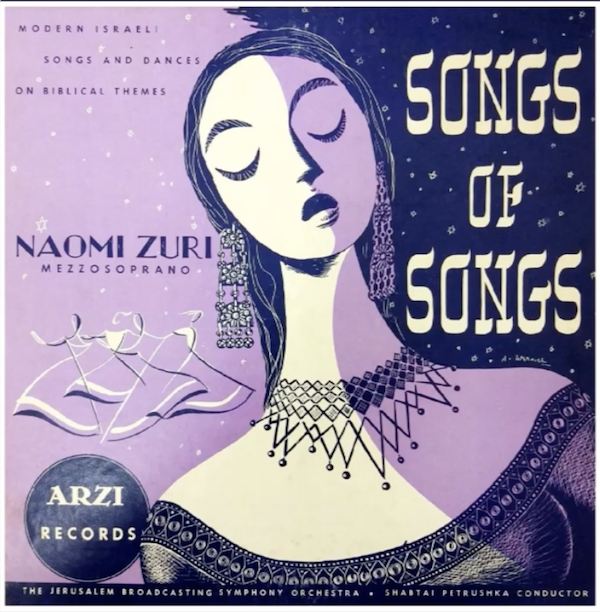
Early in the daily morning prayer service and on holidays, including Rosh Hashanah, there is a section meant to put us in the mood for prayer, but is not prayer itself. In p’sukei d’zimra, we recite “Adonai [G-d] is my strength and my might; G-d is my deliverance.” These words are taken from the Song of the Sea, which is in the Book of Exodus, Chapter 15, verse 2. It was not only a popular Israeli song, but it was sung as part of the morning prayers by the Women of the Wall, which is fighting for women’s right to pray aloud, with Torah scrolls and tefillin, at the Western Wall (the Kotel). A version of it, sung by Naomi Zuri, is on YouTube.

From the same Song of the Sea comes a song of thanksgiving by Amir Benayoun. Found in the Book of Exodus 15:1-15 and 15:20-21, the text describes how the Israelites successfully crossed the Red Sea, leaving Pharaoh and his chariots to their fate when the sea closes back up. It’s on YouTube as well.

Another popular song is based on an event in the Book of Numbers 20:11, though it doesn’t use the exact wording of the biblical text. In the story, Moses hits a rock twice in frustration, water gushes out, and the Israelites and their animals drink. G-d apparently refused Moses entry into the Land of Canaan because of this angry action. According to the late Rabbi Lord Jonathan Sacks, Moses failed to understand that times had changed and he was facing a new generation. The people he confronted the first time were those who had spent much of their lives as slaves in Egypt. Those he now faced were born in freedom in the wilderness.

Rabbi Sacks clarified what that meant: slaves respond to orders, free people do not. Free people must be taught; otherwise, they will not learn to take responsibility. Slaves understand that a stick is used for striking, but free human beings must not be struck. Hence, Sacks suggested that, for this lack of understanding, Moses was punished.

There is a video on YouTube of Aviva Semadar singing “Mosheh hikah al sela” (“And Moses Struck a Rock”) and there is also a video of “Ya’aleh v’Yavo” (“He Will Go Up and He Will Come”), performed by Gidi Gov, who first sang Yoram Taharlev’s song in a 1973 song contest. In the first stanza, Moses has climbed Mount Nebo to look at the Promised Land. While no one knows for sure where Moses is buried, many claim he died on Mount Nebo and G-d Himself is said to have buried him. 

Curiously, these words – “Ya’aleh v’Yavo” – also appear in the Amidah. And, those who are familiar with the Grace after Meals will note that this phrase is added on Rosh Chodesh and holidays. It is chanted right before the section dealing with the [re]building of Jerusalem. 

Significantly, on Rosh Hashanah, we sing a verse from the Book of Jeremiah (31:19) during the Zikhronot section (which, according to Mahzor Lev Shalem, recalls the covenantal relationship between G-d and humanity) of the musaf Amidah for Rosh Hashanah:

“‘Is not Ephraim, my dear son, my precious child, whom I remember fondly even when I speak against him? So, my heart reaches out to him, and I always feel compassion for him,’ declares Adonai.”

image - Miri Aloni album coverYou can listen to Israeli singer Miri Aloni sing “Haben Yakir Li” (“My Dear Son”) at matchlyric.com.

There are several songs taken from the Song of Songs. One of the older well-known pieces is “Dodi Li,” “My Beloved is Mine,” sung by Sharona Aron, which is on YouTube, as are two other pieces from the Song of Songs, which have been composed more recently.

The first is performed by the Yamma Ensemble – a group that records in both Hebrew (ancient or modern) as well as in Ladino and Arabic dialects – which is coming to Vancouver for Chutzpah! (For story, click here.)

The lyrics are: “As a lily among thorns, so is my love among the daughters.  My beloved spoke and said unto me: ‘Rise up, my love, my fair one, and come away. For, lo, the winter is past, the rain is over and gone.”

The other piece from the Song of Songs is performed by singer Hadar Nehemya: “Many waters cannot quench love, neither can the floods drown it; if a man would give all the substance of his house for love, he would utterly be condemned / As a lily among thorns, so is my love among the daughters / My beloved spoke, and said unto me: ‘Rise up, my love, my fair one, and come away.’”

image - Yehoshua Engelman’s The Collection album coverSince Rosh Hashanah is approaching, I will end with an optimistic song, Yehoshua Engelman’s “Eliyahu (Elijah),” which can be heard on Spotify. Eliyahu is mentioned in numerous places in the Hebrew Bible and takes on numerous roles, though we don’t ever learn much about him. He is a bit of a mystery man, supposedly the harbinger of the Messiah. At the end of Havdalah, the ceremony marking the end of either Shabbat or holidays, we sing to Eliyahu, asking him to bring us redemption.

We could certainly use it. 

Deborah Rubin Fields is an Israel-based features writer. She is also the author of Take a Peek Inside: A Child’s Guide to Radiology Exams, published in English, Hebrew and Arabic.

Bucharest a city of contrast

There is an abundance of street art in Bucharest. (photo by Deborah Rubin Fields)

What could be more Israeli than the hora? Well, truth be told, the hora is not Israeli! The word hora comes from Romania. And, like the origins of the hora, the Romanian capital, Bucharest, is a place where the unexpected should be expected.

When you walk along Bucharest’s broad boulevards, one word comes to mind – palatial. There is the former Cantacuzino Palace, today’s George Enescu National Museum; the Elisabeta Palace, the private residence of the former Queen Elizabeth of Greece (born Princess Elisabeta of Romania), following her 1935 divorce from King George II of Greece; the former Royal Palace, today’s National Museum of Arts; the Romanian Athenaeum, today a major concert hall; the Palace of the Deposits and Consignments, still a bank, but today called the CEC Palace; and the Palace of Parliament.

Bucharest once had strong ties to Paris, and French is still mandated in schools. It was called Little Paris, so it should not be a surprise to see that Bucharest’s Manu-Auschnitt Palace is a copy of Paris’s Hôtel Biron (today’s Rodin Museum). While smaller in size, many older private homes were built with stunning stone (perhaps even cement) arches and columns, bas reliefs incorporating figures of lions, men and women, shields, gryphons, eagles, the angel of death, and various free-standing sculptures. In this home, the windows are in national-romantic and neo-Romanian style. Paris-inspired art deco metal work appears on door grills, door overhangs and the tops of buildings. Five classy examples of art deco building in Bucharest are 1 Piata Sfântul Stefan; the Ministry of Justice at 53 Bulevardul Regina Elisabeta; the Telephone Company Building on Calea Victoriei; the “Union” Building on 11 Strada Ion Campineanu; and 44 Calea Calarasilor.

photo - The Old Palace of the Chamber of Commerce in Bucharest, a city full of former palaces
The Old Palace of the Chamber of Commerce in Bucharest, a city full of former palaces. (photo by Deborah Rubin Fields)

In addition to the number of stunning palaces, there is also an abundance of street art. Some of this street art is commissioned and appears on the sides of various buildings. It is often colourful and imaginative. There is, however, a lot of graffiti, which, apparently, began to appear after the 1989 Romanian revolt against the communist regime. Graffiti is illegal, but, as I was told, the consequences depend on the discretion of who catches the graffiti artist or how fast the artist can run.

Jewish presence in Romania dates to Roman times, when the country was a province called Dacia. The first mention of Jews in Bucharest is from the 16th century. Jews came to Bucharest from two directions: Sephardi Jews came from the south, mainly from the Ottoman Empire; later, Ashkenazi Jews came from the north. The latter, from Galicia or Ukraine, settled in Bucharest after having lived in Moldavia. As in other European countries, Jews were at various times tolerated, even integrated into general city life.  At other times, however, they were punished in one way or another.

The Jewish population of Bucharest grew significantly, particularly in the second half of the 19th century. In 1835, some 2,600 Jews lived there; this number jumped to 5,900 in 1860. In the 1800s, nine synagogues were constructed and, by 1900, the total Jewish population had risen to 40,500, making Bucharest by far the largest Jewish community in Romanian territory. By 1930, the city’s Jewish population was 74,480. Jews settled in virtually all the city districts, especially in areas where economic growth was fastest. Bucharest’s Jews laboured as artisans, metalworkers, merchants and bankers.

In the early 19th century, there were several instances in which Jews were accused of ritual murder. This led to violence and pogroms. While, on the books, Jews were to be given citizenship, government after government dragged its feet in making emancipation stick. In general, being Christian was a prerequisite for Romanian citizenship, although a complex naturalization process was theoretically made available to Jews. When, in 1866, Jewish French lawyer Adolph Crémieux came to Bucharest to help push for Jewish political emancipation, rioters attacked Jewish shops and synagogues. Toward the end of the century, many antisemitic organizations existed, due in large part to nationalist leader Alexandru C. Cuza’s political activities. In particular, his followers organized antisemitic agitation against Jewish students at Bucharest University. 

After Germany, Romania is directly responsible for more Jewish deaths in the Shoah than any other country. For most of the Second World War, Romania allied with Nazi Germany. According to official Romanian statistics, between 280,000 and 380,000 Jews were murdered or died in territories under Romanian administration during the war. Antisemitic legislation downgraded the identity of Jewish citizens to second-rate status: they lost the rights to education and health care, their property was confiscated, and they were forced to perform hard labour. In September 1942, approximately 1,000 Jews were deported to Transnistria.

Despite such treatment, most of Bucharest’s large Jewish community was spared the worst horrors of the Holocaust. Between 1941 and 1943, Bucharest-based Chilean charge d’affaires Samuel del Campo saved the lives of more than 1,200 Romanian and Polish Jews by issuing them Chilean passports, thus preventing their deportation to Nazi concentration camps.  A memorial stands in front of the former Ashkenazi Great Synagogue, commemorating the January 1941 paramilitary Iron Guard’s (Legionnaires’) savage murder of 125 Bucharest Jews, an action reminiscent of Nazi techniques, with the skinning of the victims and the hanging of them on meat hooks. 

Shortly after the Second World War, Bucharest experienced a great influx of Jews, as refugees arrived from concentration camps and from several areas in Romania where they continued to feel unsafe. By 1947, the Jewish population had grown to 150,000.

After the first years of the communist regime and the closing of Jewish welfare and religious institutions, Bucharest continued to be a centre of Jewish communal and cultural life due, in large part, to Chief Rabbi Moses Rosen, who coped with the inconsistencies and peculiarities of Romanian official policy – particularly during the 1965-1989 dictatorship of Nicolae Ceausescu. When former US ambassador Alfred Moses first visited Bucharest in 1976, a young Jew approached him saying, “Don’t believe what they tell you. The situation here is terrible, especially for Jews. We are blamed for everything that goes wrong. Help us get out. There is no future for Jews in Romania. Everything you hear is a lie, a lie, a lie.”

After the rebirth of the state of Israel, many Jews made aliyah. By 2000, only 3,500 Jews were left in Bucharest. Today’s Jewish life in Bucharest focuses on three synagogues, a community centre, a kosher restaurant and the Centre for the Study of the History of Romanian Jews. 

In 2021, a Romanian survey reported one-fourth of respondents saying they didn’t know or couldn’t say exactly what the Holocaust was. Another 35% said they couldn’t identify the Holocaust’s significance for Romania. In 2022, the populist Alliance for the Union of Romanians (AUR) opposition party called Holocaust education a “minor topic” when it was mandated in Romanian high schools. This party currently holds 12% of parliament seats and some people predict it will become a major political force in the near future.

On a more positive note, a few years after the death of Jewish Romanian Nobel laureate Elie Wiesel, at age 87, Bucharest memorialized him with a bust in the Piata Elie Wiesel. 

Finally, if you hear what sounds like a Slavic language spoken in Bucharest, it might just be Ukrainian. Since Russia began its attack on Ukraine two years ago, 11,000 Ukrainian men of conscription age have illegally fled to Romania. It is too early to say how this population will impact Bucharest life. 

Deborah Rubin Fields is an Israel-based features writer. She is also the author of Take a Peek Inside: A Child’s Guide to Radiology Exams, published in English, Hebrew and Arabic.

Trip sparks realization 

Starting in 1539, it took Spain 250 years to construct the six-level fortress El Morro in Puerto Rico, and Spain’s former power still emanates from the walls. (photo by Lauren Kramer)

I was in Old San Juan, Puerto Rico, recently, when the full magnitude of the Spanish Inquisition hit me like a ton of bricks.

The scene seemed an unlikely one for a blast from the Jewish past. I was with Pablo Garcia, a fast-speaking guide with Spoon, a boutique food and history company, and we were standing in the Plaza del Quinto Centenario, in front of fortifications that were more than 500 years old.

These were fortifications Spain built in the 1500s, not long after Christopher Columbus “discovered” Puerto Rico in 1493. “Discovered,” because the indigenous Taino people had been there for centuries but, for reasons that seem unfathomable now, that didn’t matter to the Spaniards.

Back home in Spain, 300,000 Jews were being expelled, murdered in the Inquisition or forced to convert to Catholicism, with some of them practising their Judaism underground. To appreciate the kind of force they were up against, you just need to pay a visit to Old San Juan and lay eyes on El Morro.

Spain started building El Morro in 1539 and it took 250 years to construct the six-level fortress. Its thick, stone walls, 185 feet above sea level, were punctuated by garritas, dome-shaped sentry booths located shouting distance from one another, so that, when one sentry perceived a threat on the horizon, he simply yelled a warning to his cohorts. El Morro guarded the city’s harbour from invaders and its bastion, with barracks, dungeons and storerooms, still holds original cannons that face the ocean in preparation for defence. 

The sites are so well preserved that, were the Spanish to resume control today, one feels certain they’d need very little additional infrastructure to guard the island. I looked at those stone walls that safeguarded the island from many battles over the centuries and marveled at the sheer strength of the Iberian Union. It dawned on me that the Jews of Spain really didn’t stand a chance against a power like this in 1492.

I was jolted back to reality when we stopped for a caffeine buzz at Don Ruiz, a coffee shop located in what was once Spain’s Ballajá Barracks. The coffee beans are from a four-generation family farm specializing in single-harvest, hand-picked beans, Garcia said. “In the 1700s, coffee was big business in Puerto Rico and one in every six cups of coffee worldwide was made with beans grown on the island. Coffee money built our roads and sealed our dams,” he said. 

Over the next three hours, I wandered between restaurants in beautifully preserved, colourful buildings in Old San Juan’s narrow, brick-laid streets. I sipped soursop juice, a local hangover cure with a pear-like taste, and sampled mofongo, a pastry made from mashed, fried green plantains. 

Spain maintained a stronghold on the island until 1898, when it became the US territory it remains to this day. But the Spanish influence remains pervasive, easily perceptible in the cuisine, the history of the island, the language and the islanders’ distinct cultural identity. 

Garcia stopped outside a local bank with a circular symbol above the door. “That’s the seal of Puerto Rico, still used to stamp new laws to this day,” he said. The seal depicts a tower representing Queen Isabella of Castille, a lion representing King Ferdinand II of Aragon and a cross, symbolizing Catholicism and Spain’s “discovery” of the “New World.”

It struck me as interesting that these two Catholic monarchs, the architects of the Spanish Inquisition, are still being lauded. Their legacies are sealed in Puerto Rico’s legal documents even today, and the authority they wielded 500 years ago still can be seen in those seemingly impenetrably thick stone walls of El Morro. 

Lauren Kramer, an award-winning writer and editor, lives in Richmond.

An alternative to honey cake

Peach-blueberry cake à la Ina Garten, made by the Accidental Balabusta. (photo by Shelley Civkin)

With Rosh Hashanah right around the corner, I’m already thinking of honey cake … but not honey cake. Wanting to ring in the new year with something sweet but not traditional, I found a recipe that might just fit the bill perfectly. Looking around the stores, there is still lots of fresh fruit to be had and, in a final hurray to summer, I decided to indulge in the juicy sweetness of peaches and local blueberries. Add in a few dozen other ingredients and, voila, I produced a cake that my husband declared worthy of a Balabusta column. 

Reading the recipe I found online at sweetandsavourypursuits.com, I was initially apprehensive, since the ingredients list reads like a Tolstoy novel. Then I thought, heck, stop being a kitchen-weeny and get the job done. If the internet is to be believed (ha!), this recipe is “adapted from Ina Garten,” the “Barefoot Contessa,” so it was all but guaranteed to be good. And it was. However, I have one caveat: the baking temperature and cooking time are way off. But that’s an easy fix.

Made in a nine-and-a-half-inch springform pan, this cake has got legs. It’s gooey and sticky and holds its own. It’s the opposite of light and fluffy, but you don’t necessarily expect light and fluffy from a fruit-filled cake. Anyway, no more excuses. Just try it. But keep in mind that you will probably need to adjust your temperature up from the stated 350˚˚ F to about 365˚ F or even higher, depending on your oven. The recipe calls for a cooking time of 45 to 55 minutes at 350˚F, but the batter was still wet and jiggly after 55 minutes, so I upped the temperature and just kept adding time until the cake set, which ended up being more like an hour and 15 minutes or so. Flexibility is a must for this recipe. Don’t expect to make it when you’re in a rush. Won’t happen. But darn, it’s worth the time.

PEACH-BLUEBERRY CAKE

1/2 cup unsalted butter at room temperature
2 cups white sugar
2 large eggs at room temperature
1 cup sour cream at room temperature
1 tsp vanilla extract
2 cups all-purpose flour
1 tsp baking powder
1 tsp baking soda
1/2 tsp ground cinnamon
1/2 tsp ground cardamom (optional, and I didn’t use it)
2 large fresh ripe peaches, peeled, pitted and sliced
3/4 cup fresh blueberries rinsed and dried
1/3 cup light brown sugar packed
1/2 tsp ground cinnamon
1/4 tsp ground cardamom (optional)

1. Place rack in the middle of the oven and heat oven to 350˚ F (as I said above, I would recommend more like 365˚ F or higher – your call). Line the bottom of a 9 1/2” springform pan with parchment paper or lightly grease it. Set aside.

2. In a large bowl, sift the flour, baking powder, baking soda, salt, cinnamon and cardamom (if using). Set aside.

3. In the bowl of your mixer, add the butter and white sugar and beat on medium-high for 3 to 5 minutes, until mixture is fluffy.

4. Add eggs, one at a time, mixing after each addition.

5. Add the sour cream and vanilla extract and beat until smooth.

6. Scrape the side and bottom of the bowl before gradually adding the flour mixture on low speed.

7. Once the flour has been added, increase the speed and beat until the batter is smooth. Don’t over-beat the batter. 

8. In a medium bowl, mix the peaches and blueberries with the brown sugar, cinnamon and cardamom (if using).

9. Spread the batter evenly into the springform pan.

10. Add the fruit to the top of the batter by arranging the peaches in a circular pattern and scattering the blueberries in the gaps. (At this point, I was so tired, I just threw the whole fruit mixture on top of the batter.)

11. Bake for 45 to 55 minutes or until a toothpick inserted in the centre of the cake comes out clean or with a few crumbs clinging to it.

12. Cool the cake on a wire rack for 10 minutes before running a knife along the edge and releasing the cake from the pan.

The recipe says to serve the cake at room temperature, but who are we kidding? As soon as I could touch the cake without burning my fingers, I was stuffing it into my mouth. The recipe also suggested serving it with sweetened whipped cream or vanilla ice cream, neither of which I had, so we ate it au naturel.

The cake can be stored at room temperature for up to two days and, after that, it should be refrigerated. But, once again, who are they kidding? As if a cake would last two days in our home. Maybe we’re gluttons. Or maybe we just wanted the cake while it was fresh. My money is on freshness. And expediency.

However you parse it, this cake is summer-yummy. And, since I can already feel fall in the air, if I were you, I’d hightail it to your local grocer, buy some peaches and blueberries and get baking. The cake was delicious right from the oven. It was delicious the next morning for breakfast. And it was still delicious that afternoon. Now, it is no longer. I have no idea if it would freeze well or not, but, if so, it would make a refreshing alternative to honey cake for Rosh Hashanah. You could probably substitute berries of any kind in this cake, but I hear that blueberries are a particularly good antioxidant food. If, however, you happen to be pro-oxidant, then skip the blueberries and opt for something less controversial. Whatever. Just try this. Then thank me. 

Shelley Civkin, aka the Accidental Balabusta, is a happily retired librarian and communications officer. For 17 years, she wrote a weekly book review column for the Richmond Review. She’s currently a freelance writer and volunteer.

Mousse and toasties, yum!

Easy-peasy Vegan Chocolate Mousse served up in a teacup. (photo by Shelley Civkin)

I have to admit, I have a soft spot for Donna Reed-type recipes from the 1960s. Aside from being comfort food, they usually boast the honour of containing highly processed foods that are, well, a little short on nutrition. But do they taste good!

One such recipe comes from my cousin Heather. The name says it all: Artichoke Toasties. It appeals to the lazy cook in me because it only has seven ingredients, five of which I always have in my kitchen. But it’s also a surprisingly creamy, crunchy and satisfying appetizer. And, it’s pretty filling too, so you can get away with serving a lighter dinner. Always looking for shortcuts.

ARTICHOKE TOASTIES

12 slices white bread
butter
1 14-oz can artichoke hearts, drained and finely chopped
approx. 1/4 cup grated parmesan cheese
3 heaping tbsp mayonnaise
pinch of salt and pepper
1 clove crushed garlic

Preheat oven to 425°F. Use a drinking glass (2” diameter) to cut circles of bread out of each slice. Butter one side and press the buttered side down into a greased muffin pan, flattening the entire surface. Mix the remaining ingredients together and place a spoonful of the mixture into each bread “bowl.” Bake 12-15 minutes, until golden and crisp. Cool briefly before removing them from the pan.

Not only is it a fun presentation, but it satisfies that salty, cheesy craving we all get now and then. I never promised anyone a low-calorie, highly nutritious, gourmet meal, but I always hope to deliver something yummy.

My next recipe is a no-brainer dessert that will have your partner or guests convinced you went to French culinary school. It’s called Vegan Chocolate Mousse, and it tastes like a fancy-restaurant dessert made with the finest Belgian chocolate … the kind you’d eat while wearing high heels and diamond earrings. Best part is that it’s ridiculously simple to make. As in, it take five minutes. Seven, if you really go nuts with the blending. I never thought a recipe that starts with the word vegan would draw me in, but, hey, first time for everything. You’re welcome.

EASY-PEASY VEGAN CHOCOLATE MOUSSE

1 can (13.6 oz) full-fat coconut milk (or coconut cream) chilled overnight
1/4 cup + 1 tbsp cocoa powder
3-4 tbsp powdered sugar
1 tsp vanilla extract
2-3 tbsp liquid from the can of coconut milk
1/2 tsp instant coffee or 1/2 banana (optional)
fresh berries for topping (optional)

Refrigerate the can of coconut milk (or coconut cream) overnight. Be sure to use full-fat canned coconut milk for this recipe – and do not shake the can, because you want the cream separate from the liquid underneath.

Once cold, open the can of coconut milk and transfer only the thick cream part to a bowl. Keep 3 tablespoons of the watery part and discard the rest (or freeze it for later use).

Whip the coconut milk (or coconut cream) until smooth. Add remaining ingredients and whip until it forms a mousse-like texture. Spoon into ramekins or small bowls and chill for a few hours or up to overnight. For a unique and kitschy presentation, I served the mousse in old-fashioned teacups.

Top with whipped cream and raspberries or blueberries, if you’d like.

There is a pronounced but not overwhelming coconut flavour to this mousse, however the cocoa powder dominates the palate. I made this recipe recently and, as I dragged my spatula towards the finish line, I had a strong feeling this was going to be a top contender in my dessert repertoire. Sure enough, it was a huge hit with my guests. As for my hubby, after the first bite, his eyes glazed over and he went into a trance-like state. Then, he came to and hoovered up the rest of the mousse in 30 seconds flat.

Be aware that this recipe only produces three good-sized portions or four scant ones. Given how popular it was, I would likely double or even triple the recipe next time. This was hands-down the easiest, fastest and least expensive dessert I’ve ever made.

One another note … along the way on my culinary adventures, I’ve stumbled upon a few new-to-me kitchen hacks. These tricks eliminate mess, rescue flavours and are just kind of cool, so I thought I’d share.

Dental floss

When you’re slicing certain creamy foods like cheesecake or goat cheese, give plain dental floss a try. It’s thin, so it doesn’t create drag, like the blade of a knife does, and the slices come out clean with just a simple pull of the floss. Caveat: don’t use flavoured dental floss or your cheesecake or goat cheese may come out tasting like mint. Regular, thin, waxed floss will do the trick.

Stop pot from boiling over

When you’re boiling anything on the stove, the quickest way to stop it from boiling over is to put a wooden spoon across the top of the pot. Don’t ask me why this works, it just does. Every time. I think the wood absorbs the steam. But don’t try this with a silicone spoon.

Rescue a salty soup

Next time you mistakenly oversalt a soup, toss in a few pieces of raw apple or potato. Simmer for 10 minutes then discard the pieces. The apple or potato absorb the salt like little sponges.

My best hack

My favourite kitchen hack by far though is this: eat out! Or, stay home and stuff your piehole with artichoke toasties and vegan chocolate mousse. 

Shelley Civkin, aka the Accidental Balabusta, is a happily retired librarian and communications officer. For 17 years, she wrote a weekly book review column for the Richmond Review. She’s currently a freelance writer and volunteer.

Tasty, tangy Shabbat salad 

Micah Siva’s Pomegranate Lentil Tabbouleh, the recipe for which is in her book NOSH. (photo by Micah Siva)

This past weekend was hot, and the last thing I wanted to do was cook, so I turned to Micah Siva’s NOSH: Plant-Forward Recipes Celebrating Modern Jewish Cuisine (The Collective Book Studio), which I reviewed for the Passover issue (jewishindependent.ca/tasty-plant-forward-recipes). I made the salad portion of Siva’s suggested summer Shabbat dinner, and it was the perfect meal: fresh and tangy, healthy and filling.

Siva’s summer Shabbat dinner includes the tabbouleh, four variations of hummus, an everything bagel spiced Israeli-style pita (“[t]ypically thicker than other flatbreads or pitas … when made correctly, it contains a pocket”) and falafel balls. Of course, she has recipes for every part of the meal. Here is the one for the tabbouleh. Enjoy!

POMEGRANATE LENTIL TABBOULEH
(serves 4 to 6)

1/2 yellow onion, finely chopped
1 medium tomato, cut into 1/4-inch pieces
1/2 english cucumber, seeded and cut into 1/4-inch pieces
salt
pepper
2 cups roughly chopped fresh parsley
1/2 cup roughly chopped fresh mint leaves
1/2 cup pomegranate arils
1/2 cup cooked brown or green lentils
1 tsp lemon zest
juice of 1 lemon (about 3 tbsp)
3 tbsp olive oil
1/4 cup sesame seeds
2 tsp za’atar

In a medium bowl, combine the chopped onion, tomato and cucumber. Season liberally with salt and pepper. Let sit for 5 to 10 minutes. This helps remove excess water from the vegetables.

While the vegetables are salting, combine the parsley, mint, pomegranate arils and cooked lentils in a serving bowl.

Use a colander to drain the onion and tomato mixture, pressing out any excess liquid. Add the mixture to the serving bowl.

Add the lemon zest, lemon juice, olive oil, sesame seeds and za’atar and toss to combine. Season with salt and pepper to taste.

Note: Make this salad up to 3 days in advance by combining everything but the fresh herbs in an airtight container and refrigerating. Toss with the herbs just before serving. 

Variations: Add 2 teaspoons of ground sumac to this recipe for a tangier variation. Omit the sesame seeds and add hemp seeds for added protein. 

Enjoy weekend in Montreal

A bike tour with Fitz Montreal. (photo © Fitz and Follwell Co)

There’s nothing like a weekend in Montreal, whether you’re in the mood for a classic bagel, a mouthwatering babka dripping with chocolate, or a heaping smoked meat sandwich from Schwartz’s Deli. Now that Porter Airlines has launched direct daily flights between Vancouver and Montreal, it’s a great time to explore this fabulous city, which oozes with personality, culture, history and great food. 

We joined a fast-paced bike tour to see the city’s highlights, pedaling 15 kilometres through green alleyways, busy boulevards and along the Lachine Canal to get a broad overview of Montreal’s history. We rode through the Old Quarter, with its ancient stone buildings, following the canal past factories and warehouses reincarnated into swanky apartments. We puffed up the hill to the base of Mount Royal and zipped back down past the austere buildings of McGill University. 

At Place d’Armes, we stopped to gaze at a pair of statues called “The Two Snobs.” On one side, a Francophone woman holds her poodle, looking with contempt at the head office of the Bank of Montreal, a symbol of English power. On the other, an Anglophone holds his pug, looking with similar disdain at the Notre-Dame Basilica, a symbol of the Catholic Church in Quebec. The statues hint loudly at the enduring, simmering tensions between English and French in Montreal.

photo - The Old Quarter of Montreal
The Old Quarter of Montreal. (photo © Freddy Arciniegas – Arcpixel – Tourisme Montréal)

We escaped the tourist crowds in the Old Quarter by heading to Mile End to join a food and history tour offered by the Museum of Jewish Montreal. Our guide, Avery Monette, a 23-year-old master’s student at Concordia, led us on a gastronomic feast as she described the city’s Jewish origins in 1760. That’s when Jews first arrived in Montreal to work as fur trade merchants. The community stayed small until the 1880s, when pogroms drove Eastern European Jews to the safety of Montreal’s Mile End. Over the next 90 years, it would become the largest Jewish community in Canada.

We bit into a sweet, rich cheese crown from Boulangerie Cheskie, a small kosher bakery in the neighbourhood, and then braved the cold wind to line up outside St-Viateur Bagel, one of Montreal’s two most famous bagel shops. Established in 1957 by Hyman Zeligman and Myer Lewkowicz, the store never closes. Ever. “In April 2023, there was an ice and snowstorm that knocked out all the electricity in the area,” Monette recalled. “Even then, this place was open!” 

We strolled along rue Jeanne-Mance in Mile End, where frum families pushed strollers alongside us and a man wearing a shtreimel strode by, headed for the synagogue with his tallit tucked under his arm. The Jewish influence was easily spotted, with most houses having mezuzot on their doors and many with the skeleton of a sukkah in their front yard. 

By the 1950s, Jews in Montreal had migrated to the middle class, and many left Mile End for larger homes in Côte Saint-Luc, Hampstead and Côte-des-Neiges. We passed the College Français, once the home of the B’nai Jacob Synagogue, which was known as the Carnegie Hall of cantorial singing in its heyday. 

Our Vancouver jackets were feeling pretty inadequate in Montreal weather by the time we arrived at Fairmount Bagel, where the line out the door was even longer than at St-Viateur. Once inside, we were surrounded by garlic, pumpernickel, cranberry and muesli bagels, as well as matzah with sesame, onion and poppy seeds. While none of it is kosher, the store is still owned by the same Shlafman family that first opened it in 1949. 

A few doors away is Wilensky’s, a small restaurant with origins in 1932 and family members still at the helm. With its Formica counters, bar stools and what could easily be the world’s tiniest washroom, the store feels like a 1930s time capsule. Monette orders the Wilensky Special, an original family recipe featuring beef salami, beef bologna and mustard on a grilled roll. No special requests or modifications are allowed, not for us or for Anthony Bourdain and Mordecai Richler, both of whom were customers. 

On Boulevard Saint-Laurent, new stories mingle with the old. We picked up a babka at Hof Kelsten, where Jeffrey Finkelstein is turning heads with his challah, rugelach and rye. We passed Leonard Cohen’s grey-stoned triplex, a house he lived in from 1968 and that’s still owned by his family. “He was well known for padding around the streets in the slippers he bought right here,” Monette says, gesturing at J. Schreter, a shoe shop on the corner.

photo - Lunch at Schwartz’s Deli
Lunch at Schwartz’s Deli. (photo © Eva Blue)

Between the bagels, the babkas and the Wilensky Special, it’s hard to make room for more food, but the length of the line outside Schwartz’s Deli tells us this one is not skippable, so on we go. Famous for its smoked meat sandwiches since its inception in 1928, the deli is now owned by Celine Dion and her partners, who have kept things much the same, adding a smoked meat poutine to the menu. Take a bite of one of Schwartz’s sandwiches, which literally bulge with hefty portions of meat, and you understand precisely why the little deli is such a cultural icon in the city. Quite simply, it’s unforgettable. It’s a fitting symbol for the city of Montreal, which is bursting with flavour.

Whether you come for the food, the history, the arts scene or the culture, Montreal is charmingly seductive, and so vastly different from Vancouver that it feels like an entirely different country. Now just four-and-a-half hours away, it’s an easy decision to put this sophisticated French city on the itinerary. 

If you go …

• In April, Porter Airlines launched its daily round trip service between Vancouver and Montreal (flyporter.com)

• A bike tour with Fitz Montreal is a great way to explore Montreal’s highlights, with many sights packed into an exhilarating, fast-paced ride (fitzmontreal.com)

• Museum of Jewish Montreal offers regular Beyond the Bagel Tours in the spring, summer and fall. The three-hour tours include food and range from $79-$95 per person (museemontrealjuif.ca/beyond-the-bagel)

• Humaniti Hotel offers sophisticated accommodation in the heart of the city, steps from Old Montreal, the Palais des congrès and the Quartier des Spectacles (humanitihotel.com)

Lauren Kramer, an award-winning writer and editor, lives in Richmond. 

The joys of making matzah

Left to right: Joanne Belzberg, Henia Wineberg, Rabbi Yitzchok Wineberg, Arnold Silber, Tammi Kerzner and Syd Belzberg. (photo by Yaletown Photography)

For more than three decades, the Model Matzah Bakery, organized by Chabad Lubavitch in British Columbia, has offered a unique and interactive Passover experience for thousands of participants. What started in the early 1990s has blossomed into an event anticipated by children, high school students, adults and seniors alike.

The hands-on program immerses participants in the ancient tradition of making matzah, a significant element of the Jewish holiday of Passover. From separating wheat kernels to baking the final product, attendees go through each step of the process, gaining a deeper understanding of the cultural, spiritual and historical significance behind this unleavened bread.

One of the highlights of the Model Matzah Bakery is its emphasis on participation. Everyone is invited to roll up their sleeves and get involved in every aspect of the process. We begin by separating wheat kernels from the chaff, a task that connects us with the agricultural roots of this ancient practice. Next, we grind the kernels into flour, followed by meticulous sifting to ensure the purity of the ingredients. As the flour mixes with water, laughter and excitement transform the process into a joyful communal experience. With expert guidance from volunteers, participants roll out the dough, making sure to create holes to prevent leavening. And all of this must be completed within a strict time limit of 18 minutes, after which the dough may begin rising, which will create chametz, leaven, which is not permitted during Passover.

This year, the Matzah Bakery got an upgrade as it partnered with Stable Harvest Farms. Not only did participants get to make matzah for Passover using locally grown, organic wheat, Stable Harvest Farms is also offering the chance for children to experience the process from farm to seder table – literally. Two family days will be hosted at the farm, where families will plant and then harvest their own wheat, which they will then use to create matzah for next Passover. Save the dates: May 12, a special Mother’s Day celebration, where the wheat will be planted, and Sept. 8, a pre-Rosh Hashanah experience, including harvesting the wheat and setting aside for Passover 2025/5785.

“Chabad is known for their innovative approach to Jewish education,” said one educator from a local Jewish day school. “This kind of hands-on, start-to-finish project will guarantee that the children remember the joy and excitement of the holiday for years to come.”

While initially designed for children, the Model Matzah Bakery has evolved to welcome participants of all ages. High school students and educators find themselves drawn to the program as an engaging way to learn about Jewish traditions, while adults and seniors appreciate the opportunity to celebrate their cultural heritage. This year, for the first time, children with special needs had their own opportunity to visit the bakery.

“It’s not just about making matzah; it’s about connecting with our heritage in a tangible way,” said Rachel Cohen, a long-time attendee of the Model Matzah Bakery. “The experience of being part of something so ancient yet so relevant to our lives today was truly special.”

Rabbi Dovid Rosenfeld, director of Lubavitch BC, which organizes this project, emphasized the importance of preserving and passing on these traditions to future generations. “Our goal isn’t just to teach about matzah making, but to create lasting memories and connections to our shared history through positive Jewish experiences,” he explained. “When participants left here, they took with them not just matzah, but a sense of belonging and pride in their heritage.” 

– Courtesy Chabad Lubavitch BC

About the 2024 Passover issue cover

image - JI Passover cover April 12 2024There are numerous interpretations of Chad Gadya (One Little Goat), which ends the Passover seder. A cumulative song, like “There Was an Old Lady Who Swallowed a Fly,” it starts with Father buying a goat, which is then eaten by a cat. Because it’s easier to summarize from the end, the last verse is, depending on your translation: then came the Holy One, Blessed be He, and slew the angel of death, who killed the butcher, who slaughtered the ox, that drank the water, that quenched the fire, that burnt the stick, that beat the dog, that bit the cat, that ate the goat. The Hebrew on the table in the cover image is the beginning of the song: Chad gadya, chad gadya, d’zabin Aba bitrei zuzei (that Father bought for two zuzim).

Often sung with different seder participants making the sounds of the succeeding aggressors, Chad Gadya is a cheerful song despite its violent imagery. With the numerous conflicts that mark human history and our present, I imagined the song’s characters, animate and inanimate, sitting down for a seder and what that might look like. This idea forms the centre of the cover scene.

While specifically about the Israeli-Palestinian conflict, Chava Alberstein’s 1989 version of Chad Gadya has always spoken to me more personally than politically. I have “been” the deer and dove of her song in my more empathetic and hopeful moments; her wolf and leopard in my more angry, fearful and hurt moments. As she sings – I, too, sometimes “don’t know who I am” in this world that can be so incredibly harsh. I, too, have thought, as Alberstein sings, and which I’ve written on the bottom of the cover art in Hebrew: “And we start again from the beginning …” each time one of us attacks another, with words or actions.

But giving up is not an option. So, while the characters of Alberstein’s song lie at the periphery of the seder image I created, 16 other symbols that might appear on a modern seder plate are scattered throughout. They represent what each of us can do to make ourselves better humans and the world a better place. They are not my ideas. I completely lifted all of them from “Beyond Bitter Herbs: Contemporary Additions to the Seder Plate” by Beverley Kort (with Leland Bjerg), which we ran in the Jewish Independent’s Passover issue last year.

Kort explains the meanings behind the fruit, acorns, chocolate, coloured light bulb, key, mirror, potatoes, banana, olives, basil, whole wheat matzah, vegetables, dried flowers, feather, rock and puzzle piece. For all the explanations, visit jewishindependent.ca/the-modern-seder-plate. Highlighting some of them: the acorns at the top of the picture represent an acknowledgement of Indigenous land rights; the rock above the dog’s head is symbolic of resilience; the key by the seder plate is about unlocking doors, embracing change; on the left side, the coloured lightbulb symbolizes the creative spirit; and the feather wafting off to the right is a reminder of the importance of kindness and compassion.

Chag Pesach sameach.