Enjoy summer’s many fruits

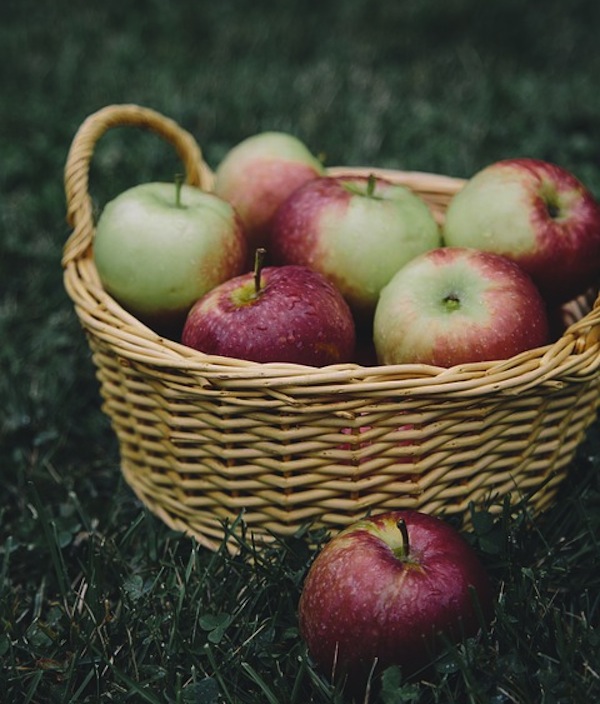
Who doesn’t look forward to summer’s bounty? Not only are fruits healthy – blueberries, for example, are low in calories but high in fibre, Vitamin C, Vitamin K and have a high antioxidant capacity – and delicious on their own but they make for great desserts, salads and spreads. Here are some recipes for a few of my favourite fruits: blueberries, peaches and apricots.

REVERSED BLUEBERRY COBBLER
six to eight servings

base:
2 cups blueberries
1/2 cup sugar
1 tbsp flour
2 tsp grated lemon peel
1/8 tsp nutmeg
2 tbsp pareve unsalted margarine

cake:
1 1/3 cups flour
3/4 tsp baking soda
3/4 tsp baking powder
1/4 tsp nutmeg
6 tbsp unsalted pareve margarine
1/2 cup sugar
2 eggs
1/2 tsp vanilla
1 1/2 tsp grated lemon peel
2/3 cup non-dairy creamer

1. Preheat oven to 350°F. Grease a baking dish.
2. Combine blueberries, sugar, flour, grated lemon peel, nutmeg and margarine for base. Bake 10 minutes.
3. In a bowl, combine flour, baking soda, baking powder and nutmeg for cake.
4. In another bowl, cream margarine with sugar and eggs. Add vanilla and lemon peel.
5. Mix in dry ingredients with non-dairy creamer. Drop batter atop blueberry mixture. Bake for 40 minutes. Serve warm with pareve whipped cream or ice cream.

BLUEBERRRY YOGURT CAKE 1

1/2 cup butter or margarine
1 cup brown sugar
1 egg
1 tsp vanilla
2 cups flour
1 tsp baking soda
1/2 tsp baking powder
1 cup blueberry yogurt

1. Preheat oven to 350°F. Grease a cake pan.
2. Cream butter or margarine and brown sugar.
3. Add egg and vanilla and blend.
4. Stir in flour, baking soda, baking powder, alternately with yogurt.
5. Pour into a cake pan. Bake for 50 minutes.

BLUEBERRY YOGURT CAKE 2

1 cup brown sugar
1/2 cup butter or margarine
3 eggs
2 cups flour
1 tsp baking powder
1 tsp baking soda
2 cups blueberry yogurt
1 tsp vanilla
1 tsp cardamom

1. Preheat oven to 325°F. Grease a cake pan.
2. Cream half cup sugar and butter or margarine. Add eggs.
3. Gradually add flour, baking powder and baking soda.
4. Stir in one cup blueberry yogurt. Add vanilla and cardamom. Pour half of batter into cake pan.
5. Spread remaining sugar and yogurt on the batter. Add rest of batter. Bake for 45-50 minutes.

SPICED PEACHES

4 cups sliced peaches
1/4 cup brown sugar
2 tsp lemon juice
12 cinnamon sticks
2 tsp brandy

1. Place peaches, sugar, lemon juice, cinnamon sticks and two cups water in a saucepan.
2. Bring to a boil. Reduce heat and simmer 20 minutes.
3. Cool and add brandy. Pour into a jar with a lid or a bowl.

WALDORF PEACH SALAD
four servings

1/2 cup chopped celery
1/2 cup sliced grapes
1/2 cup chopped apples
1/4 cup chopped nuts
4 sliced peaches
4 pieces Romaine lettuce
1 tbsp brown sugar

dressing:
1/2 cup mayonnaise
1 cup whipped cream
1 tsp grated orange peel

1. In a bowl, combine celery, grapes, apples and nuts. Toss lightly.
2. Place a piece of lettuce on each salad plate with a sliced peach on top. Fill with a quarter of the salad.
3. Sprinkle with brown sugar. Refrigerate.
4. In a bowl or jar with a lid, combine mayonnaise, whipped cream and orange peel. Spoon over each peach salad serving.

PEACH UPSIDE DOWN CAKE

1 cup brown sugar
1 cup chopped nuts
2 cups chopped peaches
1 cup brown sugar
1/4 pound butter or margarine
1 egg
1 cup milk or non-dairy creamer or pareve almond milk
1 tsp vanilla
2 cups flour
1 tsp baking powder
1/2 tsp cinnamon
1/2 tsp nutmeg

1. Preheat oven to 350°F. Grease a cake pan.
2. Toss together one cup brown sugar, nuts and peaches. Sprinkle on the bottom of a cake pan.
3. In a bowl, cream one cup brown sugar and butter or margarine. Add egg, milk and vanilla and stir.
4. Add flour, baking powder, cinnamon and nutmeg and blend. Spoon into cake pan. Bake for one hour or until a cake tester comes out clean. Allow to cool before turning out onto a cake plate.

APRICOT JAM
This is a Grace Parisi recipe taken from Food & Wine Magazine’s online recipe pages. It makes three half-pint jars.

photo - apricots2 pounds pitted apricots, cut into 1/2-inch pieces
1 1/2 cups sugar
2 tbsp fresh lemon juice

1. In a nonreactive saucepan, toss the apricots with sugar and let stand, stirring until the sugar is mostly dissolved, about one hour.
2. Add lemon juice and bring to a boil until sugar is dissolved. Simmer until the fruit is glassy and the liquid runs off the side of a spoon in thick, heavy drops, 20-25 minutes. Skim off scum that rises to the surface.
3. Spoon into three half-pint jars, leaving a quarter of an inch at top. Close and let jam cool to room temperature. Store in refrigerator for up to three months.

SPICED APRICOTS

2 cups apricots cut into halves
2 tbsp brown sugar
1 tsp lemon juice
6 pieces stick cinnamon
1 tsp brandy

1. Place apricots, sugar, lemon juice and cinnamon in a saucepan with a little water. Simmer until soft.
2. Add brandy and heat. Cool and spoon into a jar.

APRICOT BUTTER

five cups
2 pounds halved apricots
1/4 cup sugar
1 tsp cinnamon
1/2 tsp cloves
1/4 tsp allspice
2 tsp lemon peel
1 tbsp lemon juice

1. Place apricots in a saucepan. Cook over low heat in their own juices until soft.
2. Puree in a blender and measure. Return to sauce pan, adding a quarter cup sugar for each cup of pulp.
3. Add cinnamon, cloves, allspice, lemon peel and lemon juice. Bring to a boil. Spoon into jars, close and refrigerate.

APRICOT LEATHER

2 cups pitted apricots, cut into pieces
1 tsp lemon juice
1/2 cup sugar

1. Preheat oven to 175-200°F.
2. Drop apricot pieces into a blender and puree. Add lemon juice and sugar.
3. Spray a cookie sheet with vegetable spray. Spread pureed apricots evenly, quarter-inch thick on a cookie sheet. Place sheet in oven and keep door open. Bake until dry, three to six hours. Let cool.
4. Cut crosswise once, lengthwise three times, so you have six pieces.
5. Cover with plastic wrap and roll up.

Sybil Kaplan is a journalist, lecturer, book reviewer and food writer in Jerusalem. She created and leads the weekly English-language Shuk Walks in Machane Yehuda, she has compiled and edited nine kosher cookbooks, and is the author of Witness to History: Ten Years as a Woman Journalist in Israel.

#MeToo and education

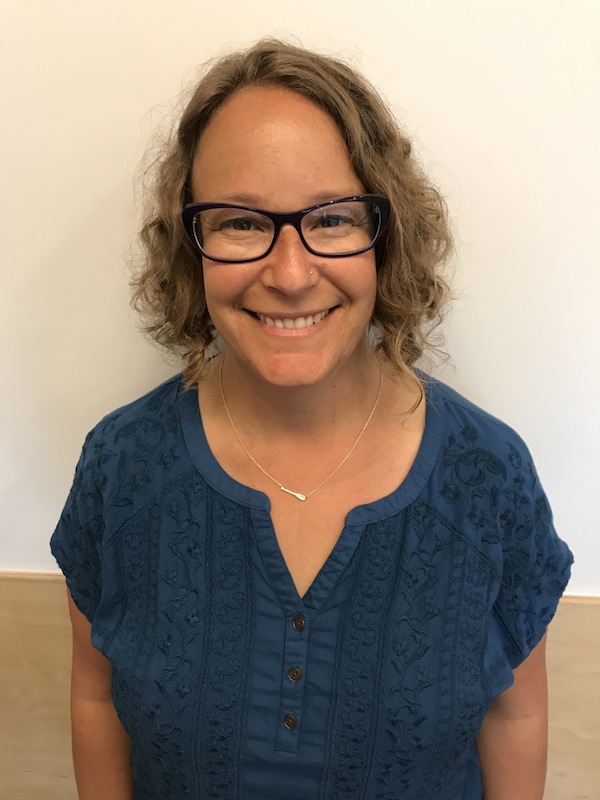
Lu Winters, academic and student wellness counselor at King David High School. (photo from Lu Winters)

In the fourth of a series of articles on sexual harassment and violence in the Jewish community, the Jewish Independent speaks with Lu Winters of King David High School, Elana Stein Hain of the Shalom Hartman Institute and Rabbi Carey Brown of Temple Sholom.

The first step in reducing bullying and other abuse in schools is to work with the students, said Lu Winters, academic and student wellness counselor at King David High School.

“I build connections with students in class,” she told the Independent. “And, with various groups in the school, I sometimes take them on trips. After the connection has been built, then the helping relationship can happen. It can happen one-on-one, in groups, in gender groups and through workshops.

“At King David, I’ve created a wellness program. Each grade receives a workshop, or two or three, depending on what’s going on during the year, on specific topics that I think are age-appropriate. I wish I could do every workshop for every single grade, but then the academic part of school would fall to the wayside.

“We run workshops on topics like LGBTQ awareness; healthy relationships with your body; self-esteem; stress and anxiety; drugs and alcohol; choices and values; and sexual health.”

Since the start of the #MeToo movement, Winters has seen some momentum. People have a lot to say about the movement, she said. “We haven’t had a specific workshop about it this year, but it’s on my radar for next year. During our sexual health education classes, we do address sexual harassment and consent, including talking about the roles of everyone involved, people’s faith, and making appropriate decisions for themselves at the right time … what to do if, G-d forbid, anything happens: who to talk to, what kind of support you can get.”

photo - Elana Stein Hain, scholar resident and director of faculty at the Shalom Hartman Institute
Elana Stein Hain, scholar resident and director of faculty at the Shalom Hartman Institute. (photo from Elana Stein Hain)

In the greater Jewish educational sphere, the Shalom Hartman Institute has produced a series of videos about related topics and examines how scripture has educated Jews on the subject over the years. Elana Stein Hain, scholar resident and director of faculty, has been leading the project.

“What we do is essentially develop curriculum around challenges facing the Jewish people,” Stein Hain told the Independent. “And I wouldn’t even say it’s about developing curriculum as much as developing conceptual frameworks for thinking about issues that arise. We’re an educational think tank. We ask ourselves what issues are now facing the Jewish people and consider how to develop educational material that deepens how we think about these issues. Then, we speak with change agents in the Jewish community about some ways of thinking.”

Stein Hain and her team began by looking for Torah teachings that address the topic of harassment directly. They came up with a three-part video series, which launched with a presentation that addressed the question of how, as a 21st-century teacher, you can educate people with our most sacred text and have the value proposition of our most sacred text being very important and continuing to give us the wisdom we seek, said Stein Hain. “And, also, we address the absence or relative absence of women’s voices and women as an audience.”

The next video talk was by Dr. Paul Nahme, a member of the institute’s Created Equal Team. He speaks on how definitions of manhood are dependent on cultural context.

“There’s this ‘boys will be boys’ kind of assumption and he says that, actually, there are places in Jewish tradition where that assumption had been challenged,” explained Stein Hain. “Young men were being trained to not be bravado macho, arrogant and assertive – to instead be trained to think about what it means to have doubts, to need someone else’s help. That was in contrast to what masculinity was understood to be.”

The last talk in the series was done by another member of the team, Dr. Arielle Levites, who discusses the portrayal of women in some Jewish traditional texts.

“It’s a deep folk story about women who try to move beyond their station or to move beyond the assumptions of them being portrayed as monsters,” said Stein Hain. “And she relates that to the … women who come forward with claims of sexual harassment or sexual violence who become seen as the offending party, getting questioned and vilified in certain ways.”

All of the videos can be accessed at hartman.org.il.

“The idea is really to get to the root of education,” said Stein Hain. “We are glad that people are going to do trainings on sexual harassment, on mandated reporting and on how to respond in the moment. We’d like to get to the root thought process of a culture that has come to this. And we want to learn how we can educate better, so we can have an adaptive change in the way people think, talk and act. Then, society and the Jewish community in particular can be built upon a different foundation.”

The educational realm within synagogues has also felt reverberations of the #MeToo movement, according to Rabbi Carey Brown of Temple Sholom.

photo - Rabbi Carey Brown of Temple Sholom
Rabbi Carey Brown of Temple Sholom. (photo from Carey Brown)

“I have seen an incredible amount of conversation among rabbis about this issue,” said Brown. “Some have been from within female rabbinic circles of women … some confronting it … things that people had kept within themselves for years or decades … and, now, gaining the courage to talk about it – everything from struggles to trying to understand the situation insofar as its professional implications for female rabbis … major discussions are being had on the topic at our annual conferences.

“Within the congregation, I haven’t had any individuals come to talk to me about personal experience,” she said. “But I have had a sense that women are feeling more free to bring up topics having to do with abuse, with safety, within the congregation, [at the] board level or [from a] staff perspective.”

A couple of months ago, the synagogue’s Men’s Club had a program on the #MeToo movement and sexual harassment in the workplace, including panel discussion on the topic in which Brown participated.

“I was really glad they took the initiative to have this program,” said Brown. “This didn’t come from the rabbis; it came from their leadership wanting to have an opportunity to talk about it. The conversation was really good and those who attended were very engaged and didn’t want to leave.”

Brown spoke about the Jewish perspective, discussing its tradition of values and ideas around sexual harassment, as well as her own personal experience with harassment.

“We talked a lot about consent,” said the rabbi. “A few different pieces of Talmud were discussed. We looked at this one that was about what happens if a man – one who counts money for a woman from his hand to her hand in order to look upon her – even if he has accumulated knowledge of Torah and good deeds like Moses, he will not be absolved from punishment.

“We talked about how, if someone even has a good reputation in the community, is known for their knowledge, good deeds and business … if they are abusive or using their power in a way that puts someone else in a position in which they are abused and powerless … our tradition says that, no, that is not OK.”

Abuse can be as simple as the way one person looks at another – if there is a misuse of power or position to objectify someone, Jewish tradition says that is not acceptable, stressed Brown.

“We talked about how we need to stand up when someone is being objectified, abused or put into a difficult situation,” she said. “That is part of our Jewish imperative – not to look away. It is part of what the Torah teaches us: that we can’t be indifferent and we must act.”

Over the years, Brown has had inappropriate comments directed at her. She said, “I’ve received comments like, ‘You don’t look like a rabbi’ or ‘If my rabbi looked like you, I’d have gone to shul a lot more when I was younger,’ or comments on my clothing and hair, and such.

“I mentioned at the event with the Men’s Club that my experience, both in Vancouver at Temple Sholom and in Boston, has been that the longer that I am the rabbi of a community, the stronger the relationships. And, I feel some of those things begin to fade away … within the regular, active population of the synagogue.

“It’s often when I’m in a new environment with people who don’t know me – at a shivah minyan, a wedding or something like that – my antennae go up. I’m very aware that it’s very likely I’ll get comments that are really inappropriate or that I have to psyche myself up a little bit to deal with.

“If I’m at a shivah minyan, I’m there to comfort the bereaved. I’m generally not going to confront in that situation,” she said. “I will take it with a grain of salt and maybe grumble about it to a friend. But, sometimes I’ll say, ‘That’s not appropriate.’ Sometimes, I’ll hear things like, ‘I’ve never kissed a rabbi before.’ And, I’ll say, ‘Well, we don’t need to kiss.’ I’ll push back a little bit to establish some boundaries.”

Rebeca Kuropatwa is a Winnipeg freelance writer.

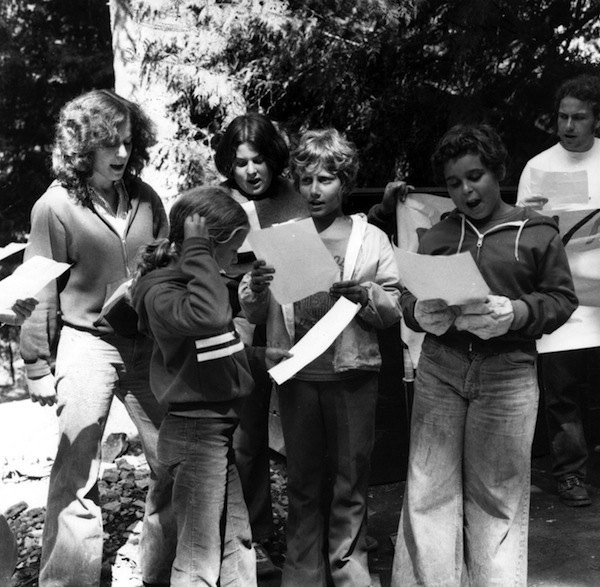
Mystery photo … June 29/18

Beth Israel Synagogue, 1972. (photo from JWB fonds, JMABC L.09793)

If you know someone in this photo, please help the JI fill the gaps of its predecessor’s (the Jewish Western Bulletin’s) collection at the Jewish Museum and Archives of B.C. by contacting archives@jewishmuseum.ca or 604-257-5199. To find out who has been identified in the photos, visit jewishmuseum.ca/blog.

Traveling with family

Levinsky Market (photo by Daniel Dodek)

The decision to travel with your family to Israel is a big one. It’s so expensive and the long distance requires going for at least two weeks to make it worthwhile. My husband and I debated for years on the merits of taking our children on such a trip. Finally, our daughter’s bat mitzvah convinced us it was time. At nearly 13, she would get a lot out of it, and our 11-and-a-half-year-old son seemed ready as well. To mitigate jet lag, I traveled a week early with the kids to London, England, where we laid low, staying with friends and taking in a few sights. We then met my husband in Jerusalem.

photo - Michelle Dodek with Max and Naomi
Michelle Dodek with Max and Naomi. (photo by Daniel Dodek)

The morning after we arrived, we went on a walking tour. Our guide, Dvir, specializes in tours of the Old City, which must be done on foot. Not only did he take us to all of the highlights, find us the best food in the Old City and explain the geopolitics of Jerusalem but, also, he knew where to find all of the clean toilets. And our children surprised us with the knowledge they had gleaned from their years of Jewish education, enriching our experience, as well. That day, we walked more than 13 kilometres, helping us sleep well and rid us of any jet lag that might have been lingering.

The next day, we returned to the Old City to buy special gifts of Judaica, and managed to pick up plenty of beautiful treasures for ourselves. We finally found use for our son’s bargaining skills, which had previously only been used to negotiate things like screen-time and treat consumption.

One of the best decisions we made was to stay in apartments. With two preteens, the need for food sometimes comes fast and furious. Knowing breakfast was in the fridge and we could make nutritious snacks to take along with us every day contributed enormously to the success of our trip. The other element that made it the best vacation we’ve ever had with our children was the planning my husband did, combining some days with a tour guide and other days with age-appropriate activities. Since neither of us is interested in driving in Israel, he also worked our plans around all the different kinds of transit. Our centrally located lodging enabled us to walk many of the places we wanted to go.

photo - Daniel and Max Dodek enjoy the beach
Daniel and Max Dodek enjoy the beach. (photo by Daniel Dodek)

We were invited by a friend, who was also visiting Israel with her family, to join their tour one morning of an agriculture reserve called Neot Kedumim. Near Modi’in, the site is of archeological significance and takes visitors back to biblical times through the landscape, agriculture and activities. Our experience included tree-planting, za’atar-grinding, pita-making, cooking and pulling water up from a cistern. My husband’s dream now is to spend his birthday working as a shepherd there. Another morning, with the same friends, was spent in fierce competition at the Tower of David doing something called the Amazing Race. It was good fun and educational, too.

We ventured one windy day to Ein Gedi and did a hike. Luckily, before driving to Masada, we discovered that, when it’s too windy for the cable car to run, Masada is closed. However, the Dead Sea was open for business as usual and, while we took in the experience of the mud and the floating, we also loved the variety of people from around the world visiting the waters.

In Jerusalem, we loved the green spaces like Station One. Formerly a train station and tracks, it is beautifully landscaped and is perfect for cycling, so we rented bikes. The public art in Israel makes the parks and streets even more interesting. Markets are favourites when we travel and Machane Yehuda did not disappoint. We returned there a number of times to buy Israeli essentials like halva, rugelach and dates, as well as more mundane food like fruit, vegetables and bread. The dinner scene is like the best food court in the world.

photo - Max Dodek dressed as Aaron Chelouche, founder of Neve Tzedeck, and Noam Rumsack, the guide
Max Dodek dressed as Aaron Chelouche, founder of Neve Tzedeck, and Noam Rumsack, the guide. (photo by Daniel Dodek)

We all enjoyed the food in Israel. Gone are the days when every corner had falafel, fly-covered shawarma and pizza with corn and tuna. You can still find those delights in a few places but, these days, no matter what you like to eat, you can find it in Israel (except on Shabbat or holidays in Jerusalem). Keeping kosher for Passover, once the holiday began, was certainly easier than we find it in Vancouver.

Two days before Passover started, we took the bus from Jerusalem to Tel Aviv. Comfortable, cost-effective and an experience in Israeli culture, the bus took only 45 minutes. Our lovely apartment in Tel Aviv was in an area in transition. Just over a block from the beach and a short walk from Shuk HaCarmel (where we went almost daily), the location was excellent. We were able to walk to many places, including Sarona (the market is like an upscale Granville Island), Shenkin (shopping), the Tachana (eclectic Israeli items) and Neve Tzedeck (artists and fancy touristy stores). We ended every day relaxing at the beach on the powdery sand.

The seder was delightful at my cousin’s house in Ramat Hasharon. Seeing my secular Israeli cousins argue over the tunes and forget the words occasionally showed us that they observe Passover similarly to how we celebrate it. The only difference was that they served twice as much food as I do, including seven types of meat. The food was almost as unreal as the traffic jam at 12:30 a.m., as people left their respective seders.

Other excellent parts of our trip included a fun and informative walking tour of Jaffa. Our guide, Noam, dressed in Turkish garb of 1905 – and, for awhile, our son dressed up as well, beard and all. We spent a day in Ramat Aviv, between the Museum of the Diaspora (Beit Hatfutsot) at Tel Aviv University and the Palmach Museum, just down the road. All of us took full advantage of the many types of exercise equipment in the public parks all around Tel Aviv and rode bikes along the Yarkon River, in addition to enjoying the lively promenade (Tayelet) along the ocean. One day, we took a fabulous full-day private tour up north to Akko, Haifa and Caesarea. The guide enabled us to get the most out of the day.

When we saw the family dynamic start to go sideways, we split up. Our ability to keep good snacks handy and to make sure everyone got enough outdoors time each day made everything we were able to see and do a wonderful experience for all of us. I would recommend a trip to Israel to anyone.

Michelle Dodek is a freelance writer living in Vancouver who spent enough time in Israel in her youth to speak sufficient Hebrew to communicate with taxi drivers and vendors in the shuk.

Fast-paced spiritual trip

The bimah of Ari Ashkenazi Synagogue in Tzfat (Safed) was part of the Land and the Spirit tour, which is organized by the Rohr Jewish Learning Institute. (photo by Roy Lindman)

My husband and I excitedly counted down the days until the Land and the Spirit Israel experience in March. Having met with Chabad Richmond’s Rabbi Yechiel Baitelman and his wife Chanie, who accompanied our group on this trip, we learned that the touring days would be long, but that the sights we’d see and the people we’d meet would more than offset the intensity factor. The Land and the Spirit tour is organized by the Rohr Jewish Learning Institute, the adult educational arm of Chabad.

The tour took place March 4-13 and drew approximately 800 Jews (and a handful of non-Jews) from across North America. Knowing that we’d hit the ground running, my husband and I decided to arrive in Israel a few days ahead of the tour, to get acclimated. We also spent an additional two weeks after the tour exploring Israel on our own. This was my sixth trip to Israel and my husband Harvey’s third.

The tour was, in some ways, like an Israel 101 course, supplemented by in-person meet-and-greets with high-level people from all walks of life – we had special access to soldiers, politicians, religious leaders and other VIPs. On some levels, it was geared to people who’ve never been to Israel before, and they got an overview of the highlights Israel has to offer. Yet, even for those of us who had been to Israel, it was a chance to discover places we’d never seen.

Participants had the freedom to choose from a variety of “tracks,” including: “In the Footsteps of the Bible,” “Classic,” “Borders and Security,” “Israel Encounters,” “Israel in Depth” and “Food and Wine.” Presumably, participants would get a glimpse of Israel that sparked their desire to return again. The flip side of this is that there was not a lot of in-depth learning, and we didn’t get a chance to spend a great deal of time in any one place. It was primarily surface introductions and more of a visit-the-sights kind of trip, rather than an intense learning experience, like the National Jewish Retreat.

There were way more things to see and do than each of us had time for, hence the need to choose “tracks” each day. Highlights for my husband and me included Caesarea, with its fascinating historical ruins and stunning location, overlooking the Mediterranean. We also found Silicon Wadi fascinating. It’s the area in Israel where scientists, techies and businesspeople work in shared spaces to develop groundbreaking technologies. When we were there, we toured a WeWork site, where young technology whizzes were producing 3D and other objects inspired by their sky’s-the-limit imagination.

Kfar Chabad was another high point of our trip. This Chabad-Lubavitch village is not far from Lod, and has a life-size replica of 770 Eastern Parkway, Chabad’s Brooklyn headquarters. More than 6,000 Chabad live in the village, and the site is home to an etrog orchard. Our tour included a shmurah matzah bakery, where they make Passover matzah by hand.

The highlight by far, though, was the Ohr Simcha Children’s Home, where 300 high-risk boys from troubled environments live with their adoptive Chabad families. Ohr Simcha was established in partnership with the Israeli government, to help some of the most socially challenged children gain a sense of security. Seeing the kind of patient, loving care it takes to sustain these kids, to give them a real home of their own, was inspiring and emotional. True chesed in action.

The ancient mystical city of Tzfat (Safed), “the City of Kabbalah,” with its narrow streets and beautiful tiny synagogues, was magnificent. We went to Ari Sephardic Synagogue, where the famous Jewish mystic Rabbi Yitzchak Luria (known as the Ari) prayed. We also went to the Ari Ashkenazic Synagogue. Guest speakers explained the detailed history and designs of the synagogues. Unfortunately, we didn’t squeeze as much spirituality out of Tzfat as we would have liked, because time was limited. But it left a lasting impression.

It bears mentioning that all the tour guides on our buses were incredibly knowledgeable and made the places we visited come to life.

The Latrun Tank Museum was yet another highlight on the tour. There, we got to meet Israel Defence Forces soldiers and hear firsthand their inspiring personal stories. Live music, dancing and delicious food topped off the evening.

We spent a moving Kabbalat Shabbat at the Kotel (Western Wall). Having never visited the Kotel at night, much less experienced Shabbat at that holy site, we felt like Israel had wrapped its arms around us. Shabbat day was quiet and gave us the opportunity to walk the empty streets of Jerusalem in peace.

The second to last day of the tour was super-charged, and saw us traveling from Jerusalem to Masada, to the Dead Sea, where we schmeared mud on ourselves and bobbed around like human corks in the salt-laden water. After a long day, we showered off the Dead Sea water, got dressed in our finest and went to a gala banquet, where music, speakers and other entertainment were on the menu.

The final day was spectacular. First, we boarded a bulletproof bus that took us to our Matriarch Rachel’s Tomb, in Bethlehem. This was a particularly emotional experience, to see so many people praying so fervently. But it only got better, as we got on the bus and traveled to historic Hebron, where we visited the Cave of the Patriarchs (the Cave of Machpelah), one of the holiest places for the Jewish people. There, all 800 of us walked through Hebron carrying a Torah scroll that had been saved from the Nazis. This was followed by a spectacular light show, fireworks and a lively dinner.

On the whole, the tour was phenomenal, albeit arduous, especially for those of us in our 60s and older. Early morning starts, long stretches on the bus, shlepping and climbing, eating and touring. Repeat. For eight days. Was it worth it? You bet! The entire trip was spiritually nourishing, and fed our desire to start planning when we would next return to our home away from home.

Shelley Civkin is a happily retired librarian and communications officer. For 17 years, she wrote a weekly book review column for the Richmond Review, and currently writes a bi-weekly column about retirement for the Richmond News.

Traveling with young kids

(photo by Masada Siegel)

Taking a red-eye flight was no way to end a glorious Hawaii vacation with my nine-month-old, but it was the only nonstop and I figured everyone would go to sleep. Ah, how wrong I was! My little guy, who just had started walking, was so excited that we were not only awake the entire flight, but we spent it walking up and down the aisle.

Having little ones is a game-changer. After having traveled solo for months at a time, where I could follow any whim and not plan if I didn’t want to, my travel style has been turned completely upside down, but for all the right reasons.

So, while I always pack lots of extra food and supplies for my little guy, who’s now a toddler, I’ve learned to pack light for myself. Everything needs to be multipurpose. For example, my go-to travel uniform consists of a wrap-sweater because I use it as a baby blanket, and many friends use it as a nursing cover-up. Also, because it’s attractive, it can dress up a simple outfit.

Part of the travel experience is keeping your kids entertained. The best compliment I got recently was when a woman two rows behind me exclaimed, “What, you have a toddler with you? I had no idea. Thank you for making this a pleasant flight for all of us.”

Truth is it helps to be extremely prepared with planned activities, as well as making sure your little one is excited about the journey. A happy kid makes for a pleasant flight for all. Prior to our trip, I gave my son his own luggage, a super-cute airplane-themed rolling suitcase that also turns into a backpack. He loves it and constantly drags it around with him. I find it helpful for him to feel as if he is one of us, and part of the adventure.

I always pack a number of toys – they all must be useful both on the long flights and at the destination. I never leave home without our Bubzi, a stuffed owl that plays lullabies and projects stars on the ceiling, as it helps with sleep. Another lightweight item to bring is the Cinemood, an ultra-light three-inch portable projector that can be used just about anywhere with a flat surface, as its preloaded with lullabies, books and kid-friendly content. Be sure to pick up kid-safe headsets that protect little ears; Buddyphones are especially good on planes to help drown out the noise, too.

Traveling with a toddler has its ups and downs. On a recent trip, my son, who has always disliked cribs, was sleeping in a bed. Even though he was right next to me, he still flew off of it in the middle of the night, leading to a bruised up nose and an upset mom. There seem to be a million tiny situations that need to be thought through, some as simple as piling pillows all over the floor around a bed.

I’ve also learned that the details matter, such as keeping my little one out of the sun. While I tan easily, my son is blond and fair, leading me to explore a million different sunscreens, many sticky, which led to complaints. While we do use sunscreen, I’ve heard conflicting reports of how useful they are and how bad some of the chemicals are, so I finally changed my travel stroller to one that has on oversized canopy, as extra protection.

A sturdy stroller is also important because you can place your bags in it and my son can walk alongside me or even push the stroller. I’ve realized, the more active he is in the airport, the more tired he will be on the airplane. I always research the airport we are flying into, to see if there is anything to see, such as an aquarium, museum or viewing deck, so as to keep everyone entertained.

However, being organized takes a lot of effort and, while I try my best to keep everything in its place in my diaper bag, sometimes I don’t. I’ve had to dig around for my wallet, plane tickets and all sorts of odds and ends. Usually, a box of milk or other liquid slips my mind and then security zeroes in on me.

Even with a baby in tow, I have been patted down on every single flight I have taken with my son. Security is in no rush and generally don’t care if you miss your plane. On my last flight, I had to run through the airport holding my son to make it in time.

Traveling with a toddler certainly keeps you on your toes, but isn’t that why we travel in the first place, because we want to have new experiences? So, while the getting to the destination is part of the journey, my best advice is to try to enjoy the ride.

Masada Siegel is an award-winning journalist and photographer. Follow her at @masadasiegel and visit her website, masadasiegel.com.

Torah is part of who we are

Much to the disappointment of their Orthodox brethren, most of the Jewish people outside the Orthodox world probably do not believe that the Torah was literally received at Sinai. This creates something of a problem on Shavuot, the festival on which the giving of the Torah at Sinai is celebrated.

On Passover and Sukkot, even non-believers who reject the literal truth of the biblical stories on which these festivals are based, can find ways to connect to universal notions of freedom from slavery and the temporariness of the human condition that they inspire. On other holidays, too – Rosh Hashanah and Chanukah come to mind – it is possible to relate to broader themes and even to the symbols and rituals that seek to evoke them. Shavuot is different. It is limited in symbolic ritual, and it does not offer an easily identifiable, abstract idea worthy of celebration even by non-religious Jews.

What’s more is that the rabbinic sages seem to make a point of exalting an aspect of the Mount Sinai story that is anathema to modern sensibilities. “Na’aseh v’nishmah” – “We will do and we will hear/understand” – a phrase uttered, according to Exodus 24:7, as the Jewish people accept the Torah, is often glorified in our tradition as an act of blind obedience. The willingness to do first, and comprehend later, is seen as a readiness to receive the Torah unconditionally, regardless of its content. The Midrash praises the Jews for the commitment – unlike that of any other nation – to follow the scriptures without asking why. Had the attempt to alienate Jews of Western, liberal convictions been deliberate, it would not have been more successful.

What are those who question the merits of blind obedience to do with this tradition? How to reconcile teaching our children to question, when we are told to applaud the fact that the Children of Israel did not?

Fortunately, our sources – as always – offer alternatives to this particular approach. For one thing, the text of “na’aseh v’nishmah” provides less evidence of blind obedience than popular wisdom suggests. Chapter 24 of Exodus, where the concept of “na’aseh v’nishmah” is cited, actually stipulates twice (in verses 3 and 7) that the Torah was first read in its entirety to the Children of Israel. The result is a far less dramatic narrative of the Jewish people’s agreement to accept the Torah, after it was heard.

Others offer a softer reading of “na’aseh v’nishmah” to suggest that the Jewish people demonstrates through this phrase not unthinking acceptance of the Torah, but rather the view that it is through the act of doing – of actually fulfilling the commandments – that the Torah will be understood.

More significantly, there is a well-known, and contrary, midrashic tradition that suggests that the Torah was not in fact willingly embraced by the Jewish people at Sinai, but instead coerced upon them. The Talmud, in Tractate Shabbat 88a, drawing from the phrase in Exodus 19:17 that the Jewish people camped “b’tachtit ha’har” – “at the base/under the mountain” – suggests that the Holy One blessed be He covered the mountain over them like an (inverted) barrel, and said to them, “If you accept the Torah, fine, but, if not, there will be your burial place.”

The Jewish tradition demonstrates a constant tension between unquestioning obedience to God, and struggle with Him. Both are valued, neither absolutely. We are told of the Abraham who obediently agreed to sacrifice Isaac, and of the Abraham who argued with God to spare the innocents of Sodom. And, in the case of the Torah at Sinai, we are relayed two distinct rabbinic narratives – one, of a people eagerly accepting their canonical text, and the other, of that text being forced upon them.

When taken together, these conflicting narratives seem to be saying that we can either embrace the Torah or fight against it, but in either case we cannot escape that it is ours. In the same way as we cannot choose our parents, we cannot choose our spiritual ancestry. Whether out of choice or out of coercion, the Torah is our spiritual home. We can quarrel with it, turn from it, reinterpret it or embrace it whole, but it is the unavoidable reference point from which we chart our path.

I have always been struck by the fact that the Gemara cited above strangely says that the Jewish people will be buried “there” rather than “here.” After all, if the message is about the coercion at Mount Sinai, wouldn’t the threat be to accept the Torah or to perish at the foot of the mountain? Instead, the implication of the text is that the risk of burial is at a later time and place, as if to suggest that the impact of rejecting the Torah will not be immediate.

In this sense, the text can be seen as a kind of warning. A people that is not familiar with its foundational texts, that is not engaged with them – whether in agreement or in argument – risks withering away. Our burial place is not at the moment of rejection; it is “there,” further down the road, when the connection of future generations with the conflicting and profound stories that shape our tradition is severed.

Shavuot need not only be seen as a celebration of the acceptance of the Torah. It also celebrates acceptance of the idea that who we were is part of who we are. It is an embrace of, and reconnection with, our story and our texts, not necessarily because we accept them literally and wholeheartedly, but because they are part of the DNA of Jewish civilization.

We do not enter the earth free and clear to invent ourselves from naught. Like it or not, we are born into a legacy, a tradition and a set of values that should draw us into a dialogue and shape our identity and sense of meaning. That dialogue may be one of reverence, or of rebellion, or of something in between. But, at its heart, it prizes the idea that, for the Jewish people to stake a claim to a truer and healthier future, we must be honest, learned and engaged in the claim our heritage has upon us.

Dr. Tal Becker is a fellow at the Shalom Hartman Institute and a senior fellow of the Hartman Institute’s iEngage Project. More articles from the SHI can be found at hartman.org.il.

Mystery photo … May 18/18

B’nai B’rith, 1966. (photo from JWB fonds, JMABC L.09493)

If you know someone in this photo, please help the JI fill the gaps of its predecessor’s (the Jewish Western Bulletin’s) collection at the Jewish Museum and Archives of B.C. by contacting archives@jewishmuseum.ca or 604-257-5199. To find out who has been identified in the photos, visit jewishmuseum.ca/blog.

Treat your mom special

H Tasting Lounge at the Westin Bayshore has a new tea service. (photo from westinbayshore.com/htasting-lounge)

Mother’s Day might be celebrated only once a year, but being a mother is an everyday, every minute occupation. Rashi, the brilliant 11th-century sage, offered a moving interpretation: “A mother is a woman who gives life,” he wrote (see Rashi, Genesis 3:20).

Rabbi Pinchas Allouche, spiritual leader of Congregration Beth Tefillah in Scottsdale, Ariz., explained, “A mother does not just live; she makes life. She does not just occupy space for herself; she makes space for others. She does not desire to take; she desires to provide. She does not seek power; she seeks influence. She does not just live by existing; she lives by giving. And she breathes life, continuously, into her own children, and into her own surroundings.”

Since most moms are so busy taking care of everyone else, this special day is an opportunity to give back to this wonderful person, if you’re lucky enough to have her still in your life. Here are a few ideas on how to celebrate.

Something sweet

If you live in the Metro Vancouver area, check out the new tea service at the H Tasting Lounge at the Westin Bayshore in Coal Harbour (westinbayshore.com/htasting-lounge). It has two choices, Eastern-style and Western. Their Western Tea includes smoked salmon and cucumber tea sandwiches, as well as a variety of sweet samplings such as scones with jam and cream. Meanwhile, the Eastern Tea, while also a classic tea service, includes a mix of traditional Asian foods, such as a duck wrap.

If you would rather create something unique at home, try using Yonanas (yonanas.com). My mom and I made a healthy dairy-free dessert, as the machine transforms frozen fruit into what tastes like ice cream – without all the calories. They include a recipe book with the machine, but we found it fun to experiment. We added, for example, a little chocolate and cinnamon to the frozen bananas.

DNA kit

Mother’s Day is a great opportunity to get to know your mom better in myriad ways and a DNA test is a great way to learn about your family. We used the Living DNA test (livingdna.com), but there are others.

My mom swabbed the inside of her mouth and, within a few weeks, we discovered that some of our ancestors were Dutch, Finnish and Swedish! Living DNA does a comprehensive analysis. It provided data on our ancestry throughout human history, as well as percentages of our ethnic backgrounds from 80 global regions. The company also offers a full-colour coffee table book of your results, which preserves your family history for future generations.

Something stylish

I recently discovered a few new stylish brands of purses for moms. MZ Wallace and Be Brilliant have purses that are useful for a variety of purposes, from practical to simply being fashionable, which is always a treat for the mom shlepping around a million items usually not for herself. Both brands are easily cleaned, offer lots of pockets and, best of all, will make your mom feel special. (And both companies sell and ship to Canada.)

photo - To design and make your own hat, check out Vancouver-based West Coast Hatters
To design and make your own hat, check out Vancouver-based West Coast Hatters. (photo from westcoasthatters.com)

The purse can be paired with a fancy hat. I love creating new fashions, and spending quality time with my mom doing something creative is always a joy. To design and make your own hat, check out Vancouver-based West Coast Hatters (westcoasthatters.com), which specializes in creating hats for film and hosts one-on-one workshops or small classes for people who want to create their own special style.

In the fascinator-making class, students use a straw base and build up from there. However, if you want to get serious about hat-making, try the two-day class, where you will create a masterpiece by hand, blocking, steaming and draping the fabric into your own special creation.

Spa day

A personal favourite is to treat my mom to a spa day. The truth is I have yet to meet a mom would couldn’t use some time for herself, and what better way to celebrate each other than by spending quality time together in a quiet setting.

There is also the option of a do-it-yourself spa day. You can set the mood by lighting candles and putting out comfortable chairs while you and your mom give yourselves facials.

Personally, I like American spa owner David J. Witchell’s eponymous collection (davidjwitchell.com), which features an all-natural line of products. I like DJW’s Matcha Wash with grit for cleansing, using a towel or natural sea sponge, then following it with the company’s Shaman oil blend, which firms and illuminates the tone and texture of the skin, and its Time Traveler, which brightens, hydrates and protects your skin.

To complete the spa experience, you can gift your mom some luxury body soaps. One brand I use it Costa d’Oro (siegebrands.com/naturalsoaps). Its soaps are natural, made in Arizona and leave my body feeling a decade younger. I especially like Himalayan Salt Scrub with Activated Charcoal; Lemongrass and Rosemary; and Gardenia.

The best part of a do-it-yourself spa day is that your mom can use the products again and again.

Happy Mother’s Day!

Masada Siegel is an award-winning journalist and photographer. Follow her @masadasiegel and visit her website, masadasiegel.com.

A girl’s rite of passage

Mia holds a Havdalah candle. (photo by Miriam Leo Gindin)

Many Orthodox Jews wait until a boy’s third birthday before giving him his first haircut in a ritual called upsherin, a Yiddish word meaning to “cut off.” In recent years, this custom has spread outside of the Orthodox world to be embraced by other Jews and, as a recent upsherin in Vancouver showed, some are beginning to include girls in the custom as well.

On March 17, Noam and Val Dolgin invited family and friends to their house for the upsherin of their daughter, Mia.

“For me, this was an opportunity to connect with tradition. I love the lifecycle traditions of Judaism,” Val Dolgin told the Jewish Independent.

Noting that they had done the same thing for their son Erez, who is two years older than Mia, she said, “I think it’s really important for kids to see themselves as being a part of a multi-generational community that cares about them, that makes them feel safe; that they can know they’re part of something bigger than themselves, that there are lots of people around rooting for them to succeed. For me, it was a chance for Mia to be affirmed in her community, to mark a transition, and to connect with tradition in a way that’s meaningful.”

Val Dolgin’s parents, who did not grow up with the upsherin tradition, were present at the ceremony. “My parents are very proud that they have Jewishly involved children,” she said. “They had never been to an upsherin before Erez and Mia’s. For them, they enjoy any opportunity to celebrate their family.”

Traditionally, the upsherin marks when, at the age of 3, a boy officially begins his Torah education and starts to wear a kippah and tzitzit. It was first mentioned in Sha’ar HaKavonot by Rabbi Chaim Vital, a student of 16th-century kabbalist Isaac Luria. The ceremony’s origins are mystical, and it was seldom observed outside of the Orthodox world until recently. The traditional ritual includes the haircut (leaving peyot), eating cookies shaped like Hebrew letters and dipped in honey (to show learning is sweet) and the wearing of tzitzit and a kippah for the first time.

The idea of three years as the transition time derives from the mitzvah of orlah. The Torah says that if you plant a tree, all fruits that grow during the first three years are orlah, or off limits (Leviticus 19:23). Given the kabbalistic comparisons of people to trees, many Orthodox Jews leave a child’s hair uncut during the first three years.

“The ritual of upsherin was special for us on a few levels,” said Noam Dolgin. “First, the ecological connection, which reminds us that we are part of nature. Two, it marks an important transition from baby/toddler to child. And, lastly, it is an important moment when our child is old enough to start learning and internalizing Jewish and communal values and mitzvot.”

He added, “I believe the practice has even more significance today as we better understand child development and re-explore our ecological connections. And, of course, we would do it for our daughter – it’s just as relevant to her development and place in our community as it was our son.”

“The upsherin marks a Havdalah between freest babyhood and, at age 3, the first increment of teaching and training a child,” said Or Shalom spiritual leader Rabbi Hannah Dresner, who led the ceremony. “What a great ritual to promote and renew! For us, of course, it is an egalitarian marking of readiness. Traditionally, the first snip is taken from the centre of the forelock, the place of the third eye or of insight, the spot that will, someday, at the next big milestone of readiness, receive the tefillin shel rosh, the tefillin box that sits on the forehead. For those in progressive Jewish circles, kippah, tzitzit and tefillin are all ritual wear promoted for girls and boys alike. The upsherin can be a sweet, celebratory beginning of Jewish education and the beginning of mitzvah-doing in the lives of all our children.”

Matthew Gindin is a freelance journalist, writer and lecturer. He is Pacific correspondent for the CJN, writes regularly for the Forward, Tricycle and the Wisdom Daily, and has been published in Sojourners, Religion Dispatches and elsewhere. He can be found on Medium and Twitter.