Skip to content
  • Home
  • Subscribe / donate
  • Events calendar
  • News
    • Local
    • National
    • Israel
    • World
    • עניין בחדשות
      A roundup of news in Canada and further afield, in Hebrew.
  • Opinion
    • From the JI
    • Op-Ed
  • Arts & Culture
    • Performing Arts
    • Music
    • Books
    • Visual Arts
    • TV & Film
  • Life
    • Celebrating the Holidays
    • Travel
    • The Daily Snooze
      Cartoons by Jacob Samuel
    • Mystery Photo
      Help the JI and JMABC fill in the gaps in our archives.
  • Community Links
    • Organizations, Etc.
    • Other News Sources & Blogs
    • Business Directory
  • FAQ
  • JI Chai Celebration
  • JI@88! video

Recent Posts

  • BGU fosters startup culture
  • Photography and glass
  • Is it the end of an era?
  • Taking life a step at a time
  • Nakba exhibit biased
  • Film festival starts next week
  • Musical with heart and soul
  • Rabbi marks 13 years
  • Keeper of VTT’s history
  • Gala fêtes Infeld’s 20th
  • Building JWest together
  • Challah Mom comes to Vancouver
  • What to do about media bias
  • Education offers hope
  • Remembrance – a moral act
  • What makes us human
  • המלחמות של נתניהו וטראמפ
  • Zionism wins big in Vegas
  • Different but connected
  • Survival not passive
  • Musical celebration of Israel
  • Shoppe celebrates 25 years
  • Human “book” event
  • Reclaiming Jewish stories
  • Bema presents Perseverance
  • CSS honours Bellas z”l
  • Sheba Promise here May 7
  • Reflections from Be’eri
  • New law a desecration
  • Resilient joy in tough times
  • Rescue dog brings joy
  • Art chosen for new museum
  • Reminder of hope, resilience
  • The national food of Israel?
  • Story of Israel’s north
  • Sheltering in train stations

Archives

Follow @JewishIndie
image - The CJN - Visit Us Banner - 300x600 - 101625

Category: TV & Film

Diverse DOXA festival offerings

Diverse DOXA festival offerings

In the very talented ensemble of The Road Forward by Marie Clements are Michelle St. John, left, and Jennifer Kreisberg. (photos from National Film Board of Canada)

This year’s DOXA Documentary Film Festival features several films with Jewish community connections. They explore a wide range of topics: First Nations activism, Fort McMurray and the oil sands, real-life mermaids, bigotry against larger people, and being a freelance journalist in the Middle East. They will make you question your assumptions, ponder the various ways in which humans find connection, and introduce you to ideas, people and places you probably didn’t know existed.

Opening the festival, which runs May 4-14, is The Road Forward. In the very talented ensemble of this musical documentary by Marie Clements are Michelle St. John and Jennifer Kreisberg. As many of us do, St. John and Kreisberg have multiple cultural heritages that form their identity; in their instances, First Nations and Jewish are among them. In addition to performing, Kreisberg also composed and/or arranged many of the songs; the main composer is Wayne Lavallee.

The Road Forward began as a 10-minute performance piece commissioned for the Aboriginal Pavilion at the 2010 Olympics, and premièred as a full-length theatre show at the 2015 PuSh Festival. The documentary has mostly traditional components – interviews, archival footage, news clips – but these are broken up by a number of songs, which add energy and emotion to the film.

The documentary uses as its starting point the Native Brotherhood and Sisterhood, which were established in the 1930s, when First Nations people were not permitted to meet and organize. The groups’ “official organ,” the Native Voice, was the first indigenous-run newspaper in Canada.

“The idea was to honour B.C.’s history, so I started researching and reading online and came across the archives of the Native Brotherhood and Sisterhood, the oldest Native organization in the country. Their parent organization, the Native Fishing Association, is located in West Vancouver, close to me,” explains Clements in the press material.

The Road Forward touches on many issues along its journey to current-day First Nation activists, who carry on in their ancestors’ paths. Though their goals are varied – some fight for particular legal or policy changes, others for restitution and reconciliation, yet others for their own voice and place in the world – they are all seeking justice, equality, understanding.

The songs highlight the immense struggles. As but two examples, “1965” is about the decades upon decades that First Nations have been denied the basic rights that most other Canadians have long enjoyed, and “My Girl” is a heartbreaking tribute to the aboriginal women who have been murdered along British Columbia’s Highway 16, the “Highway of Tears.” The Indian Constitution Express, a movement organized by George Manuel in 1980-81 to protest the lack of aboriginal rights in then-prime minister Pierre Trudeau’s plans to patriate the Canadian Constitution, receives somewhat more attention than other activist achievements, and the song “If You Really Believe,” based on a speech by Manuel, is quite powerful.

The May 4 gala screening of The Road Forward is the official launch of Aabiziingwashi (#WideAwake), National Film Board of Canada’s Indigenous Cinema on Tour. For the length of 2017, NFB is offering films from its 250-plus collection to all Canadians via [email protected]. The film also runs on May 10 and Clements will participate in a Q&A following both screenings.

* * *

Limit is the Sky follows a handful of 20-somethings who have moved to Fort McMurray to follow their dreams. A few years before the price of oil plummeted in 2015 and the 2016 wildfire decimated the northern Alberta city, the average family income in “Fort Mac,” was $190,000 a year, according to the film. Working on the oil sands was where the real money lay, but others were drawn to the college or to places that serve the oil workers (and others), such as hairdressing salons and restaurants.

photo - The seven young dreamers featured Mucharata, from the Philippines, who had to leave her 2-year-old son behind initially (for fours years)
The seven young dreamers featured Mucharata, from the Philippines, who had to leave her 2-year-old son behind initially (for fours years). (photo from NFB)

Most striking about the population we meet in Limit is the Sky is their diversity: they not only come from other Canadian provinces and the United States but from much further afield. The seven young dreamers featured include Max, from Lebanon; Mucharata, from the Philippines, who had to leave her 2-year-old son behind initially (for fours years); and KingDeng, a former child soldier from South Sudan, who had to help support his wife and children (in Edmonton) while at school in Fort McMurray.

“I was looking for young people who’d just recently arrived in Fort Mac, full of hopes, dreams and naïveté,” says filmmaker Julia Ivanova in the press material. “I wanted to walk the viewer through their ups and downs in a place where the men seem tough and the women even tougher. I wasn’t looking for tough characters, though: sensitivity and beauty – both inner and physical beauty – were important to me.”

Ivanova, who has Jewish roots, migrated to Canada from Russia many years ago.

“Being an immigrant myself,” she notes, “I could feel what was at stake for these young people and the challenges they face on a very intimate level.”

The main filming ran from fall 2012 to spring 2015. She felt welcomed by the people in the city, though not by the industry. “That was a brick wall I hit over and over again,” she says. “There was no filming of anyone allowed, anywhere, period.”

By the end of the film, most of the millennials featured had left the city, along with many others. “The town felt almost deserted, compared to how I had seen it in 2012 and 2013,” says Ivanova. “So many people were leaving. There was so much anxiety. I went to all the places I loved – and they’d all changed.”

Ivanova’s film shows the hope, the drive, the challenges, the loneliness of her interviewees. The dynamics are much more complex than one might assume of a city that relied on the oil sands for its prosperity. The environment is of crucial importance, obviously, but people matter, too, and this documentary shines a necessary light on that fact.

Limit is the Sky screens May 5.

* * *

Falling into the who-ever-would-have-thought category, Ali Weinstein’s Mermaids introduces viewers to real-life mermaids, of a sort.

photo - Rachel’s underwater job at the Dive Bar in Sacramento, Calif., helps her deal with a family tragedy
Rachel’s underwater job at the Dive Bar in Sacramento, Calif., helps her deal with a family tragedy. (photo from DOXA)

Rachel’s underwater job at the Dive Bar in Sacramento, Calif., helps her deal with a family tragedy. Vicki and a group of former Weeki Wachee Resort (in Florida) swimmers recall their mermaid days, including a show for Elvis and a 50th anniversary performance. Being a mermaid helps Cookie, who was abused as a child and has mental health issues, manage life, and she and her soulmate, Eric, who makes her mermaid tails, are married in a mermaid wedding, after being together for some 30 years. Last but not least, Julz, a transgender woman who was bullied as a child and disowned by her father, discovers acceptance and love in a Huntington Beach, Calif., mermaid group.

Weinstein intersperses these stories with brief summaries of long-told mermaid tales, “from the 3,000-year-old Assyrian figure of Atargatis to the Mami Wata water spirits of West Africa.”

It really is a fascinating documentary, showing just how resilient and resourceful the human spirit is.

Mermaids plays twice during DOXA, on May 6 and 13, and Weinstein will be in attendance at both screenings.

* * *

Think of the cartoon villains and the hapless sidekicks. How are they often portrayed? As fat, dumb and/or oversexed? If those weren’t your first thoughts, think again. The documentary Fattitude convincingly shows how widespread bigotry against larger people is – so much so that it can be overlooked, until pointed out. Then, you wonder how you ever missed it.

image - From the age of 3, the film notes, we are already programmed with negative stereotypes
From the age of 3, the film notes, we are already programmed with negative stereotypes. (image from DOXA)

From the old woman in the candy house that eats Hansel and Gretel, to Star Wars’ Jabba the Hut, to the evil squid in The Little Mermaid, these are just a few of the villains. Then there is the heavyset and dumb Hardy, sidekick to thin, smart Laurel; the stereotypical chubby best friend in so many movies; and the archetypal black nanny, forever cast in the caring, subservient role. Miss Piggy is a more complex character, both strong and confident in herself, but also sex-crazy over Kermit. And, in the entire Star Trek franchise – where have the larger people gone?

From the age of 3, the film notes, we are already programmed with negative stereotypes. When all put together, it’s quite depressing. However, Fattitude is a rather upbeat documentary, as its interviewees are spirited, determined and intelligent enough to effect some change, mainly via social media.

Filmmakers Lindsey Averill and Viridiana Lieberman speak to almost 50 people and, to a person, they provide an interesting perspective, connecting the body images depicted in films, television shows, cartoons, magazines and advertisements with their effects on viewers and on our perceptions of ourselves and others. The film discusses the links between race, socioeconomic status and weight, as well as the reasons why Michelle Obama’s campaign to end childhood obesity was misguided.

Fattitude screens May 9.

* * *

Being a journalist in a war zone seems dangerous and frightening, and it is. But it is also tedious and lonely. At least this is what it seems from watching Santiago Bertolino’s Freelancer on the Front Lines.

photo - Jesse Rosenfeld with peshmerga combatants, Santiago Bertolino and Ayar Mohammed Rasool
Jesse Rosenfeld with peshmerga combatants, Santiago Bertolino and Ayar Mohammed Rasool. (photo from NFB)

Bertolino follows Toronto-born, Beirut-based freelance journalist Jesse Rosenfeld as Rosenfeld hustles to get story ideas and budgets approved, waits in sparse hotel rooms for fixers to connect him with interviewees, and ventures into Egypt during its post-Arab Spring elections, the West Bank during an Israeli-Palestinian conflict, a Syrian refugee camp in Turkey and to Iraq, where they witness the fight against ISIS from the front lines.

Some of the more disturbing images are of the bodies of Palestinians gunned down in a home by undetermined executioners and the corpses of dead ISIS fighters dumped in the back of a truck, as well as tied to its back bumper. In another memorable part, Rosenfeld yells questions to a caged Mohamed Fahmy, when Fahmy and two fellow Al Jazeera journalists were on trial in Cairo. (Fahmy, who holds both Canadian and Egytian citizenship, spent almost two years in jail of a three-year sentence.)

Rosenfeld has strong views and isn’t afraid to share them, though he struggles to make eye contact with the camera when he makes his pronouncements. Some of the best exchanges in the film are between him and Canadian-Israeli journalist Lia Tarachansky, who hold different opinions on the Israeli-Palestinian conflict.

Freelancer on the Front Lines screens May 13 at Vancity and will include a post-film discussion.

For tickets and the full DOXA Documentary Film Festival schedule, visit doxafestival.ca.

Format ImagePosted on April 21, 2017April 20, 2017Author Cynthia RamsayCategories TV & FilmTags activism, culture, documentaries, DOXA, First Nations, journalism, mermaids, Middle East, National Film Board, NFB
The reach of humour

The reach of humour

Director Ferne Pearlstein with Mel Brooks. (photo from Tangerine Entertainment)

Woody Allen’s Crimes and Misdemeanours marked the first time that many people heard the philosophical proposition, expressed by Alan Alda’s character, that “comedy is tragedy plus time.”

I’ve always cited “the Woodman” as the source of the insight, probably because it’s consistent with a Jewish worldview. In fact, another Allen, the late, great comedian, composer and TV host Steve Allen, described the phenomenon in a 1957 magazine interview. Maybe he picked it up from somebody else; in any event, this is what he had to say: “When I explained to a friend recently that the subject matter of most comedy is tragic (drunkenness, overweight, financial problems, accidents, etc.), he said, ‘Do you mean to tell me that the dreadful events of the day are a fit subject for humorous comment?’ The answer is ‘No, but they will be pretty soon.’”

Ferne Pearlstein’s wonderfully entertaining and provocative documentary The Last Laugh asks a gaggle of comedians, as well as the viewer, if there might be one subject that defies Allen’s thesis. Seventy years on, is the Holocaust still off limits for purveyors of punchlines? Are there subjects that cannot and should not be the subject of jokes? Or are some of the functions of humour – healing, confronting uncomfortable truths from oblique angles, challenging stereotypes – applicable even in the case of targeted genocide? Finally, as the great wit Hillel famously asked his students at a late-night yeshivah improv set, “If not now, when?”

Pearlstein puts the question to a group of sharp Jewish humourists, interspersing their incisive comments with a parade of clips from films and TV shows that comprise a kind of Rorschach test for the viewer. The expert witnesses include Rob Reiner, Harry Shearer, Gilbert Gottfried and Larry Charles, who grapple with the topic with both hilarious and discomfiting results. As you’d imagine, given their ethnic backgrounds and line of work, they’ve given the matter considerable thought over the years.

Mel Brooks, who displayed unimaginable chutzpah and courage in conceiving and producing The Producers 50 years ago, cites Charlie Chaplin’s brilliant The Great Dictator to illustrate the power of mockery and ridicule to cut the Nazis down to size. Another interviewee provides a reminder that humour played an important role in the camps, providing a brief escape from bleak reality and a way of maintaining one’s humanity and dignity.

But it’s another matter altogether to mine the camps or victims for laughs. (Here’s where the late Joan Rivers makes an appearance with a jaw-dropping one-liner from some archived late-night show.)

Of course, one of the jobs of comedians is to step over the line, in order to impel us to consider where the line is. (Come on down, Sarah Silverman.) And, given the prominence of the Holocaust in shaping the identity of at least two generations of American Jews, it is a taboo that needs to be examined.

Too soon (to use the catchphrase du jour)? About time, I’d say.

Pearlstein implicitly acknowledges two important caveats, however. The reality of the Holocaust can’t be ignored or subsumed in a theoretical discussion of contemporary attitudes, and those who endured the camps should be allowed to comment on what’s funny.

Stalwart survivor Renee Firestone acts as a thread and guidepost throughout The Last Laugh, reminding us of the deadly toll of the Holocaust as well as the determination and, yes, good humour required to create a satisfying life after the darkness of Europe.

Firestone inspires us to consider the highest and best use of memory and, in the context of the film, to see humour as a constructive way of remembering and revisiting tragedy that instils strength. Over and over, The Last Laugh eschews glib analysis in pursuit of deeper truths. And those are always the best punchlines.

The Last Laugh airs on PBS April 24 (check local listings).

Michael Fox is a writer and film critic living in San Francisco.

Format ImagePosted on April 21, 2017April 20, 2017Author Michael FoxCategories TV & FilmTags comedy, Ferne Pearlstein, Holocaust
Recalling Six Day War

Recalling Six Day War

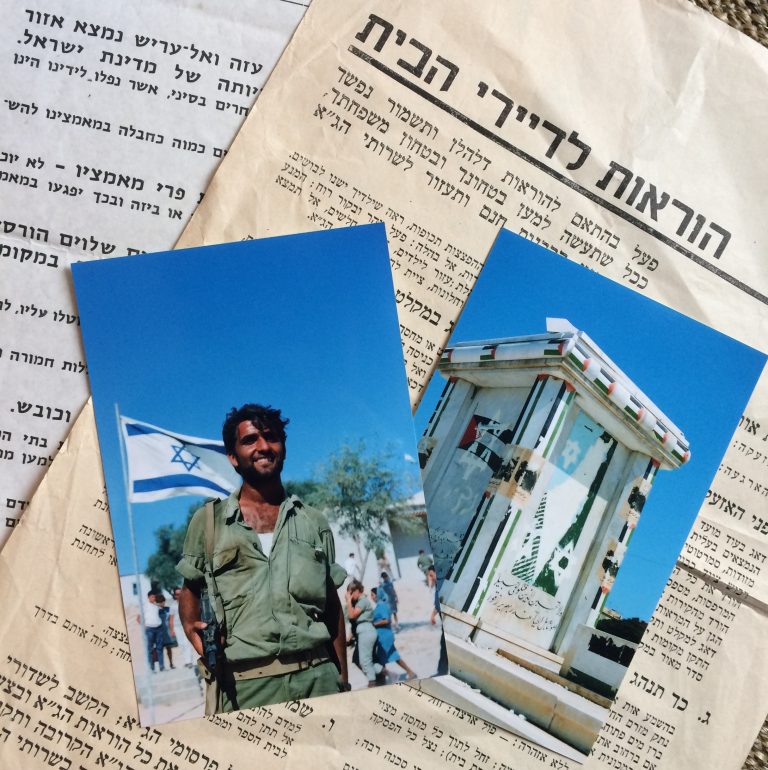
Posters from the Six Day War, explaining how to remain safe and be good citizens; the soldier shown is at El Arish, Sinai, in late June or early July 1967. (photo by Shula Klinger )

This year marks the 50th anniversary of the Six Day War. While the conflict may have only lasted a few days, its impact was tremendous. Not only did it lead to the redrawing of Israel’s borders, it sent a powerful message to the rest of the world. Within 20 years of its establishment, Israel had become a strong, united country. Israelis – and Jews around the world – were jubilant.

In addition to the Israelis who walked away from their daily lives to fight in the war, many other recruits flew in from overseas. Keeping Israel safe – and Jewish – was their only purpose.

This year, a group of young Israelis is making a documentary to explore this phenomenon. With funding from Jewish Federation of Greater Vancouver, the production team is filming veterans of the Six Day War as they recall their time at the front. Lior Noyman, who is also a photographer, is the documentary’s editor. He observes that, without fail, “every one of them remembers exactly where they were when the announcement came about the war.”

Dan Gadassi, who worked in television production for 17 years in Israel, before moving to Canada, is fascinated by the impact of the 1967 war on these individuals and their communities.

To get a full picture of what it was like in Israel as the war ended, the local group has interviewed a wide range of veterans: Sephardi and Ashkenazi, secular and religious. “A Canadian woman, a volunteer; South Africans; a former Israeli soldier who liberated the Western Wall; two people who went to Israel to fight,” said Gadassi. Most of these individuals are retired now.

The documentary is not a recapping of the military actions that brought Israel to victory. It seeks to portray the atmosphere in Israel, as experienced by individuals, through “memories, beautiful stories about what happened when it ended.” Their narratives include the story of a young woman “hearing the sirens in Jerusalem … and what it was like approaching the wall after two thousand years,” said Gadassi.

In addition to the oral histories, the film will show archival materials from the Jewish Independent and artifacts from community members. Gadassi described “beautiful old videos, amazing photos of Israel 50 years ago.”

Some of the photos to be shown in the film have only recently come to light, as older relatives have passed on. They depict scenes from the battleground at El Arish in Sinai, shortly after the war ended. Sparsely captioned, these starkly beautiful images are of desert scenes, soldiers and the debris of war. They show the tremendous relief felt by a nation, said Gadassi, “whose survival was assured.”

No war story is uncomplicated, of course, and the situation in the region remains complicated. As Noyman observed, “They thought it would be the last war.”

The filmmakers look forward to taking viewers on a visual journey back to 1967, “on an emotional level,” said Gadassi. “We want to conjure up the atmosphere of the time.” Asked to sum up that atmosphere in a few words, he said, “We are here and we are staying.”

If you have a story to share or any archival materials, contact Noyman ([email protected]), Ayelet Cohen ([email protected]) or Gadassi ([email protected]). The screening and a display will be held on June 5, 7:30 p.m., at the Jewish Community Centre of Greater Vancouver. The entire community is invited to attend.

Shula Klinger is an author, illustrator and journalist living in North Vancouver. Find out more at niftyscissors.com.

Note: This article has been edited to reflect that the screening date changed.

Format ImagePosted on April 7, 2017May 24, 2017Author Shula KlingerCategories TV & FilmTags Israel, Six Day War
Hear My Music premières

Hear My Music premières

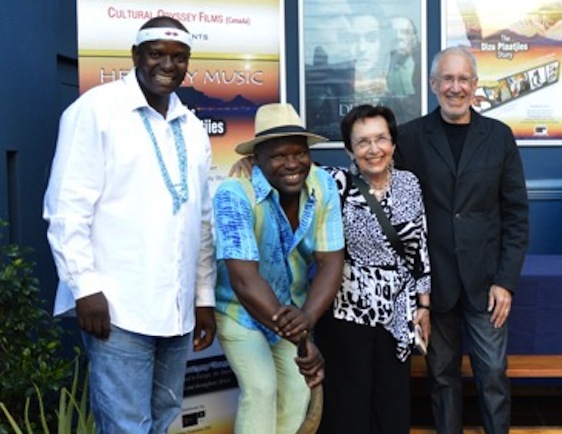
At the première of Hear My Music at Labia Theatre in Cape Town on Feb. 15, are, left to right, Ntandazo (Didi) Gcingca, associate producer, and Dizu Plaatjies, the documentary’s subject, with Wendy Bross Stuart and Ron Stuart of WRS Productions. (photo from WRS Productions)

Dizu Plaatjies is a performer, scholar and cultural activist who has devoted his adult life to indigenous African music. His journey from childhood in the Eastern Cape and Langa Township to concert stages worldwide is the compelling story that is the focus of the documentary Hear My Music: The Dizu Plaatjies Story.

photo - Dizu Plaatjies is a performer, scholar and cultural activist who has devoted his adult life to indigenous African music. His journey from childhood in the Eastern Cape and Langa Township to concert stages worldwide is the compelling story that is the focus of the documentary Hear My Music: The Dizu Plaatjies StoryCultural Odyssey Films and WRS Productions (comprised of Vancouver’s Ron Stuart and Wendy Bross Stuart) premièred the documentary on Feb. 15 at Labia Theatre in Cape Town, South Africa.

Plaatjies has a vast international following, both of overseas students at the University of Cape Town, where he teaches, and fans of his recordings and concert work. Throughout his career he has maintained a commitment to nurturing a younger generation of artists, and founded the Amampondo ensemble. Among the first African musicians to tour extensively, they became familiar to world music lovers in Europe, the Americas, the Middle East and throughout Africa. They were a personal favourite of the late Nelson Mandela and Bishop Desmond Tutu.

Plaatjies recognized the need of local musicians for access to authentic and reasonably priced indigenous instruments, and has embarked on a program of instrument-making with apprentices from the region. His love of traditional African melodies and rhythms from various cultural sources has led to significant “salvage ethnomusicology” work. Apart from his own Xhosa heritage, he has promoted the musical styles of groups throughout southern Africa.

Despite his accomplishments and wide recognition, Plaatjies remains an approachable and humble individual. He is at home teaching children in a township school, exchange students at the university, and specialists in African music. On stage, he still exudes the enthusiasm he had when busking on the streets of Cape Town as a young musician in the early 1980s.

Format ImagePosted on March 17, 2017March 14, 2017Author WRS ProductionsCategories TV & FilmTags Dizu Plaatjies, WRS Productions
Envisioning the world

Envisioning the world

Brothers Tony and Ryan Smith are in the process of bringing the feature film Volition to the screen. (photo from Smith Brothers Film Company)

Local Jewish brothers Ryan and Tony Smith have worked in the film and television industry in Vancouver for most of their careers, and their latest project, a feature film, is set to begin filming in May 2017.

“Volition is a film about a man named James, who is afflicted with clairvoyance – the ability to see snippets of his future, out of order, before they happen,” Ryan told the Independent. “James gets involved in some shady dealings, using this ability. However, he soon has a disturbing clairvoyant vision: he sees his own imminent murder. At that point, he realizes that, if he has any chance of survival, he must go on the run.”

Tony has always loved metaphysics and both brothers are fans of the cerebral science fiction genre. The inspiration for Volition came during Tony’s film school days, and returned many years later, when he was going through a period in his life where he was feeling stuck.

The idea of the observer being responsible for the existence he or she sees resonated, “so, if I see the world positively, I might see the world positively; if my thoughts are negative, I’ll see the world that way,” he said. “I started to think that, what if where I’m stuck is because of my thought process, and those thought processes are almost creating a self-fulfilling prophecy. Then I thought, what would it take to get me off my ass and try something different – that turned into the character [in Volition] seeing his own death. What if that is what it takes to finally motivate somebody to change?”

Born in South Africa, and raised for the better part of their childhood in Vancouver, Tony and Ryan were exposed to the magic of illusion at an early age. Both their father and grandfather were professional magicians in South Africa. One of Tony’s earliest memories is of his dad performing a magic trick, ending with his mother locked in a trunk.

When they moved to Vancouver in 1990, their dad continued his work as a jewelry designer but remained a part of the International Brotherhood of Magicians. Their dad is still a great storyteller, and is also a budding actor – “Our dad wants to really be cast in it [Volition], but we can’t afford him,” said Ryan.

The early exposure to magic is, as Ryan puts it, related to filmmaking in terms of “what you’re presenting, where the twist is and what the audience is watching, when.”

Oxford Dictionaries defines volition as “the faculty or power of using one’s will.” About how the film’s protagonist will employ this faculty, Tony said, “That’s what it’s all about. James doesn’t believe he has free will, because he sees pieces of his future ahead of time, and his visions always come true. He almost has an arrogance to him, in that he knows something the rest of us don’t. Through the narrative, he’s faced with the daunting task of not only trying to avoid his murder, but of attempting to undo his own belief system. He needs to believe in free will, even though his life has shown him that its existence is an illusion.”

Tony is a director, writer and editor, whose short film Reflection earned five Leo Award nominations, including for best picture and best director. Ryan is a full-time writer for television (Reboot: The Guardian Code, Mr. Young, Some Assembly Required), which has earned him two Leos.

Reflection and Volition seem to share similar themes of loss, regret, isolation, hope and the need to be understood. Tony said he and his brother like writing redemptive, honest stories. Ryan added that, underlying these two films, “there is a hopefulness of returning to a truer sense of self – the character is going through something, a struggle, and they’re hopefully getting to a place of self-understanding and growth even though it can go through some dark places.”

photo - Filming for Volition is set to begin in May
Filming for Volition is set to begin in May.

Tony will be directing Volition and Ryan will be the film’s producer; both brothers are credited as writers. When asked about the challenges of working together closely, as brothers, Tony, who is the oldest, said, “Because I came to this world first and it was my kingdom first,” he has that older brother “of course, I’m right about this thing” mentality. He said he even went so far as to coerce Ryan into signing a contract (with no expiry date) at a very young age, which states, “Ryan will shoot the scene whether he wants to or not, he won’t go crying or wimping.”

Nevertheless, as Ryan grew up, he started speaking his mind. “We have so much video evidence of the short films and the things that we’ve done through the years,” said Tony. “I found this moment when Ryan is an early teenager and he’s starting to give me lip. He’s actually on-camera starting to disagree with me!”

The brothers said they come from a relatively traditional Jewish family. Ryan attended King David in South Africa and then, on moving here, enrolled in Vancouver Talmud Torah. He said his days at these two Jewish schools and his engagement with the Torah stories “were, in a way, early touchstones for story and myth.”

For Tony, Judaism’s spiritualism and mysticism also inspire his storytelling. “I still have my first Bible,” he said.

“I love the Genesis story, I love the Noah story, and my mum, at an early age, I asked her, ‘How did the world get made in seven days?’ ‘Well it’s a metaphor,’ she said. At an early age, she was letting me in on abstract ideas and symbolism,” said Tony.

Filming for Volition is expected to begin in May, and Ryan and Tony are currently in the process of gathering the crew and auditioning for the two lead roles. Veteran Vancouver actor John Cassini has signed on for the role of the villain, Ray, a corrupt businessman, and his brother Frank Cassini will also feature. Tony and John worked on Comedy Network together, and Tony said John is “such a presence … he could read the phone book and make it interesting.” Tony also noted that John brings “an authenticity to the role – it’s not a two-dimensional villain, it’s a very textured antagonist.”

The latest casting announcement came just this past Monday, on Feb. 27. Canadian actor Bill Marchant will play, according to the film’s website, the “mentor character, Elliot Williams, a troubled psychologist with a dark secret.”

The Smith brothers are taking a unique approach to their pre-production process, documenting the journey through semi-monthly webisodes.

Volition is being produced by Smith Brothers Film Company in partnership with Paly Productions Inc., and Paly has been a “driving force behind doing this indie webisode marketing,” said Tony. The brothers, who are normally private about their creative process, liked the approach of “getting to know our audience from day one and welcom[ing] them into the process so we can build a grassroot connection with them.”

Readers can check out the webisodes and follow the brothers’ journey on volitionthemovie.com.

Alice Howell is a graduate of the University of Otago in New Zealand, with a bachelor of arts in film and media studies and a bachelor of science in psychology. She is a writer and actor based in Vancouver.

Format ImagePosted on March 3, 2017February 28, 2017Author Alice HowellCategories TV & FilmTags sci-fi, Volition
Food connects generations

Food connects generations

Ken Levitt, president of Jewish Seniors Alliance, and Leah Deslauriers, coordinator of JCC Seniors and L’Chaim Adult Day Centre. (photo by Binny Goldman)

On Jan. 25, a treat awaited all who attended the screening at the Jewish Community Centre of Greater Vancouver of filmmaker Julie Cohen’s The Sturgeon Queens, the story of New York City’s legendary fish store (and restaurant) Russ and Daughters.

The documentary was presented by the Jewish Seniors Alliance of Greater Vancouver in partnership with L’Chaim Adult Day Centre, and was the second session of the 2016/2017 JSA Snider Foundation Empowerment Series. With the theme of Nourishing Tradition: Food, the Doorway to our Culture, this year’s series is being co-hosted with the Jewish Museum and Archives of British Columbia.

JSA president Ken Levitt welcomed the crowd with a groissen dank, todah rabah, big thank you to all involved, which set the tone and taam (taste) for what was to follow. Michael Schwartz, coordinator of programs and development of the JMABC, shared the news that the museum will soon be starting a Supper Club, which will take place at the Peretz Centre for Secular Jewish Culture, where the museum resides. He noted the important role that food plays in keeping traditions alive, in passing them on to future generations.

photo - Michael Schwartz, coordinator of programs and development at the Jewish Museum and Archives of British Columbia
Michael Schwartz, coordinator of programs and development at the Jewish Museum and Archives of British Columbia. (photo by Binny Goldman)

Case in point is Russ and Daughters. Four generations have not only kept the appetizer shop alive – selling smoked fish, lox, herring and sturgeon – but grown it into a restaurant, as well. Stan Goldman introduced the film on behalf of JCC Seniors. He said it was at Russ and Daughters that he tasted smoked fish for the very first time.

According to the film, Cohen first discovered the renowned fish store in 2007. Upon realizing that “the daughters,” sisters Hattie (Russ Gold) and Anne (Russ Federman), were still alive, Cohen flew to Florida to interview them. The Sturgeon Queens is a feel-good documentary about the start of the shop, which Joel Russ founded in 1914. Russ had come to New York at age 21 and, starting in 1907, used a pushcart to sell his herring. He went on to sell the fish using a horse and wagon, before finally opening his store. He enlisted his daughters – who were in their early teens at the time – to help him. The sisters became full-time workers and eventually partners with their father in the business.

Russ’s addition of “and Daughters” to the name of the shop was unusual for those years. Ruth Bader Ginsburg (associate justice of the U.S. Supreme Court) states in the film that this move made her very happy, seeing this was an enterprise where daughters counted.

The Lower East Side, where Russ and Daughters has always been located, was the area in which immigrants arriving in New York first settled. And fish is what they ate – it was healthy and, more importantly, relatively inexpensive, as they struggled to make their way. Now, it is eaten not only because of its taste, but because it connects many to their ancestors; it is a comfort, or “emotion,” food, whose appeal goes beyond taste. Russ and Daughters customers sense this as they enter the shop, which seems to offer this same feeling.

The documentary was made to celebrate 100 years of Russ and Daughters, which survived many turbulent times, including the 1970s and 1980s, when things were most dire for them economically. The family still strives to maintain the traditions, quality and history of the shop, working to enrich the lives of their customers, who not only come to buy the food, but to linger and chat.

Nicki Russ Federman, who runs the establishment now, along with Josh Russ Tupper, said there was never anything glamourous about the store, that it was just hard work, but that Hattie and Anne had set the stage for their grandchildren to take over. Russ Federman was a health professional and Russ Tupper a lawyer, but they decided, after almost a decade away from the store, to return and make sure that Russ and Daughters continued.

Herman Vargas, who has been with the shop for almost 30 years now, is fluent in Yiddish and feels part of the family. The New Yorkers who frequent the shop also feel part of something, that they are connected to a living piece of the city’s history – some of the film is even narrated by several seniors who were gathered together by Cohen. Molly Picon, Zero Mostel and Morley Safer are just a few of the famous people who have come to the shop according to the documentary.

“It was powerful to watch the expression on my grandmother’s face as she watched the movie – she was watching her life affirmed,” says Nicki Russ Federman in the film. On Jan. 25, as the audience at the JCC watched, we, too, felt just how entwined are food, family, love and tradition.

When the JSA’s Shanie Levin thanked all those who made the screening possible, she asked if the film had been enjoyed and was greeted by a huge round of applause. Over coffee, tea and a nosh, comments overheard were “It warmed my heart!” and “It made me happy to be Jewish.”

The next session of the Empowerment Series takes place March 8, 11:30 a.m., at the Unitarian Centre and will highlight Israeli cuisine. For more information about it or the JSA, call Rita Propp at 604-732-1555, email [email protected] or visit jsalliance.org.

Binny Goldman is a member of the Jewish Seniors Alliance of Greater Vancouver board.

Format ImagePosted on February 3, 2017February 1, 2017Author Binny GoldmanCategories TV & FilmTags history, New York, seniors
Film seeking funders

Film seeking funders

A scene from the trailer for Note in the Oak.

During the summer of 2014, Vancouver-based Cornfield Media produced a short film titled Note in the Oak, starring Carmel Amit and Moshe Mastai. Now feature-length, the production is seeking funds to complete some of the Jewish heritage and culture aspects of the film.

The short Note in the Oak was the official selection at several festivals: at the Vancouver Jewish Film Festival in 2014 and, in 2016, at Roma Cinema DOC in Rome, Italy; Move Me Productions short film festival in Antwerp, Belgium; London Monthly Film Festival in England; Best International Independent Film Festival in Karlsruhe, Germany; and Reflections of Spirit International Film Festival in Erlangen, Germany.

The film’s plot was inspired by true events that took place in New Jersey in 2012. The hero is Joyce, a home-care provider. Following the death of a longtime patient, she goes on a quest to find his estranged son, Corry, to bring him to his father’s grave. The story mixes suspense, laughter, hope, heart and conflict. It also includes a slice of a Jewish culture.

During the past two years, the short has been developed into a feature film (100 minutes) and Cornfield Media is now ready to produce it this year. However, the feature script is not yet fully complete and some vital elements are still missing. This is where the producers are seeking community participation.

Cornfield Media needs help to secure some licensed Jewish artistic material – these poems and pieces of music are essential to the plot and without it, the story will be good, but missing some of the key Jewish elements it requires. Any assistance would be greatly appreciated. For more information and to contribute, visit jewcer.org/project/nito343334.

Format ImagePosted on January 13, 2017January 11, 2017Author Cornfield MediaCategories TV & FilmTags fundraising, Jewish culture, Judaism
Stories from Europe

Stories from Europe

Teaching Racism, which looks at discrimination against Roma in the Czech Republic, is one of nine videos currently comprising the Global Reporting Centre’s Strangers at Home project. (photo from strangers.globalreportingcentre.org)

Shayna Plaut has long been concerned with the plight of minorities in Europe. Her doctoral thesis focused on the Roma, and she has gone back and forth to Central and Eastern Europe to advocate for migrants, refugees and minorities since 2001. She speaks Romani fluently and, during her phone interview with the Independent, words from the Romani and other languages came out of her mouth with ease, pronounced perfectly. Plaut is clearly someone who deeply respects the details and uniqueness of different cultures.

In January 2014, Plaut began work as research and project manager on Strangers at Home, a Global Reporting Centre initiative featuring short films by a range of talented people in Europe – filmmakers, writers, cartoonists, musicians, scholars, as well as average citizens. The film project was aired at the United Nations High Commission for Human Rights in April 2016, and had its Canadian debut at Simon Fraser University Harbor Centre in September. It will screen at the main branch of the Vancouver Public Library on Nov. 19 during Media Democracy Days.

Most of the films are from the perspective of minorities – Jews, Roma, Muslims – but some are from the perspective of nativists who are acting out of fear of the increased presence of migrants and refugees. As the project website says, “Extremist voices are gaining political power, inspiring white Europeans to take to the streets to ‘claim back’ their place in Europe. As a result, millions of people in Europe are feeling like strangers at home.”

The nine videos, which can be viewed online, are rich and varied. Hate Poetry features Germans with “foreign sounding last names” reading hate mail, Queen of the Gypsies discusses how life has improved for Roma in Macedonia, Fascist Logic details the fear of immigrants felt by an Italian national, Teaching Racism looks at the discrimination against Roma in the schools of Czech Republic, Exceptionally Greek looks at the struggles of migrants in Greece, Hatschi Bratschi features a racist children’s book that continues to be a bestseller in Austria and Defending Russia presents the perspective of a paramilitary warrior in training to protect what he considers traditional Russian values.

Two videos deal specifically with Jews in Europe: Chasing Ghosts, by a non-Jewish cartoonist, examines the antisemitism present in Serbia despite the virtual absence of Jews, and Breaking the Silence looks at what the filmmaker sees as a conspiracy of silence about rampant antisemitism in Malmo, Sweden.

“We asked them, ‘What do you want people in North America to know about what’s happening in your country?” explained Plaut. “News coverage here can be sensationalistic, or overly simplistic. We wanted to hear from the people themselves, their stories. The way to do this is not to send another American journalist but rather to solicit the stories from the storytellers themselves.”

In Plaut’s view, the media jumps too quickly to simplistic narratives like “it’s 1938 again,” or lumps different countries with different problems together too quickly.

“Take Greece, for example,” she said. “The media is often quick to associate the rise of the right-wing with austerity, but we found Greek xenophobia to have more to do with deep cultural ideas about fears of impurity. When countries are portrayed in caricatures, that’s how they are engaged with. If diagnosis is incorrect, then the solution will be incorrect.”

Of the pieces that present the perspectives of nationalists themselves, Plaut said she was torn over whether to pay nationalists to present their views, but decided that, ultimately, it is important to hear their stories and understand where they are coming from as human beings as well.

“We can’t just write people off and say they are crazy,” she said. “People need to hear and understand that story, too. We can’t just shut off stories we don’t like.”

While the Strangers at Home project currently consists of nine pieces 60 to 90 seconds long, Plaut would like to see it expanded into 10-to-15-minute films comprising a feature-length documentary to go on the festival circuit, as well as being used online as an educational tool. Fundraising efforts are underway. For more information and to watch the videos, visit strangers.globalreportingcentre.org.

Matthew Gindin is a freelance journalist, writer and lecturer. He writes regularly for the Forward and All That Is Interesting, and has been published in Religion Dispatches, Situate Magazine, Tikkun and elsewhere. He can be found on Medium and Twitter.

Format ImagePosted on November 4, 2016November 3, 2016Author Matthew GindinCategories TV & FilmTags antisemitism, Europe, media, racism
Becoming who we are

Becoming who we are

One of the best parts of Moos, which screens Nov. 10 as part of the Vancouver Jewish Film Festival, is the friendship between Moos (Jip Smit) and Roel (Jim Deddes). (photo by Greetje Mulder)

Moos is a delightful and unpretentious film. The title character is a truly nice person, so busy taking care of others that, not only do her dreams fade into the background, but she does. When a close family friend toasts everyone at the Chanukah dinner table but forgets Moos, she drops her news – she’s going to audition for theatre school.

In this light and uplifting Dutch contribution to the Vancouver Jewish Film Festival, which runs to Nov. 13, no one believes that Moos has the talent or confidence to pass the auditions and, well, she doesn’t, but her attempt starts her on a path of self-discovery and self-assertion. On their own personal journeys are Moos’ father, who must also become more independent and move through the loss of his wife, and Sam, a childhood friend of Moos who returns from 15 years in Israel for a visit and discovers that maybe he belongs in Amsterdam.

“I wanted to make a film about ordinary people in a world where beauty and appearance are everything,” writes director Job Gosschalk. “Not a glamorous romantic comedy but a film about two people who were not first in line when they were handing out good looks. There are enough stories about heroes. This would be a small story about daily troubles. I wanted to give the audience characters they could easily identify with.”

Sam, Moos and the other characters do seem like people viewers might actually know. And, while as predictable as most rom-coms, Moos has its own sense of humor and style. In addition to telling a good story, the film reinforces the importance of trying something (more than once) and of supporting (and being supported by) your family and friends – one of the best parts of the film is the friendship between Moos and Roel, who does get into theatre school. The value of tradition and ritual also play a large part in the film, which starts on Chanukah and features a bris and a bar mitzvah – for different boys. Moos is a really enjoyable hour and a half.

In the documentary realm, Mr. Gaga is a joy to watch if you’re a fan of contemporary dance. Full of excerpts from his masterful choreographic creations, the film also features many video clips of Ohad Naharin – as a boy dancing, as a young man trying out moves in his apartment, as a student, as a performer and as a teacher.

Naharin has been artistic director of Israel’s Batsheva Dance Company since 1990 and is the founder of his own language of movement, Gaga. His brilliance is evident from his work and, while Mr. Gaga, oddly enough, doesn’t tell viewers much about Gaga, it does offer a meaningful introduction to Naharin, his career path, relationships, method of work, love of dance.

“Dance started in my life as long as I remember myself,” he says. But, when asked by a reporter why he dances, instead of simply saying, there is “no one clear answer,” as he does in the documentary, he makes up a fantastical story about a tragedy involving a fictional twin brother and a grandmother dying in a car accident. It would be an understatement to say that Naharin has an active imagination and the courage to use it.

Naharin only started formal dance training at 22, and he credits his late start as a reason for his success: “… I was a lot more connected to the animal that I am.” A dance teacher notes, “what he did was different.” It certainly was – and is. Mr. Gaga shows just how creative and exacting a person Naharin is, some of the challenges he has faced, the losses he has mourned, the temper he has tried to quell, and his efforts to become a better communicator and teacher. As we all are, Naharin is a work in progress.

Another documentary in the festival is a local community project: A Life Sung Yiddishly about singer Claire Klein Osipov, made by Haya Newman. For viewers unfamiliar with Osipov and her accomplished lifetime career performing Yiddish folksongs – for the most part with pianist and composer/arranger Wendy Bross Stuart – the film touches on some highlights and serves as an important video record.

For the full festival lineup, visit vjff.org.

Format ImagePosted on November 4, 2016November 3, 2016Author Cynthia RamsayCategories TV & FilmTags dance, film festival, Gaga, romantic comedies
Festival highlights diversity

Festival highlights diversity

Chef Michael Solomonov samples the wonders of the Levinsky Market in Tel Aviv. (photo from israelicuisinefilm.com)

The 28th Vancouver Jewish Film Festival starts next week. New this year is an all-ages weekend of films at Rothstein Theatre, which follows the Nov. 3-10 festival screenings at Fifth Avenue Cinemas. Not new is the diverse selection of thought-provoking offerings.

With the festival opener, In Search of Israeli Cuisine, foodies will get their fix and then some. Guided by Michael Solomonov, the chef-owner of Philadelphia’s Zahav restaurant, the viewer is taken on a global food tour all within the confines of the tiny state of Israel.

Is there even an Israeli cuisine, the film asks. Yes, says food writer Janna Gur. “It’s perhaps a nascent cuisine, a baby cuisine, but a very precocious baby,” she says.

Israeli cuisine, Solomonov says, is made up of “traditions that were brought here and also that were born here.” He asks one market vendor how long he has had a spice shop. The reply: “Four hundred years.”

The food of Israel mirrors the history of the country, particularly its economy. In the years after independence, cuisine was defined by economical, modest recipes that incorporated the agricultural resources of the new state. In the 1980s, when the economy boomed, Israelis traveled more and wanted at home the kinds of flavors they found abroad.

Philosophically, Israeli food developed alongside the new identity the people were creating for themselves and their country. People were ashamed of the past and embarrassed by the foods of their parents. Israel’s “new Jew” was supposed to leave sad history behind and create a new post-galut civilization.

“In Israel, when you say Polish cooking, it’s another way of saying bland, boring, guilt-ridden kind of food,” says Gur.

Yet, the effort to abandon the past was both successful and, thankfully, unsuccessful. Tradition, in fact, integrates change through adaptive cookery. The centrality of Shabbat has defined Jewish and, therefore, Israeli cuisine, because of the necessity of developing recipes that can cook slowly for up to 16 hours. And, even though most Israelis are not religiously observant, Shabbat can still be a sacred family experience. One person explains that watching American TV, where families gather twice a year for Thanksgiving and Christmas, seems foreign, because every Jewish mother wants her daughters and sons with her every Shabbat.

Also unlike in most of North America, the film illustrates mouth-wateringly that a vegetarian in Israel can eat like royalty with endless options.

Politics also intervenes. During the Oslo peace process, Palestinian restaurants flourished in Israel. “Food makes peace,” says an Arab-Israeli chef. But there are also accusations of cultural appropriation.

“They often accuse us of stealing it,” chef Erez Komarovsky says of Israeli cuisine. But food knows no borders, he contends. “Food is not political. Food is what is grown on this land by the people who are living in it. If they are called Palestinians or Israelis, I don’t care. I don’t think the tomato cares.”

“Israeli salad is actually Arabic salad,” Gur admits. “What makes it Israeli is the way we use it.” That means eating it three meals a day and, for instance, stuffing it in pita with schnitzel.

The evidence about what defines Israeli cuisine is not entirely conclusive. Though Komarovsky claims to know.

“The essence of the Israeli taste is lemon juice, olive oil and the liquids from the vegetables,” he says. “And this is the taste that you miss after two or three days when you go abroad.”

– PJ

Liberation after the Holocaust was not unalloyed joy. It was complex, emotional terrain that involved coming to terms with the reality of the extent of the destruction of European Jewish civilization, individual family members and entire communities. This mix of emotions is clearly shown in Magnus Gertten’s documentary Every Face Has a Name.

photo - Hinda Jakubowicz stepping off the ferry in Malmö on April 28, 1945
Hinda Jakubowicz stepping off the ferry in Malmö on April 28, 1945. (photo from everyfacehasaname.com)

Gertten took a film that was shot of arrivals to Malmo, Sweden, on April 28, 1945, and obtained the list of 1,948 passengers who arrived that day. Then he set out to put names to faces.

Elsie Ragusin was an Italian-American New York girl visiting her grandparents in Italy when the war began and they could not return home. When the Nazis occupied Italy, she and her father were arrested as spies and she became, as she says, the only American girl in Auschwitz.

She looks at her face on the film and says: “There, I’m thinking: ‘Can this be true?’” The smiling people handing out food seemed unreal to her. No one had smiled at them in the camps.

Gertten, a Swede, was moved to make the film when he saw parallels with the faces in footage of refugees arriving in Europe today. “Who are they?” he asks.

Fredzia Marmur, now of Toronto, sees herself on film, at age 9, wearing the same cloth coat she wore when her family left the Lodz ghetto. “There I am again,” she says of a little girl beaming into the camera.

The other women in the screen were together with her in Ravensbruck and, while Marmur admits she didn’t know what was happening, she took a cue from those around her. “I saw that everybody seemed happy, so I decided to be happy too,” she says.

Siblings Bernhard Kempler and Anita Lobel, 8 and 10 in 1995, try to reconstruct their thoughts at the time. Bernhard survived dressed as a girl and the pair stuck together, avoiding all others through their time in hiding and at Ravensbruck.

“It looks to me like I’m somewhere between happy and frightened,” says Bernhard. “A mixture of hope, a mixture of relief, a mixture of ‘Can I trust this?’ and some fear.”

He recalls his reunion with his parents. He was in hospital and the staff gathered around to watch what they expected to be a joyful scene. It wasn’t. His response, he recalls of meeting his parents after years of separation was, “Who are these people?” He suspects his parents wondered, “Who is this child?”

“I didn’t know who I was for a long time after that,” he says.

The film intersperses images from 1945 with those of present-day refugees arriving (some alive, some dead) in Sicily. A small but disturbing 1945 scene is ostensibly happy – women receiving clothes in Sweden – but the camera shows their nakedness, as if, even on liberation, their right to privacy was not granted.

People couldn’t always tell who they were seeing in the film. Judith Popinsky recognized four of the five young women who formed her surrogate family in Auschwitz after their families were murdered on arrival there. Only after some self-convincing did she determine that the fifth woman must be her.

“You encountered so many nameless faces throughout that period in time,” she says. “No one remembers them anymore. They lived anonymously. They were buried anonymously. At least now some of them have their names restored.”

– PJ

In One Rock Three Religions, the rock in question represents the city of Jerusalem. The Temple Mount – which Muslims call Haram al-Sharif – is the literal rock, where the two historical Jewish temples existed and where al-Aqsa Mosque and the Dome of the Rock now stand. The film captures the glory of diversity and the tragedy of division that coexist in the holy city.

photo - Dome of the Rock is indivisible from a human – versus political – perspective
Dome of the Rock is indivisible from a human – versus political – perspective. (photo from facebook.com/onerockthreereligions)

Divisibility in a political sense has been mooted several times. The 1947 Partition Resolution saw a Jerusalem under international governance. The city was divided, from 1948 until 1967, with East Jerusalem under Jordanian occupation and West Jerusalem in Israel. However, Kanan Makiya, author of The Rock, insists that, from a human standpoint, it cannot be separated. “How do you cut a rock?” he asks. “Jerusalem belongs to more than one faith. No one person, no one faith can claim it.”

When the Temple Mount was captured by Israel in the 1967 war, some soldiers raised an Israeli flag over the Dome of the Rock. Gen. Moshe Dayan ordered it taken down and handed the keys to the Wakf, the Muslim religious authority. This was both a symbolic and a practical decision, particularly in contrast with the exclusion experienced from 1948 to 1967, when Jews were forbidden from the holiest Jewish sites.

The documentary focuses on the contending claims and assertions of rights. The founder of the Muslim Public Affairs Council says he has not seen Jerusalem because he will not stop at checkpoints and be searched “by soldiers that I consider occupiers.”

Some religious Jews say that, because the Temple existed where al-Aqsa Mosque now stands, they should be able to pray there as well as at the Western Wall. A Palestinian diplomat calls this a provocation.

Former Israeli diplomat Dore Gold contends that Palestinian and other Arab leaders frequently incite their followers with allegations that Israel is attempting to undermine or destroy the mosque and its environs. And the film features the Palestinian ambassador to the United Nations repeating the incendiary falsehood that the Jews are trying to build the Third Temple in the place of the Dome of the Rock. Some Muslims are quoted denying any Jewish connection to the location.

This sort of denial, recently codified by UNESCO in a resolution that erases Jewish and Christian historical ties to the holy site, is evidence that strength through diversity in a place of such importance is often more wishful thinking than reality.

– PJ

photo - AKA Nadia is far more complex and compelling than you might first assume
AKA Nadia is far more complex and compelling than you might first assume. (photo from 2teamproductions.com)

When you read the sentence-long review of AKA Nadia on some sites – “A happily married mother of two seems to have the perfect life, until her hidden past comes to light” – you make a few assumptions. Namely, that the two-hour film is a fairly fast-moving tale of deception and drama. The opening scenes, in which a host of events happens, back this up: lively protagonist Nadia (Netta Shpigelman), a young Arab girl, graduates school in Jerusalem and secretly marries her lover, a PLO activist; they move to England where, fairly quickly, he’s caught by the authorities and she’s left alone, branded a terrorist and with no easy way of returning to Israel.

It’s not until half an hour in that the movie reveals its style – thoughtful and slow-moving, far more complex and compelling than you might first assume. When we were first introduced to Nadia, it was in East Jerusalem in 1987. We’re now reacquainted with her 20 years later, in the city’s west. Having fled England, thanks to a young Jewish woman’s passport, she’s completely (and secretly) rebuilt her life, as a Jew called Maya. And this is where the movie focuses the bulk of its time, perhaps too much time, on her new roles: successful dance choreographer, mother of two and wife to a Jewish official at the Ministry of Justice.

It’s only to be expected that this pleasant middle-class family life shatters when her past catches up with her. And every aspect of the subsequent relationship breakdown is well-acted and artistically produced. You feel for both husband and wife, and of, course, you’re forced to think of the bigger picture, too – religious identity in Israel and the ramifications of being Jewish versus Arab. Even after the movie ends – which it does a little abruptly – you’ll be left contemplating these issues for days.

– RS

My Home doesn’t shy away from its aim: showing how much minorities in Israel are typecast. It starts by stating that minorities (mostly Muslims, Christians, Bedouins and Druze) make up 20% of the population, but are often viewed by the outside world as all being Arabs who resent the Israeli “occupation” and the Jewish “apartheid state.” To show this is far from the case, the documentary follows the work of four people, one from each of the minority groups listed above.

photo - A scene from My Home, in which Muhamed Kabiya undergoes an ID check in Jerusalem
A scene from My Home, in which Muhamed Kabiya undergoes an ID check in Jerusalem. (photo from ruthfilms.com)

The result is a slightly disjointed, but incredibly interesting portrayal of people who are all different, but united in their bravery. There’s a Greek Orthodox priest and a Lebanese Christian, both promoting integration by “others” into Israeli society. But the two people who really resonate are Wafa Hussein, a Muslim Zionist and school teacher preaching acceptance of all ethnicities, and Mohammad Ka’abiya, an Israeli Bedouin who prepares Bedouin teenagers in his village for Israel Defence Forces service, having served himself.

The latter two have been labeled traitors by their communities because of their activism, but persist in striving for coexistence. And this is an aspect of the documentary that must be applauded – there is no sugar-coating the discrimination minorities face: “as an Arab, you wake up in the morning and tell yourself, ‘I have a lot to deal with today.’” But, the film ultimately is a heartening look at the complexities, both good and bad, of calling Israel “home.”

– RS

For tickets to the festival, visit vjff.org or call 604-266-0245.

Rebecca Shapiro is associate editor of vivalifestyleandtravel.com, a travel blogger at thethoughtfultraveller.com and a freelance journalist published in Elle Canada, the Guardian, the Huffington Post and more.

Format ImagePosted on October 28, 2016October 27, 2016Author Pat Johnson and Rebecca ShapiroCategories TV & FilmTags food, Holocaust, Israel

Posts pagination

Previous page Page 1 … Page 16 Page 17 Page 18 … Page 24 Next page
Proudly powered by WordPress