Reading expands experience

Letters that highlight friendship, writing that facilitates healing, stories that dissect societal mores – the books reviewed by the Jewish Independent this week represent only a small fraction of those featured at the Cherie Smith JCC Jewish Book Festival this year.

While the official festival runs Feb. 11-16, opening with Dr. Gabor Maté in conversation with Marsha Lederman about his latest book, The Myth of Normal: Trauma, Illness & Healing in a Toxic Culture, there are a couple of pre-festival events this month: German writer Max Czollek launches the English version of his book De-Integrate! A Jewish Survival Guide for the 21st Century on Jan. 19 and American-Israeli photographer Jason Langer presents his book Berlin: A Jewish Ode to the Metropolis on Jan. 26. As well, there is a post-festival event, on Feb. 28, which sees former federal cabinet minister and senator Jack Austin launching his memoir, Unlikely Insider: A West Coast Advocate in Ottawa.

If the books reviewed by the Independent are any indication, attendees of the festival can expect to have their views challenged and their perspectives broadened; they will be moved, disturbed and amused, sometimes all at once.

Intimate portraits

Two years ago, the JCC Jewish Book Festival featured the book Memories of Jewish Poland: The 1932 Photographs of Nachum Tim Gidal (jewishindependent.ca/gidals-photos-speak-volumes). It was the fulfilment of a dying request that Israeli photographer Tim Gidal made in 1996 to Vancouver scholar, writer and philanthropist Yosef Wosk. The book was released at the same time that an exhibit of its photos was mounted at the Zack Gallery (jewishindependent.ca/jewish-poland-in-1932).

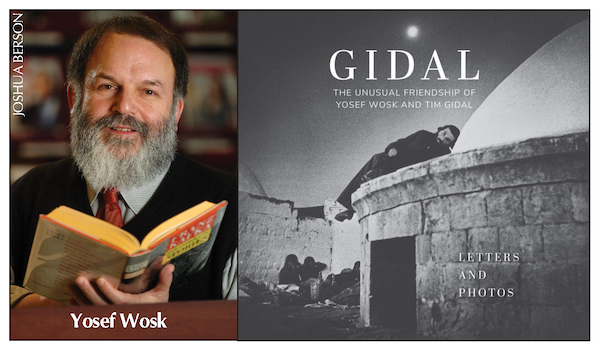
The friendship between Wosk and Gidal was evident in that book and in the exhibit. How the two men – separated in age by some 40 years and in geography by almost 11,000 kilometres – became such good friends is the subject of Gidal: The Unusual Friendship of Yosef Wosk and Tim Gidal, written by Wosk (and, technically, Gidal) and edited by another of Wosk’s good friends, Alan Twigg.
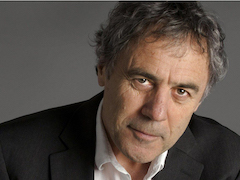
photo - Alan Twigg
Alan Twigg (PR photo)

The bulk of Gidal is letters that Gidal and Wosk wrote to each other from 1993, soon after they met, through to Gidal’s death in 1996. The postscript is a letter from Wosk to Gidal’s wife, Pia, mourning Gidal’s death and hoping that “his work and vision continue to inspire others.” Twigg has masterfully edited the multi-year correspondence, which comprised hundreds of letters, into an engaging narrative that offers insight into the core of these undeniably brilliant men, their work, ideas, loves, frustrations, sadnesses and more. Their vulnerability makes this a brave publication for Wosk to have created, and a meaningful one.

The other main component of Gidal is, of course, Gidal’s photographs, which, Wosk writes in the afterword, “serve as background to the letters.” As he did with Memories of Jewish Poland, Wosk mostly lets the photographs speak for themselves. Each photo section has a theme but each image within the section is simply captioned, placed and dated, without commentary.

There is a short chapter on Gidal and one on his and Wosk’s friendship and how this book came about. Gidal is creatively and esthetically put together. Each letter is headed by a key quote from the missive and the date it was sent. Images are included of some of the actual letters, most of which were sent by fax. It is interesting to contemplate whether this fount of communication would exist if it had been made via email.

Wosk and Twigg will talk about Gidal on Feb. 14, 7 p.m., at the book festival. The event is free of charge.

 Therapeutic memoirs

Paired together for a presentation are Margot Fedoruk and Tamar Glouberman. The program categorizes them as “modern-day women” who will be presenting their “offbeat memoirs,” summarized by the question, “How B.C. is that?” Indeed, both Fedoruk and Glouberman tell coming-of-age stories of a sort, Fedoruk’s beginning in her 20s and Glouberman’s in her 30s. And they both lead outdoorsy, independent lives that could be described as the B.C. ideal, yet both have also faced many challenges and darker sides of that ideal.

Fedoruk is the author of Cooking Tips for Desperate Fishwives, in which she openly shares her anxieties of being married to a West Coast sea urchin diver – she is lonely without him, must raise their two daughters mostly without him and is worried that an accident may result in her having to live without him. Yet, she loves Rick, even though she does try (unsuccessfully) to convince him to take up another profession and stay closer to home. The pair moves around a lot, and Fedoruk herself takes up many different jobs over the years to make ends meet. But they stick together, getting married after their daughters are all grown up and have left home.
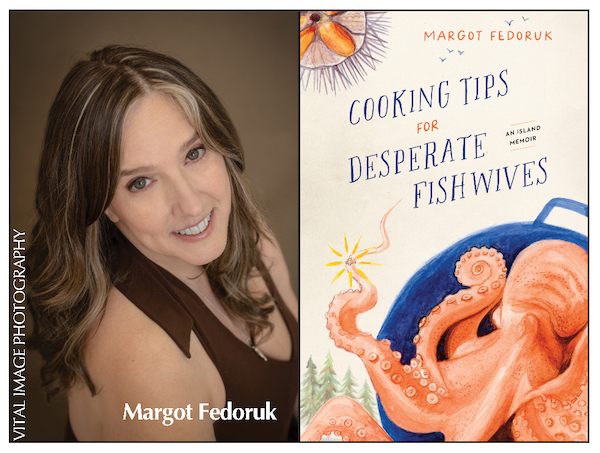
images - Margot Fedoruk and Cooking Tips for Desperate Fishwives coverAs dysfunctional as their relationship appears at times, Fedoruk had a more challenging life before she met Rick. Her father is a horrible man, her mother dies of cancer and she and her sister lose the family home to her mother’s second husband, also a horrible man. And there’s more. It is no wonder she leaves Winnipeg, eventually settling in British Columbia, though settling may be too strong a word, as she and her family do live in several different places on the coast, with some time in Calgary.

What makes Fedoruk’s memoir unique is the inclusion of a recipe in almost every chapter that reflects the mood or subject matter of the chapter, like the Killer Lasagne in the introduction, which begins, “The night I ran over Rick with my car, I was over four months pregnant with our first daughter.” Other recipes include Easy Curried Chickpeas With Rice, which appears as an affordable comfort food in a chapter about her being exhausted, on her own, caring for her two then-young daughters; and Wild-crafted Stinging Nettle Pesto, which comes after one of her descriptions of the soaps she makes – her business is Starfish Soap Company.

Near the end of her memoir, Fedoruk mentions that she has started therapy. I would have liked her to have written this book further into that process. As honest as she is about her feelings and circumstances, the memoir would have been more layered and impactful had she been further along in understanding how her traumatic childhood experiences, her genes and other factors affect how she moves through the world.

Glouberman has a less tragic background but a similarly transient life – and also loves something that gives her both great joy and great anxiety, the latter of which eventually takes over. In Chasing Rivers: A Whitewater Life, she shares her emotional journey of trying to make a life as a whitewater rafting guide.
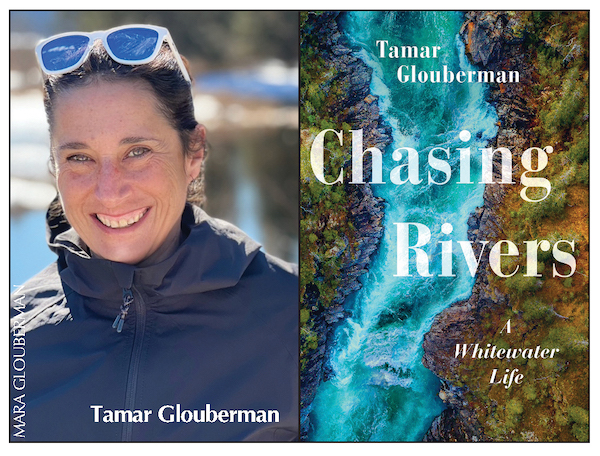
images - Tamar Glouberman is the author of Chasing Rivers: A Whitewater LifeOne of the few women to guide tours, Glouberman does face sexism, her skills often underestimated by clients, but her male bosses and colleagues all seem to appreciate her abilities – certainly more than she does. She is constantly worried about making a mistake that will kill her or someone else and, while this is rational, given her job and its risks, the feeling becomes overwhelming. With an accident on the road – there is a lot of travel required to get to places like Chilko River, Williams Lake and further afield, outside the province – and her worst nightmare coming true on a rafting trip, Glouberman’s fears have very real incidents on which to grow.

Glouberman tries other types of work, but is always drawn back to the water. She struggles with depression and has a few other harsh experiences that add to her self-doubt. She tries various forms of therapy, some of which make her feel worse. Her family is supportive, though, and her sister’s home in Whistler is a refuge. She is only beginning her journey to healing when the memoir ends, and part of that has to do with getting into a master’s writing program. Both she and Fedoruk, who also went back to university for a writing degree, thank several people for their memoirs coming to fruition.

Glouberman and Fedoruk present at the book festival Feb. 12, 2 p.m. (tickets are $18). They also speak at Congregation Har El that day, at 11 a.m.

The price of victory

The harm inflicted on a society by war culture is front and centre in Israeli writer Yishai Sarid’s book Victorious. The main character, Abigail, is a military psychologist who, basically, tries to make soldiers into better killers, both “helping” them through trauma after they’ve experienced it and teaching them ways to be immune to trauma so that they can “beat the enemy.” Her father, who strongly disapproves of her work with the army, is a renowned clinical psychologist. On more than one occasion, he tries to talk her out of working for the military, but does not succeed. That the character of the father is dying of cancer is not coincidental.
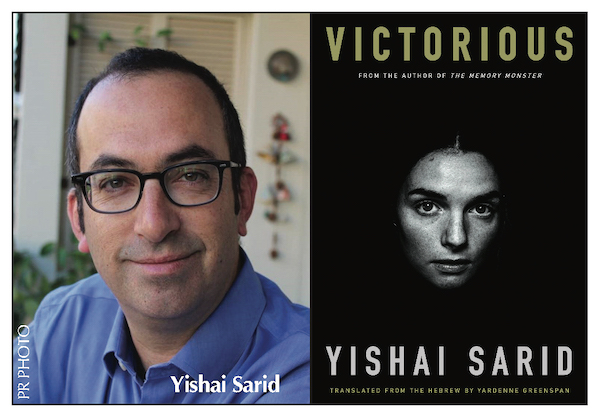
images - Yishai Sarid and Victorious book coverAbigail blurs professional lines everywhere, working for the married man who fathered her son, the man who is now the army’s chief of staff; sleeping with a patient/friend; trying to become close friends with a former patient; and having a sexual relationship with one of the young soldiers whose unit she’s evaluating. The lessons she teaches are chilling, as is her abandonment of a patient who becomes too difficult for her to handle and some of her other actions.

She believes her job is her patriotic duty, even as her own son, Shauli, enters military service, in the paratroopers no less, and her fears for him fight with her pride in his choice. Though, with both his father and mother being staunch militarists, it could be argued that Shauli doesn’t really have a choice.

Victorious is a sparingly written novel that readers will not only ponder but feel well after they put it down. Translator Yardenne Greenspan must be given credit for making Sarid’s words as impactful in English as they are in Hebrew.

Sarid’s book festival event is Feb. 12, at 8 p.m. Tickets are $18.

For the full author lineup and to purchase festival tickets or passes, visit jccgv.com/jewish-book-festival or call 604-257-5111.
Controversy welcome

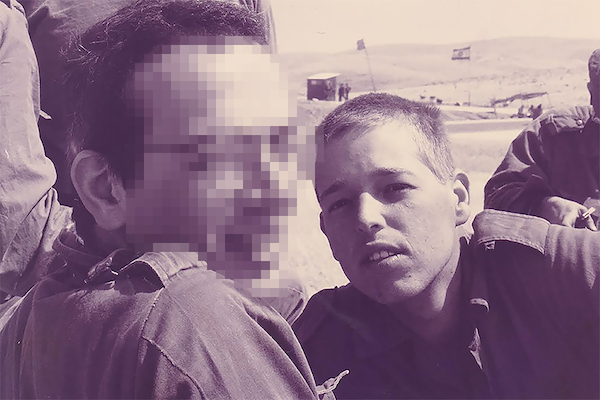
Soldiers of Tomorrow, about Itai Erdal’s experiences in the Israeli army, is at the Roundhouse Feb. 3-5. (photo from the Elbow Theatre)

“I know that this play will piss off a lot of people on both sides of the conflict, but I welcome the controversy. I am taking some strong stances and talking about some explosive subject matters (pun intended) so, if it wasn’t going to piss people off, then I probably didn’t do my job properly,” Itai Erdal told the Independent. “I think it’s good to challenge people and I welcome the discussion that this play will generate.”

Erdal was talking about Soldiers of Tomorrow, which he wrote with Colleen Murphy. The play is part of this year’s PuSh International Performing Arts Festival, and sees its world première Feb. 3-5 at Roundhouse Performance Centre.

Presented by the Elbow Theatre and PuSh, Soldiers of Tomorrow is directed by Anita Rochon and performed by Erdal with Syrian musician Emad Armoush.

“When I was a kid growing up in Israel, peace seemed inevitable – it was just a matter of time, there were countless songs about the day peace will arrive. The adults would always say, ‘By the time you grow up, we won’t need an army anymore.’ No one says that today,” writes Erdal on his website. “Most Israelis accept that their children will be soldiers. One day, when my nephew was 8, he came home from school with an empty box to fill with stuff to send to soldiers on the front line. Inside the box his teacher had written: ‘To the soldiers of today from the soldiers of tomorrow.’”

This experience inspired the play. While fictional, it is about real events that happened to Erdal during his time in the Israel Defence Forces in the early 1990s.

“I served in the army for three years and as a combatant soldier,” said Erdal. “I would have had to be in the reserves until the age of 45, which I didn’t want to do. I was in Jerusalem during all the suicide bombings in the ’90s and my reluctance to continue to be a soldier and my exhaustion of the political situation definitely contributed to my decision to immigrate to Vancouver.”

Erdal has made his mark here in many ways, including as an award-winning playwright, performer and lighting designer. He created the Elbow Theatre in 2012 “to confront urgent social and political issues.” Soldiers of Tomorrow is its sixth production. The PR blurb notes that, in it, Erdal “relates his actions in the army, exploring his personal culpability in the face of complex geopolitical forces in his former country – a place that he loves ‘with a broken heart.’”

“I pitched the idea for this play to Colleen Murphy in 2018 when we were working together in Stratford,” Erdal told the Independent. “We met a few times that year, but it really took off when the pandemic started. For almost two years, Colleen and I would meet on Zoom every Monday and Thursday for two hours. It was really great to have a project during the lockdown, it kept me sane.”

Although it is a one-man play, Armoush will also be on stage with Erdal, performing the music live. As to how he connected with Armoush, Erdal said, “I was looking for a Palestinian musician but there aren’t many of them in Vancouver and Emad was highly recommended by my Israeli musician friends.”

About the timing, Erdal explained, “During my lifetime, the situation for Palestinians has only gotten worse, it never gets better. Israel recently formed the most extreme right-wing government in its history, with several openly racist and homophobic ministers. Many Israelis and Palestinians are bracing themselves for the worst. Unfortunately, this play is more relevant than ever.”

He is not concerned about how Jews in general or Israelis specifically will be perceived by non-Jewish people who see the play.

“I am a very proud Jew and, even though I criticize the state of Israel, I do so because I love it, and I think that love is clear in the play,” said Erdal, who shared the following quote from the play: “I am aware that this is a topic that intimidates many Canadians. I’ve seen the glazed look in your eyes. I’ve had many people ask me to explain the conflict to them and, after one minute, they are searching for the exit. I’ve also seen many people twist themselves into pretzels in order not to take sides because they were concerned about appearing antisemitic. I hope by the time you leave here, you’ll be able to criticize Israel without worrying about appearing antisemitic.”

Soldiers of Tomorrow is at the Roundhouse Feb. 3-4, 7:30 p.m., and Feb. 5, 2 p.m., with a post-show talkback after the Feb. 4 performance. The show is 75 minutes long, with no intermission. Tickets ($34) can be purchased at pushfestival.ca.

The PuSh International Performing Arts Festival runs Jan. 19-Feb. 5. It features 20 original works – theatre, dance, music, multimedia and circus – from 12 countries and includes six world premières, one North American debut, six Canadian and two Western Canadian openings and one Vancouver première. Single tickets start at $34 in-person, $25 online, plus there are pay-what-you-can and free events; passes, which offer a discount and other perks, are available for both in-person and digital shows. Visit pushfestival.ca or call 604-449-6000.

Sacre premières here

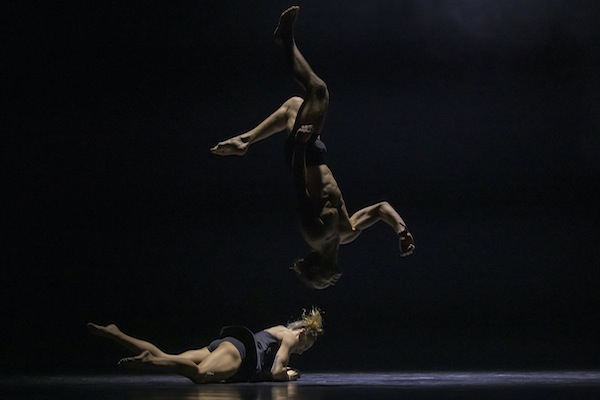
Circa’s Sacre is an exploration of humanity’s interconnectivity, our inherent sexual desire and our complex relationship with divinity. (photo by Pedro Greig)

DanceHouse and the Cultch present the Canadian première of Circa’s acrobatic Sacre, on stage Jan. 17-21, 8 p.m., at the Vancouver Playhouse. Directed by Jewish community member Yaron Lifschitz, artistic director and chief executive officer of Circa, Sacre is an exploration of humanity’s interconnectivity, our inherent sexual desire and our complex relationship with divinity. Inspired by Igor Stravinsky’s seminal production The Rite of Spring, the full-length work from Australia’s leading contemporary circus company is a blend of balletic lines and athletic feats, infused with pulsating and dissonant elements of a reimagined Stravinsky score.

“This is a work of powerful juxtapositions, blending the sacred with the profane; the ethereal with the visceral. On one level, Sacre is a work of mesmerizing beauty, drawing on the lyrical movement of contemporary dance and the intense physicality of the circus arts,” said Jim Smith, artistic and executive director of DanceHouse. “At the same time, the work offers a raw and bracing social commentary, drawing upon the ancient pagan traditions referenced within Stravinsky’s transgressive work – in which a virginal young woman dances herself to death. This offers an intriguing and gritty contrast to the pure spectacle of the performance, and invites reflection on the nature of humanity’s responsibility toward one another in a world on the brink of disaster.”

Stravinsky’s The Rite of Spring was so scandalous that it incited a riot at its Parisian première in 1913. Despite – and partly because of – this incendiary start, the work is now considered one of the most impactful compositions of the 20th century. Circa’s new interpretation of the haunting work premièred in January 2021 at the Illawarra Performing Arts Centre in Wollongong, Australia. Sacre features 10 acrobats interwoven in ceaseless motion, as they deftly move in and out of technically complex grouping structures, lifts, tumbles and leaps.

Set to a pounding musical score by Philippe Bachman, full of fast-paced tempo and mood changes, and echoed by a lighting design by Veronique Benett that moves through intense flashes of light and darkness to dim lighting that slowly brightens, the work methodically builds into a crescendo with heart-pumping intensity.

Circa’s Lifschitz is a graduate of the University of New South Wales, University of Queensland and National Institute of Dramatic Arts (NIDA), where he was the youngest director ever accepted into its graduate director’s course. Since graduating, Lifschitz has directed more than 60 productions throughout his career, including opera, theatre, physical theatre and circus. He was founding artistic director of the Australian Museum’s theatre unit and head tutor in directing at Australian Theatre for Young People, and has been a regular guest tutor in directing at NIDA. He was creative director of Festival 2018: the arts and cultural program of the 21st Commonwealth Games.

Lifschitz has served as artistic director and CEO of Circa, based in Brisbane, since 2004. The company has performed in more than 40 countries across six continents to more than 1.5 million people. Circa has presented at major festivals and venues around the world, including Brooklyn Academy of Music, the Barbican Centre, les Nuits de Fourvière and Chamäleon Theatre Berlin.

For tickets and further information about Sacre, visit dancehouse.ca.

Courtesy DanceHouse and the Cultch

Opening gates of kabbalah

Rabbi Matthew Ponak recently released his latest book, Embodied Kabbalah: Jewish Mysticism for All People. (photo by Marilyn Wolovick)

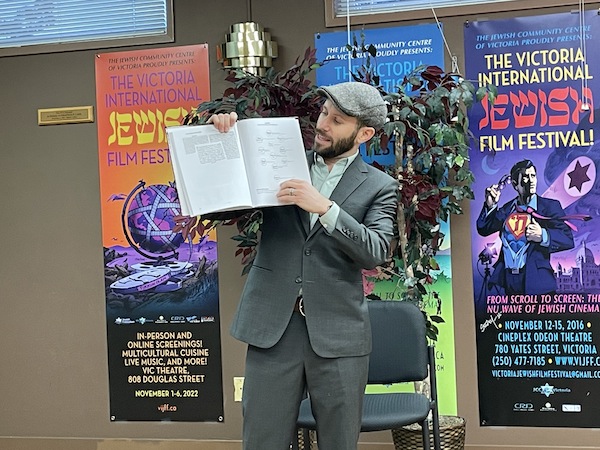
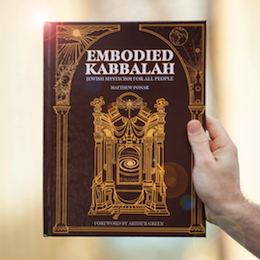
Rabbi Matthew Ponak introduced his new book, Embodied Kabbalah: Jewish Mysticism for All People, this month both in a Zoom event and in-person at the Victoria Jewish Community Centre.

According to the book’s description, the objective of Jewish mysticism is to “touch infinity with your feet planted in everyday, ordinary reality.” The book contains universal teachings that Ponak believes are necessary to the world at this time.

Delving into a millennium of Jewish writings, Ponak hopes his approach will serve as a counterweight to the focus in modern spirituality on bliss and transcendence. Throughout the centuries, Ponak argues, Judaism – including Jewish mysticism – has held “being a good person” as the ideal.

image - Embodied Kabbalah book coverEmbodied Kabbalah, written in the talmudic style, in which commentary surrounds the original texts, looks to the mystic teachings for finding a healthy balance between one’s spiritual life and external commitments to family, work and community. Many of the book’s sources have been translated into English for the first time.

During the launch at the Victoria JCC, Ponak spoke of the personal journey that led to the creation of the book. In his initial studies, he observed two different paths. “One was a path of transcendence,” he said, “a path of bliss, that all is well in the world and we should be celebrating all day. On one level that appealed to me, but I felt there was something missing in it.”

The other path, he said, is one of transformation. “This is one of deep self-knowledge: that I could get to know who I was inside, and new parts of me would start to come forward. There is a deep, radical honesty that can liberate parts of who we are. Those parts can enter into our outer lives as we become more whole.”

Upon further exploration, he discovered there was a way to incorporate both paths into one’s life.

“I found a particular teaching that says there is a time to transform – the work week – and a time to rejoice – Shabbat. One day a week, it is time to celebrate all that we have and focus on the positive, to not get weighed down by the negativity,” Ponak said. “There is a time for the deep personal transformation of working on ourselves, the spiritual work week. On Shabbat, however, everything is whole and we are, too. We feed ourselves delicious food and take an extra nap to help our bodies know the world is complete.”

Ponak emphasized that it is not necessary to choose between the paths of rejoicing and of transformation. There is a time for working and a time for celebrating. If all one has is work, then there is the risk of missing out on the beauty of life, he said. Alternatively, if one is in a prolonged state of transcendent joy, then a spiritual leader, for example, might become unable to help others grow because they have “left the world, so to speak, unable to relate to people.”

He said, “It is good to come off the mountain. It took me a long time to understand the value of that. If I had a trauma or a difficulty in my earlier years as a seeker, it was with the bliss. The transformation stuff was hard, but I was able to get it once it was taught to me in an accessible way.”

Ponak retraced various aspects of his spiritual journey. He studied transpersonal psychology (or spiritual psychology) and other religions. Through this, he found he could be both a spiritual person and grounded.  “But there was a deeper part of me that knew there was something else,” he said. “There must be something in Judaism.”

After several years of study at the Rabbinical School of Hebrew College, he was able to decode the texts on his own. He discovered the hidden treasure of grounded Jewish spirituality that had been there all along in lesser-known mystical writings.

“If I had access to Embodied Kabbalah as a teenager, it could have saved me a lot of headaches and heartaches, to say nothing of my family’s stress,” he said. “This is why this book is so close to my heart.”

Among those who would benefit from the book, Ponak pointed to those interested in Jewish mysticism, those who have Jewish ancestry but feel alienated from Judaism, and those who want to learn about universal Jewish teachings as part of the global spiritual landscape.

Yet, for him, “the call to action that feels most urgent is to help people who are ‘ungrounded,’ who are finding mystical writings or going to spiritual retreats but are not connected to the earth: to the body or to their emotions. It’s time to open up the gates of Jewish wisdom to all who can benefit from it,” he said. “I hope this effort will help spiritual seekers to be responsible, relatable, whole and healthy – along with spiritually connected – so that we can be of our greatest service to humanity.”

For more information or to order the book, visit matthewponak.com.

Sam Margolis has written for the Globe and Mail, the National Post, UPI and MSNBC.

Reflecting on life of creativity

Earlier this year, Claire B. Cohen published a book of her 30-plus years as an artist. She made it for family and friends, as a record of her artistic legacy.

“Art is a powerful and a creative force of self-expression. To create art is to develop an ability to communicate visually what cannot be expressed in words.

“By creating the process of art, we change the way we see the world,” Claire B. Cohen told the Independent. “In understanding ourselves, we find areas where we feel limited. In understanding ourselves, we stand up for ourselves and can present ourselves authentically to others. An artist’s creation is unique and original to their work.”

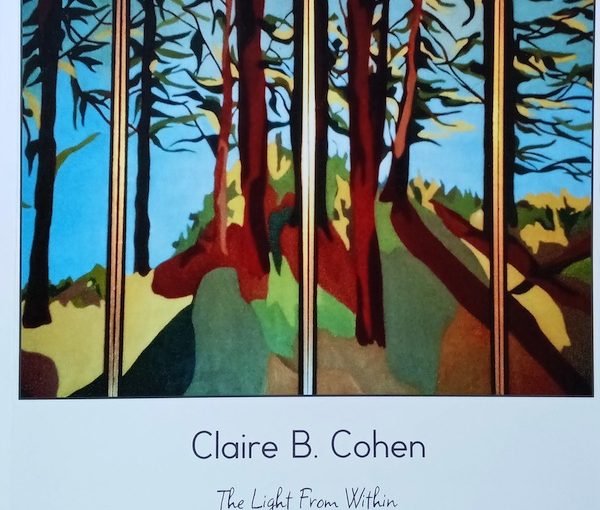
Earlier this year, Cohen published a slim volume, mainly with images that burst from the pages, outlining her 30-plus years creating art. We glimpse the range of her work – landscapes, portraits, semi-abstracts, flowers, multimedia collages and a compartmental series, in which colourful abstract canvases were “connected sequentially in a zigzag for using piano hinges.” Flow and fun describe this series, her portraits – both colour and black and white – capture the personalities of her subjects, her landscapes and collages are bold and full of movement but also balance. The book touches on her work as an art therapist.

Originally from Israel, Cohen came to Canada in 1964. She studied fine arts at York University in Toronto and the University of Ottawa, and later earned her master’s in art therapy and counseling from U of O in 1987. She had many solo exhibits and group shows in Ottawa, and elsewhere, over the years. The book takes readers to 2006, with an exhibit list to 2009. She moved to Vancouver in 2012.

“I continued to paint after moving to Ottawa, but my move to Vancouver changed my focus, since joining my family had taken much of my time, being richly involved with newborn grandchildren,” said Cohen. “However, I still continued painting and showing new work in Vancouver galleries, as well as donating paintings to different organizations in Vancouver, such as hospitals, Louis Brier [Home and Hospital], friends, and creating more collages and multimedia-based work. I participated in group art shows and sold some to the public.”

Cohen said her reason for producing the book “was to create a place to keep all of my art as a legacy to leave to my family in remembrance of my story. COVID times were affecting my spirit, my mood was down and … the idea came about to focus on creating the book for my family and friends.”

During the pandemic, Cohen said she started to lose her connection to creativity. 

“Friends cut off from each other, as much as children and family,” she said. “I slowly lost my energy and interest, as well as the need I once had to be close to my easel. The paints, the brushes, the colours all lost their meaning and the need I had to paint slowly deteriorated.”

She began to look back at her past, which, she said, “led me to wake up from my dormancy and questions such as ‘what is my meaning of life?’ I discovered my paintings in storage and wanted to create a book.

“I reflected further on my body of work and questioned: why did I dedicate my years to painting? Was there any purpose to it? The answer eventually arrived – yes. There are many purposes to be alive, and work as an artist, investing my life in art. In my case, most of it was to leave a memory to my next generation.”

Cohen’s most recent exhibit and sale was at Britannia Community Centre in 2021. Art can be cathartic, whether one is making it or experiencing it.

“The process of creating art has a great intensity and full force of emotions that lead to a freedom and release when the piece is complete,” she explained. “Looking at these pieces that I created many years ago leads to a sense of nostalgia and a softening of that intensity. These pieces have followed me through many moves and lives, and have a story of their own that has evolved with the emotions that once created them. The language of art cannot be explained in words, the language of these emotions is form, line, colour and brush strokes.”

This language can help heal, as Cohen well knows from her art therapy practice.

“The more we know about ourselves, the more we learn to grow and develop our abilities to stand our ground,” she said.

Describing art as “a powerful and unique way to explore our creative forces,” she explained that people who participate in art therapy use the “materials to express the self and communicate visually,” composing stories. In a group setting, they “collaborate and share with others … connect and integrate parts of his/her inner self, gain confidence and reduce stress in a supportive environment, with the aid of the instructor.”

It was both a dream and a need for Cohen to do art therapy and counseling.

“I realized that art is not just for selling and decorating homes, rather it was a way to find myself, to grow and see who I am, and to help others with their healing.”

To see Cohen’s body of work, go to clairebcohen.wixsite.com/portfolio/home.

Artist advocates for nature

Lori Goldberg’s artwork reminds viewers that “that which we discard doesn’t disappear.” (photo from Lori Goldberg)

If you attend a performance at Queen Elizabeth Theatre, you will see the artwork of Lori Goldberg. She is one of the artists whose creations are at the theatre for another couple of weeks. The exhibit opened Oct. 29.

“Queen Elizabeth Theatre has a program for exhibiting artwork by local artists,” Goldberg told the Independent. “There was a call that was sent out a few years ago and I responded. I was accepted and the work was to be installed just when the pandemic began, so it was postponed until this year.

“It is an ideal venue,” she continued, “as thousands of people a week attend events at the Queen E.  My art has a message about climate change and it is important that it gets seen by as many people as possible. My pieces are on exhibit until Dec. 19, and people are only able to see it if they have a ticket to an event. Alternatively, I am available to take anyone interested on a private tour.”

The paintings in the exhibit come from three ongoing series: Plasticity, Poetics of the Discarded, and Reconstructing Nature.

“For many years, I have been investigating what happens when two opposing places – cities and nature – collide, connect and transform,” said Goldberg. “Through more awareness and experience firsthand, many of my works have ultimately been about the precarious relationship that we have with our natural world. Seeded in environmental advocacy, an animating factor in my practice has been reclaiming, recycling and reimagining refuse.”

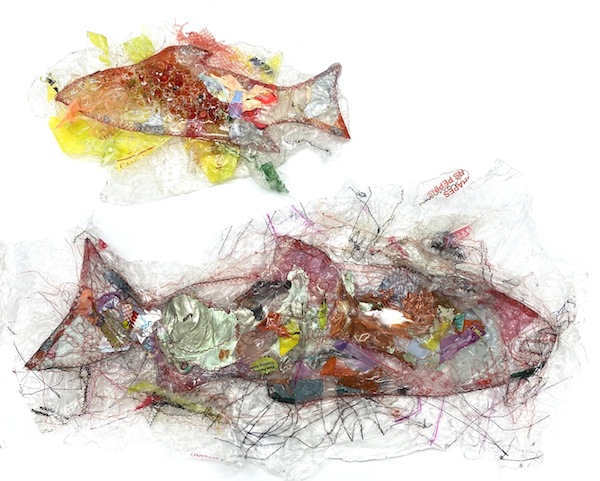
photo - “Rogue Fish” by Lori Goldberg
“Rogue Fish” by Lori Goldberg (photo from Lori Goldberg)

In the description of Plasticity on her website, Goldberg mentions her discovery that ink can be transferred from, say, a plastic bag, to canvas. Her creative process invites such discoveries.

“I am a diverse artist and my ideas dictate my art,” she explained. “My practice has primarily focused on painting, but I have had to explore other mediums to adequately express my concept.  Besides paint, I have explored photography, assemblage and sewing.  I have worked with clay, glass, so-called ‘trash’ from my studio, single-use plastic bags that I fuse on canvas, and I have stuffed lost socks with fabric remnants given to me by tailors.”

For Goldberg, the camera is her “sketchbook” and a photo is generally the starting point for her painting.

“My work references the physical world at one point in my creative process,” she said. “When I research and gather information, I look for source material that is usually filtered through my own photo documentation. Other photo images can come from friends, the internet or by random discovery. I also use memory, dreams – and always my imagination. I take parts of photos that resonate for me and incorporate that visual language – usually recontextualizing and altering it – in my work.”

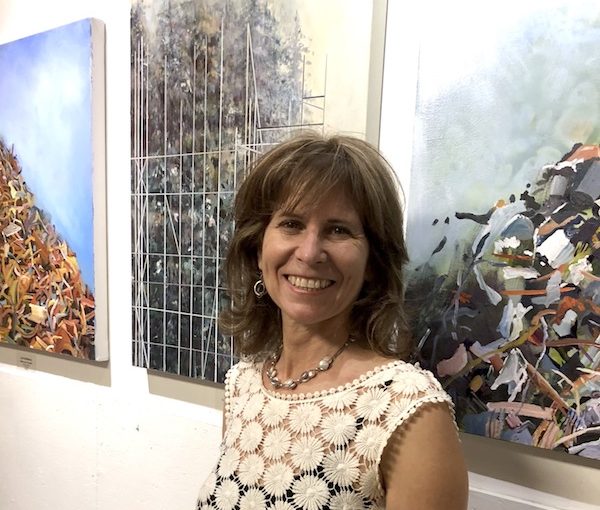
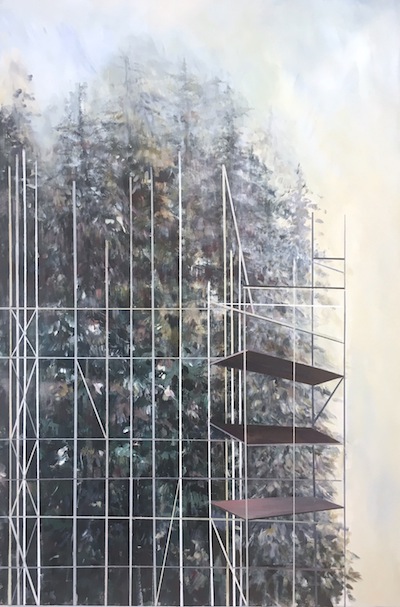
As an example, Goldberg spoke about the series Reconstructing Nature, which references nature/urban tensions found in Vancouver. “There is no lack of trees here and our city is in constant state of flux, with the demolishing of buildings and the construction of new ones, so I take photos of the nature that is all around me, but also of the scaffolding and cranes that are so prominent in the city as well,” she said. “In the Poetics of the Discarded series, I started by visiting a number of refuse sites, with an interest in memory and objects. Within the refuse, there were mounds and mounds of history: the detritus of days spent, life and death, business, conveniences used, sentimental things and so much more. I would photo-document these toppling heaps of refuse and re-contextualize and resurrect them as a visual reminder of the ongoing narrative between humans and their environment, reminding us quietly: that which we discard doesn’t disappear.”

photo - “Reconstructing Nature” by Lori Goldberg
“Reconstructing Nature” by Lori Goldberg (photo from Lori Goldberg)

While Goldberg does not paint on location often, she said, “My creative process is to go out into nature or the city, experience it, document it and return to my studio. Having said that, making work outdoors is becoming more interesting to me and it is a future direction that I plan to spend more time doing.”

With her art, Goldberg said, “I would like to think that I am creating work that is impactful to the viewer and especially the younger generation, that they will be empowered to take action towards making a difference as they engage with the world.

“The works are meant to be educational and I hope that they impart to the viewer a sense of personal responsibility – that they put to action what they feel and be one small ripple of change to create a better future for themselves.”

An educator for more than 30 years, Goldberg has taken her classroom outside and into the public arena, where, she said, “I create hands-on workshops using materials that address repairing the planet and healing ourselves. I created a project titled Lost Socks, where the public stuffed and sewed lost socks together to create a long tubular form that stood for connection, diversity and difference. Recently, I have used single-use plastic packaging to create wearable art. What I enjoy about these workshops is that they attract all ages and so it is intergenerational and accessible to all.

“Artists are essential in our communities,” she stressed. “Some of us choose to create work that challenges topics that are highly charged and sensitive, but, without venues in which to work and to exhibit, the messages cannot be passed on. I appreciate the exhibits I have had over my life at the JCC – I cannot imagine what would happen if we lost such a significant public space as the Sidney and Gertrude Zack Gallery. It is a venue for Jewish artists and Jewish content. It reinforces Jewish identity, conversations and connections. It is a gallery that has assisted me in my journey as an exhibiting artist and has given me opportunities to work with preschoolers, seniors and poets.”

Goldberg believes in giving back and donates her work frequently to different organizations, such as Big Brothers. “My recent donation was to Tikva Housing,” she said. “I gave them three paintings from my Judaica series. There is a satisfaction that is hard to explain, but it is a joy to be able to offer something of value to make others feel uplifted.”

Goldberg is currently applying for artist residencies in different parts of the world.

“I am interested in responding to the environment that I would be in and allowing it to dictate the direction of my work,” she said. “I want to contextualize my work in such a way that I am creating awareness about our healing of our planet but indirectly, through healing ourselves. Artist residencies offer opportunities for new perspectives and fewer distractions, so you can shed the restraints and discover what is there, but has been hidden.”

For more information, visit lorigoldberg.ca.

Survivors share their stories

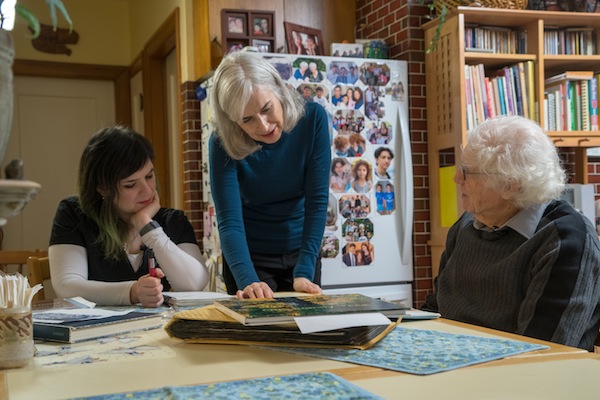
Charlotte Schallié, a University of Victoria scholar and Holocaust historian who is leading the graphic novel project, with survivor David Schaffer and graphic artist Miriam Libicki, left, at Schaffer’s home in Vancouver in January 2020. (photo by Mike Morash)

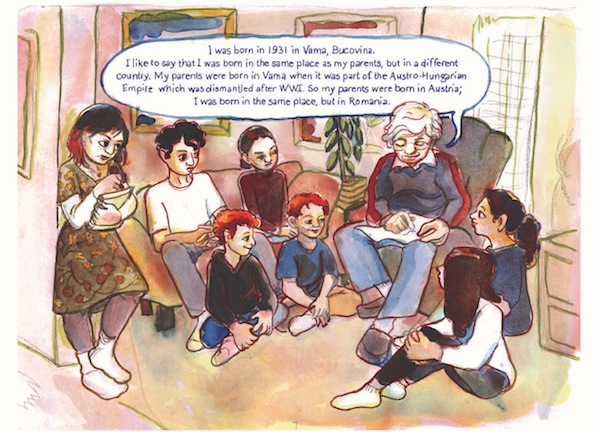
A University of Victoria project, first announced in January 2020, came to fruition this spring with the release of But I Live, a graphic novel that tells the stories of four Holocaust survivors.

But I Live involved an international team of researchers, students and institutional partners from three continents, and brought together four survivors and three graphic artists to create an autobiographic series recounting one of the darkest periods in human history. The survivors who told their stories were Emmie Arbel (Israel), Nico and Rolf Kamp (Holland) and David Schaffer (Canada). Their stories were transformed into art by Barbara Yelin (Germany), Gilad Seliktar (Israel) and Miriam Libicki (Canada). The project was edited and organized by Charlotte Schallié, chair of the department of Germanic Slavic studies at UVic and head of Narrative Art and Visual Storytelling in Holocaust and Human Rights Education at the university.

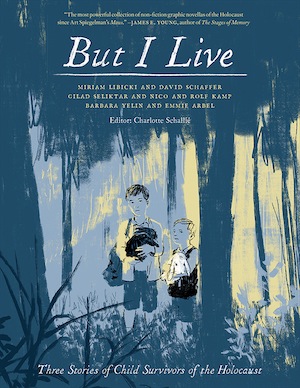
image - But I Live: Three Stories of Child Survivors of the Holocaust book cover
But I Live: Three Stories of Child Survivors of the Holocaust was published by New Jewish Press (2022).

“Many people in North America have learned about the history of the Holocaust through survivor stories that are repeated in popular culture, which largely focus on survival in the concentration camps or experiences of hiding in Nazi-occupied territory,” said Schallié. “The three stories in But I Live complicate these mainstream narratives by exploring complex topics such as the burden of memory, the need to testify, the ripple effects of trauma and the impact of the Holocaust on descendants of survivors, for example. As historical documents, they are also important for centring the survivors’ experiences and enabling them to tell their own stories.”

Though the gravity of the crimes committed during the Holocaust is well documented, the majority of visual records were largely produced by the Nazis and their collaborators. “These are important historical sources,” said Schallié, “but a sole focus on documentation produced by perpetrators ignores the value of survivors as living knowledge-keepers.”

An objective of the project, therefore, was to turn the perspective over to the survivors. “A survivor-centred approach to gathering testimony about the Holocaust honours the integrity and humanity of the person’s lived experience, while respecting their right to tell their own story,” Schallié said.

Another consideration in the project was time – the majority of Holocaust survivors alive today were young children during the war and are now in their 80s and 90s. The importance of learning from these knowledge-keepers is increasingly vital.

“If we don’t engage them in our research now, their expertise and experience will soon be lost,” Schallié stressed.

There is, in her view, a moral obligation and duty to collect and preserve survivor testimonies. “Each voice that was marked to be silenced by the perpetrators of these atrocities matters greatly and needs to be heard and acknowledged,” she said.

An additional goal of But I Live is to interest young readers in Canada, where high schools are not mandated to include the study of the Holocaust in their curricula.

“We hope that our visual storytelling work will appeal to youths and young adult readers, and elicit within them a deep sense of empathy that leads them to think critically about the historical past and present,” said Schaille.

“Holocaust survivor stories that are presented as heroic narratives, where the storyline progresses from dark to light – or from a site of danger to one of safety – place a heavy burden and responsibility on survivors, whose life stories and memories are unlikely to conform to that model, and simplifies the reality of their lived experiences. But I Live holds space for fragmented memories, difficult emotions and the afterlife of trauma. In doing so, it complicates mainstream tropes, clichés and iconographic imagery that is sometimes misappropriated or exploited in popular culture,” she explained.

image - A panel from “A Kind of Resistance,” a graphic narrative by Miriam Libicki from interviews with David Schaffer
A panel from “A Kind of Resistance,” a graphic narrative by Miriam Libicki from interviews with David Schaffer. (image by Miriam Libicki)

The work at UVic expands on previous projects, such as the book On Listening to Holocaust Survivors: Beyond Testimony by Henry Greenspan of the University of Michigan, which focuses on survivor accounts while being mindful of the trauma such memories can evoke.

“Eliciting experiences and memories of extreme human suffering from the survivors necessitated a research process and practice that privileged their safety by minimizing the risk of re-traumatization, managing potential triggers and providing sustained support for all participating project partners,” Schallié said. “This approach ensured that we – the stewards of survivor memories – honoured what we felt was our obligation and duty to amplify the voices of the Holocaust survivors.”

But I Live was released by New Jewish Press, a division of University of Toronto Press. A German edition, Aber ich lebe, was published by C.H. Beck in July and has received positive coverage in the German broadsheets Der Tagesspiegel and Die Zeit. In November, the book received a German LUCHS-Preis for literature.

On Oct. 23, But I Live won the 2022 Canadian Jewish Literary Award for biography, presented at York University in Toronto. At the ceremony, the project was lauded for exemplifying “the power of the non-fiction graphic novel to convey the experience and aftereffects of the Shoah.… The historical essays, an illustrated postscript from the artists and personal words from each of the survivors offer a profound meditation on the past and its reach into the present.”

But I Live will be featured at the Cherie Smith JCC Jewish Book Festival here in Vancouver on Feb. 12.

Sam Margolis has written for the Globe and Mail, the National Post, UPI and MSNBC.

Beckow’s music legacy – CDs now available

Left to right: Wendy Bross Stuart, Jessica Stuart and Katey Morley in a Joan Beckow Legacy Project performance at Holy Blossom Temple, Toronto, on Nov. 19. (photo by Robert Saxe)

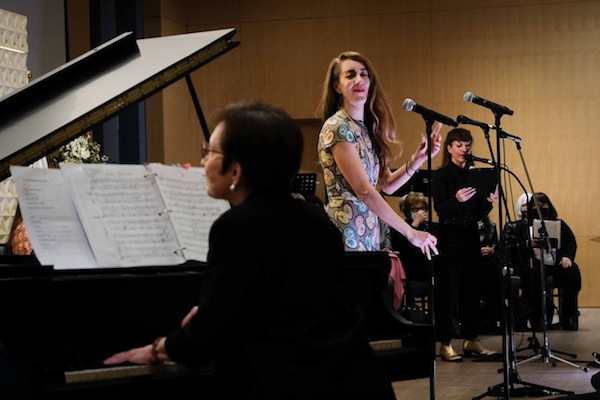
The Joan Beckow Legacy Project performance at Holy Blossom Temple, Toronto, on Nov. 19,  included a preview screening of the documentary Unsung: the Joan Beckow Story. The project features 30 musicians from across Canada who got together to make the first-ever professional recording of Joan Beckow’s music. (See jewishindependent.ca/beckows-music-will-live-on.)

To purchase the double-CD set of 22 songs, representing a cross-section of Beckow’s vast catalogue, visit joanbeckowlegacy.com.

Hochman joins Fung in VRS concert

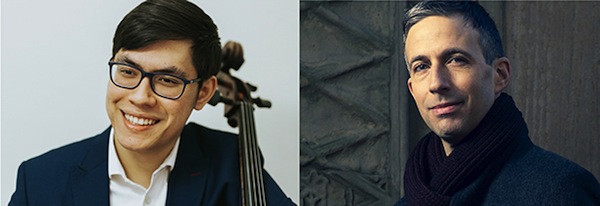
Zlatomir Fung (cello) and Benjamin Hochman (piano). (photo from vanrecital.com)

The Vancouver Recital Society (VRS) presents American cellist Zlatomir Fung and Israeli pianist Benjamin Hochman at the Vancouver Playhouse Jan. 15. Fung has racked up a slew of awards: in 2019, he was the first American in four decades and youngest musician ever to win first prize at the International Tchaikovsky Competition, cello division, and was the recipient of an Avery Fisher Career Grant in 2020 and a Borletti-Buitoni Trust Fellowship in 2022.

The Juilliard alum was originally booked for the VRS in 2020 but the pandemic thwarted plans. In January, Fung will perform with Hochman, who first performed in a VRS series in 2003, with violinist Elisabeth Batiashvili. Hochman is a graduate of the Curtis Institute of Music, where he studied with Claude Frank, and the Mannes College of Music, where he studied with Richard Goode.

The concert repertoire will feature the music of Yuri Shaporin (6 Pieces, arranged for cello and piano by Viktor Kubatsky), Nikolay Sokolov (Romance for Cello and Piano, Op. 19), Leo Ornstein (6 Preludes for Cello and Piano), Alexander Glazunov (Entr’acte from Raymonda, Op. 57, arranged for cello and piano) and Dmitri Shostakovich (Cello Sonata in D minor, Op. 40).

Tickets for the Jan. 15, 3 p.m., concert can be purchased at vanrecital.com.

vanrecital.com

The music of Shabbat

image - Az Yashir CD coverAz Yashir is an original Jewish music album of songs for Shabbat from singer and composer Yair Rosenberg. As a journalist, Rosenberg has interviewed White House officials, profiled Israeli prime ministers, covered Jews in baseball, and even chronicled the translation of Harry Potter into Yiddish. But, for the last seven years, he has been working on something different.

Az Yashir takes listeners through the experience of the Jewish Sabbath, combining centuries-old lyrics with contemporary musical influences ranging from Irish folk to EDM. With this debut album, Rosenberg follows in the footsteps of his grandfather, Rabbi Israel David Rosenberg, a Chassidic composer who escaped the Holocaust through Shanghai and whose songs from that time are still sung to this day.

Az Yashir features eight original compositions and two new adaptations, performed by Rosenberg, backed by 20 different musicians and produced by Charles Newman of Mother West.

Visit yairrosenberg.com.

– Courtesy Worldisc