More bridges to build

The entire Jewish community was shocked to witness a spike in antisemitic vandalism in November, with incidents reported in Montreal and Toronto, and at three synagogues and a Jewish community centre, as well as at non-Jewish sites, in our nation’s capital.

The Centre for Israel and Jewish Affairs (CIJA) worked closely with targeted institutions and local police to ensure effective measures were taken to protect the community in Ottawa, and the police arrested a suspect who now faces serious criminal charges.

While these ugly crimes remind us that antisemitism – the world’s oldest hatred – still exists, solidarity demonstrated by many proves we are not alone in this battle. Countless leaders, including the prime minister, various members of Parliament, the mayor of Ottawa, police officials, the United Way, and leaders in the Christian, Sikh and Muslim communities, have denounced these incidents. In so doing, they have reminded us of the value of our efforts to build bridges with non-Jewish leaders and communities. Our voices are stronger when united in common cause. From the many communities whose interests, values, and concerns we share, I highlight just three recent examples of CIJA partnerships making an impact.

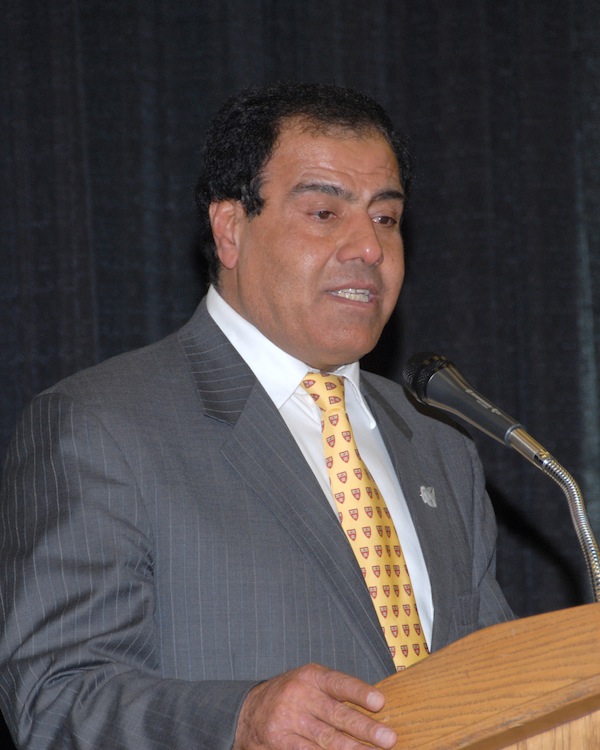
In October, CIJA was honored to meet with His Holiness Mirza Masroor Ahmad, caliph of the Ahmadiyya Muslim community. Numbering some 10 to 20 million globally, Ahmadis face persecution in much of the Muslim world. In Pakistan, they are denounced as “non-Muslim,” face systemic discrimination and are the target of harassment and terrorist attacks.

CIJA has built a relationship with the Ahmadiyya community of Canada, with whom we have established dialogue and joined in calling on the Canadian government to prioritize religious freedom abroad. The caliph (a non-political position) recently commented on the thriving Ahmadi community near Haifa and underscored his community’s belief in the need to respect all faiths. Canadian Ahmadiyya leaders have shared both their appreciation for Israel as the freest country in the Middle East and their opposition to boycotts targeting the Jewish state.

CIJA continues to enjoy warm friendships with several major Christian organizations, including the Canadian Conference of Catholic Bishops (CCCB), the Evangelical Fellowship of Canada and various mainstream Protestant denominations.

Last November, CIJA and the Canadian Rabbinic Caucus launched a partnership agreement with CCCB, including a shared commitment to join forces in countering antisemitism and hatred in all its forms. We’ve since worked with CCCB on issues as diverse as Holocaust commemoration, the persecution of Middle East Christians and – in a unique Jewish-Catholic-Evangelical-Muslim partnership – a campaign calling for a national, well-funded palliative care strategy. This latter issue is especially crucial given Canada’s aging population and evidence that far too many patients cannot access high-quality end-of-life care.

We have also mobilized the support of various Christian groups and others, including Sikhs and Muslims, in our effort to strengthen Canada’s hate crime laws. Currently, vandalism targeting places of worship is automatically treated as a hate crime with serious penalties, a designation not applied to incidents involving community centres and schools associated with an identifiable group. Working with our interfaith partners, we are urging MPs to support Bill C-305 to close this loophole in the Criminal Code.

And, while Canadian society has witnessed a generational shift regarding LGBTQ rights, many in this community continue to face bigotry. CIJA is proud to be part of the four-member executive committee overseeing Trans Equality Canada, a coalition leading the advocacy efforts for Bill C-16, which extends hate crime and anti-discrimination protections to the transgender community. This historic legislation passed the House of Commons in November and is now with the Senate.

CIJA’s role in this campaign is unique. We’re the only ethnic or religious community organization at the forefront of what is, arguably, the most important issue concerning the Canadian LGBTQ community today: the rights of transgender Canadians.

This work mirrors the efforts of local CIJA offices and grassroots Jewish groups across Canada building ties with their respective LGBTQ organizations and Pride festivals. For their work in Montreal, our team received an award from the LGBT Chamber of Commerce of Quebec.

These relationships don’t just advance human rights. They help ensure we have allies within the LGBTQ community when anti-Zionists attempt to import their bigoted agenda into Pride, just as, in October, Halifax Pride voted down a resolution to ban any mention of Israel from its events.

This is just a sample of the partnership work we’re doing to build a better society for the Jewish community and all Canadians. But it’s a work in progress, and there are countless communities with whom we will seek opportunities to strengthen ties through issues of common cause. If you have suggestions or would like to get involved, connect with us at info@cija.ca.

Shimon Koffler Fogel is chief executive officer of the Centre for Israel and Jewish Affairs.

Where will the money go?

The Canadian government has announced that it will resume funding the United Nations Relief and Works Agency for Palestine Refugees in the Near East (UNRWA). The government made the announcement last week, allocating $20 million to UNRWA’s budget and an additional $5 million to support the emergency appeal issued by the organization in order to aid Palestinian refugees affected by the catastrophic war in Syria.

In a statement, the government said, “with this funding, Canada joins all other G7 countries in supporting UNRWA’s efforts to meet the ever-increasing needs of Palestinian refugees, assists in providing basic services for vulnerable people, and contributes to some stability in the region.”

Canada’s previous Conservative government backed away from supporting UNRWA, reducing funding from $32 million in 2007 to $19 million in 2009 and, in 2010, cutting funding entirely. The justification at that time was that UNRWA has ties to the terrorist group Hamas, which controls the Gaza Strip.

The $20 million just announced is expected to support health, social services and education “for millions of vulnerable Palestinian refugees,” according to Ottawa. But the announcement comes just days after renewed reports that raise concerns about the more than 200 Palestinian schools sponsored by UNRWA, which teach students between first and ninth grade.

One expert on the subject told a conference organized by the Centre for Near East Policy Research (CNEPR) this month that the textbooks reflect the educational principles introduced by Yasser Arafat when the Palestinian authority gained control over the education system in the West Bank and Gaza, and have not been cleansed of hate, antisemitism and incitement. Participants in the conference obtained textbooks from the warehouse that supplies Palestinian schools and they claim the books still encourage a violent struggle for the liberation of “Palestine,” which is defined to include all of present-day Israel, the rejection of historical facts about Jewish holy places and the demonization of both Israel and of Jews.

A spokesperson for UNRWA outright rejects the accusations, saying that two significant analyses of textbooks, including one by the U.S. Department of State, debunked the assertions of incitement in the curriculum. However, David Bedein, director of CNEPR, said he was prepared to present the U.S. government with evidence that contradicts the state department’s findings but told the Jerusalem Post he was rebuffed by the White House.

These conflicting reports are disconcerting. It should be possible for funders who send hundreds of millions of aid dollars to find out for sure whether their money is funding genocidal incitement. The Centre for Israel and Jewish Affairs is certainly correct in declaring that donor countries “have a responsibility to ensure that aid is used for the purpose for which it is given, and we are pleased Canada has taken the lead in establishing a robust accountability protocol.”

In announcing the renewed funding, the federal government promised “there will be enhanced due diligence applied to UNRWA funding … accompanied by a very robust oversight and reporting framework, which includes regular site visits and strong antiterrorism provisions.”

This would be a positive step, to say the least. It would also be a positive step if these Canadian funds do actually provide health, education and social services to people who need them. But this, too, will be difficult to discern. The Wall Street Journal reported earlier this year that an analysis by Israel’s Ministry of Foreign Affairs indicates that the Palestinian Authority budgets about $75 million a year to support Palestinian terrorists – about 16% of foreign donations the PA receives. A lack of transparency about where the rest of the money goes means the world has been unable to determine how much money is lining the pockets of cronies of the dictatorship and what proportion is making positive social and economic contributions in the lives of Palestinians. Notably, the Palestinians receive more international aid per capita than any other people in the world – by far. Even as the catastrophe in neighboring Syria has seen 250,000 killed and 6.5 million refugees displaced, Syrians receive $106 per capita in international aid, while Palestinians receive $176.

One could argue whether Canadian funds are needed by the Palestinian Authority at all. And, clearly, we cannot be entirely confident that funds are going to the places they are intended. But, if the Canadian government does indeed follow the money, as promised, and determines whether it is making life better for Palestinians or is instead inciting terrorism, this might finally answer some questions that today seem subject to accusations and denials. That would be money well spent.

Illiberal world of Bannon

In considering the furor around President-elect Donald Trump’s decision to appoint Stephen Bannon, the chief executive officer of the hard-right news website Breitbart, as his chief strategist, let’s start with the perspective of those who have defended him.

On one important level, their anger over the Bannon spat is justified. It is galling to see the behemoths of the liberal left, from MoveOn.org to the New York Times, suddenly discover the threat of antisemitism after showing general indifference to its resurgence in public life during the last 16 years.

Simply put, their negative feelings towards Israel got in the way of acknowledging that larger reality. But, as Israel isn’t a factor in the case of Bannon, they can level the accusation of antisemitism safely, untainted by any association with the Jewish state or its “occupation” of Palestinian territories.

But, there is no meaningful record of statements or actions on Bannon’s part to convict him of the charge of being, on a personal level, antisemitic. And, since Americans tend to understand antisemitism as suggestive of a character defect, it is not surprising that many people also interpreted the attacks upon Bannon as a low blow against his boss, the incoming president.

It’s at precisely this juncture, however, that the Bannon quarrel has gone awry. The issue was never really about Bannon’s own sensibilities and, in fairness, that was never the focus of the much-discussed Anti-Defamation League (ADL) statement on Bannon released Nov. 13. What the ADL said is that Bannon “presides” over the “premier website” of the “alt-right,” which it then defined as “a loose-knit group of white nationalists and unabashed antisemites and racists.”

This raised the legitimate question of whether a man with such associations is suited to one of the country’s top political appointments – whether he can be one of the unifying figures the country needs. But that is not the discussion we have had these past days; it’s all been about the personalities, and not the politics.

David Hirsh, the British academic who has played a key intellectual role in confronting the academic boycott of Israel, put forward a better standard with which to make a judgment at the ADL’s Never is Now Summit on Antisemitism, held in New York Nov. 17. Bannon’s case reminds us, he said, that “antisemitism is about politics, not personal moral failure.”

Our bitterly sectarian politics compromise the discussion of antisemitism and, more broadly, racism and prejudice, in America today. In the debate about Bannon, there seems to be an assumption among his supporters that nobody as implacably opposed as he is to the progressive left – powerful elements of which have allied with Islamists, and enabled the spread of antisemitic discourse in the guise of anti-Zionism – could possibly share any of their flaws.

As a result, Bannon’s defenders adopt many of the same rhetorical tactics that left-wing anti-Zionists deploy when confronted with the charge of antisemitism; listing their Jewish political comrades or friends or relatives, decrying reputational smears without foundation, asserting their fondness for Jewish culture, and so on.

In rushing to Bannon’s aid, they overlook the deeper historical truth that antisemitism has always been promiscuous, finding favor on right and left. Yet, in their alternative imagining, antisemitism is solely a problem of the political left.

Let me offer a brief explanation of why some aspects of Bannon’s intellectual universe should be of concern to anyone who cares about the basic social empathies that are needed to sustain democracy – the same empathies, I would add, that have been badly damaged by the growth of identity politics on the left and right.

Read more at jns.org.

Ben Cohen, senior editor of thetower.org and The Tower Magazine, writes a weekly column for JNS.org on Jewish affairs and Middle Eastern politics. His writings have been published in Commentary, the New York Post, Haaretz, the Wall Street Journal and many other publications. He is the author of Some of My Best Friends: A Journey Through Twenty-First Century Antisemitism” (Edition Critic, 2014).

Mourning Mom and inherited scars

Marta Fuchs, right, with Ilona Fuchs, 1968, Pasadena, Calif. (photo from Marta Fuchs)

My 98-year-old mother died recently and I’m waiting to feel something. I watched family and friends cry at her funeral and I listened to their outpouring of love and accolades for the remarkable woman my mother was. To a person, they spoke of how loving and generous and talented she was – and yes, that she was also forceful and insistent – how much of an impact she made on them, how they remain in awe of how she survived Auschwitz at great odds, and how she rebuilt her life multiple times with flair, energy and optimism.

I sat there quietly, gripped by cognitive dissonance. The woman everyone knew was all those things they described. She was a resilient survivor, a gifted dressmaker and teacher, a devoted friend, but, with me, her other side overshadowed it all. Early on, as a Jewish child in postwar Hungary, I knew my job was to take care of her emotionally, to mitigate the suffering that happened to her before I was born. I spent a lifetime doing that while also being the brunt of her relentless criticism and control. It often felt as if nothing I did was ever enough, or good enough, though I do recall seeing her happy at times with my outfits and she took pride in my accomplishments. But, regrettably, I am now hard-pressed to recall more than a few positive moments together over the more than six decades of my life with her.

photo - Ilona Engel Fuchs, circa 1950-51, Tokaj, Hungary
Ilona Engel Fuchs, circa 1950-51, Tokaj, Hungary. (photo from Marta Fuchs)

I rarely cried when she would mercilessly pick on me. Depression was more my style. I knew she had to win and I had to surrender in what always felt like a life-and-death struggle for her no matter the issue. From my room, I heard my father echo what I had been pleading with her, “Ilona! She’s almost 50 years old! When are you going to stop dictating what she should do?!” “I am so sorry she treats you like this” he came in to comfort me, adding his perpetual advice, “Don’t pay attention to her and do what you think is best.”

Shortly after Dad passed away, Mom and I came to blows again, and she retorted accusingly, “Your father said I should be nice to you since you are so sensitive.”

Being sensitive was not a value for her, and I understand why. Being sensitive was a luxury she could not afford if she was to survive as a young woman in Auschwitz. In fact, once when we were talking about Auschwitz, she looked at me and stated matter-of-factly, “You would never survive.” Perhaps she’s right, yet we don’t really know until we’re tested. And, at least I can say that, thus far, I have survived her, albeit with scars.

There was a period of two blessed weeks, six years ago, the summer I turned 60, when I had the mother I wished for: kind, calm, appreciative, going with the flow. She had fallen in her doctor’s office after getting a clean bill of health and broke her hip, then suffered a cascade of near-fatal medical complications. My brother and I took turns staying around the clock with her in the hospital and then in rehab, to be her advocate and translator, as she often reverted to her native Hungarian. It was painful to watch her suffer and I did everything I could to alleviate it. But it was also a period of relief, for she was too sick to do battle with me. Once she started recovering, she was back to her true self with me, which for all of us was ironically a good sign.

I did learn a lot from my mother and inherited her creativity and resourcefulness, for which I’m grateful. I do feel good about having been the consummate dutiful daughter despite her wrath, and perhaps I did a public service being her emotional caretaker, which may have enabled her to be shining in the world, making such a positive impact on others. Whatever I inherit from her will, though, mostly feels like reparation payments, for I, like many children of Holocaust survivors, remain collateral damage.

Remarkably, despite our battles, my mother and I never stopped loving each other and, fortunately, I could always summon enough amnesia to begin each visit anew. As I stare at the dwindling light in the tall, blue shiva candle graced with a simple Star of David, I am coming to accept that it’s OK that I am not filled with the same sorrow and boundless reservoir of love I felt when my father passed. I felt sorry for Mom, I loved her, I admired her, I wrote books and articles about her, and I did as much as I could for her. And, what I am most grateful for is that with my own kids I have the kind of warm and supportive relationship I wish I could have had with her. May she rest in peace and may her memory be for a blessing.

Marta Fuchs, MLS, MFT, is a professional speaker, psychotherapist and author of Legacy of Rescue: A Daughter’s Tribute. She was born in Hungary to Holocaust survivor parents and escaped with her family in the wake of the 1956 Hungarian Revolution. Her website is martafuchs.com.

Small but important

There were fears that, if Donald Trump lost the election last week, his supporters would riot. Fewer people thought the opposite would happen – either that Trump would win or that those who opposed him would riot.

Nightly protest marches after the election were largely peaceful, but some were not, notably in Portland, Ore. It would be informative to learn if any participants in these street rallies were among the 45% of Americans of voting age who didn’t bother to cast a ballot. It would be galling in the extreme to find that people who couldn’t take a few minutes to vote on Nov. 8 were spending hours on the following days marching against the results of an election in which they didn’t think it necessary to vote.

But something more predictable has happened as well. Given the tenor of Trump’s campaign, and the glee with which his victory was met by such groups as the Ku Klux Klan, other white supremacists and those who go by the neologism alt-right, the Republican victory seems to have unleashed among some Americans a spurt of acting out. There have been countless recorded incidents of antisemitic, anti-black, anti-Muslim and anti-gay slurs, graffiti and even physical attacks. It was predictable that Trump’s hateful rhetoric would have an impact regardless of the election’s outcome, but the validation he received from more than 50 million Americans appears to have legitimized, or at the very least, inspired, some people to act out in antisocial, racist and violent ways.

In response, online articles, videos and infographics have been created demonstrating how to intervene and de-escalate a point of conflict. Also, a movement has emerged in which individuals demonstrate solidarity with individuals and groups who feel threatened.

A safety pin. A simple safety pin affixed to a garment is a new signal for people who may feel threatened in a situation – on a subway, in a classroom, at the mall, anywhere – that the person wearing a safety pin is a person who can be relied on for support.

It’s a small thing, but it isn’t. For an individual feeling threatened because they are identified as a target because of their ethnicity, religion or sexual orientation, a tiny signal of solidarity, support and refuge could be a lifeline.

We are in Canada, of course, not in the United States. But we would be naïve to think that what happens there doesn’t impact the social fabric here. There is racism, antisemitism, anti-Muslim bias, homophobia and other forms of bigotry under and at the surface here. The idea that we could provide a place of safety for individuals feeling threatened – or indeed that we could find ourselves looking for such a place – is as realistic for Canadians as it is for Americans.

Now that Remembrance Day has passed, we will remove our poppies, the symbol of respect for those who fought and died in the past for democratic and civil rights. Some of us, if we feel inclined, will replace it with a safety pin, evidence that we are committed to upholding these values today and in the future in whatever small but meaningful way we can.

Good news on Alzheimer’s

For the last three years, I have been researching, interviewing and writing articles for Senior Line, the magazine published three times a year by Jewish Seniors Alliance of Greater Vancouver. In that capacity, I read everything I can about dementia, especially Alzheimer’s disease, medical care for seniors and residential facilities for seniors.

A year ago, I succumbed and started paying for a digital subscription to the New York Times. Using their “alerts” system, my inbox is filled with relevant, current articles on these topics. I scour the media (Vancouver Sun, Zoomer Magazine, Jewish Independent, CBC News Network, CNN, documentary channels, movies portraying Alzheimer’s disease, and online newsletters from organizations such as CARP and COSCO) searching out information about these senior issues. I also began visiting the Louis Brier Home and Hospital regularly, interacting with people with dementia (with the assistance of Davka, my Standard Poodle).

Why was I obsessed with Alzheimer’s disease? The truth is that I was swimming in a turbulent sea of fear, dread and panic – analyzing every forgetful moment and constantly measuring my intellectual capacities, to be sure that I wasn’t “losing it.” This had been going on for the past five years.

My feelings and thought processes began to evolve as I gained knowledge and understanding of the causes, the progression of this condition and, of utmost importance, the changes in attitude towards the management of seniors residences and the programs offered to seniors with dementia. Most surprisingly, among the gloom and doom scenarios of “the grey tsunami” and “the stark demographic shift,” I began to understand that there is actually good news about dementia and Alzheimer’s disease. Yes, you heard me: good news!

Today, reaching the age of 100 is no longer shocking. I personally know three people who have reached that age. Seniors of my generation, and the Boomers and Zoomers, are living longer. Within this large cohort, dementia is a product of the natural aging process. The longer we live, the higher the probability of dementia. Is there anyone among you who wants to die at 65 or 71 (the risk of Alzheimer’s begins to increase dramatically at the age of 65)? Wouldn’t you rather live to 86 or 94? Of course! Well then, your chances of having dementia will increase.

At 77, I am more active and more productive than I have ever been. I know that, at any time, I may begin to deteriorate. The influence of genes is crucial: one grandmother had dementia, the other did not. My aunt has Alzheimer’s and, recently, a close relative was diagnosed with the early signs of the disease. I am shocked and saddened, but now I am able to accept the possibility, putting it in the context of the result of aging well and living longer.

What have I learned? Maria Shriver, in her Feb. 25 article on WebMD “We can handle the truth: the facts on Alzheimer’s,” writes “try to put your denial impulse aside and take a hard look at the truth about Alzheimer’s. Because the fear that causes you to deny things – like our risk of getting this mind-blowing disease – can actually be the motivator you need to stop ignoring the facts….” We know the risks and the consequences, but we are in denial and unprepared to deal with it – personally, financially and as a society. It seems that by pushing through my ignorance and my fear, I have come to a place of harsh reality and hope.

The intense desire for the discovery of a cure for dementia, or a preventive strategy for Alzheimer’s disease, is universal. Exciting research is happening in labs across the globe but, until a “miracle cure” is found, let us not refuse to act because there is no cure. Denial is the enemy of hope.

How much do you want to know about your risk of getting the disease? Here is a list of ways to learn more:

  • Review your family history with your doctor.
  • Review lifestyle factors like diet and exercise with your doctor.
  • Review your medical history with your doctor, including questions about brain trauma.
  • Take a genetic test to determine whether you have genes that raise your odds of getting the disease.
  • Get a brain scan to spot signs of the disease.

But, if you are like 41% of the people in the survey “Insight into Alzheimer’s Attitudes and Behaviors,” you have not – or are not willing to – take any of the proposed steps, according to a Feb. 25 article by Ashley Hayes on WebMD. Another 46% say they aren’t worried about getting Alzheimer’s in the future, mainly because they take care of their health and also because they can’t do anything about it. Thirty-four percent of respondents say they’re concerned about getting the disease in the future and, of those, 69% say they’re concerned because they don’t want to become a burden to their family, with 60% concerned because there’s no cure.

Michael Smith, MD, WebMD’s chief medical editor, states, “There is great concern about the impact of this disease, but denial, fear or other unknown factors seem to be preventing us from taking the necessary steps to prepare.”

People do not seem to realize that they can lower their risk. A few suggestions are offered: stay mentally or intellectually active, eat a healthy diet, take vitamins or supplements, exercise at least three times a week and stay socially active.

There is a positive link between physical exercise and brain health. There is a relationship between the foods, drugs, alcohol and nicotine we ingest and their impact on the brain. Hopefully, more informed, more realistic children will notice when a parent’s mental capacities are diminishing (if you haven’t), and they will get us to the physician or gerontologist early, wasting no time; perhaps to participate in a clinical trial or to get a new drug that could slow its progression. Plans must be made, contingency scenarios must be worked out. The best way to break through denial is to challenge it.

The good news

Dementia rates have been plunging. It took a few reports and more than a decade before many people believed it, but data from the United States and Europe are becoming hard to wave off. The latest report finds a 20% decline in dementia incidence per decade, starting in 1977.

A recent American study, for example, reports that the incidence among people over age 60 was 3.6 per 100 in the years 1986-1991 but, by the years 2004-2008, it had fallen to 2.0 per 100 over age 60. With more older people in the population every year, there may be more cases in total, but an individual’s chance of getting dementia has gotten lower and lower, as Gina Kolata reported in a July 8 New York Times article.

The psychological definition of “denial” is an unconscious defence mechanism characterized by refusal to acknowledge painful realities, thoughts or feelings. My anxiety, fear and dread have disappeared. I have faced the dreaded monster, I have embraced the enemy. I now visit with people suffering from Alzheimer’s. I have spoken to my children frankly about my wishes if I should become incapable of handling my affairs. I have decided where I wish to live if I must move into a seniors residence to receive care. I am aware of the newer approaches to residential care and housing arrangements. I have informed myself of the resources that my community can offer me.

Now, every day is an invitation to excel, to learn and to enjoy. I have become ambitious, physically stronger and more committed than ever to appreciate my good health and sense of well-being.

Dolores Luber, a retired psychotherapist and psychology teacher, is editor of Jewish Seniors Alliance’s Senior Line magazine and website (jsalliance.org). She blogs for yossilinks.com and write movie reviews for the Isaac Waldman Jewish Public Library website.

Between parent and child

When my father died in 2014, I was already familiar with the notion that mourning progresses in stages. These include denial, anger, grief, bargaining and, finally, acceptance, and they are widely recognized by the therapeutic professions.

Two years after my father died, however, I could make an argument for one more item in this neat list. This item is: paperwork. Paperwork that can take months or years to complete while other tasks are shelved, children get older and family relationships unravel.

And so it was that I didn’t really start grieving for my father until two years after his passing. This was the point at which I was finally able to look through my father’s archive. He had a wealth of his professional writing, as well as mementoes from his life in Israel – things I had never seen, never heard about, photos of people I didn’t recognize. Here, now, was another kind of loss: his memories, the languages he spoke, the cultural narrative of the Egyptian Jew who became the halutz (pioneer), the farmer and a soldier.

My grief was further complicated by my father himself: complex, secretive, angry, hard to fathom and even harder to love. But, as hard as it was to love him, it has been just as hard to let go of this contradictory, loving, gifted and extraordinary man, who spoke nonchalantly about his life being “nothing special,” while simultaneously and relentlessly craving recognition for his life’s work.

How was I to experience my grief, work through it in the tidy way suggested by the literature, without feeling like a hypocrite? Every time the sadness bubbled to the surface, another voice cried out, yes, but…. And yet, and yet, and yet.

My father loved trees. He loved the smell of them in Egypt. He loved planting them in Israel, shortly after its independence. After immigrating to England, he started a conservation charity to encourage children to do the same. He spoke fondly of his favorite plants, naming them with relish, acer palmatum, acacia, copper beech, pyracantha, weeping willow, honeysuckle. He talked about them the way other people talk about their friends, and his belongings reflected this after his death. One of his books was called Meetings with Remarkable Trees. It suited him. His meetings with remarkable trees had started when he was still a youngster.

It was also appropriate because, as straightforward as his relationship was with trees, his relationships with other people were confusing and painful. He was seldom content, often angry, and his brain was constantly besieged by business ideas, political observations and diatribes about the state of world affairs. I never saw him make a new friend. He called nobody from his old life and nobody called him. A staunch Zionist, he regarded orthodoxy with disdain. He refused to join the Jewish community and kept us apart from it, too.

But, when he was nurturing his plants, he was in touch with something sacred; this was his worship, his peace and his prayer. He could stand perfectly still, just watching the arc of the water landing on the dry earth, listening to the birds and the wind in the willow tree, utterly alone and completely at peace.

At other times, I tried to look after him. I tried to be his caregiver, his protector. So, with him gone, I felt myself to be – even with a multitude of other responsibilities – rather redundant.

By the spring of this year, I found an uncomplicated way that I could commune with my father: I nurtured my own garden. I thought of him as I watered, listening to the wind in the trees and watching the droplets creating rainbows. The water trickled down the spines of the squash leaves, pooling at the roots. I listened to the birds, felt the sun on my back, remembering the ice-cold glasses of water we’d enjoy together in the summer, the way he taught me to transplant trees, how I was always surprised by how much water he’d use. “Do you really need that much?” I’d ask.

He would collect seeds with a strange sort of compulsion, from public gardens, with no particular method – he would never store them properly or label them but there they were, stuffed in the bottoms of his pockets. Like me, now, collecting foxglove, chive, kale and garlic seeds for next year. Always thinking of the next harvest, another step toward self-sufficiency. “We made the desert bloom. We grew watermelons there.”

When I went to visit my mother this summer, I noticed that her own honeysuckle plant was growing wildly out of control. It had become so heavy that the lattice was falling off the wall of the house and it was beginning to encroach on other plants. The flowers were beautiful and the aroma intoxicating but, according to my mother, the vine was basically a weed. I offered to prune it back for her and was startled when she showed me how much could come off. Like a cautious hairdresser, I asked her, “Are you quite sure?” And she was. Besides, she told me, it would grow back in no time.

As I started to cut the branches, I realized that a good part of this monster was already dead. The branches overhead broke apart in my hands, dropping dry leaves in my hair. It was more than 30 degrees outside and, with older tools and a ladder pitching on the gravel, it was slow-going. I tried to avoid cutting live stems but soon grew too tired for mercy. I hacked at the convoluted, weedy vine and snapped the brittle trunk as perspiration ran into my eyes. As I did so, it occurred to me that something about the honeysuckle felt very familiar. In short, this tangled, complicated plant was very much like my father – extravagantly beautiful, complicated and with no respect for boundaries. One might almost say, parasitic.

And then I noticed what looked like a bundle of dry leaves tucked in the back. On closer inspection, I realized that it was an abandoned bird’s nest, carefully woven from the tiniest twigs with only the smallest space left to hold a few eggs. Right in the middle of that tangled mass of dead foliage, there was a sanctuary. Like our relationship – painful and nearly impossible to navigate but, at its heart, like that nest, there was something to treasure.

In the end, grief is not so much affixed to the image of the parent we have lost, or even the relationship we had. We are not grieving the relationship we could have had, either: we are acknowledging the gifts they did pass on.

My father, teaching me to cut and paste magazines; to write business letters with punchy opening lines; to edit my work, to edit it mercilessly until it was taut like a tightrope, without a single unnecessary word. Sure, he was a merciless critic, but this quality has served me well.  Even as I revisit each sentence of this essay, it is an act of memory, a gesture of thanks to my father that I am so particular, so careful with my words and so determined that they should fall in, militarily, if possible, with my meaning.

In the end, this is how we find grace in grief when our relationship with the dead was challenging – toxic, even. We can choose how we remember, how we grieve and, ultimately, how we live, once our beloved relative is gone.

It is not simply an act of respect, this mourning. It is an act of gratitude, as we thank our lost ones for what they did give us, as we visit all of the unconditional love we can muster for that ancient connection, between parent and child.

Shula Klinger is an author, illustrator and journalist living in North Vancouver. Find out more at niftyscissors.com.

What now, America?

Many of our readers survived the predations of fascism or communism; some endured both. It is probably safe to say these people do not take democracy for granted, as some of us who have been fortunate to live our entire lives under democratic governments may.

For many of us, Remembrance Day is one of the few times in the year when we stop and take stock of our good fortune and the sacrifices that made it possible. This year, we should perhaps give even more consideration to the fact, which we have mentioned in this space before, that democracy is a remarkably new and fragile thing. What we recognize as modern democracy is an American invention just 240 years old.

There have been concerning noises in the birthplace of democracy leading up to the close Tuesday of this ugliest of presidential election campaigns. In addition to Donald Trump’s threats to not abide by the democratic decision of the people because of some imaginary “rigging,” much of his rhetoric has seemed deliberately calculated to undermine democracy and its parallel values of pluralism and respect for diversity. Trump’s behavior and language – and the vitriol and violence he inspired and encouraged among his followers – are antithetical to American democracy.

We should not fall into the trap of comparative blame. This was probably the nastiest campaign in American history, but that is not something we can ascribe equally to both leading candidates and their followers.

Hillary Clinton ran a negative campaign, yes, but only within the comparatively gentle parameters of what has become conventional in American politics of the television age. Trump’s campaign, on the other hand, was a blast furnace of hatred, ridicule, dehumanization, lies, racism, sexism and incitement.

One of the most important pillars of democracy is also one of the most ephemeral: the confidence of the populace in the institutions of governance. And polls indicate that Americans currently have extraordinarily low opinions of their officials.

The American people – and the new president (who was declared after the Independent went to press) – have an unenviable task ahead of them in restoring confidence in the system, in their institutions and in their ability to advance as the world’s beacon of democracy.

For the sake of their country – and for the sake of the magnitude of impact it will have on the rest of the world – we should all wish for a period of reflection, healing and reconciliation.

The strength of family circle

There is a wise Jewish saying: “A little hurt from a kin is worse than a big hurt from a stranger.” (Zohar, Genesis 151b) Why is that? Strangers come and go in our lives. Some remain to become friends, others are barely remembered and, as we move on in life, we leave them behind. But family – that’s a different story.

The closest bonds we will ever form are with our parents and our siblings. They know us intimately and, even with all our faults, they still love us. (Though, admittedly, not everyone is so lucky to have a loving family.)

Next comes the extended family – cousins, aunts, uncles, et al. Some of them we just tolerate, often in an amused way, because families are like fudge – mostly sweet with a few nuts! But we do care about them because they are kin.

Within our own close family circle, we are proud of each other’s accomplishments and boast of them. We hurt when a family member is unhappy. We celebrate birthdays and anniversaries, and we try to be together for important Jewish holidays. That is what family should mean.

I’ve always loved the description of her family by the late Erma Bombeck: “We were a strange little band of characters trudging through life sharing diseases and toothpaste, coveting one another’s desserts, hiding shampoo, borrowing money, locking each other out of our rooms, inflicting pain and kissing to heal it in the same instant, loving, laughing, defending, and trying to figure out the common thread that bound us all together.” I think most families can relate to this warm-hearted description.

When there is a break in a family circle, it can be unbearable. It’s not just a matter of location, for, these days, communication has never been easier and we can connect with family wherever they live. But, when there is a misunderstanding and angry words are exchanged, it can be heartbreaking. We feel as though we have a deep fracture in our very being and life will never be the same again if the family member we once loved is lost to us.

Teenagers are known to be rebellious and that is considered normal. It is necessary for them to become independent, to break away from the sheltering family structure. It can be very hurtful for parents to see them break away, but if they were nourished with your morals and standards of ethical behavior in their childhood, and educated with love, they won’t stray too far. Siblings may have very different ideas from each other as adults, but no one – not even a spouse – can have the same kind of bond, with its childhood memories, shared experiences, old family jokes. It is special.

When strangers hurt you, you may become disappointed or angry, but it doesn’t tear at the fabric of your being. You are not obsessed by it and whatever has happened, you know that you will get over it in time.

It is not the same with families. When there is a break between parents and children or brothers and sisters, it colors every aspect of your life, for the family is your haven, your soft resting-place. When there is a break, your emotional security is gone. We need to feel ourselves one in a world of kinfolk, persons of variety in age and temperament, yet allied to us by an indissoluble bond, which nature has welded before we are even born. A family quarrel does not just leave aches or wounds; it is more like splits in the skin that won’t heal because there’s not enough material. Author Dodie Smith described her family as “that dear octopus from whose tentacles we never quite escape, nor, in our inmost hearts, ever quite wish to.”

So, cherish your family while you still have them. Other things may change us, but we start and end with the family, which is one of G-d’s masterpieces. Having a place to go is your home. Having someone to love is your family. Having both is a blessing.

Dvora Waysman is a Jerusalem-based author. She can be contacted at dwaysman@gmail.com or through her blog at dvorawaysman.com.


Silver linings, anyone?

By Michael Vadon - from Wikipedia
Photo by Michael Vadon – from Wikipedia

As the majority of the world sits in shock that a reality TV star was actually voted in to be the next President of the United States (happy or not, y’all have to admit only Michael Moore expected this result!), many awoke Wednesday morning trying to make some sense of it all.

It’s usually around this time that the desperately positive side of me seeks some kind of solace or acceptance by trying to find a silver lining in a seemingly poor situation – that same part of me that has allowed me to be a Vancouver Canucks fan for so many years.
It is with that train of thought that I consider what possible positive outcome might eventually come from the fact that more than 50 million Americans submitted their vote for a man with no international political experience, the temperament of a bully, sexist tendencies and an undeniable ability to look someone in the eye and lie if it suited him in that moment.
There was an intense sense of panic across the country leading up to this election. There was panic from those who feared their country was already falling apart and looked to Trump as their only option for change. There was also panic from those who opposed Trump and feared the type of change he could bring.
It became clear, however, that very few Americans felt that their country was going to be just fine no matter what happened Nov 8.
Perhaps the shocking election of Donald J. Trump was the wake-up call or the shake up the country needed to become more focused on what it needs to do in order to actually become whole again.
If Trump is as ridiculous, ignorant and unprepared as President as he showed to be during his campaign it’s going to become painfully obvious rather fast. In which case the need for dramatic reform could kick the country into high gear, unite leaders in unprecedented ways and refocus the entire country.
Or perhaps Trump becomes humbled by the responsibility of leading the free world, learns on the job quickly and becomes the new type of leader millions of Americans are hoping for. If that happened it would also completely change the way American politics function moving forward.
Of course it’s also possible he leads the country into civil war, alienates millions and sets of world-wide fires that can’t be easily extinguished while the US of A becomes a joke, sending Western society into grave danger. But let’s stay on the possible silver lining track here for a minute!
It is clear that something had to give. Much like when mother nature sets off natural disasters in order to renew herself for the longevity of the planet, perhaps this disaster of an election will do the same for the longevity of the USA.
Perhaps this is the political version of the story of Noah and the flood and America can come out of this disaster ready for a more positive future.
Unfortunately, as many Americans learned while crashing the Canadian immigration website last night, Canada is not the Ark!
Happy silver linings, everyone!