Nakba exhibit biased

The following is the executive summary of the study The Canadian Museum for Human Rights and Its Nakba Exhibit: Bias and Animus in Process and Outcome and the Nature and Impact of the New Antisemitism in Canada, written by Dr. Bryan Schwartz, a professor of law at the University of Manitoba, and Rhonda Spivak, LLB, editor of the Winnipeg Jewish Review. It is reprinted with permission, edited for JI style and length. The exhibit is set to open in June. For a link to the full study, go to winnipegjewishreview.com.

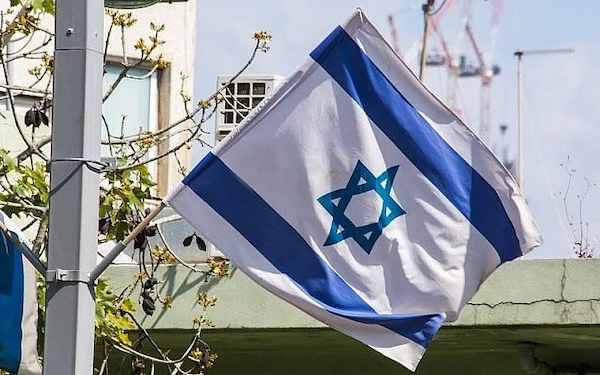
The proposed Nakba exhibit at the Canadian Museum for Human Rights (CMHR), titled Palestine Uprooted: Nakba Past and Present, is not a balanced exploration of displacement. It is a partisan exercise in the demonization and delegitimization of Israel – driven from its inception by a process whose composition predetermined its outcome.

A publicly funded national museum exhibiting biased content that vilifies one national/ethnic group’s homeland constitutes a discriminatory denial of equitable human rights education.

The process and work product – to the extent it is already available – are not consistent with the CMHR’s statutory mandate under the Museums Act, the Canadian Human Rights Act (CHRA), the International Holocaust Remembrance Alliance (IHRA) definition of antisemitism adopted by both Canada and Manitoba, and the ethical codes of the Canadian Museums Association (CMA) and International Council of Museums (ICOM).

The bias is structural and traceable. The CMHR assembled a Palestinian Content Advisory Network whose membership was kept opaque – referenced once in the 2022/23 annual report and then deleted. Investigation reveals that its members hold views that are hostile to Israel and not sustainable on a fair-minded analysis of history and current realities.

Ramsey Zeid, president of the Canadian Palestinian Association of Manitoba and member of the advisory network, has publicly called Zionism a “disease that must be destroyed,” accused Israel of genocide, rationalized the Oct. 7 massacre as Palestinians “biting back,” and condoned violent intifada with language such as “intifada revolution … scorch the earth.” Other advisory network members have framed Israel as an apartheid settler-colonial state, endorsed the boycott, divestment and sanctions (BDS) movement, advocated one-state solutions that would deny the right of the Jewish people to their own state, have accused Israel of genocide at its founding and in Gaza, and compared Israel to the Nazis. The CMHR cannot credibly claim that work product shaped by this group is free of bias and animus rather than driven by it. By including persons with such views in an official advisory committee, it has extended official recognition and an aura of respectability to them.

The process excluded and marginalized the mainstream Jewish community at every stage. There was no public consultation of the kind that accompanied the Holocaust gallery. The Jewish Heritage Centre of Western Canada withdrew its partnership with the CMHR over the exhibit. The Centre for Israel and Jewish Affairs (CIJA) warned that the exhibit would deliver an incomplete and unbalanced narrative that would omit Jewish refugee experiences. The Abraham Global Peace Initiative (AGPI) wrote to the CMHR, the minister of Canadian Heritage and the prime minister requesting suspension.

Jewish organizations who supported the exhibit are fringe anti-Zionist groups, such as Independent Jewish Voices (constituting at maximum 0.2% of Canadian Jews, this report places them around 0.0025% of Canadian Jews), the United Jewish People’s Order (expelled by the Canadian Jewish Congress in 1951, and whose membership has never surpassed their 1950s numbers, placing it well below half a percent of Canadian Jews; it seems that their largest attended event in recent years was around 350 people total) and the Jewish Faculty Network (less than 0.05% of Canadian Jews). IJV and UJPO were involved with the organization that organized a Nov. 2, 2025, panel at which the exhibit’s director discussed her involvement in the exhibit.

The exhibit’s content is equally one-sided. The CMHR’s potted history, as per its website, attributes Palestinian displacement primarily to Jewish and Israeli armed forces while omitting critical context: Jewish acceptance of the 1947 UN Partition Plan, repeated Arab rejection of two-state solutions, the invasion by five Arab armies to destroy the nascent Jewish state, over a century of lethal anti-Jewish violence in Mandatory and Ottoman Palestine (documented from at least 1834), the ethnic cleansing of approximately 850,000 to 900,000 Jews from Arab countries after 1948, and the documented pattern of rejectionist violence against moderate Palestinians who favoured coexistence.

The very term “Nakba” – originally coined to describe the catastrophe of Arab armies’ failure to destroy Israel – has been recast to frame Israel’s founding as an illegitimate catastrophe, implicitly justifying campaigns to eliminate it. The CMHR exhibit instead insists that “Nakba” refers only to the displacement of Palestinians and avoids acknowledgement of Arab rejection of the two-state solution, of the right of Israel to exist as the Jewish homeland, and the armed invasion of Israel by the armies of five Arab states aimed at Israel’s destruction.

The museum’s diversity policies require representation of multiple perspectives, especially on contested histories, which in this case requires presenting sources that nonviolent Palestinian villages were allowed to stay, multiple Arab sources showing calls by Palestinian leadership and Arab states for evacuation of villages to further the Arab war effort, or leave rather than give the nascent state of Israel legitimacy…. Since Israel is an open society, multiple lines of scholarship diverge. That is not the case in Arab states, which have not opened their archives. Nor is it the case in the Palestinian Authority, where President [Mahmoud] Abbas made “Nakba denial” a crime subject to jail terms.

The exhibit, as Zeid’s own statements make plain, rests on a double game. The exhibit is presented as a collection of individual personal narratives – merely “telling stories” about the effects of displacement, yet it simultaneously advances “the story” that is supposedly the single overall historical truth. The audience is expected to accept these personal narratives as historical fact, even in the context of an advisory network whose documented members variously call Zionism a “disease” or a virus that must “be destroyed” and adopt other epithets that demonize and delegitimize the Jewish state.

It is known that oral histories can contain varying degrees of fact and can be coloured by “collective memory” – political perspectives on past events that are widely shared but may not reflect fairly or fully the actual events of individual lives in earlier generations. Judging from the composition of the Palestinian Content Advisory Network, we can expect these stories to be infused with negativity towards Israel and a lack of any historical context.

In practice, we can expect that many or all narratives in this exhibit may be an occasion to vilify Israel, from its foundation until the present. For example, it may speak of checkpoints without mentioning the suicide bombings that necessitated them, of displacement without mentioning Jewish acceptance of partition and Arab rejection of it, of suffering without acknowledging that it was Arab rejectionism and aggression that created the refugee crisis in the first place.

The “personal story” framing is a shield against accountability: it permits the museum to disseminate a partisan political narrative while disclaiming responsibility for its historical claims. This exhibit will contribute directly to the rising tide of antisemitism that has made Canada an increasingly dangerous place for its Jewish citizens, as documented in … this report.

This selective framing constitutes the “Three Ds” of antisemitism identified by Natan Sharansky and popularized in Canada by former justice minister Irwin Cotler: demonization, delegitimization and double standards applied to Israel. It occurs at a time when Jews face the highest per capita hate-crime targeting of any group in Canada (Statistics Canada). Many Jewish Canadians feel unsafe in their own country, even though both Prime Minister Justin Trudeau and Prime Minister Mark Carney publicly affirmed Zionism and Israel’s right to exist and prosper. Those are the rights that the advisory network has dismissed for this exhibit.

The CMHR, in the aftermath of the genocidal attack on Israel in 2023 and the ongoing brutalization of hostages, allowed an unauthorized pro-Palestinian “die-in” inside the museum. This “die-in” was allowed while refusing a request from supporters of Israel for a counter-demonstration, a disparity that exemplifies the institutional bias at work. [CMHR vice-president of exhibitions] Matthew Cutler’s public statements at the time made it unmistakable that the museum had already promised off the books, without public consultation from the Jewish community, to include an exhibit that focuses on the contested oppression of Palestinians by Israel.

Officials of the CMHR have, on the public record, favoured anti-Israel fringe groups while showing disrespect for the groups that represent the overwhelming majority of Jewish Canadians. The museum has not been transparent with the general public or the mainstream Jewish community. This invites the question of how transparent museum bureaucrats have been with the museum’s own board of trustees, who are responsible for fulfilling the museum’s mandate and maintaining its reputation.

The exhibit in its current form must be halted. The CMHR must commission an independent historical review by balanced, credentialed experts. It must require transparent public consultation, including meaningful engagement with mainstream Jewish Canadian organizations; ensure the exhibit includes parallel refugee stories, Arab rejectionism, the full context of the conflict; and conduct a governance audit of curatorial processes to prevent future partisan capture.

Proceeding instead risks CHRA complaints, further reputational damage and continued erosion of public trust in a taxpayer-funded national institution whose mandate is to promote universal human rights, not to serve as a vehicle for the delegitimization of the Jewish state. 

Survival not passive

Driving south along Oak Street on a recent sunny spring morning, it was hard not to feel the hope of renewal. Paralleling Vancouver Talmud Torah is a majestic line of cherry blossoms in full flourish. A few metres on, outside Congregation Beth Israel, waves of daffodils tell the cyclical story of nature and regeneration. 

If hope itself were temporal, springtime would be its incarnation. Sometimes, though, recognizing and feeling hope can take effort.

For many of us, the just-ended celebration of Jewish redemption and rebirth held special resonance, as it has since 2023. The ageless stories, relived at the seder, remain so relevant. We are living through a period that feels, at once, ancient and immediate, because hatred has resurfaced so ferociously and wears familiar disguises. 

The redemption of the last hostages from Gaza and the end of that war gave little reprieve before a new war began in a cycle with which Israelis are all too familiar. Jewish history, though, teaches that darkness is never the whole story. 

Seeking peace is a central obligation in the Jewish tradition. But Jewish law, halachah,  also acknowledges the role of force when necessary. Jewish survival has never been passive; it has never been the result of favourable conditions. It has been an act of will – a refusal to accept that the present moment, however dark, is permanent. From the destruction of the Temples to the expulsions of Europe and the Levant, from the crusades and pogroms of the Middle Ages to the ashes of the 20th century, Jewish history has been punctuated by chapters that seemed like endings. And yet, they were not.

Jewish hope  is not blind. It is strategic – necessary and unavoidable. Consider what has happened in just the past century – an epoch that, in the annals of Jewish time, is the blink of an eye. A people nearly annihilated rebuilt not only our lives, but our language, our culture and our sovereignty. The rebirth of Jewish life in our ancestral homeland was not inevitable. It was improbable. 

War is tragedy. There are no easy moral lessons in suffering, no easy narrative that redeems loss. But history demonstrates that moments of profound rupture can create the conditions for transformation. As David Ben-Gurion said, “In Israel, in order to be a realist, you must believe in miracles.”

The peace between Israel and Egypt followed a devastating war. The Abraham Accords emerged from a recognition that endless conflict was untenable. It is not naïve to hope that, from the current devastation, a new framework might eventually emerge – one that prioritizes stability, dignity and coexistence over perpetual violence.

The same is true of the surge in antisemitism globally. It is alarming, yes. But it is also exposing something that has long simmered beneath the surface. Ideas that were once coded are now explicit. Relationships that were once assumed are now being tested. Perhaps, in these challenges lies opportunity.

There is a growing recognition that Jew-hatred and Israel-hatred are not isolated prejudices, but warning signs. Individuals and communities are standing ground and pushing back. Young Jews and “Oct. 8 Jews” – whose connections to Jewishness were limited until the shock of renewed hatreds motivated new inquiries into their identities – are rising to the moment. 

Non-Jewish allies are speaking out, showing their support in their actions and presence. Take, for example, those daffodils at Beth Israel – planted in memory of those people murdered in the Hamas terror attack on Israel on Oct. 7, 2023, the garden was inspired by a non-Jewish ally. (See jewishindependent.ca/flowers-for-those-murdered.)

The story of Passover does not promise that the journey will be easy. It does not deny the existence of hardship or doubt. It does insist that liberation is possible. And this idea is not just tradition. It is necessary and an obligation. 

New law a desecration

Israeli Minster of National Security Itamar Ben G’vir holds up a champagne bottle in the Knesset on March 30, toasting the passage of Israel’s new death penalty law. (screenshot)

On March 30, two days before erev Passover, Israeli Minister of National Security Itamar Ben-Gvir celebrated the passing of his racist, dangerous, vengeful and unjust death penalty law by raising a champagne bottle and drinking to victory. The customary toast in Jewish tradition, of course, is to exclaim “L’chaim!” (“To life!”) Partly for this reason, the name chosen for the Jewish anti-death penalty group I co-founded, which now includes thousands of members in Israel and abroad, is “L’chaim! Jews Against the Death Penalty.” Those members of the Knesset who support this law have upended the phrase meant to evoke Judaism’s core life-affirming principles. 

While Ben-Gvir claims to be a pious and observant Jew, his actions once again reveal his blatant disregard for Jewish values, and an essential mockery of Jewish ritual symbolism. He might as well have screamed “Lamavet” (“To death”) for his celebratory toast. Make no mistake: the passage of this death penalty law will certainly bring death for both convicted terrorists and innocent Israelis and Jews across the world. It is an abomination that will prove disastrous for multiple reasons.

Wine at Passover

One of the most well-known facts about the Passover seder, which both Jews and many non-Jews are keenly aware of, is that it traditionally involves drinking four cups of wine or grape juice. These four cups are a mandatory rabbinic commandment, representing the four expressions of redemption God used in Exodus 6:6-7 to promise freedom to the Israelites. Consumed at specific intervals in the seder, they symbolize freedom, joy, and key stages of liberation, from slavery to becoming a nation. 

Perhaps one of the most widely understood reasons for drinking wine on Passover, as on Purim and on any Jewish holiday, is its symbolism of life, joy, sanctification, and transformation used to elevate holy moments like Shabbat, holidays and weddings. It signifies “cheering the heart,” redemption (specifically the four cups at Passover) and divine blessing, while also serving as a reminder of the need for temperance and balance. By lifting a glass for death just ahead of Passover, Ben-Gvir has effectively desecrated this sacred tradition with inverted, grotesque symbolism.

Another tradition of the Passover seder highlights the extent of the sacrilege of Ben-Gvir’s celebration. It is customary for seder-goers to remove 10 drops of wine, one for each of the plagues they chant, symbolizing how the suffering that each affliction produced for our people’s enemies diminishes our joy. This list culminates in the 10th plague of the death of the firstborn of Egypt at the hands of Malakh Hamavet, the Angel of Death. Instead of honouring this Passover ritual, Ben-Gvir profaned it by using wine to glorify killing.

The 10 Plagues

It is most fitting, with Passover only recently having ended, for L’chaim to use the 10 Plagues – with which God cursed the Egyptians in response to Pharaoh’s “hardened heart” – as symbols of the many reasons to oppose the death penalty. We align these biblical maladies with 10 damning strikes against the death penalty to highlight that capital punishment itself is a plague on any society that enacts it. Capital punishment condemns any government that wields it, including Israel now, infinitely more so than any of the individuals it condemns to death.

Dam (Blood): Israel’s death penalty law could increase terrorism, making it more enticing to would-be martyrs (shahids).

Tzifatdeiya (Frogs): It will undoubtedly endanger Jews worldwide.

Kinim (Lice): From Adolf Hitler to Donald Trump, Machiavellian politicians wield the death penalty as a political tool, particularly for election campaigns, and that is the case with this law. Consider the recent examples in Israel of Ben-Gvir’s noose-shaped lapel pin and his video promoting the death penalty law, illicitly filmed at a gallows museum in Jerusalem, as well as Limor Son Har-Melech’s Nazi-inspired Purim costume featuring an injection syringe.

Arov (Wild Animals): Jewish tradition makes the death penalty virtually impossible to carry out. Passage of this law has betrayed the life-affirming core of that tradition.

Dever (Pestilence): Terms like “deterrence,” which is a fallacious delusion when applied to the death penalty, and “retributive” or “proportional” justice, are veils for vengeance. Unequivocally, revenge does not bring closure for murder victims’ loved ones.

Sh’chin (Boils): The death penalty is racist, and this law in particular is viciously discriminatory.

Barad (Hail): The death penalty inherently violates the human right to life. Relatedly, it often results in physical torture, and always is psychological torture, for individuals counting down to their execution day. There is no humane way to execute human beings against their will.

Arbeh (Locusts): Many execution methods are direct Nazi legacies, including firing squad, gassing and lethal injection.

Choshech (Darkness): Capital punishment will traumatize the executioners within the Israel Prison Service. This law also risks placing anyone involved in contravention of human rights treaties.

Makat Bechorot (Death of the Firstborn): The death penalty inevitably risks executing the innocent.

Onward toward repeal

On March 30, the same day that the Knesset passed this barbaric law, a vast coalition of Jewish organizations across Israel and the world immediately petitioned the Israeli Supreme Court to repeal it. The next day, the Supreme Court ordered that the state must respond to the petition and the request for an interim injunction by May 24. The members of L’chaim, together with Jews of good conscience and all of civilized humanity, will continue to do all we can to support this vital, sacred effort.

None other than death penalty abolitionist Elie Wiesel (1928-2016) aptly referred to capital punishment as the “Angel of Death.” It is high time to banish this medieval plague from Israel once and for all. The final uplifting song of the Passover seder is “L’shanah haba’ah b’Yerushalayim” (“Next year in Jerusalem”). It is our consummate hope and intention that next Passover, Jerusalem will see the repeal of this monstrous legislation. 

Cantor Michael Zoosman is a certified spiritual care practitioner and received his cantorial ordination from the Jewish Theological Seminary of America. He sits as an advisory committee member at Death Penalty Action and is co-founder of L’chaim! Jews Against the Death Penalty. Zoosman is a former Jewish prison chaplain and psychiatric hospital chaplain. He lives with his family in Vancouver.

Resilient joy in tough times

A few days ago, our beloved, big, senior dog had a limp. We went to the vet, on short notice. Our regular vet was away. It was icy and snowy. I got the dog into my 23-year-old car, backed it out of the 123-year-old garage. We made it there on time. The dog got help for what is maybe arthritis or an injury, perhaps from the ice. Driving home, I wondered if I should run an errand but decided, nope, it was windy and raw. The dog should be warm and cozy at home again.

I parked the car in the driveway, got the dog inside and then returned to put my car into our narrow garage. I heaved open the left garage door, planting it into the ice. I hoped the prairie winds wouldn’t slam it shut again. When I got back into the car, it was completely dead. Wouldn’t start. 

Then I realized that the heavy garage door had come off its bottom hinge. Huge screws were hanging halfway out. I closed it as best I could and locked it. Inside again, I nearly keeled over because I’d missed eating lunch.

When I warmed up, ate, triaged my work and called the Canadian Automobile Association, I anticipated the worst. The day hadn’t gone as planned. 

Yet, CAA help arrived quickly. Miraculously, the fix was simple. A terminal needed to be replaced on my battery. At that moment, the raw day tempered by a cup of hot tea and a moment to think, I was seized with gratitude. What if my car had died on a busy street, with the dog inside? What if we’d been stuck at the vet? What if I’d stopped to run an errand and then been stuck with a car that wouldn’t start and a dog hurting too much to walk home?

Back inside, I looked again at a garage door photo I’d taken. It could have been even worse. What if I hadn’t noticed the screws hanging off the hinge? What if I’d shoved the heavy door and it crushed me underneath it instead? The possibilities were far worse once I’d thought about what happened. This has a happy ending. My husband will repair the hinge when that ice melts. My car now starts. My dog is on medicine and will hopefully be better soon. Gratitude felt like the only answer here.

This was midweek, and we stayed close to home through the weekend. Though we live near downtown Winnipeg, where the national NDP convention took place, we steered clear. At synagogue, one kid played baritone sax for the family service on Shabbat, as little kids danced along in their seats. My other kid greeted families in the lobby as they arrived. Before the wiggly kids got there, we spent a few moments at the main service and did the Birchot Hashachar, the morning blessings, where we thank G-d repeatedly for the good things, the everyday basics, happening in our lives.

On Sunday, our teens spent time on science fair preparation and on helping deliver Passover hampers for those in need, and we adults worked on the household. My husband cleaned steadily but managed to burn something in the microwave, break a pencil sharpener and a cereal bowl. I began to worry again about this weird bad luck, when I thought of the Birchot Hashachar. I remembered what to do. Being resilient meant pausing and finding gratitude instead. 

Emergency services had to be called to the high school earlier this week for a student, but, this weekend, my kids are safe, healthy and doing productive things. Though I walked past slogans calling for radical protests at the NDP convention and a woman attendee wearing a keffiyeh at the café right near home, we’re safe, for now.

This year’s celebration of Israel’s birthday feels emotionally like a larger, more difficult version of our small misadventures. War is no joke. Israel is really going through it right now. Via social media, I see these extended family members in my tribe, my community, running for bomb shelters and fighting. Yet, I’m so impressed by the way Israelis strive for beauty and everyday normalcy – trips to the park, surfing and making music – with so much violent disruption. It’s been scary to watch, and I’m not there. That said, maybe the lesson in this birthday is seeing how, after these horrible, life-shattering events, it’s possible to practice that mind shift. The gratitude one, where strangers care for one another in bomb shelters, sharing food, music and space while struggling with what could have happened. 

It’s unsettling to be Jewish near a Canadian political convention peddling antisemitic tropes. I’m reeling from seeing a premier who lives near me, who is also a parent I’ve spoken to on the playground, say deeply unsettling words on the NDP stage. Even if Wab Kinew’s “Epstein class” comment wasn’t intended to be antisemitic, his words, about this “dumb war” horrified me. 

Jewish tradition teaches that all lives are valuable. Premier Kinew said North American lives shouldn’t be lost – to stop a repressive regime that has already killed thousands of its citizens. Our lives are no more valuable than theirs. Iranians deserve help, as do all the people harmed by the horrible regime and its terror proxies.

In precarious times, it’s helpful to seek the good. To remember that heavy garage door, still dangling off its hinge, the car that died, thankfully, in the driveway and was fixed, and the veterinary help that came when needed. Being grateful and practising joy, even when it’s a strain, is complicated. I want to be happy on Israel’s birthday, but it’s a complicated emotion, too. It requires practising gratitude and celebration even when times are tough, but that’s what we’re “commanded” to do sometimes.

This year, I wish for peace and everything good for everyone in Israel and its neighbours, as well as in other places where conflict reigns. Thank goodness Israel exists, as a place of refuge for all Jews, but it’s OK to wish for safer times at home in the diaspora, too. May the year ahead be an easier one, without war or complication; one in which we can all embrace less fear and more simple joy. 

Joanne Seiff has written regularly for the Winnipeg Free Press and various Jewish publications. She is the author of three books, including From the Outside In: Jewish Post Columns 2015-2016, a collection of essays available for digital download or as a paperback from Amazon. Check her out on Instagram @yrnspinner or at joanneseiff.blogspot.com.

Teach critical thinking

We are failing in a battle we cannot afford to lose. Canadians and the world are trying, unsuccessfully, to control the spread of misinformation and disinformation at the source, policing online platforms, flagging content and regulating perpetrators. 

This “supply-side” approach is fundamentally flawed. Information today moves too fast, too freely and too globally to ever be contained. Controlling what is produced is a losing battle. Our main hope is to vaccinate consumers of information against the pandemic of lies.

In recent issues, the Independent has reported on steps being taken by the provincial and federal governments to police boundaries (for example, provincial legislation that would create “bubble zones” around religious institutions) and strengthening hate crime laws (the federal government’s Bill C-9). These are deeply necessary and well-intentioned steps.

They are also like plugging a collapsing dike. 

In the immediate term, we need to police speech that is hateful and potentially violent. In the longer term, we need to educate citizens to differentiate between truth and lies so they are less susceptible to bigoted ideas and misinformation.  

B’nai Brith Canada has launched a national digital literacy campaign that is timely and necessary. (Click here for story.) Even this initiative, though, should go further. Digital literacy alone is not enough. Canadians – and people everywhere – require a much broader foundation in critical thinking and media consumption. They need to know not just how to use digital tools, but how to question and critique all manner of information: how to evaluate sources, how to distinguish fact from fiction, commentary from reporting, propaganda from legitimate information.

If individuals are equipped to interrogate what they see – if they instinctively ask, “Who created this? Why? What evidence supports it? What motivations might the creator have beyond informing me?” – then misinformation loses some of its power. It stops spreading, not because it has been removed, but because it has been assessed and rejected by its targets.

Importantly, this is not just about young people, though teaching students these skills early is essential. Misinformation does not discriminate by age, and neither should our response. In many cases, older generations, who did not grow up in a digital environment, are even more susceptible.

The world is experiencing a tsunami of information. Everything – everything – depends on the ability of each of us to navigate these surging waters. If people cannot tell what is real, they cannot make informed decisions or vote responsibly. If they cannot distinguish truth from manipulation, democracy itself erodes.

This is especially relevant right now to Jewish Canadians, who are deeply concerned by surging antisemitism and antizionism. We are wringing our hands over how to successfully confront this crisis. If we can train people to identify misinformation, propaganda and assorted falsehoods and conspiracies, the Jew-hatred problem may not entirely resolve itself. Those steps would, however, almost certainly be the most effective and enduring contemporary response to an ancient and enduring bigotry. 

A society that can think critically is a society that is less easily misled. And, in today’s world, that may be the most important skill of all. 

Learning to bridge divides

A friend from my grad school, Jill, has a distinguished academic career. She’s now the chair of her university’s religious studies department. She’s co-authored a book on dialogue in education and works with an organization called Essential Partners, which “helps people build relationships across differences to address their communities’ most pressing challenges.” This work shows great promise in helping people listen and learn from one another. 

This dialogue-oriented academic approach draws on the Socratic seminar, an ancient learning technique I was taught as a young teacher. It gets students to interact, do analysis and to listen carefully to one another. 

I was thrilled that this technique was used in one of my twins’ public school English classes. His regular teacher was on leave and an experienced, retired teacher took over the classes as a long-term sub. As a former English teacher, I watched my Grade 9 student dig into the material. He did prep work to learn how to participate, including writing journal entries and eventually producing a literary analysis essay. The cherry on top was that this whole unit focused on Elie Wiesel’s book Night. The students finally accessed some Holocaust education (mandated by the province but not previously implemented) as part of this rigorous unit.

Then my kid reported that classmates said the sub was “trying to Jewify” them. Later, classmates said he only got high marks because he was Jewish and a teacher’s pet. In a polarized political climate, this teacher did everything right to facilitate safe dialogue and teach important texts. Even so, antisemitism popped up – showing how necessary dialogue like this is for our society at this moment.

Our household likes to discuss and debate. We don’t shy away from difficult topics. I think we succeed at this type of conversation at the dinner table, though we could all benefit from improvement in our listening habits. 

When I became a parent, I stepped back from the academic work I used to love. I became a caretaker when we had twins, due to health challenges. I also mostly stopped teaching, due to all the moves necessary for my husband’s work.

To “get back” some of this work, I’ve explored different opportunities in the last year. I spoke on “finding hope,” as part of an ethics, politics and humanity panel at an interfaith conference. I committed to teaching two workshops at Limmud. In another foray, I took advantage of a podcast’s call for entries and applied. This local academic podcast focuses on “peopling the past.” They requested submissions to examine the relevance of the ancient world in understanding contemporary issues. 

I wanted to explore how the Babylonian Talmud, in tractates Zevachim and Menachot, examines boundaries, definitions and understandings of “appropriate sacrifice.” I saw fascinating parallels between this ancient discussion and how textbook definitions of words like “apartheid,” “genocide” and “colonization” are being manipulated today. I thought it could make a great case study of how the Talmud recorded hundreds of years of comparison and dialogue between rabbis (scholars) and how that model might be applied to analytic discussion today. 

The rabbis disagreed about definitions and details. It was a high stakes conversation for them. Ritual sacrifice in the Temple was a thing of the past, but they felt it essential to understand and record the right way to do this, so the Jewish people would know how to manage if the Temple were rebuilt. Further, if the Temple is never rebuilt, what could we learn from the “right” and holy way to do sacrifice?

Months passed. The deadline for hearing back from the podcast organizers passed. I inquired politely but heard nothing. Then, I did something I should have done in the first place. I researched more about the nearby academic organizing this. I learned this academic was heavily invested in Palestinian activism. Once I read this, I figured I would never even hear back about my proposal. Yet, to my surprise, I got a polite form letter, which (of course) turned down my submission.

My pitch might not have been competitive. I’ve got two master’s degrees but no PhD or university affiliation. The topic maybe was too controversial. Perhaps my write-up was too plainspoken. After sleeping on it, I realized none of that mattered. In fact, I was relieved. After all, considering my family’s challenges in listening more and talking less at the Shabbat table, I wondered if I could have pulled off a podcast conversation with a person so firmly entrenched in an opposing and confrontational viewpoint.

Studying Daf Yomi (a page of Talmud a day) since January 2020 helps me shed light on these career-building experiences. Every day, I read rabbis’ debates, over centuries, that model dialogue and analytic questioning. There are aspects of the Socratic seminar in these texts and the ways in which scholars build relationships and bridge differences to solve their communities’ challenges. Repeatedly, I see this difficult, but meaningful, process play out between rabbis who lived almost 2,000 years ago, in a text compiled a little over 1,500 years ago.

A reflective teacher evaluates what was or wasn’t successful in an assignment or lesson plan. This recent rejection allowed me that reflection. I’d take off points if I assessed myself. First, I failed to do enough research to realize that this podcast, while geographically convenient, wasn’t a good fit for ideological reasons. Second, it helped me examine ways I can grow as a listener and work to create meaningful spaces for respectful, safe dialogue across deep divides. Studying Talmud for a few minutes a day, across six years, gives me even more respect for the role of civilized, rigorous discussion and safe spaces to disagree. Some people aren’t ready to grow this way. They cannot leave space for that intellectual growth. When challenged, they respond with rejection or name calling, as my kid experienced.

Finally, I realized why sometimes academics spend a lot of grant money and time on choosing the “right” professor to travel to their institution. It’s sometimes too uncomfortable to sit in the room with someone who is not an easy match. Still, we might learn more from the dialogue with those more challenging discussion partners. Learning to bridge divides and live together is sometimes the most meaningful work, after all. 

Joanne Seiff has written regularly for the Winnipeg Free Press and various Jewish publications. She is the author of three books, including From the Outside In: Jewish Post Columns 2015-2016, a collection of essays available for digital download or as a paperback from Amazon. Check her out on Instagram @yrnspinner or at joanneseiff.blogspot.com.

Moment of opportunity

From the first of Vancouver’s weekly vigils for Israeli hostages, after the 10/7 attacks, members of the local Iranian community were a welcome presence. Asked by the Independent why he was moved to join the mostly Jewish crowd at one of the first vigils, an Iranian-Canadian man explained that no one knows better than Iranians the enemy Israel is up against.

Now, it is the Iranians in Vancouver who are gathering regularly to show solidarity with their families halfway around the world. And it is uplifting not only to see Israeli flags and Jewish community members amid the throngs, but additionally inspiring that the Jewish presence is as profoundly welcomed at these gatherings as the Iranian-Canadian support was at our own community’s vigils.

The escalating confrontation between the United States, Israel and the Islamic Republic of Iran is fraught with danger. War in the Middle East rarely unfolds in neat or predictable ways. Yet, for all the risks, the present moment might represent a genuine opportunity.

For more than four decades, the regime in Tehran has destabilized the Middle East. Since the Iranian Revolution in 1979, the Islamic Republic has invested enormous resources in regional proxy networks, backing armed groups across the Middle East while suppressing dissent and freedoms at home. Iran is one of the world’s foremost state sponsors of terror and the primary backer of both Hamas and Hezbollah – Israel’s most dangerous terrorist enemies.

Many Iranians living outside Iran, probably most, support efforts to weaken or eliminate the Islamist regime in Tehran. Diaspora communities across North America and Europe include people who fled political persecution, censorship and the stifling of basic freedoms. 

Domestic opposition – the courageous Iranians who have taken to the streets in opposition to government tyranny – has not dislodged the regime, obviously. Many hope that the US-Israel military action could create an environment that might topple it.  

The Israelis and Americans, it needs to be noted, have both explicit and less overt objectives in this war. One stated aim, of many unclear objectives, is to ensure that Iran is prevented from developing nuclear weapons. Regime change is not an explicit goal. The US president has instead called on the Iranian people to take this opportunity to continue to rise up against their oppressors. However, the US administration has not made it clear that ending the theocracy is their aim or that the US will be there for the Iranian people if the war’s other geopolitical aims are met.

For Israelis, regime change in Iran probably presents the greatest chance for stability the country has experienced, at least in the past four decades. 

A post-theocratic Iran might pursue normal relations with its neighbours and with the West. It could redirect vast resources away from proxy wars and toward economic development. 

None of this, of course, is guaranteed or, perhaps, even likely. History offers sobering reminders that the collapse of authoritarian regimes can produce chaos as easily as freedom. 

Iran is not Iraq in 2003 or Afghanistan in 2001. It has a large, educated population, a long, cohesive national history and a strong sense of cultural identity that predates the current regime. Civil society – though heavily suppressed – has shown remarkable resilience, from women’s rights movements to waves of protests demanding political reform. These internal forces matter a great deal. Ultimately, the future of Iran will be determined not by foreign militaries but by the Iranian people.

That is why the current moment, dangerous as it is, should also be understood as holding possibility. If external pressure weakens the regime enough to create space for internal change, Iranians may have a chance to shape a different future. 

The risks are undeniable. Escalation could spiral. More civilian lives will be lost – especially as a regime saturated with end-times theology sees its very survival threatened. The region could face new volatility before it finds stability. Civil war could break out.

Sometimes, though, the status quo is the deeper danger. The Islamist regime in Tehran has spent decades exporting conflict and constraining the aspirations of its people. As long as it remains in power, Israel and other countries in the region will not know dependable calm or have much chance to fulfil any dreams of peace.

For the Iranian people, for the region and for the world, this may be one of those rare instances when risk and opportunity arrive together. What follows will depend not only on military outcomes but on whether the international community – and Iranians themselves – can seize the chance to build something better.

As events unfold half a world away, something positive is happening closer to home. In this time of danger and war, it is uplifting to witness Jewish British Columbians standing alongside our Iranian neighbours as they have stood alongside us in our most challenging moments. 

BC budget fails seniors

Brenda Bailey, BC minister of finance, delivers the government’s 2026 budget. (photo from flickr.com/photos/bcgovphotos)

British Columbia’s 2026 budget sends a message that should concern every family in this province: seniors can wait. Indefinitely.

Seven scheduled long-term care projects have been delayed. These designated projects were to be built in Abbotsford, Campbell River, Chilliwack, Kelowna, Delta, Fort St. John and Squamish. They now have no completion dates. Are these “delays” just another broken government promise? 

This is not a minor policy adjustment. It is a policy choice with real consequences. The reality is that this reinforces an all too familiar pattern: the fastest-growing demographic in the province continues to receive the slowest response. What is government waiting for?

When long-term care beds are delayed, the need does not disappear. It shifts. It shifts into overcrowded hospitals, onto exhausted family caregivers, and into the homes of seniors who are increasingly isolated and struggling to cope without adequate support.

Despite the fiscal challenges facing the province, delay of critical infrastructure for seniors leaves seniors living in isolation and without proper supports. Government knows this produces worse outcomes for seniors.

The province is aging faster than its systems are evolving. Every year of delay widens the gap between need and capacity. While governments talk about sustainability, the current approach is neither sustainable nor strategic. Even with the completion of these planned beds, demand for long-term care beds vastly outpaces availability. It always will.

Delaying long-term care without rapidly expanding home support is not a cost-saving measure. It not only shifts the burdens of care, but the costs. It shifts costs to emergency departments. It shifts costs to family caregivers who reduce work hours or leave the workforce. It shifts costs in its impact on seniors’ physical and mental health as isolation deepens. And, ultimately, it shifts even greater costs back onto the health system.

This is why the 2026 budget was a missed opportunity for bold solutions.

If capital projects must be delayed, then investment in home support should surge. Instead, innovation in home and community care remains an afterthought – despite overwhelming evidence that it is the most cost-effective way to support aging populations.

Jewish Seniors Alliance of British Columbia knows that most seniors want to age at home. Supporting them there is dramatically cheaper than institutional care. Preventing crises is cheaper than responding to them. Keeping people connected is cheaper than treating the consequences of isolation.

The math is not complicated. The policy response should not be either. This is why JSABC has long been a leading advocate for universal free access to home support for all BC seniors.

Across British Columbia, community organizations are already proving what works: volunteer-driven wellness checks, culturally appropriate outreach, transportation assistance, social programs and coordinated home-support initiatives that keep seniors healthier and independent longer. These are not luxury services. They are preventive health care in its most practical form. Yet they remain chronically underfunded, and our community organizations can’t keep pace to support our seniors’ needs province wide.

Home support is not a side program. It is the backbone of a modern seniors care strategy focused on providing alternative service delivery models and providing support for people to age well in place.

It is time for government to prioritize seniors. Ignoring the problem today won’t change the system for when we ourselves are looking for extra support not so far into the future. 

Jeff Moss is executive director of Jewish Seniors Alliance of British Columbia.

Ritual is what makes life holy

Years ago, I regularly walked with my two bird dogs on streets near my home, in Winnipeg. I had a setter-mix and a pointer, rescued from a Kentucky animal shelter as young dogs, before moving to Canada. I walked them once or twice a day. Our routines were solid. The dogs sat on street corners. They heeled while crossing streets. Strangers admired their obedience skills and called out praise. Others stopped to say hello. I said thank you, but the next question almost always was, “How did you do that? My dog doesn’t….”

The answer, every time, was the same. I walked these dogs for years. Every day, we waited at street corners for cars to pass, and I had my dogs sit. Every time we crossed in traffic, I aimed for two lively dogs who heeled at my side to make the street crossing safer. Now, I own a different dog (another setter mix from the pound) and have twins as well. My family gets complimented about those lovely teens with their good manners, and we all say thank you. How did we do it? The same way – with consistency and positive reinforcement.

Our Jewish lives are also full of ritual and routine. No matter your level of observance, some of those repetitions stick. Perhaps you say a blessing when you wash your hands or do blessings before eating. Others may light Shabbat candles, attend a family seder or use Yiddish phrases of endearment. Some hum Jewish music or embrace Jewish values. These visible and invisible parts of our identity are so ordinary that we may not think about them much. 

I’ve heard rabbis express their congregants’ disinterest in the specifics of how to build the Mishkan, the Tabernacle, in the wilderness in Exodus when reading the Torah portion each year. Yet these details mattered enormously to the many people who used the information as “how-to” guides. These were people with great skills, those who spun the finest linen yarn or wove the curtains, dyed the textiles the right shades using natural materials, or who worked gold and silver to create ornamentation. Later in our history, the priests who made the sacrifices in the Temple in Jerusalem needed to know how to do those sacrifices properly. The rabbis debated and recorded these routine details, even though the Temple no longer existed. The information was precious. It was a guide for the Jewish people.

The details illustrate how meaningful it was to create this beautiful “home” for the Divine. Today, we may not understand the details of how spinners, goldsmiths or hand-dyers worked. However, our texts record their efforts, these gorgeous descriptions, for a reason. 

Just as our body is the “container” for our soul, our homes and synagogues are now our mishkan, our sanctuary. How we create beauty and routine matters. A house that’s functional and attractive is one where we find rest and peace to escape the outside world. 

Like the daily dog walk, other routines or “sacrifices” make our houses and gardens functional and humming. It’s a pain to clean up thoroughly, whether dusting, scrubbing or sweeping. Still, these small moments add up to a clean, healthy and safe place to live. Clinging to these rituals also orders our lives when we’re mourning or stressed.

Many have seen social media images of Israelis, family or friends, rushing to their shelters to stay safe during the war. Recently, I saw a clip of a mom who taught her small children that, when they heard a big boom in the shelter, they should say, “Olé!” She created a quirky, positive celebration of life to respond to missiles and the Iron Dome response. That routine helps create resilience during anxious moments. We can panic when we don’t know what to do. Solid routines (rituals) create order during difficult times.

About eight years ago, I crossed a busy street in front of my home with my (new to me) adolescent, large dog. We tripped over each other. I literally fell and rolled at an intersection full of fast-moving cars. Kind people asked if I was OK as I got up from the pavement, but some stopped their cars to yell at us instead. This further panicked an already bruised and disoriented young dog and owner. My long routines of dog walks helped me get up, calm the new dog and get across the street safely. The drivers, jostled by this upsetting event, lost their calm commute. While I was bruised, I had the tools to get up again. I could proceed without yelling rude things back.

Every dog walk is an opportunity for training and reassurance. Every meal is a chance to rejoice in good, tasty food with people we love. We make the ordinary something special. When we’re faced with upheavals, a bad tumble or even a war, we can find resilience in the rituals and beauty of each day as it comes. Jewish life offers repeat performances, if we choose to embrace them. 

While I sometimes dread chores like weeding, our small choices each day, what we plant or weed, can become glorious garden landscapes later. Similarly, big Shabbat meal prep for family and friends can feel overwhelming. However, when I break it down into first steps and familiar routines, baking challah or turning out salads, I regain calm. And, with each gathering, the bonds with family and friends are deepened.

We can choose resilience and ritual, meaning and beauty as daily practice even during hard moments. We can find the joy in the everyday, if we look around and see what we’ve created through those routines. The minutiae in our lives, the how-to manuals of our days, can feel like too much. Even so, a calm child or dog, a well-planned meal or a garden filled with colour are all signs of someone’s daily efforts. These household routines aren’t ordinary, but magnificent, like the ways we built the Mishkan, our wilderness sanctuary. Perhaps what’s limiting is the unimaginative person who yells negatively, for that’s the person who cannot see the countless steps that go into making the mundane into something holy. 

Joanne Seiff has written regularly for the Winnipeg Free Press and various Jewish publications. She is the author of three books, including From the Outside In: Jewish Post Columns 2015-2016, a collection of essays available for digital download or as a paperback from Amazon. Check her out on Instagram @yrnspinner or at joanneseiff.blogspot.com.