Haiku signs in the bathroom

This summer, our main event was a road trip. My husband had a conference at Cornell University in Ithaca, NY. Since we met at Cornell as undergrads 30 years ago, we thought it might be worthwhile to make this a family trip. We hadn’t been back in 20 years. 

When you go back to old haunts, they might not be what you expect. There were so many new campus buildings. I took our twins on a campus tour where a 19-year-old guide talked about economics (her major), business and start-ups. When she asked the alumni in the group about their majors, I told her I was a double major: comparative literature and Near Eastern studies. She said, “So interesting!” in a tone that made it clear she thought I was ancient and bizarre.

I didn’t feel at home in Ithaca, which I used to feel was “my place.” My kids found holes in Cornell’s sustainability mantras that I used to deeply respect. While trying to dry clothing by draping it in the back of the car, for example, they pointed out there were no clothes lines in the dorms where we stayed or outdoors. When we went to buy the obligatory university sweatshirts, they couldn’t believe the campus store stocked tons of branded items made entirely of synthetics – manufactured from petroleum and likely made in poor working conditions. 

When we visited a renovated cafeteria, where I had eaten with my husband when we first met, we had to go to the washroom. Each stall had a short message posted. It explained what not to throw down the toilet. It also explained what had happened to require the message to be posted. It was the soul of brevity, a haiku of sorts, but it answered every question that a smart-mouthed adolescent student might ask.

With a smirk, I commented that this was still my kind of place – it offers the full explanation. As an adult, I’ve lived in places without the full explanation. Here’s an example: when an event is announced in Winnipeg, there is a start time, usually with a vague location, and the announcement just assumes everyone knows where it is. There’s also an assumption that you’ll know that, if food will be served, what kind of food, and what else is likely to happen. If there is a contact number at the end, it’s a postscript that reads, “If you are dumb enough to not understand this, call this person – but, guess what, they won’t know either.” Admittedly, I’m paraphrasing a little here, but, inevitably, if I call that number, the person is completely stymied by my questions. They wonder about why anyone would need to know what I am asking. They aren’t used to newcomers who might not know what to expect or who need all the details.

Maybe I’m just that annoying person who likes to know what I’m getting into, but when I hang out with relatives from bigger cities, their event schedule is full of the pertinent details. When I look at my sister-in-law’s fridge, in the DC suburbs, every single school event flyer or invitation has all the information. Maybe it’s a Type A thing? Even if they’re uptight, those are my people.

Recently, we had a visit with a local teacher here in Winnipeg and she mentioned a place run by two nice Jewish guys, called Friend Bakery and Pizzeria, which has delicious cinnamon buns. The bakery’s not near our usual activities. Out on an errand, we stopped in. We were greeted by the owners. They were welcoming, and open to our family deliberations. While we eyed the big $11 challahs, I said it was too bad that we’d already started ours in the bread machine – because it’s summer and I’m so not turning on the oven. The man nodded with understanding. We wished each other Shabbat Shalom. I got a little teary driving home. I had found more of my people.

Finding one’s “people” isn’t easy or without contention. Wandering around Ithaca on our trip, I encountered a Gaza war propaganda sticker with real venom to it. I was upset. For the first time ever, I unpeeled that sticker and threw it away. They might be free to spread misinformation, but I was just as free to see its harmful hate and throw it out.

Summer is for rest, reflection and productivity. I felt physically rested after spending many days in the car. Yet summer is also a time for growing things, embracing learning out of school and in the world. My kids saw lakes, gorges and waterfalls, ate lots of ice cream and watched Ferris Bueller’s Day Off for the first time. (The movie is still funny.) The grandeur of steep craggy landscapes and huge lakes is still awe-inspiring. 

My world has narrowed some since Oct. 7. I actively avoid encounters where I suspect my household might face hate or harassment. A friend and ally suggested that it must be even more upsetting when it happens in a place where I’m relaxed and least suspect it. The places where I used to feel safe are painful to be in.

Even so, I’ve felt love, support and outreach from unexpected places. Two close non-Jewish mom friends, who consistently wish me Shabbat Shalom, encourage me to vent and they listen with love. A few of my husband’s colleagues and friends’ parents just contacted us out of the blue to say they care and are thinking of us.

I don’t know “where we go from here” in the middle of a war, and the hate it’s stirred up. I think about the bathroom sign haiku with a weird fondness. It said everything that needed saying. I wish bigger, scarier times allowed for that kind of precise explanation and brevity, but I know it isn’t possible. Smart people disagree, struggle and work to find meaning. This is what Torah and Jewish rabbinic tradition models for us. The key is to keep it up, not lose hope, and to avoid the paralysis that comes with irrational fear.

When we find “our people,” they don’t always agree with us, and things are always changing. A long road trip can remind us that we’ve been stuck in ruts. But, sometimes, the GPS directions are wrong. We need our brains, a hard copy map and common sense to get out of tricky situations; autopilot doesn’t always suffice. However, our personal and historic experiences offer a roadmap of what has gone before and what might lie ahead. With that context, we can go forward: towards a new school year, a new Jewish year, new learning and better times. 

Joanne Seiff has written regularly for the Winnipeg Free Press and various Jewish publications. She is the author of three books, including From the Outside In: Jewish Post Columns 2015-2016, a collection of essays available for digital download or as a paperback from Amazon. Check her out on Instagram @yrnspinner or at joanneseiff.blogspot.com.

World political theatre

Israel’s Prime Minister Binyamin Netanyahu visited Washington this week, coincidentally in the aftermath of US President Joe Biden’s decision to not seek reelection. There is certainly no shortage of topics on their minds – and there are doubtlessly some unspoken subtexts. Given that one man is now officially in the final months of office and the other seems likewise approaching an end, the significance to each man’s country of a tête-à-tête is inevitably minimized. 

This was hardly the only theatre happening in recent days. The Bibi-Biden meeting took place days after the International Court of Justice declared that Israel has perpetrated a “de facto annexation” and is preventing Palestinians from exercising their right to self-determination.

The decision by the World Court, as it is known, is “advisory,” rather than “binding,” which is effectively neither here nor there, since Israel will probably do whatever it chooses anyway. And so it should.

This is not to say the court’s decision is meaningless. But its impacts are not at all what the court or those trumpeting this decision think they are.

To be clear: the court is not wrong. Palestinians are experiencing human rights violations in the West Bank and East Jerusalem. They are being prevented from fulfilling their right to self-determination – for reasons well beyond Israel’s control, though Jewish settlements and other Israeli government decisions make a prospective Palestinian state more difficult to realize.

Two things, though, can be true at the same time. Palestinians are experiencing these violations. But, Israel will, and should, ignore the court’s ruling. The ICJ opinion was a political, rather than a judicial, expression, the culmination of a concerted campaign by some of the most despotic regimes in the world. Israel did not participate in the hearing, choosing not to legitimize the process. The decision deserves to be dismissed.

Likewise, the world should largely ignore a related provocation by Israel’s parliament.

The Knesset last week, for the first time, effectively voted against a two-state solution. The vote, which called the idea of a Palestinian state an “existential danger” to Israel, was every bit as much a political act as the ICJ decision. In fact, they are basically two sides of the same coin. The Knesset vote was a slap (along right-left party lines) against those who would presuppose an independent Palestine in the absence of what would be inevitably long and complex negotiations. 

The entire situation is a tragedy. The tragedy of the ICJ decision is, first and foremost, for the United Nations broadly, the World Court specifically and the millions, if not billions, of people worldwide whose legitimate need for human rights and a global voice for justice is diminished by the politicization of the ICJ. It is another nail in the coffin of the United Nations’ legitimacy.

Nawaf Salam, the chief judge who released the decision, is a two-time candidate for prime minister of Lebanon, having run with the imprimatur of the anti-Zionist and antisemitic terror group Hezbollah. His presence in this role is a mere illustration of a toxicity that has permeated some branches of the UN, not least the evidence that employees and leaders of UNWRA, the UN branch responsible for Palestinian refugees, were involved in the atrocities of Oct. 7. All of this is inevitable when a global parliament operating on democratic principles is made up primarily of autocratic member-states.

We must step back, though, and make a defence of the world body. Danny Danon, Israel’s former UN ambassador, who has undeniable Likud bona fides, is both a critic of the UN’s failures and a staunch defender of the necessity of its existence. He knows better than almost any other pro-Israel voice of the good work the UN does on too many fronts to abandon it. The idea of the UN is too important to terminate just because it is, in practice, falling woefully short.

Perhaps the best way to think of all these developments is as theatre. Like Netanyahu’s trip to Washington, the Knesset vote against a Palestinian state, the ICJ decision and all the hoopla around these events are just performances and, as Shakespeare said, all the people merely players. Only when all parties commit to laying the foundations for whatever form peace and coexistence might take, rather than simply making dramatic pronouncements, can substantive, positive change become reality. 

We must keep asking “why?”

Our short Canadian summer is full of wonder. We try to spend lots of time outdoors, finding things to marvel at on dog walks and even on errands. While we might not be out in the bush too often, we still can spot foxes, deer, woodpeckers, butterflies and moths, as well as magnificent gardens, in our neighbourhood in Winnipeg’s city core. As toddlers and preschoolers, children go through a “why?” phase. Everything is a question. Parents must come up with meaningful but short answers every time. However, as our tweens transition to teens, I have been pleasantly surprised to discover there are still a lot of “whys” being asked.

On a practical level, sometimes I end up saying “that’s a Google question” because I cannot remember every detail of European history. If our resident biology professor dad isn’t home, we’re trying to figure out flora and fauna on our own. (Hint: there’s an app for everything now.) Most of all, I am thrilled that intellectual curiosity is still a thing. Our household still finds space to wonder about how things work, what things are called and why events evolved in one way or another. 

Just the other evening, I admonished our kid about being gracious about gifts. He didn’t know what I meant. We stopped to discuss the phrase “Don’t look a gift horse in the mouth” and take apart what it means. This kind of daily learning is an exciting part of life, and especially in summer, when we have hours at a stretch to talk and think about things, as well as seeing natural wonders, going to museums, meeting new people, reading and listening together. Pursuing this kind of informal learning makes a well-rounded education.

I continue to study Daf Yomi, a page of Talmud a day, and right now we’re studying the tractate of Bava Batra, one of the three Bavas (translated as “gates”) that deal in civil law. I find nuggets of wisdom in these tractates, even as some of them seem dry to other students. If you’re wondering, for instance, who pays for a fence, or making the decisions about erecting a fence across a shared courtyard? The beginning of Bava Batra will help you figure out whether this is possible, and how to get along with your neighbour in the process. Each issue is examined with a “why?” lens.

How does one decide where you’re from? If you’ve lived in many places (I have), this is a real question. Do you define home as where you were born? Where you lived the most years? Which kitchen or garden you liked best? This is examined on Bava Batra 11, which suggests that, if you’ve lived in a city for 12 months, you can be considered a resident. However, if you buy a house earlier than that, or even, according to Rabban Shimon ben Gamliel, land that would be suitable for building a house, you’re immediately considered a resident. This bit of ancient law discussion struck me as useful in an age where so many decisions are made based on where one lives: where one votes, gets health care, sends kids to school and other bureaucratic needs. Establishing residency is still often up for discussion.

There is an advantage to maintaining intellectual curiosity and nurturing critical thinking when it comes to negotiating the world. As recently as a year or two ago, I would have been upset to think that one should be getting news from social media or email newsletters. Now, however, I find access to multiple reports about the Israel-Gaza war in English and Hebrew, through Instagram and X (formerly Twitter). I then end up satiating my curiosity by clicking through to read from multiple other news sources, finding out about elections in Europe, antisemitism worldwide, or even locating (and avoiding) possibly violent protests in my own city. Asking “why? why? why?” becomes a daily necessity in trying to decipher both what’s happening and the political angle of those who write the articles, blogs or tweets.

A recent piece covering humanitarian aid distribution in Gaza on the CBC, for instance, used the word “Hamas” only once, when mentioning “Hamas-led militants” on Oct. 7. The word “Israel” could be found on the page 18 times. While 18 is a lucky number, in this case, it sounds like an uncritical reader could lay blame on one side simply through repetition. One might completely lose sight of why Gazans are in this mess in the first place. If, perhaps, Hamas chose to stop firing rockets into Israel? It might be easier to distribute supplies and return to normality. Also, the journalist mentioned Egypt only twice. Egypt also shares a border with Gaza. Egypt could choose to facilitate humanitarian aid. Whose responsibility is this? The article’s slant, and the journalist’s bio, made me suspect a bias. When examining the journalist’s X posts online, I saw only one side of this conflict emphasized. It didn’t reference anything about Oct. 7 or Israel’s experience.

It can be hard right now to maintain an even keel while facing the barrage of information about the Gaza war, Russia’s war on Ukraine, politics in Canada, the United States and Europe, and the famines and violent conflicts elsewhere in the world. Unplugging and getting out to see and do things with family, taking a vacation, exploring wild places, helps us recalibrate. It can also boost our “why?” skills so we can return refreshed, with energy to analyze all the new craziness as it erupts.

I’ve just begun Bava Batra, but one topic hit early on is where and how to donate charity to do the most good. Bava Batra 8b reminds us that money donated towards “saving captives” is a great mitzvah, the biggest commandment/good deed that one can do. Sometimes, an ancient text can remind us to readjust our priorities. Reading critically and asking “why?” are essential to Talmud and rabbinic discourse. It’s also essential for us. We must keep helping our children ask “why?” We ourselves must maintain the wonder that enables us to stay curiously critical thinkers. 

Joanne Seiff has written regularly for the Winnipeg Free Press and various Jewish publications. She is the author of three books, including From the Outside In: Jewish Post Columns 2015-2016, a collection of essays available for digital download or as a paperback from Amazon. Check her out on Instagram @yrnspinner or at joanneseiff.blogspot.com.

Upheaval, good and bad

The French elections Sunday resulted in a hung parliament, with no party coming close to forming a working majority in the lower house. Given the choices French voters faced, this may be the best possible outcome.

The results were a surprise. The far-right National Rally, led by Marine Le Pen and founded by her father on neo-fascist roots, was widely anticipated to win. This would have been a long-dreaded victory for far-right extremism in Western Europe.

Dissatisfaction with the moderate President Emmanuel Macron was a significant factor, but the failure of the president’s party also reflects a larger trend across Europe toward the political extremes and away from the centre. This shift forced French voters into what, for many, was an unpalatable choice. Sunday’s election was the second round in a two-part process, the first round having eliminated many of the Macron-aligned candidates and forcing voters to choose between Le Pen’s party and a coalition of centre-left and far-left parties.

While Le Pen attempted to convince many French that her party had abandoned its antisemitism roots, the far-left leader Jean-Luc Mélenchon, in some ways, has taken up the antisemitic baton. He has repeatedly picked fights with the main French Jewish communal agency, employed what many hear as antisemitic dog whistles and condemned Macron’s acknowledgement of the complicity of some French people during the Holocaust, including in the notorious Vel’ d’Hiv Roundup of Jews. He has even dug up the ancient allegation that Jews crucified Jesus. So long are the litany of Mélenchon’s affronts to Jews that indications are that many Jews, possibly a plurality, opted for the far-right in Sunday’s vote. Additionally, many Jews apparently felt betrayed by the urging of Macron and other ostensibly moderate French leaders to support the left-wing bloc over the right-wing bloc.

Imagine Jews feeling it was safer to vote for a party born in fascism than a leftist bloc that includes individuals who don’t even make pretenses that they reject antisemitism. 

This sense of being squeezed from all sides is not a new or unfamiliar discomfort for French Jews, who have been abandoning that country for years. Terror attacks, often perpetrated by radicalized individuals originating or descended from former French colonies in North Africa and other Muslim-majority countries, have undermined what sense of security Jews had there. A litany of shocking crimes has occurred in the past two decades, including grisly antisemitic murders, a mass shooting at a kosher grocery store and, last month, the gang rape of a 12-year-old Jewish girl by perpetrators hurling antisemitic slurs.

Coincidentally, just three days before the French elections, a general election in the United Kingdom provided a dramatically different message.

In the previous election, the Conservatives, then under Boris Johnson, crushed the Labour Party, which was led by Jeremy Corbyn, a vocal anti-Israel voice and someone many British Jews perceive to be antisemitic. An internal party investigation and a government watchdog group denounced “a culture within the party which, at best, did not do enough to prevent antisemitism and, at worst, could be seen to accept it.”

While the Conservative government elected in 2019 stumbled from one disaster to another through a succession of failed party leaders and prime ministers, the Labour Party underwent what may prove to have been one of the most profound rehabilitations in modern political history.

The new Labour Party leader, Sir Keir Starmer, now the prime minister, promised he would “tear antisemitism out of our party by the roots.” 

The party undertook an intensive process purging those accused of creating the antisemitic culture – and Corbyn himself was ousted from the party (though he was easily reelected as an independent in his longtime constituency).

After one of their worst defeats in generations an election earlier, the Labour Party emerged July 4 with one of the most whopping landslide victories in British history. 

Among the 400 or so Labourites who will sit in the 650-seat House of Commons when the new government convenes, there are almost certain to be some who will demonstrate recidivist antisemitic tendencies. It will be up to the new prime minister and his team to demonstrate clearly and quickly that this sort of rhetoric and behaviour will not be accepted. 

The uplifting message is not so much that the Labour Party won the election – we can agree or disagree on their policies and approaches. The nearly miraculous thing that has happened is that a democratic party has provided an example for reasonable politicians everywhere of how to pull a movement that had been dangling over a dangerous ledge of extremism back to a reasoned and tolerant position.

The fact that such a rehabilitation is even possible, let alone achievable by a single determined leader in a mere couple of years, should be a message of profound hope to people who value tolerance and inclusivity and who oppose antisemitism.

Perhaps we have too much naïve optimism. But it is worth clinging to.

If Starmer’s efforts at cleaning up the antisemitic mess he was left with proves successful in the long-term, people in democracies around the world should be flocking to Labour Party headquarters to find out how it’s done. 

Non-Jews must speak out now

As a student at the University of British Columbia, I want the Jewish community to know that the encampments at universities across Canada do not reflect all students’ values. In my view – and I have spoken with many other students who feel the same way – these encampments are not places of peaceful protests but instead places that allow for the exclusion of students who hold different views and the spreading of antisemitism. Advocating for Jewish students on campus has become controversial, and I want to change that. 

The student protesters at these encampments have resolutely turned their back on any form of dialogue. The recently disbanded encampment at UBC, for example, was set up on April 29 and, as early as May 9, a statement from the encampment’s Instagram – Peoples University for Gaza UBC – read “F*** a discussion, we want divestment” in response to their perception of UBC president Dr. Benoit-Antoine Bacon’s handling of their demands.

At UBC, openness to discussion with Jewish students of differing views has never been demonstrated, and only self-proclaimed anti-Zionist Jews were allowed into the encampment. The anti-Zionist group Independent Jewish Voices was allowed in, with the group having taken part in protests against Hillel BC on campus. From what I saw, if a Jewish student identified as a Zionist and tried to engage in dialogue or enter the encampment, they were intimidated off the premises. 

On May 31, I created an Instagram post from my personal account (@zaranybo) titled “A Canadian non-Jewish ally’s response to the university encampments.” That post has received more than 1,200 likes and hundreds of shares. I prepared myself for an onslaught of hate comments, but, instead, I have received only support. 

In the statement, I share two photos that were taken at the UBC encampment: a sign saying “Zionists F*** Off” and “F*** Colonization, another saying F*** KKKanada, F*** Israel.” These signs were prominently displayed on the outer fence for all passersby to see. The encampment was demonizing Israel and trying to convince my peers to believe Hamas propaganda and antisemitic rhetoric. 

photo - One of the signs that were posted on the fence of the encampment at the University of British Columbia
One of the signs that were posted on the fence of the encampment at the University of British Columbia. (photo by Zara Nybo)

I see such encampments as tiny, hypocritical echo chambers for my peers to radicalize in. It is my understanding that it is illegal to protest with a face mask or face covering under the Canadian Criminal Code and yet they do so. The encampment at UBC took university equipment and furniture to use as barricades. UBC is on unceded Musqueam land, thus the encampment was “colonizing” Maclnnes Field, against the law and on unceded land. The protesters were doing exactly what they contend Israel is doing to Palestinians.

From the response to my Instagram post, I realized that students across Canada are hungry for a community of students who are against the hypocrisy of the encampments and willing to speak out. I received a direct message from a student at the University of Toronto who felt they’d gone crazy, watching their peers spew pro-Hamas rhetoric. I also received an outpouring of support from many Canadian Jews, thanking me for standing against antisemitism.

After the first statement was so well received, I posted another one – “The time is now. Non-Jewish allies need to stand up.” We, as Canadian university students, have been silent for too long. I hold us collectively accountable for our silence. I know that it feels difficult for my peers to speak out. Understandably, they fear ostracization from their social circles and other repercussions. However, I challenge that, it should not be controversial to speak out against hate. 

What if social media had been around during the 1930s and 1940s? If we in Canada had seen the Jewish buildings being targeted then, saw that Jews were no longer allowed to attend school, and saw “no Jew” zones created, would we have said something? Would we have done something? 

Across Canada today, synagogues are being targeted, Jewish schools are being targeted, and the elders and children attending both are the target. If we believe we would have spoken up in the 1930s and 1940s, then we need to speak up now. We cannot let history repeat itself on our watch. 

It is vital that other non-Jewish students speak out, whether that is on social media or in their friend groups. Even though it feels nerve-racking to have a “controversial” or differing opinion from our friends, we must speak up nonetheless. Social media is a tool we can each use on an individual level to create a collective paradigm shift. 

To post or reshare support for Israel or call for the release of the hostages can create a rift in our friends’ online echo chambers. Social media algorithms work by showing users posts similar to what they have previously liked, reinforcing a certain worldview for users. This is what we call confirmation bias. If one person can alter that echo chamber, even with one post, it can begin to change what  individuals see on their feeds. With the amount of disinformation and terrorist propaganda circulating, this small action can make a difference. 

In the BC high school curriculum, we learned of the Nazis, antisemitism and the death camps. I always believed I would have risked my life to hide a Jewish family, but now I see it’s easier for most of us to be quiet in the face of antisemitism. 

After seeing my peers’ reactions and lack of courage to stand with the Jewish community after Oct. 7, I no longer believe that if social media had been around during the Second World War it would have made a difference. Many people knew then what was happening in Europe, even though media was less immediate and visually powerful, and people certainly know now what is happening. Yet, most of us are silent still. 

We’ve reached a point where standing up for Jewish people and against antisemitism seemingly require an in-depth understanding of the Middle East’s complex political history. This is a harmful conflation and double standard for fighting antisemitism – any other form of racism does not require this level of knowledge.

In my speech at the launch of Be An Upstander for Upstanders Canada on June 23, I said, “I’d like to tell you that the extreme anti-Israel rhetoric we are seeing on campus is not going to change the reality in the Middle East – but it is making life for Jewish students in Canada difficult and, in many cases, dangerous.” This is the truth. These protests aren’t going to change the outcome of this war, but they are creating a nearly unbearable campus culture for Jewish students. 

But I am hopeful. After the outpouring of support for my statements on Instagram from Canadian university students, I believe that, if more of us speak out against antisemitism, others will follow. There is still time to change the deafening silence of the non-Jewish community since Oct. 7.

Now is the time. Canadian non-Jewish allies need to speak up. How much more do our Jewish peers have to go through before we believe it’s gotten bad enough to sacrifice our comfort for our integrity? 

Zara Nybo is a third-year student at the University of British Columbia. Connect with Zara via Instagram: @zaranybo.

Criticism is hard but vital

A year ago, for an important birthday, we bought a mature lemon tree. This perhaps sounds absurd because we live in Winnipeg, which has extremely cold winter temperatures. However, our home has a heated sunroom and the lemon tree, in its pot, blossomed and bore fruit. When warm weather came, we moved it outside to enjoy the summer. The outdoor location, against a wall, sheltered the tree and two lemons ripened.

My kibbutz year came back as I picked that first lemon. The lemon blossoms perfumed the indoor air as they came and went. Off-the-tree citrus, just like any other fresh produce, tastes so much better than anything bought at a grocery store. While lemons offer a sharp, puckery sour taste, their zest and juice absolutely make food sparkle. 

I posted about our “crop” of two lemons on social media. Immediately, I had a friend from Israel commenting on how lemons were her favourite fruit. Two other North Americans asked how we managed to grow them. I sensed their excitement through their onscreen responses.

This experience recalled another scenario, which plays out regularly in Jewish life – that of feedback, or constructive criticism. I was a blunt kid, accused of being not just assertive but aggressive at times. Instead of cloaking things in demure, “ladylike” manners, I said what I thought. I took to heart the idea that everyone can improve and that we should have high expectations. Yes, criticism can be difficult, and it’s sometimes unwarranted, but, without it, we sometimes can’t grow and improve as individuals or communities.

I recently took part in a Jewish business fair for newcomers at our Jewish community centre. Sponsored by Jewish Child and Family Services, it uplifted many who had moved from elsewhere. I loved the opportunity. I smiled and chatted with everyone who came to my writing and editing booth. One community member recognized me and took the time to let me know she was sorry nothing was good enough for me here. Her view of my work, written over many years for both Jewish and non-Jewish publications, was overwhelmingly negative. I responded cheerfully, suggesting that there were many good things about Winnipeg’s Jewish community, but that it was also a good thing to learn about other possibilities from elsewhere, reflect and improve. She sniffed disapprovingly and walked away.

This interaction reflected other times when I’ve been asked for suggestions or advice. The responses often included some version of “That’s not how we do things here” with a sneer, grumble or angry tone. Even when the feedback includes a lot of praise and support, including data or anecdotal evidence from other communities, some people are defensive and aren’t ready to hear it.

In some cases, I’ve heard “since I didn’t land that gig/volunteer position/award, I was just offering sour grapes.” Sour grapes are that metaphor for saucy words we offer when we’ve been rejected and react with impulsive hurt, though sour grapes make good wine. That pucker-up taste, just like with lemons, can do wonders, with time, to improve food and drink.

A wise friend, a Holocaust survivor in her mid-80s, asked for feedback after our family’s lifecycle event at our congregation. Akin to an exit interview, it’s important to have congregants’ thoughts on how the synagogue is doing, what went well and what could be done better. I took the time to respond. I sent the information to the people in responsible positions who should see it. I also wrote a separate gushing, positive note about the livestreaming feed, which is so inclusive for us when we cannot be in the building. I got a response from someone about the livestreaming feed email. I’ve received nothing so far about the constructive criticism.

It’s normal to feel defensive about criticism, especially if it hits hard or close to the bone. Yet, a professional should be able to respond. Feedback helps us grow, whether as a customer service-oriented synagogue or a business. I have struggled with this. Rejection and negative feedback are part of being a writer.

I used to joke that a swift, rude rejection didn’t reflect on my work. Instead, I imagined a grouchy editor who ate a burrito for lunch. He had bad indigestion and took it out on me. Then the rejection wasn’t such a big deal. The guy’s stomach trouble and bad manners became funny, rather than a reflection of my efforts.

In time, I’ve embraced the notion that a rejection, including a frankly critical one, offers positive opportunities. An editor’s simple “No, thank you” can result in a quick sale when I resubmit the piece elsewhere. Helpful feedback means I can improve my skills. Complete silence doesn’t mean anything – it doesn’t indicate that my work is awful or it’s still being considered.

Jewish tradition grows from a long rabbinic tradition of debate, discussion, criticism and reproof. It’s part of who we are. It’s sharp and puckery like that fresh lemon bite or the tannic pucker of sour grapes. It’s not easy to hear. Yet, when offered in good faith, thoughtful analysis only shows how much the respondent cares. Hearing nothing from a congregant, colleague or friend doesn’t mean everything is good. It may mean that they don’t care enough to respond. Or perhaps they say nothing because they can’t stand the rude response, defensiveness or silence that might follow.

It’s important, as part of a community, to offer effusive praise and support for one another whenever we can. It’s also key to our future to reflect, reevaluate and offer ways to improve. We often make a good salad spectacular with a squeeze of tangy lemon. Sometimes, we need to pucker up to improve things, so we may experience the huge flavour that can follow. 

Joanne Seiff has written regularly for the Winnipeg Free Press and various Jewish publications. She is the author of three books, including From the Outside In: Jewish Post Columns 2015-2016, a collection of essays available for digital download or as a paperback from Amazon. Check her out on Instagram @yrnspinner or at joanneseiff.blogspot.com.

Who are the cynical ones?

The Islamic Revolutionary Guard Corps is the world’s foremost state sponsor of terror. The IRGC’s Quds Force (“Quds” meaning “Jerusalem,” to note the ultimate priority of the corps’ aims), is effectively the international terrorism arm of the Iranian government and military.

Ottawa finally got the message. Last week, the Government of Canada designated the IRGC a terrorist entity under Canadian law. 

“The Canadian Jewish community has persistently called for this decisive action against the IRGC, recognizing its role in promoting violence and instability globally, including through its support for terrorist groups targeting Jews and others,” said a statement from Shimon Koffler Fogel, president and chief executive officer of the Centre for Israel and Jewish Affairs. “While we applaud this step, it is disappointing that it took so long for the government to act on its commitment.” 

Iran has destabilized (the word seems profoundly modest) Lebanon, by backing Hezbollah, the terror group that has wreaked havoc by upending that country and turning it into a staging ground for attacks on Israel, and Syria, by supporting Bashar al-Assad, the strongman who has waged war on his own people for more than a decade. Terrorism by the Iranian regime has prevented Iraq from becoming a functioning state. Tehran’s long arm has also terrorized individuals and organizations in the large Iranian diaspora. In 2020, the IRGC shot down Ukrainian International Airlines Flight 752, killing all 176 passengers and crew, including 55 Canadian citizens and 30 Canadian permanent residents.

And still Canada’s government did not take the seemingly simple step of calling the IRGC what is so clearly is.

In 2020, the US State Department estimated that Iran was supplying Hamas and other Palestinian terror groups with $100 million per year in training and military and financial support. An Israeli source put that number, by 2023, at $350 million.

Part of the intelligence catastrophe of Oct. 7 was an apparent assumption by Israeli intelligence that Hamas did not have the capacity to organize as complex an attack as it did against Israel that day. This was a tragic intelligence failure on many fronts, but it was certainly a failure in Israel’s massive underestimation of the extent and complexity of what Hamas was capable of, thanks directly to the IRGC. 

Canada is grappling with the fact that foreign actors have meddled in our politics, with China and Russia the prime suspects in this still-shrouded issue, but Iran has certainly had its fingers in our pie. The Iranian regime is also suspected of laundering money through Canada.

Iranian-Canadian human rights activist Nazanin Afshin-Jam addressed a parliamentary committee this month, putting a fine point of who we’re dealing with, not only internationally but domestically in Iran as well.

“Any time you have seen video footage of women in Iran being beaten and dragged screaming into police vans because of not properly wearing a hijab or of Christians arrested for worshipping in underground churches or Kurds being gassed or children being executed or peaceful protesters being intentionally shot at, blinded, raped or tortured, these are all the acts of the IRGC and its paramilitary subgroup, the Basij,” she said.

So why did Canada act now?

The announcement came less than a week before a pivotal byelection in Toronto. Voters in the riding of St. Paul’s, a Liberals stronghold since 1993 and considered one of the party’s safest seats in the country, went to the polls Monday.

The riding has one of the largest concentrations of Jewish voters – about 15%, which may not seem a lot but is 15 times the national Jewish population average and enough to swing a tight race, certainly. Another 1,500 of so residents list Farsi as a mother tongue and those, presumably Iranian-Canadians, know as well as anyone what the IRGC is capable of.

The very suggestion that a Canadian government would make a crucial, long-delayed decision like this based on crass political motivations is almost beyond the imagination.

Asked point blank by a reporter whether the decision was linked to the byelection – which many suggested could have existential implications for Prime Minister Justin Trudeau’s political career – Trudeau seemed to glass over and deliver a robotic reply.

Canada, he said, has already been “extremely preoccupied with the activities of the murderous regime in Tehran.” His government, he said, has “been working very, very hard on this for years.” He suggested that the delay was based on concerns for Iranian-Canadians and their families back home.

We are glad our government has taken this step. We are also revolted at the very suggestion that the decision could have been motivated by political expediency. It is unfathomably cynical – but who are the cynics? Is it reporters and commentators who accused the government of politicizing this move? Or is it a cadre of political advisors and elected officials who calculated that a few Jewish voters in midtown Toronto could save the prime minister’s hide if they were just thrown a bone?

We may never know exactly. But, if that was Liberals’ calculation, it failed. Conservative candidate Don Church upended tradition and won the riding. Liberals and others are still poking through the entrails to divine the wider implications for Canadian politics. 

Srulik, meet Handala

The ways in which the characters of Srulik, left, and Handala epitomize the historical and cultural narrative of the Israelis and Palestinians, respectively, imbue these cartoons with an impact stronger than words. (photo by Gil Zohar)

Driving east from Jerusalem on the winding Jordanian-built road that once led down from the Mount of Olives to the Dead Sea, one passes through a series of picturesque Arab suburbs and soon comes to a dead end in front of the grotesque West Bank barrier.

Called Geder ha-Hafrada (separation fence) in Hebrew and jidar al-fasl al-’unsuri (apartheid wall) in Arabic, the insurmountable (if still incomplete) eight-metre-high concrete barrier has no doubt contributed to a reduction in terrorism and car theft. However, my objection to it is more existential: like some of those in West Berlin who spray-painted their protest for freedom on the Bundesrepublik side of die Mauer even as armed GDR guards used deadly force to prevent anyone from approaching the wall’s eastern side, I believe all walls must fall.

It is a metaphor that has repeated itself from Joshua’s encircling of Jericho, to the Berlin Wall and its remaining East Side Gallery, to Garth Hewitt’s ballad “They’ve Canceled Christmas in Bethlehem,” about the stranglehold the wall has placed on both day-to-day life and religious pilgrimage in the place where Jesus, “the Prince of Peace,” was born 2,000-plus years ago.

The world today is caught between two conflicting ideologies: some democratic countries joining in unions with open borders, joint legal systems and a common currency, of which the European Union – notwithstanding its problems – is a great success. Then, there are other countries – many repressive and undemocratic – defending their borders with minefields and walls. Like John Lennon, I prefer the first vision – of a growing global union without barriers. Imagine that.

Thus, armed with the tools of the graffiti artist – an X-ACTO knife, cardboard stencil and spray paint – I recently made my way to Abu Dis with my friend Hajj Ibrahim Abu el-Hawa, my daughter Bareket and fellow artist Eva Feld to make our mark. Reasoning that a picture is worth a thousand words, we chose a symbolic image whose meaning is unequivocal.

The image we created depicts Handala raising hands with Srulik (see picture). The two iconic cartoon characters are respectively well known by Palestinians and Israelis – yet, each is equally unknown by the other. It is a symmetry of ignorance of the other’s narrative that will have to be overcome before true peace can be achieved.

Allow me to explain the mirror meanings of the twin caricatures.

Handala – an omnipresent image on T-shirts and key chains in the aswaq (plural of suq, market) of Jerusalem, the West Bank and Gaza Strip – was created by Naji al-’Ali in 1969. A 10-year-old child driven in 1948 from his Galilee village of ash-Shajara (14 kilometres from Tiberias) to the ‘Ain al-Hilweh refugee camp in Lebanon, al-’Ali went on to become the leading political cartoonist in the Arab world.

Before being assassinated in London in 1987, he produced more than 40,000 bitingly sarcastic cartoons lampooning Arab leaders and lamenting the stateless status of his people. His autobiographical image of Handala – a barefoot, faceless, refugee youth – remains a potent symbol of the struggle of the Palestinian people for justice and self-determination.

Al-’Ali wrote: “Handala is my signature. I gave birth to this child in the [Persian] Gulf. He was born 10 years old, and he will always be 10. At that age, I left my homeland and, when he returns, Handala will still be 10, and then he will start growing up. The laws of nature do not apply to him. He is unique. Things will become normal again when the homeland returns.”

Impish Srulik – a diminutive of Yisrael (Israel) – carries an equally rich symbolism in depicting nascent Israel and, in particular, its native-born Sabras. The illustrated character was first drawn in 1956 by the cartoonist Kariel Gardosh, better known by his nom de plume, Dosh. The Hungarian-born Holocaust survivor drew Srulik for decades in the pages of the daily Maariv, until his death in 2000.

Dosh generally depicted Srulik as a young man wearing a kova tembel hat, “biblical sandals” and khaki shorts. He drew him as a pioneering Zionist and lover of the land of Israel, a dedicated farmer who in time of need dons an Israel Defence Forces uniform and goes out to defend the state of Israel, equipped with an Uzi machine gun. In contrast to the antisemitic stereotype of the weak or cunning Jew, which appeared in the Nazi weekly Der Stürmer and other European and Arab newspapers and journals, Dosh’s Srulik was a proud, strong and sympathetic Jewish character.

Shalom Rosenfeld, editor of Maariv from 1974 to 1980, wrote: “Srulik became not only a mark of recognition of [Dosh’s] amazing daily cartoons, but an entity standing on its own, as a symbol of the land of Israel – beautiful, lively, innocent … and having a little chutzpah and, naturally, also of the new Jew.”

Introducing Srulik to Palestinians and Handala to Israelis is not a bad way to begin to redress each side’s ignorance of the other’s narrative. The ways in which they epitomize the historical and cultural narrative of their own people imbue these cartoons with an impact stronger than words.

When a peace treaty is ultimately implemented between Israel and Palestine (as I’m sure it must), perhaps the image of Handala and Srulik holding hands could be adopted as a neutral symbol of coexistence and nonviolence. Their creators, Naji al-’Ali and Kariel Gardosh, both knew firsthand of persecution and exile, and the iconic figures they bequeathed us share the hope of living in freedom and peace. When peace finally arrives, new and emotionally satisfying images and symbols will need to be created to bridge the chasm between Jews and Arabs in our broken Promised Land. 

Gil Zohar is a writer and tour guide in Jerusalem.

Community and relationships

Recently, I came across a LinkedIn post. It suggested that people could evaluate their work by asking if it “made  money, saved money or saved time.” One of the responses suggested that nurses, for instance, would not fit into this model. Neither would teachers, therapists or social workers, for that matter. While education or therapy do eventually probably save money and time for society, their worth isn’t measured by these markers. As a writer, my work is also worthless in this evaluation, as it doesn’t earn lots of money or save time. But caring/thinking professions are still meaningful. I did a silent revision to the post. I added: Does your work create meaning? Is your work creating value? Meaning and value aren’t always measured in monetary terms.

I didn’t respond to this piece I read online. I don’t know who posted it originally, but priorities are different than mine. It isn’t a bad thing to save money, make money or save time, but I was left wondering – if these are a person’s top priorities, what will they do with the money or time saved? I wonder where “making meaning” comes into this person’s life.

My household is just recovering from our twins’ b’nai mitzvah. Out-of-town relatives and friends were here for several days before and after. I managed many details and events, multiple meals, a tent, chair and table rental, games and more. The synagogue service my children led was very meaningful, and looking out at the congregation was amazing. I felt so supported by family, friends and community.

For days afterwards, Jewish community members wished us mazal tov and non-Jewish neighbours and friends continued to congratulate us. My twins got gifts from places we didn’t expect. Both kids were truly flummoxed by the love and generosity showered on them.

I won’t lie: I’m exhausted after this lifecycle experience. I was the main organizer for everything other than services. Everything went smoothly, far better than I’d expected, especially given that our synagogue is under renovation.

When guests suggested a future as an event planner, I said no! I couldn’t wait to get back to my freelance writer/editor day job. Perhaps what I have learned is that, while I’m good at organizing and details, I don’t find meaning in doing those things. For me, it’s only the relationships and community that makes meaning.

A snippet of learning I did this week made that clear. I was studying the Babylonian Talmud tractate of Bava Metzia 109 when I read this story:

“Rav Yosef had a certain planter, a contractor whose job was to plant trees. He died and left behind five sons-in-law. Rav Yosef said: Until now I had to deal with only one person; now there are five. Until now, they did not rely on each other to plant the trees and did not cause me a loss, as the responsibility was their father-in-law’s, but, now that they are five, they will rely on each other to plant the trees and cause me a loss. Rav Yosef decided to discontinue the agreement with them. Rav Yosef said to them: If you take the value of your enhancement that you brought to the field and remove yourselves, all is well, but, if not, I will remove you without giving you the value of the enhancement.”

The rabbis then debate if Rav Yosef’s behaviour as a businessman was acceptable. Their conclusion is that canceling the agreement was acceptable, but sending the sons-in-law off his land without compensation wouldn’t be right. When I read Rav Yosef’s choices here, as a person in business, I saw why he made his choices. Rav Yosef had a business relationship with a contractor. When that ended due to death, he didn’t have the same agreement or support from the five sons-in-law, all of whom might have left the job to someone else. He wanted to pay them for what had been done and cut his losses.

I worried about the contractual commitments I’d made for our family event. Would the tent, tables, chairs, catering, servers, games, six-person bike, fancy vegan popsicle cart all arrive as scheduled? In the end, it all worked out. However, if I’d been faced with an issue like Rav Yosef’s – the death of someone I trusted and a time-sensitive need to get something done – I too might have wanted to pay for the work done so far and cut my losses.

Sometimes, we recognize that, without the original helper, chaos might erupt. Our synagogue caterer provided food for 75 people as take-out for us, but had no servers, due to the building closure and renovations. I worried about what to do. Luckily, through Jewish community connections, I found someone who used to work at the synagogue, and three others who worked at a different Jewish congregation. My brother (former manager of a fine-dining restaurant) stepped in to help. My neighbour volunteered her oven as a backup to warm up food, though we did not need it in the end.

This experience helped me realize that, although we moved to Canada in 2009, we had built community over time. People volunteered to support us and connections with businesspeople made the event happen. A “team” of loving people, both from far away and close by, pulled together to make meaning for us as a family.

Long before I had kids, I loved attending Shabbat services that celebrated a new baby, an upcoming wedding, a birthday or bar or bat mitzvah. Now I see that, as part of the extended community, I too created meaningful connections. The congratulations, singing “Simon Tov U’Mazel Tov,” and warm smiles matter. Being a witness and a celebrating participant are valuable.

For some, our twins’ b’nai mitzvah helped people make money. Months of work as the “organizer/Mom/event planner” saved money. If recent world events, or Rav Yosef’s contractor agreement, have taught anything, it’s that our lives could be short – time matters. It matters that we do straightforward, moral business with others. So many things can go wrong. There is absolutely nothing like a few days of love, support and meaningful interactions with people who care about us. We can also always use more love and community support. 

Joanne Seiff has written regularly for the Winnipeg Free Press and various Jewish publications. She is the author of three books, including From the Outside In: Jewish Post Columns 2015-2016, a collection of essays available for digital download or as a paperback from Amazon. Check her out on Instagram @yrnspinner or at joanneseiff.blogspot.com.

Small wins amid gloom

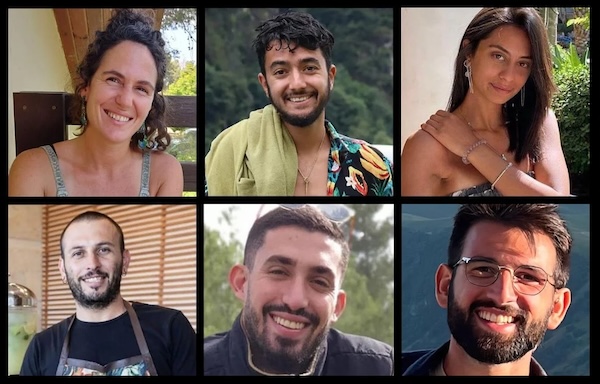
The rescue of four Israeli hostages from Gaza last week and their reunions with their loved ones is a bright spot amid much dismal news – though there remain 120 hostages whose reunions with their families we dream of and hope will happen soon.

This rescue has been a source of tempered joy for Israelis and others. In a time of tragedy and despair, these moments are worth appreciating. Amid the relief, we mourn the life of the Israel Defence Forces officer who died from wounds received during the operation and we mourn the lives of the many innocent Gazans lost. Holding this tension is weighing mightily on many of us, knowing that placing hostages among civilians is a deliberate and overwhelmingly cruel strategy of Hamas.

Closer to home, we are not without bleak news, but neither are we bereft of hopefulness.

The arson attack on Schara Tzedeck Synagogue two weeks ago is deeply troubling and scary. The outpouring of support and empathy from so many is a silver lining. Clergy, elected officials, multicultural community leaders and ordinary folks have expressed solidarity with Schara Tzedeck and the broader Jewish community.

A few less monumental but hopeful items crossed our desks recently.

The Vancouver Comic Arts Festival, which had earlier canceled the participation of artist Miriam Libicki, issued an apology for their actions – and announced that “the vast majority” of individuals who had perpetrated Libicki’s banning had resigned from the organization’s board.

Suffice to say, this is not the foremost news story this year. But it is surprisingly uplifting when a glimmer of common sense emerges where intolerance had once prevailed.

Libicki had been canceled ostensibly because she had served, once upon a time, in the Israeli army. IDF service was also the excuse used when inspirational speaker Leah Goldstein, a BC resident, was canned from an International Women’s Day event in Ontario in March. 

Assertions that an artist (or performer or whoever) is being excluded because they served in a military that we see every day in the news engaged in a tragic conflict may seem legitimate, or at least not quite as blatant as, say, posting a sign that reads “No Jews allowed.” Notably, though, no such litmus test, to our knowledge, has ever been applied to any artist (or whoever) in Canada based on their service in any other national armed forces – and, given the diversity of our country, we can be pretty much assured that we have citizens who have served in many of the world’s most tyrannical and nasty, even genocidal, militaries.

Other excuses to ban Jews or pull Jewish- or Israel-related work from events, exhibits, performances, etc., have also included enough plausible deniability to steer just clear of indisputable antisemitism.

Goldstein’s cousin, local photographer Dina Goldstein (it’s sadly becoming a family affair), was recently removed from a group exhibition. In this instance, the gallery claimed financial considerations were the deciding factor.

Then there are cases where venues pull an event or performer based on security concerns, as the Belfry Theatre in Victoria did with their scheduled performance of the play The Runner. They had reason to fear violence – the theatre was vandalized amid the controversy. But cancelations based on security concerns, as valid as they may seem, give an effective veto to those who are potentially violent.

In the shadow of the Belfry decision, The Runner was pulled from the PuSh Festival in Vancouver, the stated reason being that another artist threatened to pull their work from the event if the play was mounted. 

In addition to cancelations, there is plenty to raise alarm bells about anti-Israel bias in the public education system, as well, as we are forced to outline in discouraging detail elsewhere in this issue, with the BC Teachers’ Federation making some controversial decisions. But, again, here some reason prevails, though not from the BCTF.

The Burnaby school district took what it called “immediate action” when it became known that elementary students had been given an exam question asking them to make a case for and against the existence of the state of Israel. We could fill volumes with outrage about the unmitigated nerve of a teacher thinking this was a legitimate subject for grade sixers (if it was on the exam, one can only imagine what the same educator said in the classroom) but let’s take some solace that there were reasonable people in a position of authority to respond when this became public.

In further good news in the education realm, on June 1, the University of British Columbia’s Vancouver Senate soundly rejected (by a vote of 49 to 16) a motion urging the university to cut ties with institutions in Israel.

In challenging times, it is even more necessary to acknowledge and celebrate small victories and acts of decency. It is an act of individual and communal resistance to remain hopeful and steadfast in pursuit of peace and justice.