Land of milk, honey …

Toward the end of last year, Israel signed an historic agreement with Lebanon, enabling both countries to enjoy an abundance of natural gas located deep below their respective territorial waters.

Now, Israel can continue exploring its northern Karish gas field without the risk of Hezbollah missiles overhead. And Israel will receive indirect royalties from Lebanon’s Kana field – with no peace treaty (yet), royalties will be paid via a third country. Add that to potential revenues from Israel’s other natural gas finds in the Mediterranean, and there’s the opportunity of Israel replacing Russia as Europe’s main natural gas provider. Israel will become more than just the land of milk and honey.

Optimistic forecasts of a natural gas Sovereign Wealth Fund are for billions of shekels in tax revenue. Trusting that the new ruling gas triumvirate – Prime Minister Binyamin Netanyahu, Finance Minister Bezalel Smotrich and Energy Minister Israel Katz – will optimize our natural gas and its wealth fund, then Israel becomes the land of milk, honey, natural gas and an overflowing wealth fund.

Hopefully, Lebanon’s natural gas opportunity will help their economy. Then it, too, will be a country overflowing in natural gas and with its own wealth fund.

***

Israel’s 2022 inflation rate was 5.3%, its highest since 2008.  Within the OECD, Israel had the third lowest rate, behind Japan’s 3.0% and Switzerland’s 3.3%. How’s that for our little shtetl! Can’t even compare these rates with the much poorer performing OECD countries such as Estonia at 23.6%, Lithuania at 24.1% and Turkey at 83.5% (yikes!).

Israel’s rate was even lower than the 6.3% of Canada, whose neighbour to the south experienced a similar level. As for Israel’s neighbours, Jordan and Saudi Arabia were at 4.4% and 3.3% respectively … pretty good. Egypt suffered a 24.4% inflation rate, Syria a rate of 105% and Lebanon 189.4%, one of the highest in the world! Israel, the land of milk, honey and competitive inflation rates.

***

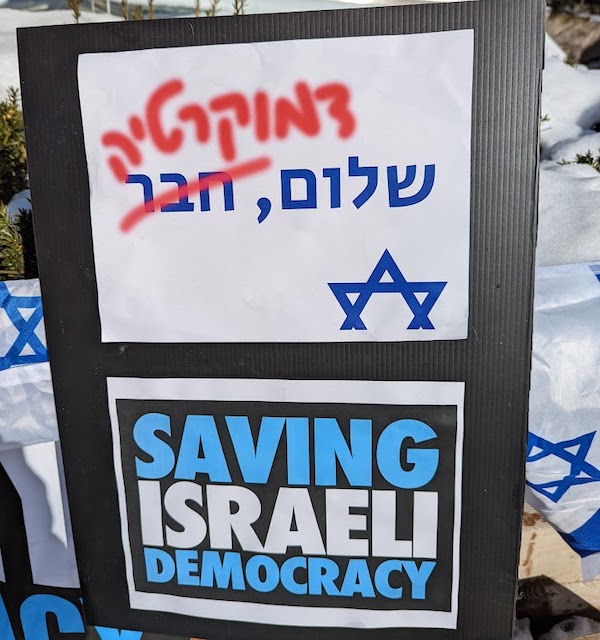
Then there’s the judicial reforms bonanza. Israel’s new justice minister, Yariv Levin, is looking to overhaul the system by granting the government – through a simple majority vote – the right to overturn High Court decisions and by giving politicians more power in appointing Supreme Court judges. Detractors are concerned this gives the government way too much say over legal matters and threatens our democracy.  Supporters – largely those who voted for the new government – believe these changes will strengthen the legislature’s ability to enact the will of the electorate. Theirs, anyway.

Karnit Flug and Stanley Fischer, former Bank of Israel governors, are firmly in the former camp. They’re concerned these reforms will harshly undermine the High Court’s authority and concentrate too much power with the government, hurting Israel’s sovereign credit rating, destabilizing the economy and reducing the standard of living.

Netanyahu – the free market czar who revolutionized Israel’s economy as finance minister and who extracted natural gas from our sea as prime minister – believes his judicial reforms will rejuvenate the economy by reducing excess regulation and judicialization.

Adding to the festivities. Israel’s anti-reform (and largely anti-government) movement had its third weekly 100,000-person protest in Tel Aviv last month. A sea of people storming the city square, waving flags of blue and white, singing folk songs and Hatikvah and shouting slogans of support for the high judges. Israel, the land of milk, honey and a real judicial balagan.

***

It’s here! 7-Eleven opened its first store in Israel. In downtown Tel Aviv (of course), with plans to roll out hundreds of branches throughout our little shtetl over the coming years. Hello, Slurpees! Those multi-coloured slushies were a staple of my Canadian childhood. Although now  I am more a fan of the fresh Dole bananas sold at the stores in the United States and Japan, which I’d buy as a healthy snack while on overseas business trips. Looking inward, does this mean the demise of Israel’s famous mom-and-pop stores, found in neighbourhoods across the country, the Bella’s and Yankela’s, which add to Israel’s heimishe-like atmosphere? That would be a pity! Israel becoming the land of milk, honey, Slurpees … and Dole bananas.

***

On a much lighter note, what about Israel’s maple syrup revolution? It was once only available from specialty food stores, and at an exorbitant price. But what’s a poor Canadian immigrant to do? I paid the ransom and our family enjoyed Shabbat morning French toast, pancakes and waffles. Whenever visiting Canada, I stocked up with the stuff, packing carefully bubble-wrapped bottles of both real and imitation maple syrup into my suitcase.

But, thanks to free trade. Real maple syrup – the organic kind from Canada – became super cheap in Israel, even less expensive than in Canada! And it’s available everywhere, even at Bella’s and Yankela’s. Now when I return to Canada, I take back Canadian maple syrup as gifts. Dare I say it … Israel, the land of milk, honey and Canadian Maple Syrup, eh.

Bruce Brown is a Canadian and an Israeli. He made aliyah … a long time ago. He works in Israel’s high-tech sector by day and, in spurts, is a somewhat inspired writer by night. Brown is the winner of the 2019 AJPA Rockower Award for excellence in writing, and wrote the 1998 satire An Israeli is…. Brown reflects on life in Israel – political, social, economic and personal.

Navigate golden years

On Feb. 15 at Beth Israel, there will be two opportunities to hear Dr. Mielu Rabinovici speak on the topic of The Know-How to Navigate Through the Golden Years and Retirement, and Preparedness also Towards an Increased Longevity and a Better Quality of Life.

Rabinovici is an author and educator who has lived and worked across Canada and on three continents. He has degrees from various institutions, including the University of Toronto, faculty of education.

He has written and taught on several subjects, his areas of speciality being accounting, marketing and management. He is also the author of several books especially designed for seniors, about retirement, longevity and towards a better quality of life.

Now in his mid-80s, Rabinovici is still writing and sharing his knowledge with many groups, including seniors, helping them navigate through the modern complexities of life, characterized by climate change and rapid technological changes.

To register for one of Rabinovici’s Feb. 15 talks (2-4 p.m. or 6-8 p.m.), call him at 604-725-1376.

– Courtesy Temple Sholom

New housing partnership

Yaron Komari, a resident at Dogwood Gardens, speaks at the development’s opening ceremony Jan. 10, as Vancouver Mayor Ken Sim looks on. (photo by Al Lau)

Yaron Komari grew up in Israel, served in the Israel Defence Forces and moved to Canada in 2009. He was pursuing a career as an apprentice electrician and was hopeful for the future when he was diagnosed with Type 2 diabetes in 2018. A year later, the diabetes progressed into serious neuropathy and his career was effectively halted.

“I had no financial safety net and soon found myself in tough times,” he said. “I quickly found myself living in a rooming house with drug addicts and prostitutes as my neighbours. I felt very unsafe. Just walking up the 12 stairs to my room became a daily challenge, never mind the chronic insomnia.”

Komari shared his story at the official opening Jan. 10 of Dogwood Gardens, an affordable housing development on West 59th Avenue near Cambie. The 138-unit building, part of the larger Cambie Gardens development, is a partnership between Tikva Housing Society, SUCCESS and the City of Vancouver.

“Even my doctor became concerned,” Komari recounted at the ceremony. “Without access to a kosher kitchen, my diabetes became unmanageable and further affected my overall health. I’m an observant, kosher Jew and my living situation simply added more stress to my everyday life.

“I never in my worst nightmares thought that I would live in an unbearable and unhealthy environment and rely on community generosity to help source kosher food and meals,” he said.

Komari knew of Tikva Housing, which has the mission of providing “access to innovative and affordable housing solutions for all those in the Jewish community who need it.” However, he thought that there were people in greater need.

“With the persuasion and the help of Tikva Housing and Jewish Family Services, I applied for housing,” he said. “You cannot even begin to imagine what I felt when I got the call from Tikva Housing that my application had been approved. There was no hope for me.… [But] the keys are now in my hand. I walked into my new home. I couldn’t even believe that was happening to me. It was emotionally overwhelming…. I have a fridge that I can store my food in. I have a kosher kitchen where I can prepare my own meals and I have the peace of mind that I am safe and secure. For the first time in years, I have slept through the night. Tikva Housing has changed my life. I’m proud of where I live…. My world feels more open and I no longer feel shame or embarrassed of where and how I live.”

Komari’s is just one of the lives positively affected by the opening of the new facility, which was made possible under the city’s inclusionary housing policy, which requires developers to provide social housing as part of large redevelopment projects. SUCCESS and Tikva will co-manage the facility, which also includes an amenity space, children’s play area, parking and storage. Of the 138 units, 30 are designated for Tikva and 108 for SUCCESS. There are studio apartments and one-, two- and three-bedroom units. About half the units are offered to tenants at 10% below market rents, while the rest are adjusted to income, based on provincial guidelines. The larger Cambie Gardens development, of which Dogwood Gardens is a part, will see a total of 540 affordable units when the project of more than 3,000 total apartments is completed on the 10-hectare (25-acre) site. The redevelopment is on the location of Vancouver Coastal Health’s former Pearson Dogwood complex, which housed adults with physical disabilities and seniors with complex needs.

Anat Gogo, Tikva’s executive director, told the Independent that about 90% of the homes designated for members of the Jewish community are now occupied, with the rest of the residents expected to move in within days. Earlier, she told the audience, which included elected officials and community leaders, that stable, affordable housing is a basic need that allows people to move from merely surviving to thriving.

“This project makes me feel like we can have a meaningful and long-lasting impact and actually make a difference in people’s lives,” she said. “At Tikva, we are committed to tikkun olam, repairing the world, and we do this one home at a time. We are committed to building community.”

Rhonda Sacks, chair of the board of directors of Tikva, also spoke, highlighting the power of partnerships.

“While Tikva and SUCCESS serve diverse populations, we share a common passion for supporting our communities and making a genuine difference in their lives,” she said. Sacks also offered special thanks to lead supporters, including the Diamond Foundation, the Ben and Esther Dayson Charitable Foundation, the Al Roadburg Foundation and the Ronald S. Roadburg Foundation.

“Dogwood Gardens is perfectly positioned to inspire meaningful connections and provide a strong sense of belonging,” said Sacks.

photo - Supporters of Tikva Housing in one of the units at Dogwood Gardens on Jan. 10, left to right: Stephen Gaerber, Gord Kushner, Bernard Pinsky, Rory Richards, Anat Gogo, Ezra Shanken, Rhonda Sacks, Sheila Sontz and Daniella Givon
Supporters of Tikva Housing in one of the units at Dogwood Gardens on Jan. 10, left to right: Stephen Gaerber, Gord Kushner, Bernard Pinsky, Rory Richards, Anat Gogo, Ezra Shanken, Rhonda Sacks, Sheila Sontz and Daniella Givon. (photo by Al Lau)

Dogwood Gardens is not the first partnership between Tikva and SUCCESS. With other partners, the two agencies opened the 129-unit Diamond Residences (Storeys), in Richmond, six years ago. Last year, YWCA Metro Vancouver, the Association of Neighbourhood Houses of B.C. and Tikva opened xʷƛ̓əpicən, a 125-unit complex at Arbutus Centre. Tikva’s portfolio also includes the 32-unit Ben and Esther Dayson Residences, in south Vancouver’s River District, and Dany Guincher House, an 11-unit building for people at risk of homelessness and persons with disabilities who can live independently, which was Tikva’s first building. The house was built in 1970, purchased by Tikva in 2007 and began operations in 2008. With Dogwood Gardens now open, Tikva’s portfolio includes 128 units.

Currently under construction in Burnaby is the next Tikva initiative, Susana Cogan Place, which is named after the woman who led Tikva until her passing in 2017. This project will add another 20 units of affordable homes.

In addition, Tikva Housing has a rent subsidy program that provides eligible low-income singles and families with cash assistance towards their monthly rent, within available funding.

At the Dogwood Gardens opening, Vancouver Mayor Ken Sim was joined by city councilors Sarah Kirby-Yung, Rebecca Bligh and Christine Boyle.

Sim noted that he grew up about a half-kilometre away in what was “effectively affordable housing” and said this new housing complex means that “the next generation of Vancouverites who may not have a lot … can still live in an amazing area like this one.”

The project is part of sprawling changes along the Cambie corridor, including the Oakridge redevelopment and smaller projects that increase density along the thoroughfare. JWest, the redevelopment of the Jewish Community Centre of Greater Vancouver campus a few blocks to the northwest, is a major component of the changing face of the broader area, which has traditionally been home to many of Vancouver’s Jewish residents and community institutions.

“The City of Vancouver is committed to delivering much-needed quality housing while developing collaborative relationships with community partners,” said Sim. “We applaud the work of SUCCESS and Tikva, who have helped expand options for culturally appropriate housing across our city.”

Queenie Choo, chief executive officer of SUCCESS, chaired the opening ceremony and acknowledged other representatives of her organization, which is celebrating its 50th anniversary this year and has grown from a small charity in Chinatown to one of Canada’s largest social service agencies.

Negev Dinner returns

Lance Davis, chief executive officer of JNF Canada (photo from JNF Canada)

Noa Tishby, an Israeli who hit it big in Hollywood as an actor, writer and producer before bursting on the scene as an activist voice for Israel, will be in Vancouver June 29. She is the headliner for the first Negev Dinner in Vancouver since the pandemic.

The Negev Dinner is a tradition of the Jewish National Fund of Canada, with annual dinners taking place for decades in regions across the country.

Michael Sachs, executive director of JNF Pacific region, says that Tishby’s upcoming visit is a response to demand.

“A lot of people in the community really want to hear from her,” said Sachs. “The rising antisemitism, as well as the delegitimization of Israel – these are issues that are forefront in our community.”

Tishby is, he said, “one of the best spokespersons for the state of Israel and for the Jewish community at large.”

With her 2021 book, Israel: A Simple Guide to the Most Misunderstood Country on Earth, the Los Angeles-based Tishby placed herself firmly in the realm of show biz activist, but on a topic that many public figures avoid. (See jewishindependent.ca/tag/noa-tishby.) Her entertainment industry work includes appearances on Nip/Tuck, Big Love and NCIS, and she is the co-executive producer of the HBO series In Treatment, an adaptation of the Israeli series BeTipul.

“To be able to have her in Vancouver, we just couldn’t miss out on it,” said Sachs, adding that this young, dynamic woman has an appeal that can expand the reach of JNF and the Negev event.

“We are also working on student pricing and we want ‘angel’ tickets,” he said. “The idea is to get as many people in our community in front of her so they can hear her message.”

This dinner will not have an honouree like such events have had in the past. Part of that is simply the desire by the organization to try different things but it is also because, with JWest, the redevelopment of the Jewish Community Centre of Greater Vancouver, and other projects, there are “a lot of asks” in the community right now, said Sachs.

While JNF has sent out “save the date” notices for June 29, the location is not yet set. The organizing committee is co-chaired by husband-and-wife team Mike and Lisa Averbach. The project to which proceeds of the event will be allocated is to be announced in the next few weeks.

While the June event will be the first JNF gala in Vancouver since the pandemic, some took place in other regions last year, said Lance Davis, chief executive officer of JNF Canada. He has witnessed some pent-up demand to celebrate with community again.

“When people get together during cocktails and they haven’t seen each other for such a long time, the hugs and the warmth – it’s wonderful,” he said.

During the pandemic, JNF held Negev “campaigns” – fundraising initiatives that did not involve in-person events. Despite the financial and social impacts of the shutdown, Davis said the organization’s revenues have rebounded to pre-pandemic levels.

“It’s a wonderful news story that we are bouncing back and moving in the right direction,” said Davis, who has been CEO of the national organization since 2017, following five years leading the Toronto region.

JNF Canada, like Jewish and pro-Israel individuals and organizations worldwide, is coming to terms with the changed political dynamic in Israel. Binyamin Netanyahu’s new coalition, frequently referred to as “the most right-wing government” in the country’s history, is shaking up the global discourse on the region. The resignation of Israel’s ambassador to Canada, announced last Saturday, is just one reaction in an uncertain new environment. Davis, like leaders of other organizations, is emphasizing neutrality and independence.

“I just want to state unequivocally that JNF Canada is nonpolitical and nonpartisan and, as such, we are going to continue to do our work regardless of who is in government,” he said. “We are mission-driven and that means simply building the foundations for Israel’s future. We will continue to help the land and the people of Israel as we have done for decades with left, right and centrist governments. Nothing has changed. Our resolve to enhance the lives of Israel’s citizens is not impacted by the current regime and this is the time for Diaspora Jewry to communicate with our extended family in Israel that we are indeed a family and as such we will always be there for them.”

photo - Lance Davis, chief executive officer of JNF Canada
Lance Davis, chief executive officer of JNF Canada (photo from JNF Canada)

For all the ink spilled on the subject, Davis thinks the supporters of JNF Canada are sophisticated enough to understand the dynamics.

“For those people who say, I can’t be a part of this because I don’t support the government of Israel, I just hope that we can have a conversation with them,” he said. “You need not worry that one penny of that money goes to the government…. It’s only for charitable purposes and I think that if we are given the chance to explain this, people will understand we are nonpolitical and nonpartisan.”

The Israeli political climate may be a new variable, but JNF has not been without its critics over the years, some of whom accuse it of promoting Israeli “colonialism.”

“There is no question that there’s a whole host of anti-Israel parties who are taking an adversarial position,” he said. “I just wish that they would actually look at what we’re doing because is building a PTSD and health centre that serves all citizens, Jewish, Arab, Christian, Muslim, everybody – is that colonialism? Building a home for abused women with nowhere to go? It’s literally a lifesaving asset and, rest assured, Jewish Israelis and Arab Israelis will be using this facility – how is this colonialism? What exactly is it that they are protesting against?”

At a Negev Dinner in Vancouver a few years ago, which was raising funds to improve a facility for the most vulnerable sick kids in Israel, Davis saw protesters outside.

“I showed up at the dinner and I said, I wish these people understood what they were protesting against,” he recalled. “Because what you guys are doing is building a resource for the sickest kids, Jewish, Arab, Christian, Muslim – they’re all Israelis, they’re all welcome at this facility. Do they even understand what it is they’re upset about? And shame on them for protesting your efforts to build this facility for the most vulnerable children.”

One new initiative that Davis is particularly excited about is JNF Canada’s Climate Solutions Prize, a competition among Israeli researchers to fund breakthrough research focused on combating climate change.

“We’ve made an effort to raise $1 million a year over the next number of years,” he said. “We have a blue ribbon panel of scientists and engineers and businesspeople who review these researchers’ proposals.”

Last October, they presented the first awards, totaling $1 million US to the leaders of three research teams. Ben-Gurion University’s Prof. Itzhak Mizrahi and his team are working to ameliorate the methane emissions caused by cows. Dr. Malachi Noked of Bar-Ilan University seeks to reduce global emissions by improving ways to store renewable energy safely, efficiently, economically and in quickly accessible forms. Prof. Avner Rothschild of the Technion is working to produce green hydrogen through electrolysis of water.

Recipients are scientists who are well advanced in their work but need a boost in funding to achieve a breakthrough.

“This is the largest climate solutions prize that’s offered in Israel, by a long shot,” said Davis. “There are prizes to encourage green technologies, but in terms of the size and the scope, we are by far and away the largest prize.”

And, at this point, it’s an exclusively Canadian project. He hopes that other JNF organizations – there are about 40 countries with similar national bodies – will jump on board and make the prize a bigger success.

Israelis are renowned for successes in financial technology, cyber- and agri-tech, said Davis. “But, in terms of climate solutions, they really haven’t had a home run yet,” he said. “We felt that we need to give people a little push to get them over the top.”

Jewish National Fund of Canada was formally established in the late 1960s, but the iconic symbol of Keren Kayemeth LeIsrael, Jewish National Fund, the pushke, or blue box, has been in Jewish households in Canada and around the world for a century. The tin has been used for collecting coins that were forwarded to local offices around the world and combined to help build the nascent yishuv and then the state of Israel, beginning by planting trees and then expanding into all range of development projects.

Davis explained that JNF Canada is fully independent and not structurally connected with the Israeli organization.

“We are not a subsidiary,” he said. “We are not answerable to any other charity.… We get to decide what projects we take on. Canadians give money to things that they want to support and we bundle all that money from coast to coast and we take on projects.”

JNF Canada works with Keren Kayemeth LeIsrael on some initiatives but works with other charities on a range of undertakings.

“We, the Canadians, decide what we want to do and the Israeli entities are our agents,” he said. “They do the work for us. People often … have it reversed [thinking that] Israelis tell us what we need to do and we just do it. No, it’s the opposite. They work for us and that’s the way it should happen.”

Started in 1948, Negev dinners have taken place, usually annually, in Vancouver, Edmonton, Calgary, Winnipeg, Windsor, London, Hamilton, Toronto, Ottawa, Montreal, and Atlantic Canada. The name comes from the fact that the earliest dinners benefited projects in the Negev Desert. JNF Canada now funds projects throughout Israel, but the name has stuck.

“I think that when Canadians think about JNF a few things come to mind: trees, blue boxes and the Negev Dinner,” said Davis.

Peace is breaking out

Avi Benlolo will screen a film at Beth Israel on Feb. 13. (PR photo)

There is a fundamental disconnect between what is happening in the Middle East and what observers in Europe and North America perceive, according to Avi Benlolo, founder and chairman of the Abraham Global Peace Initiative. He aims to close that gap, and will be in Vancouver next month to bring his message – and a new documentary film – to West Coast audiences.

“Peace is unfolding in the Middle East,” Benlolo told the Independent. “The Abraham Accords have completely revolutionized Israel’s relationship with some of the neighbouring countries like the [United Arab Emirates], Bahrain, Morocco and so on. This new development hasn’t yet registered here in the West.”

On university campuses and in the social movements of Europe and North America, he said, the narrative remains mired in the decades-old conflict and tired rhetoric of “apartheid,” “colonization” and BDS, the movement to boycott, divest from and sanction the state of Israel.

“The truth of the matter is that that rhetoric isn’t rhetoric in the Middle East,” Benlolo said. “In the Middle East, BDS is nonexistent. You now have trade in the billions of dollars between Israel and its Arab neighbours, so clearly BDS has lost.”

The film that Benlolo produced and directed, The Future of Israel and its Defenders, approaches the issues through the lenses of experts, military strategists, entrepreneurial leaders, journalists and current and former political leaders.

“The message I’m trying to transmit,” he said, “is one really of hope for change.… If we are reinforcing that message that this is happening, that will help build on the peace process.”

A growing global realization of Mideast peace will also help reduce antisemitism and empower Jews, especially young people, everywhere, Benlolo hopes.

The film will be screened, and Benlolo will participate in a question-and-answer session, at Congregation Beth Israel Feb. 13, 7 p.m., in a celebration of Israel’s 75th birthday.

Benlolo founded the Abraham Global Peace Initiative after many years of working in the Jewish communal sector, including as chief executive officer of Friends of Simon Wiesenthal Centre for Holocaust Studies. AGPI became a registered charity in late 2021.

While there are many Jewish and Zionist organizations in Canada, Benlolo said his is unique.

“There is no voice for Canadian Jews internationally,” he said. “We are taking the Canadian voice global and working with the United Nations, working with the [European Union], working with multiple leaders around the world. Antisemitism and defamation of Israel is a transnational phenomenon. The swastika that you see painted on a school wall is not just localized, it’s being motivated globally.

“We are also saying, we as Canadians can stand up for ourselves,” Benlolo continued. “Canada itself is an incredible brand globally…. What AGPI is doing is optimizing the Canadian brand and we’re doing it very successfully. Every two minutes – I’m not exaggerating – there is a subscriber onto our website from somewhere on the planet, Italy, Brazil. Every two minutes. That’s because people love the Canadian brand, they love everything that we are saying, so we can be, as Canadians, an international voice with quite tremendous strength.”

While Benlolo is hoping that the Abraham Accords mute some of the condemnation Israel experiences on the world stage, defending Israel’s rights internationally may be entering a new phase, he said. The old tropes are being replaced with the phrase “Israel’s most right-wing government ever,” including in mainstream media sources.

“It’s a challenge, I’m not going to kid you,” said Benlolo. “The thing is, the media is never a fan of Israel, particularly here in Canada, outside of the National Post and maybe the Jewish [community] media. They are using any opportunity to grab hold and to make Israel look bad. They love it.”

The characterization of Israel’s new government clouds the reality, he argued. Israelis who voted for right-wing parties did so mainly on security grounds, he said, because they are deeply concerned about terrorism.

“That has driven them to move to the right,” he said, adding that Israeli society in general “is fairly secular, is not right-wing and is very pro-human rights.” He noted that the new Knesset features the country’s first openly gay speaker.

“Just because you’ve got this government right now that’s made up of a coalition doesn’t mean that it represents Israeli society and it doesn’t mean that it’s everybody in Israel that believes in this. That needs to be articulated as well,” said Benlolo. “Finally, we’re going to put pressure to bear as a Jewish community and friends of Israel, we’re going to continue to pressure Israel to make sure that it stays the course and stays true to tikkun olam.”

More details, and tickets for the event, which is presented by Beth Israel and the Jewish Federation of Greater Vancouver, are available at bethisrael.ca.

Summit covers tough issues

Author and former politician Michael Oren addresses the Jewish Media Summit, which took place in Jerusalem Dec. 19-22. (photo by Dave Gordon)

The Iranian threat, the new Israeli government, BDS, terrorism, and the challenges of aliyah, were just some of the discussion topics last December, at the fifth annual Jewish Media Summit, which took place in Jerusalem Dec. 19-22.

The nearly 100 attendees hailed from Israel and across Europe, as well as from South Africa, South America and North America, and included the Jewish Independent. Most panels and keynote addresses consisted of official spokespeople, politicians (incoming and outgoing) and organizational heads. The conference was organized by the Ministry of Diaspora Affairs, Ministry of Foreign Affairs, and the Government Press Office.

Former U.S. ambassador to Israel Michael Oren spoke about one of his pet projects. Oren is a former member of the Knesset and the author of several books, including Ally: My Journey Across the Israel-American Divide.

Several years ago, when Oren was a deputy minister in the Prime Minister’s Office, he proposed to Prime Minister Binyamin Netanyahu that Israel have a blueprint leading into the state’s 100th birthday – Oren’s book Israel 2048 will be published in April.

To write the publication, Oren investigated different areas of Israel’s future: social, education, health and foreign policies; Israel-Diaspora relations; Palestinians, Arabs. “We found experts in every field. It was a tremendous undertaking,” he said. “I would not shy away from any issue, controversial, even explosive.”

About Israel, he noted “we don’t have sovereignty over large areas of our territory,” referring to the 60% of the country that is the Negev Desert. As an example of what this means in terms of governance, he said there’s no application of Israeli law regarding housing there and so there are some 400,000 illegal Bedouin structures in the Negev.

“But if I built a two-millimetre addition to my balcony in Tel Aviv, I have a police car there, within seconds, giving me a big ticket,” he said. Additionally, he said there’s “an inability to enforce [other] Israeli laws” there, so there’s no control over guns, drug or human trafficking, and polygamy is rampant, despite it being illegal.

Of concern, he said, is that more Bedouin are being influenced by Islamic extremism and the Palestinian narrative.

“It’s critical that the 2048 initiative is not the initiative of religious people, of secular people, of right-wing, left-wing, Ashkenazim, Mizrahim. It’s everybody together,” he said. “If you want Israel to have a second great century … we have to work on it. And we have to work at it by talking to one another, about real solutions.”

Oren spoke with the Jewish Independent about how he thinks Israel will ease challenges to aliyah.

“What shocked me is that large segments of the population are no longer interested in large-scale aliyah,” he said. “I couldn’t get people in Israel and [in the] Israeli government to be very interested in encouraging aliyah from France.”

The predominant reason for this lack of interest in welcoming new immigrants from France or any other country in the Diaspora, he said, is that Israelis are becoming increasingly angry at how the many costs of new olim (immigrants) are offset by the state.

“This is going to play out now with Russia and Ukraine as well,” he noted. “So, while everyone’s focused on the grandfather clause [of the Right of Return], I asked a deeper question: to what degree is aliyah still a central tenet of our raison d’être of the Jewish people? Because, from my perspective, if we are not encouraging large-scale aliyah, we’ve lost a big sense of why we are here. And I see this as a danger.”

The largest section of Oren’s new book, however, deals with the Palestinians. Oren said he was involved in one way or another with “every peace initiative since 1993.”

On another topic, Oren noted that Benny Gantz, then-minister of defence, proposed a solution to the Iranian threat: “force our international partners” into offering “military intelligence and diplomatic cooperation.”

“Our actions must be preventative, before it is too late,” said Oren.

On a tour of the Tz’elim IDF base, a 10-minute drive from Gaza, Gen. Bentzi Gruber spoke about the ethics of combat, stressing that the army makes enormous effort to minimize innocent casualties. In contrast, he said, only two Hamas rockets hit the base, while thousands hit civilian areas.

Gruber added that he fights a psychological battle, too.

“I fight all my previous wars every night in my sleep. My wife wakes me up when I’m yelling,” said the deputy commander of the IDF armoured division. “Every soldier that fought in a war carries the scars with them. If you killed a terrorist or a civilian, that never leaves you.”

The tour included a mini-Gaza mockup city, a training area for the Israel Defence Forces.

Kibbutz Nirim, a few hundred metres from Gaza, has been hit by rocket fire from Gaza in recent years. The kibbutz’s spokesperson, Adele Raemer, who addressed the United Nations Security Council in 2018, said the village had to build safe rooms, as residents have just a few seconds to get out of harm’s way. One terror tunnel discovered nearby was 75 feet deep, 1.1 miles long, and made of 500 tons of cement.

Still, she said, she “has nothing against ordinary Gazans,” and locals participate in Project Road to Recovery, where Jews shuttle Arab patients to local hospitals “because we care about our neighbours.”

President Isaac Herzog encouraged Jews around the world to fight the BDS (boycott, divestment and sanction) movement, whether espoused by foreign governments or the media, on college campuses or elsewhere. He commented on those who disagree with Israel’s new government.

“Israeli democracy is vibrant and strong,” he said. “The many voices that compose us do not point to the weakness of our democracy, but our strength. The rule of law, freedom of speech, human and civil rights, these have been and always will be the wall of our democratic state.”

In a non-political talk, Neta Riskin, who plays Giti Weiss in Shtisel, spoke about the surprise hit, which has run three seasons. At first, the show’s publicist told them “there’s nothing to work with” and it wouldn’t last, but word of mouth and good reviews bolstered the show, she said.

For her, Shtisel “has nothing to do with religion. It has to do with people – longing, hope and people’s desires. The cultural restraints of the show made it more interesting. No dead bodies. No sex.” She said she was pleased that women’s stories were also being told in the show.

Shtisel is popular in the Haredi community, with people watching it on their phones, according to Riskin. “The show managed to bridge an un-crossable bridge,” she added, noting how popular it was among all stripes of Jews and non-Jews alike.

Dave Gordon is a Toronto-based freelance writer whose work has appeared in more than 100 publications around the world. His website is davegordonwrites.com.

Caring in times of need

Chaplain Sari Shernofsky (photo by Norwegian Cruise Line)

Earlier this month, Sari Shernofsky described her experiences as a chaplain in a Zoom lecture called Stories from a Narrow Bridge: Meeting People in Time of Need. The talk’s title comes from a quote by Reb Nachman of Breslov: “All the world is just a narrow bridge and the main thing is to have no fear at all.” For Shernofsky, a recent transplant to Victoria from Calgary, those words were a call to pursue training as a multifaith hospital chaplain.

Shernofsky’s talk was part of Kolot Mayim Reform Temple’s current lecture series, Building Bridges: Hineini – Answering the Call to Heal the World. It took place on Jan. 8.

Shernofsky worked in hospital and hospice settings for 15 years, with the objective of offering compassionate care to those in need. She also served as the Calgary Jewish community chaplain where, in addition to visiting individuals, she helped set up support groups and various training workshops for synagogues that wanted to become involved in community care.

According to Shernofsky, to care for others in their time of need – whether it be an illness, end-of-life care or simply to connect with those who are isolated or alone – is not a choice but an obligation she views as a profound Jewish value.

A chaplain provides spiritual and emotional support to people in institutional settings. Healthcare chaplains, such as Shernofsky, are trained to work with people of different faiths. Though derived from a Christian word, a current use of chaplain encompasses the work done by spiritual-care providers. Many who go into the field do so later in life, as life experience is advantageous to the job. Shernofsky had worked in the corporate world before entering the chaplaincy. “I wanted at a certain point to work with my heart and not my head – to [be able to] look back at the end of my life and say I did something to help someone else that was meaningful,” she said.

“Maybe we are the bridge, and we are reaching out our hands to others – that is basically what a chaplain does. And there is a chaplain in all of us, to reach out our hands and make tikkun olam [repairing the world] happen,” she said.

As she explains it, her job was to visit people and let them take her into their world. Among the visits was one to someone she met while studying to be a chaplain. One evening, at midnight, she received a message on her pager notifying her that the daughter of an elderly evangelical man was looking for a Bible so she could read scripture to him. Once brought, the Bible did not create the desired effect, so the daughter asked for a hymnbook. Shernofsky returned with a hymnbook, which didn’t work either.

Silence ensued. Shernofsky finally walked over to the head of the bed and placed her hand on the man’s forehead. “I told him what a special life he led and how loved he was. I talked about the family being around and how much love was surrounding him. As I was talking gently to him, the daughter and her friends started humming ‘Amazing Grace’ in the background. I had a back-up group. And it was the most magical moment, a holy, sacred moment. When it was over, the daughter had a wonderful smile on her face. We gave her a moment that she needed. I walked out of the room at two in the morning and I was higher than a kite.”

In another instance, a Jewish man in his 60s came into the hospital in critical condition. At a certain point, doctors considered removing his life support, but his rabbi objected and he remained in hospital for another month.

“I realized that the family had time during that month to get over the initial shock and get used to the idea. Perhaps more importantly, they did not have to make a decision to pull the plug. And I don’t know how families can do that, and how awful it must be because there has got to be a place in the back of your head that says, ‘What if I hadn’t?’ It was a real learning experience for me about timing.”

She also recounted the lesson she received from a woman who had been bedridden in a hospital for several years. The woman was adored by hospital staff, Shernofsky said. “I learned that, when you have so little, you can still make a difference.”

Shernofsky ended with a few words about medical assistance in dying, or MAiD. “People choose MAiD because they are afraid of suffering, they don’t want to be helpless and don’t want to be a burden to others,” she said. “Maybe some of those reasons are a bit misguided. What happens with MAiD is often poor information. People are not told what other supports are available, like palliative home care and hospice. There are lots of good things about hospice, people are not educated about them and that’s a shame.”

The next speaker in the series is McGill University’s Prof. Morton Weinfeld, who recently published an updated edition of his book, Like Everyone Else But Different. He speaks Feb. 5, 11 a.m. To register, visit kolotmayimreformtemple.com.

Sam Margolis has written for the Globe and Mail, the National Post, UPI and MSNBC.

Students are learning to cook

In Richmond Jewish Day School’s Food Lab Program, students help prepare meals once a month. (photo from RJDS)

One by one, students at Richmond Jewish Day School filter down the hallways following the smells of a delicious and nutritious meal. Waiting for them in the gym is lasagna, Caesar salad and a pesto prepared by RJDS students with the help of Jewish Family Services culinary master, Chef Zoe Sorokin.

RJDS’s Food Lab Program is the first of its kind in a Jewish day school in Metro Vancouver. It is just one of the current programs running in RJDS to enhance students’ access to healthy and nutritious food in a way that promotes community and inclusiveness. Every week, JFS makes and delivers hot meals at no cost to the students or their families. Once a month, students in grades 4 through 7 take an active part in this, helping with the preparation of the meals, including chopping, grating and cooking the plant-based ingredients.

photo - Once a month, students in grades 4 through 7 take an active part in this, helping with the preparation of the meals, including chopping, grating and cooking the plant-based ingredients
Once a month, students in grades 4 through 7 take an active part in this, helping with the preparation of the meals, including chopping, grating and cooking the plant-based ingredients. (photo from RJDS)

“I enjoy learning new cooking skills,” said Naomi, a Grade 4 student. “My favourite dish was the bean soup.”

“I love that we use all our senses when cooking,” said Ella, who is in Grade 5.

With demand at food banks growing over the course of the pandemic and rising inflation, food insecurity has become a reality for more families. RJDS students and school staff have led several efforts, with the support of social service partners, to help families feeling the pinch. Last year, with the assistance of the Jewish Federation of Greater Vancouver, Kehila Society and JFS, RJDS began a community fridge and pantry program. The partner agencies, plus the Richmond Food Bank, keep the fridge and pantry stocked and RJDS families can access free healthy snacks, dry goods, fresh produce and meals during school hours. The Food Lab represents an expansion of the school’s food programs.

photo - The Food Lab represents an expansion of the school’s food programs
The Food Lab represents an expansion of the school’s food programs. (photo from RJDS)

“The students at Richmond Jewish Day School have absolutely loved the weekly hot lunches,” said principal Sabrina Bhojani. “Our parents have also expressed their delight with this program, knowing that their children are receiving a warm, healthy and nutritious meal at school. The research is clear – good nutrition helps our children to focus, concentrate and self-regulate, which, in turn, results in improved learning and student performance.”

She added, “Not only are the students helping in preparing food to be enjoyed by the school, they are also learning about making informed decisions about food choices, food safety, the importance of food supply and healthy nutrition.”

photo - Students helping preparing food to be enjoyed by the school
Students helping preparing food to be enjoyed by the school. (photo from RJDS)

“I love participating in the Food Lab program,” said Yahel, who is in Grade 5. “It is a fun experience and I get to learn new skills that I can use at home.”

Vienna, also in Grade 5, agrees, saying: “I enjoy learning new cooking skills that I can share with my family.”

The RJDS kitchen has become a place for children to learn new and valuable life skills, to enjoy good food with friends and, most importantly, a place in which they can contribute and build strong relationships.

– Courtesy Richmond Jewish Day School

Many first-time experiences

Camp Shalom knows that first experiences are a huge milestone in a child’s development, shaping their individuality, interests and futures. (photo from JCC Camp Shalom)

Day camps have always been places for firsts. For many, camp is the place where they are in a structured setting that isn’t school, where fun comes first. Serving children and youth from 3 to 16 years old, Camp Shalom has always viewed the experience from the lens of “what memorable first experience can we give campers?” For some kids, that experience is as simple as the first time being on a school bus going to a field trip. For others, it may be the opportunity to go camping or have a sleepover away from their homes.

These types of firsts are a pivotal part of growing up and becoming an independent person. With year-round programming during school breaks and professional development days, Camp Shalom is able to give many children and youth experiences they would not normally get to have. It’s an opportunity to meet other children who do not go to the same school as them or kids who have just moved to Vancouver. Such firsts leave a lasting impression and have the potential of creating lifelong friendships. Camp Shalom is dedicated to making camp a safe and accessible place where children want to go.

Thanks to the ongoing and generous contribution of the Diamond Foundation and the Snider Foundation, Camp Shalom is also able to support campers with diverse needs. Staff are provided with special training sessions, mentorship programs and one-on-one support to ensure each camper can have the best experience. Campers who were part of the inaugural Inclusive Summer Camp Experience have now grown and become teens and young adults who are still connected to Camp Shalom, some of whom are now camp staff.

photo - With year-round programming during school breaks and professional development days, Camp Shalom is able to give many children and youth experiences they would not normally get to have
With year-round programming during school breaks and professional development days, Camp Shalom is able to give many children and youth experiences they would not normally get to have. (photo from JCC Camp Shalom)

During their camp years, kids are transitioning from childhood into teenage-hood and teens are about to become counselors. First experiences are a huge milestone in a child’s development, shaping their individuality, interests and futures. Each year, after camp is over, counselors and staff hear about campers who have gone on to explore new interests that they gained while at camp.

A couple of summers ago, Camp Shalom introduced fencing – for almost everyone it was their first time doing this sport, and most initially knew nothing about it. One camper in particular found so much joy in this first that he has continued participating in it since. In the camp’s teen programs, many participants discover their passion for working with children or in community volunteering. Even staff are affected by these new experiences, and some have changed career paths after working at camp.

This summer, Camp Shalom will be operating at the Jewish Community Centre of Greater Vancouver and King David High School in Vancouver, Har El Synagogue in West Vancouver, and Richmond Jewish Day School in Richmond. Families can choose the location that best suits them.

For more information about the Inclusive Summer Camp Experience or Camp Shalom’s teen programs, contact Ben Horev, camp director, at 604-638-7282 or ben@jccgv.bc.ca.

– Courtesy JCC Camp Shalom

Community milestones … Gordon, Segal, Roadburg foundations & West

Dr. Paula Gordon and Gary Segal have been appointed to the Order of Canada.

On Dec. 29, Governor General of Canada Mary Simon announced new appointments to the Order of Canada. The list included two members of Vancouver’s Jewish community: Dr. Paula Gordon and Gary Segal.

“What a beautiful way to end the year, honouring Order of Canada appointees and learning about the depth and range of their accomplishments,” said Simon in a press release. “Celebrated trailblazers in their respective fields, they are inspiring, educating and mentoring future generations, creating a foundation of excellence in our country that is respected throughout the world. Their commitment to the betterment of Canada fills me with pride and hope for the future. Alianaigusuqatigiivassi. Congratulations.”

Gordon is a clinical professor in the department of radiology at the University of British Columbia. Her research interests include breast ultrasound for diagnosis and for supplemental screening for women with dense breasts. She has been the chair of numerous committees, including ones dealing with provincial health policies and screening programs. She has been a reviewer for academic publications, published extensively in peer-reviewed journals, and volunteered in numerous capacities. Gordon was appointed an officer of the Order of Canada for “advancing ultrasound imaging and technology in the early detection of breast cancer, as a prominent radiologist and researcher.”

Segal, executive/principal of Kingswood Capital Corp., is a philanthropist who also volunteers in several organizations. His current roles include chair of the board of directors of the VGH & UBC Hospital Foundation, several responsibilities with the Jewish Joint Distribution Committee, founder and chair of the Bring Back Hope initiative for Ethiopia, governor and founding member of St. Paul’s Hospital Foundation, and a member of the board of directors of the Jewish Federation of Greater Vancouver. Segal was appointed a member of the Order of Canada for “his enduring commitment to humanitarian work, philanthropy and service to the community.”

Philanthropy

On Jan. 17, JWest announced a leading $36 million capital campaign matching challenge by the Ronald S. Roadburg Foundation and the Al Roadburg Foundation. This is the first time the two private charitable foundations have collaborated on a major initiative, and they hope to inspire the community through the Roadburg family’s legacy. This gift marks the single largest donation given to the JWest project.

The Ronald S. Roadburg Foundation was established in 2021 through the estate of the late Vancouver businessman Ronald Roadburg. Rooted in a strong sense of community and responsibility, the foundation engages in philanthropic initiatives in the Jewish and broader communities locally and around the world. Promoting transformational change, it looks to support populations disproportionately affected by circumstance or inequities, strengthen and secure the Jewish community and other at-risk communities, and address complex social challenges.

“Strengthening and securing communities is at the heart of the Ronald S. Roadburg Foundation, and we saw this as a once-in-a-lifetime opportunity to do just that,” said foundation chair Bernard Pinsky. “Ronald Roadburg was active in Vancouver real estate. With his vision to establish philanthropic goals for his estate, JWest is a perfect opportunity to leave a legacy in the city of Vancouver.”

Founded in 1997, the Al Roadburg Foundation seeks to support charitable organizations across Vancouver and in Israel responding to food and housing insecurity and health care issues. The foundation also looks to assist groups that help at-risk youth and those with disabilities and debilitating diseases.

“Al Roadburg was a quiet businessman who nevertheless had a presence in many parts of Greater Vancouver,” said its chair, Robert Matas. “The JWest project will create a robust athletic, social and cultural hub that is bound to strengthen both the Jewish community and the broader community across the region. With the Roadburg family’s support for community in mind, we’re pleased to be part of making it happen.”

Al Roadburg was born in Vancouver in 1913. At an early age, he began working as a scrap dealer. Over the years, he built his business, Richmond Steel Recycling, into a multi-million-dollar operation, with the largest automobile shredder in the province. In the 1950s, he began building a portfolio of rental apartments, multi-purpose warehouses, commercial spaces and office buildings. His company, Broadway Properties, bought and held the buildings, providing security for tenants and stability to neighbourhoods in Greater Vancouver. After he died, his son Ronald took over the real estate business.

The Roadburg family lived as active members of the Jewish community and were business leaders in Vancouver. They made decisions that ensured they remained charitable through their estates. With the recent announcement, they have established a legacy that will benefit the city and community where they lived and raised their family.

“We’re immensely grateful to the Roadburg family for issuing this challenge. When the challenge is met, it will represent a profound investment in the Jewish community and the community at large,” said Alex Cristall, JWest capital campaign chair. “To achieve this goal, we will first be meeting with major donors across our community to match this challenge. However, this is a community-wide project and, in due course, we will be inviting everyone to join us in creating a legacy for future generations.”

When complete, JWest will house all programs and services offered at the current Jewish Community Centre of Greater Vancouver in larger, purpose-built spaces. It will also include expanded space for the Vancouver Holocaust Education Centre and, in the second phase of construction, mixed-use rental housing and a new home for King David High School.

In September 2022, the Diamond Foundation donated $25 million, marking the first philanthropic donation to the project, a contribution that was matched by community donors. The $36 million matching challenge from the Roadburg family foundations brings the total amount raised to $88 million of the $161 million philanthropic goal.

In addition to community philanthropy, JWest gratefully acknowledges the $25 million received from the Government of British Columbia and the $25 million contributed by the Government of Canada.

For more information, visit jwestnow.com/about.