Supporting arts, community

Residents of Prince George might be forgiven for thinking there is more than one person named Eli Klasner in their midst. Among his many concurrent pursuits, the Toronto native is directing the Community Arts Council of Prince George, leading a fundraising initiative for Ukrainian refugees and serving on the board of the Jewish Museum and Archives of British Columbia.

Living in Prince George is the fulfilment of a lifelong dream for Klasner. Since childhood, he had entertained the notion of living on the Canadian frontier or the Far North. When he was younger, he also made a commitment to himself that, by the time he celebrated his 40th birthday, he would do whatever it was that excited him.

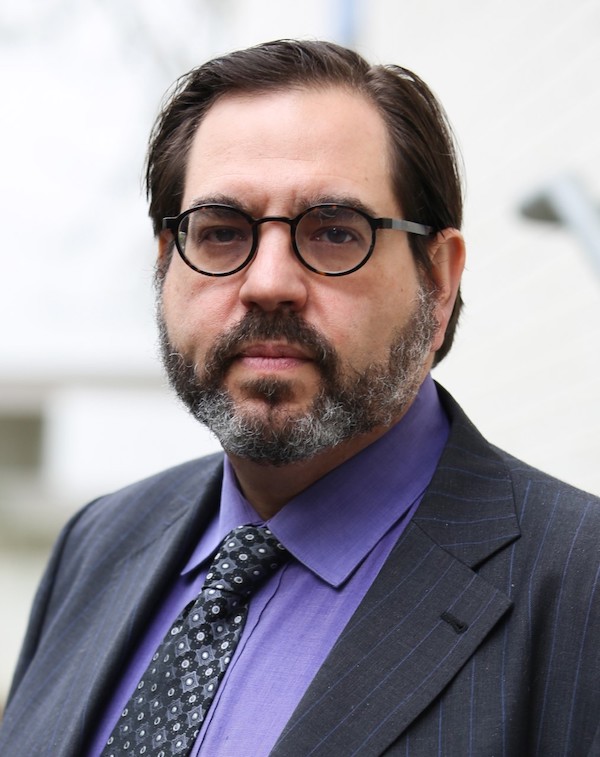
photo - For philanthropist Eli Klasner, living in Prince George is a dream come true
For philanthropist Eli Klasner, living in Prince George is a dream come true. (photo from Eli Klasner)

As events unfolded, he was able to do just that after running businesses in Toronto and Vancouver. In 2017, while Klasner was working for a nonprofit, the possibility of moving to Prince George presented itself.

“I was just charmed by the roughness and climate adversity and, significantly, by the opportunities I saw both as a participant in arts and culture but also to identify that there are Jewish people here and in this area,” Klasner told the Independent.

The friendliness and accessibility of locals reaffirmed his desire to stay. “Soon after I was here, I visited City Hall and asked who is the mayor? ‘Well, that’s his office there. If you want to say hello, just go on in and introduce yourself.’ I like that. Coming from Toronto, you don’t just walk in and put your feet up on the mayor’s table. I thought that was very appealing,” Klasner recalled.

His executive director position with the arts council quickly transformed into a full-time schedule as he came to realize that the city could use support with its arts facilities. Klasner’s role in Prince George’s artistic rejuvenation includes working on a new creative hub, a new performing arts centre and, in March, the gala opening of a retired heritage church that was turned into a concert hall.

“Taking the executive director job here helped solidify that I need to settle down and find a place to live permanently. At that point in my life, I thought a lovely arts council with a lovely little gallery and gift shop would be a lot of fun,” said Klasner, who during his youth studied music in various European capitals.

For two years of his stay in Prince George, Klasner lived in a cabin in the woods, along with two hound dogs and two cats. “I moved a little off the grid,” he said. “That, for me, was the boyhood dream of living in the woods, chopping wood, growing a garden in the summer and being close to wildlife and nature. It was an amazing experience.”

Then came 2020. Klasner contracted the coronavirus at the outset of the pandemic. “COVID is an interesting part of the journey of being up here in this odd, unusual place,” he said. “It was certainly a challenge, but, also, when you live through something like that, you really come to appreciate life when you have good health, and the bounty that comes with good health.”

From a Jewish cultural perspective, one of Klasner’s recent projects has been the performance of Different Trains, a piece written for string quartet, with pre-recorded tape, by American Jewish composer Steve Reich that revolves around the Second World War and the Shoah. After being approached last year by the Prince George Symphony Orchestra, Klasner was able to arrange to have the work performed to mark Holocaust Remembrance Day this past January.

“I found it to be a remarkable process of respect and inclusion and terrifically ambitious for a small-town symphony to want to take on such a challenging and groundbreaking piece of music,” Klasner said.

Afterwards, several members of the local Jewish community were invited on stage to say a few words. The crowd, according to Klasner, was very moved by the event. “People got to sit, ask questions and talk about Holocaust and persecution. I found it a unique thing to happen in a place like Prince George. Where else is something like this done in Canada that does not have a significant Jewish population?”

Prince George, like other parts of northern British Columbia, Klasner noted, used to have a thriving Jewish community, starting with the immigrants who arrived in the 1880s. Many of the first local businesses were started by Jews, and the first Jewish female elected to public office in Canada was in Prince George, when Hanna Director became chair of the city’s school district.

From the Second World War to the 1970s, the community dwindled. The Sefer Torah that was in Prince George was sent down to Vancouver and is in storage.

However, there has been a resurgence in Jewish life, Klasner said. “What we started to do is hold community events around holidays and festivals, wanting to expose the young generation to the culture and history of Jewish celebrations and milestones, holidays and festivals. We are quite open to people who might want to come but who are not Jewish to see a Hannukah celebration and what kind of foods we eat around Rosh Hashanah, etc. There has been a lot interest in the community.”

The Jewish Museum and Archives, Klasner said, helped him understand some of the history and heritage of the Jewish community in the area. This, in turn, helped Klasner get other members of the community involved to share stories about what life in Prince George was like at one time or another. For example, there were photos of a seder in Prince George just after the war, when so many Jews wanted to be involved that a community hall had to be used.

“When there was an opening on the board of the Jewish Museum and Archives, I thought it was an opportunity to help them have province-wide representation, rather than just the Lower Mainland, the Island and the Okanagan,” he said.

Jewish values were integral in Klasner’s recent efforts to assist Ukrainian refugees in his community. When a new endowment fund was created to help the newcomers, he reached out to the organizers to help propel their fundraising.

“I was overwhelmed at the possibilities of life when people open up their hearts to strangers in their land and by the idea of opening up one’s heart and mind and wallet to people in the community – and what a Jewish attribute as well. Our families were once accepted here as refugees,” he said. “Our life on earth depends on the fact that Canada accepted refugees.”

From June 9 to 11, Prince George will host another of Klasner’s ventures, the B.C. Gourmet Arts Festival. Now in its second year, the event features scores of local artisans and presents culinary delights of the region and country.

“I love life and the opportunity to be busy and creative and help people and get involved,” Klasner said. “Life is awesome.”

Sam Margolis has written for the Globe and Mail, the National Post, UPI and MSNBC.

Creating a new home

Khalid Aziz (photo from Khalid Aziz)

Khalid Aziz got out of Afghanistan about six weeks before the government fell. Eighteen months later, he has a job here at a local café/bakery and works part-time with a local advisory group on refugees called Diverse City. In his spare time, he volunteers with Jewish Family Services, who he considers family, and attends JFS events.

“Khalid is amazing. He just lights up the room when he walks in,” said Emi Do, former supervisor of the Community Kitchen.

Recently, Aziz planned and led a JFS Community Kitchen event, where he taught participants to cook Afghan dumplings.

“It’s all about community building, celebrating and sharing skills and knowledge about food,” said Stacy Friedman, director of food security at JFS, about Community Kitchen events, where people meet and cook together. She hopes the program will pick up again later this spring.

“Khalid has a very warm presence and is a good communicator,” she said.

But how did Aziz connect with JFS in the first place?

When he was still new to Vancouver, Aziz found the JFS and Jewish Federation of Greater Vancouver websites. He also heard on the news that Israel was taking in 150 to 200 Afghan refugees. That caught his attention and he wanted to find out more about the local Jewish community, so he contacted JFS and spoke to case manager Corrina Frederick. He was going through a rough time and Frederick was happy to listen to him.

“She showed so much empathy towards me … it was unbelievable,” Aziz said.

Soon after, Aziz was invited to a JFS Community Kitchen event, where he chatted with one of the other volunteers.

“While having our coffee, my friend asked me whether I was a Jew. I replied with Muslim. She was surprised and happy that I was among them, sitting next to each other in a beautiful atmosphere, with no hesitation, which was quite amazing to me,” he said.

Since then, Aziz has learned a lot about the Jewish people.

“Obviously, Judaism believes in one God. And its history is phenomenal. And what I learned and liked about the Jewish people is that they practise fasting, almsgiving and follow the dietary laws.” He also learned that Judaism uses the word kosher in the same way that Muslims use the word halal.

Aziz’s gratitude to JFS knows no bounds.

“The JFS assisted me with employment sources and invited me to their educational programs, as well as different events, to have the utmost experience in B.C. It really gives me pleasure to be a part of the Jewish Family Services, which helps others to achieve their goals and live peacefully.”

This is in stark contrast to his life in Kabul, where he received letters containing death threats from the Taliban for his work at the National Bank of Afghanistan, on U.S. embassy projects and at the United Nations, where he supervised and led 16 staff members involved in agriculture projects.

“Definitely, like many others, my life was in danger, without a doubt,” he said. And so were the lives of most of his family members, who were working with other organizations.

While most of his family are now living safely in different countries around the world, Aziz, 30, is still reeling from his experience getting here, and finding food and shelter.

To escape from Kabul, in July 2021, Aziz traveled to Pakistan to apply for a student visa in the United States. He successfully passed his interview at the U.S. embassy and was granted a visa one week before the Afghan government fell. With the help of family and friends, he traveled to the United States to live with his sister.

Due to the financial crisis in Afghanistan, his bank account was frozen. He waited five months for support from the American government. When that fell through, he decided to come to claim asylum in Canada.

It was nightfall and Aziz was able to avoid the U.S. border guards.

“Luckily, I made it to the border and entered Canada with happiness and hope for a better life and leaving all my stress and anxiety behind the crossing line,” he said.

The Canada Border Services Agency stopped him and cuffed him, but told him not to be afraid. They also told him that there was homelessness in Canada and he had better be prepared for that.

Aziz has no ill feelings towards the CBSA, saying they were kind in changing his handcuffs around so that he could have a drink of water.

Even though he had $1,000 when he reached Vancouver, all the hotels he found would only accept debit or credit cards. “After one hour of roaming and looking around for hotels, I ended up spending my night on a footpath downtown in the cold weather of February,” he said.

It was a tough month for Aziz, staying at shelters. “I wasn’t able to sleep well in my first month due to the inappropriate place, with no privacy and I was emotionally and mentally disturbed and stressed about what was going to happen next,” he said.

Aziz finally was able to rent a room and he bought job interview clothing while managing at the same time to volunteer for the Muslim Food Bank as a case worker and translator for refugees – he speaks several languages, including Pashto, Farsi, Urdu, Hindi and basic Arabic.

After about four months, Aziz found a job and, today, lives in a two-bedroom apartment with a roommate in Burnaby.

Aziz hopes to engage in more refugee-related work locally, as well as with the United Nations High Commissioner for Refugees.

Cassandra Freeman is an improv teacher and performer living in Vancouver.

Tikva gets new building

Al and Lola Roadburg (photo from Tikva Housing)

With the help of a $10 million donation from the Al Roadburg Foundation, a four-storey apartment building has been purchased that will allow Tikva Housing Society to offer more affordable housing in Vancouver’s Jewish community.

Situated on West 41st Avenue in the Kerrisdale neighbourhood, the 20-unit building will be home to nearly 30 individuals. Tikva currently provides housing solutions to more than 300 people, in 128 rental units in Vancouver and Richmond. With this recent addition and 20 new units in Burnaby to be completed by summer 2023, Tikva will expand its portfolio to 168 units in seven housing developments. However, the need for affordable housing is enormous – there are 302 applicants on the Jewish Housing Registry waiting for affordable homes, including 65 people with disabilities.

“This addition will be a huge step forward to providing more people with safe, secure and affordable homes,” said Anat Gogo, executive director at Tikva Housing Society. “The building was acquired through an extraordinary and unparalleled donation of $10 million by the Al Roadburg Foundation. It is the single largest donation received by Tikva and is critical to address housing insecurity.”

In gratitude for the donation, Tikva has named the building the Al and Lola Roadburg Residences.

“Secure housing is essential for individuals and families to thrive,” said Robert Matas, chair of the Al Roadburg Foundation. “We’re deeply honoured to be part of a broad network of Tikva Housing Society supporters who contribute to making housing within the Jewish community more accessible for individuals and families throughout Greater Vancouver.”

“By acquiring an existing apartment building, we are preserving a property that still has many years of life, rather than demolishing and building new,” added Alice Sundberg, director of housing development at Tikva. “Also, we are protecting rental affordability for the future. Al and Lola Roadburg Residences will be a long-term community asset protected from the pressures of our escalating real estate market.”

Al Roadburg (1913-2002) and Lola Roadburg (1922-2011) had a lifelong commitment to Israel and to Jewish organizations in Vancouver. The Al Roadburg Foundation aims to ensure their estates are used to create a legacy that benefits the community where they lived and raised their family.

– Courtesy Tikva Housing

Holocaust by bullets

The harrowing history of Ukraine’s past was recounted recently in the annual lecture honouring Rudolf Vrba, the late Vancouver scientist whose 1944 escape from Auschwitz brought the most concrete proof of the Nazi “Final Solution” to the world.

Dr. Nataliia Ivchyk delivered the 2023 Rudolf Vrba Memorial Lecture, titled The Holocaust in Ukraine: Violence, Gender and Memory. Ivchyk is at the University of British Columbia on a visiting fellowship that was created by Dr. Richard Menkis and Dr. Heidi Tworek to bring to Vancouver a Ukrainian scholar at risk. Ivchyk is associate professor in the department of political sciences at Rivne State University for the Humanities in her hometown of Rivne, Ukraine, and her work is focused on public history and memory politics.

Ivchyk’s presentation was based on survivor testimonies held at the USC Shoah Foundation, and narrowed in on the experiences of Jews in the western Ukrainian region of Volhynia and Podilia. Of the approximately 27,000 Jews who lived in Rivne (then known as Rovno) in 1937, it is estimated that just around 1,200 survived to the 1944 liberation by the Red Army. In a single day, on Nov. 6, 1941, about 21,000 Jews were murdered by Einsatzgruppe C and Ukrainian collaborators. The surviving Jews were imprisoned in the Rovno Ghetto, which was created the following month. In July 1942, remaining Jews, about 5,000, were transported to a stone quarry and murdered.

About 1.5 million Jews died in Ukrainian territory during the war years, most of them shot in what has been called the “Holocaust by bullets.”

“The Holocaust has long remained on the margins of collective memory in Ukraine,” said Ivchyk. Babyn Yar, a ravine outside Kyiv where more than 33,000 Jews were murdered over two days in 1941, has become a national symbol of Holocaust remembrance, she said. “However, the local level of remembrance remained low.”

There are many other sites of atrocities that were committed in Ukraine. “Some are marked by monuments, others are still forgotten and lost,” she said.

Of the several thousand Jews who survived the initial mass executions, anyone over the age of 13 was forced into slave labour.

“Nobody wanted to work for the Germans,” Ivchyk quoted one survivor, “but we had to. We hoped it would somehow balance our relationship with the Germans and would help us survive.”

Violence against women was mainly carried out by Ukrainian collaborators, she said, though Nazis also took part.

“I remember many times Germans came at night, knocked on the windows, took away beautiful girls,” Ivchyk quoted a survivor. “Sometimes, they raped and killed them right away. Sometimes, they said we will come again.”

Rabbis became a particular target of violence against men, given their social and symbolic status, and their role as spiritual leaders.

In the Soviet era, historical memorialization was subordinated to the priorities of the regime.

“The Holodomor [the deliberate Soviet famine that killed millions of Ukrainians], the deportation of Crimean Tatars, the Holocaust and the genocide of the Roma – all of these events were suppressed in collective memory by the Soviet regime,” she said.

Today, support in Ukraine for Holocaust memorialization is ambivalent.

“The activities of the state today do not prohibit academic, educational or public activities in the field of Holocaust remembrance, but neither does it act as a financial or ideological initiator,” she said.

The Vrba event was funded by the Holocaust education committee of UBC’s department of history, which is responsible for the annual lecture, as well as a number of other organizations, including the Vancouver Holocaust Education Centre and the Diamond Chair in Jewish Law and Ethics.

Menkis, associate professor of modern Jewish history at UBC and chair of the Holocaust education committee, noted that the event recognizes Vrba’s contributions to two primary areas to which Vrba’s life was devoted: Holocaust education and science, particularly pharmacology. The annual lectures alternate between these topics.

Menkis told the audience how Vrba and his friend Alfréd Wetzler made the momentous decision to escape from Auschwitz after overhearing conversations around the planned deportation of Hungarian Jewry. After a difficult and dangerous trek, the pair reached northern Slovakia, where they compiled a report documenting the layout of Auschwitz and the extermination process there.

“Although the report is credited with saving many lives,” said Menkis, “Vrba and Wetzler were keenly aware that more decisive action could have saved more. After the war, Dr. Vrba continued to speak about Auschwitz and his experiences. His book, I Cannot Forgive, written with Alan Bestic, was first published in 1963 and has been issued in a number of translations and re-editions since. He is also well known for his unforgettable testimony in Claude Lanzmann’s [documentary film] Shoah and perhaps less well-known but also important was his effective testimony in the Canadian trials against Holocaust denier Ernst Zundel.”

Vrba’s widow, Robin, attended the event virtually. Vrba died in 2006.

ABCs on visiting West Bank

According to one tour guide, an hour spent walking around the Aida Refugee Camp in Bethlehem and talking to the residents there is the best way to gain an understanding of the complex conflict that has caused so much suffering. (photo from Gil Zohar)

The throngs of foreign journalists parachuted into Israel to cover the judicial reform debacle – and the many more correspondents based here on a semi-permanent basis – do a poor job explaining basic facts of life in the Jewish state. A case in point is the West Bank.

Most English-speaking tourists I encounter as a licensed tour guide/journalist are woefully ignorant about the legal status and history of the territory Israel captured from the Hashemite Kingdom of Jordan in the June 1967 Six Day War. The term West Bank is a neologism King Abdullah invented in 1948, when his Arab Legion crossed the Jordan River from the east bank to occupy the area known in Mandatory Palestine as Judea and Samaria.

Apart from those traveling with companies like Abraham Tours, which offers a dual narrative tour of Hebron, or Green Olive Tours, which also promotes travel to the Palestinian Authority provisional capital Ramallah and other key Palestinian cities, most tourists avoid the Area A cities of Bethlehem, Ramallah, Nablus, Jenin, Tulkarm, Qalqilya and Hebron. The latter city, divided into PA-ruled H1 and IDF-controlled H2, is the only city in the West Bank with both Jewish and Palestinian residents.

Car rental companies like Hertz or Shlomo Sixt don’t offer insurance to visit Area A. The exception is Middle East Car Rental, located in East Jerusalem’s Wadi Joz neighbourhood, which provides twin insurance policies for those PA-controlled Area A cities, Israel-ruled areas B and C, and the pre-1967 remainder of the country.

What, then, are areas A, B and C? And what should a tourist know about visiting them?

First, the West Bank is safe for tourists – mostly. On March 18, two German nationals were surrounded by angry youths in Nablus, who slashed the tires of the tourists’ Israeli rental car. Notwithstanding that the two knew their car insurance was void in Area A, the pair – who were mistaken for Jewish settlers – drove to the city to enjoy Turkish coffee and the local goat cheese and rosewater pastry delicacy called knafeh nablusiyya. They were rescued by an Arab-Israeli who himself was shopping in Nablus in violation of the Israeli law barring its citizens from visiting Area A.

Looming trilingual signs painted red warn Israelis that entering Area A is dangerous. Nonetheless, hundreds of thousands of Israelis from Nazareth and elsewhere in the Galilee routinely shop in Jenin, where prices for food and vegetables are strikingly lower than in Israel, and where the 17% value-added tax is not paid.

Similarly, some Jerusalem Israelis illegally buy granite and marble products and furniture from factories in nearby Bethlehem, thus saving the 17% VAT. Trucks with yellow Israel licence plates, rather than the green and white ones used in the PA, routinely pass through the Israel Defence Forces roadblocks that ring the West Bank. These soldiers are not customs officers, so they don’t inspect waybills from those trucks, whose bilingual drivers have tuned their radio to Hebrew stations to blend in should they be stopped.

Apart from the aforementioned signs, nothing prevents anyone from driving into Area A. Under the bilateral Oslo Accords signed by Israel and the Palestine Liberation Organization in Washington, D.C., in 1993, Israel divided the West Bank into Areas A, B and C, and withdrew from the first. Area A is mostly composed of non-contiguous municipalities and villages, and Israel’s roads and bypass highways gerrymander around Area A cities.

photo - Despite trilingual signs painted red, warning Israeli citizens that entering Palestinian Authority-controlled Area A is dangerous, hundreds of thousands of Israelis routinely travel to Area A cities
Despite trilingual signs painted red, warning Israeli citizens that entering Palestinian Authority-controlled Area A is dangerous, hundreds of thousands of Israelis routinely travel to Area A cities. (photo from Gil Zohar)

Areas B and C are under the control of the Coordinator of Government Activities in the Territories (COGAT), a unit in Israel’s Ministry of Defence that coordinates civilian issues between the Israeli government, the IDF, international aid and nongovernmental organizations, diplomats, and the PA. Following the Oslo Accords, COGAT replaced the defunct Civil Administration, which had governed the West Bank and the Gaza Strip between 1981 and 1994. (Israel unilaterally quit Gaza in 2005.)

Returning from Area A to Israel can be trickier. The main difficulty is not the 800-kilometre-long incomplete wall and fence that partially encircles the West Bank. For example, while Palestinians with the correct documents and biometric ID card are required to pass through the Qalandiya checkpoint between Ramallah and Jerusalem, five kilometres to the east is the Hizma checkpoint used by Israelis living in the West Bank. Under normal security procedures, cars with yellow licence plates simply drive past the IDF troops. Bored-looking soldiers wave drivers through. Mostly, cars just slow down for perfunctory profiling.

But how does a scofflaw who scarfed hummus at Bandali in Ramallah’s Lower City get back to Jerusalem? Ditto for Rukab’s Ice Cream in the city centre, which has been dishing up its unique, stretchy gelato since 1941? Or the Vanilla café, renowned for its divine cakes? Having had a culinary respite from the Israeli-Palestinian conflict, one hails a cab and asks to be taken to the Rami Levy supermarket in Geva Benyamin, east of Ramallah. The driver – wink, wink – will drop you off on Route 60 at a slight distance from the settlement’s gate, which is guarded by an armed security officer. Should the guard ask you where you are coming from, the response “From Route 60” will be sufficiently vague that he will allow you past the barrier. There, at the bus stop, one waits for the bulletproof bus that drives back to Jerusalem through Hizma. No ID documents are checked.

Similarly, no documents are required for the 25-minute ride on Bus 231 from Jerusalem’s Damascus Gate Bus Station to central Bethlehem via Beit Jala. Like traveling from Ramallah back to Jerusalem, the return from Bethlehem requires some fudging of the truth. Bus passengers disembark at the checkpoint on Route 60 between Beit Jala and Jerusalem. Some Israeli citizens holding a foreign passport pretend to be tourists. When asked for the visa they received at Ben-Gurion Airport (which is issued on a sheet of paper rather than stamped in one’s passport), they play the “stupid card,” claiming they don’t have it. The guards may scowl but routinely let the faux-tourists re-board the bus rather than create ill-will.

Israel’s porous approach to security similarly applies on the West Bank’s highways. Today, all the permanent army roadblocks that once cut up the West Bank have been removed, allowing freedom of movement. “Z,” an intrepid tour guide who routinely takes tourists to all three sectors in the West Bank, points out where the decommissioned IDF posts once stood.

Jeff L., a lawyer from Los Angeles who volunteered with the Israeli army’s Sar-El program, recently went with Z on a day-long tour across the northern West Bank, including Nabi Musa (a shrine Muslims revere as the mausoleum of Moses), the oasis of ‘Ain Mabu’a, the all-Christian village of Taybe (with its renowned brewery), the all-Muslim village of Turmus Ayya, and the model city of Rawabi. Rawabi and Taybe are in Area A.

Stuck outside Ramallah in an L.A.-style traffic jam in the late afternoon, the two abandoned their plan to pose for a selfie outside Yasser Arafat’s tomb in the Muqata government compound.

In an email, Jeff wrote, “It was an awesome day. I will do my best to become an ambassador for peace.

“My day in the West Bank began at Wadi Qelt / Nahal Prat. The beautiful nature reserve was full of blooming wildflowers. Muslim women and their families from Hebron were enjoying the rushing water and lush surroundings. We were greeted warmly by all with big smiles.

“Visiting Taybe, Tarmus Ayya and Rawabi, again, everywhere we went we were warmly greeted. Fortunately, Z speaks Arabic and was able to communicate with everyone we met. My impression of the day in the West Bank was one filled with hope for the future.

“There was a genuine interest in everyone we met to talk and to make us feel welcome.

“All the people we met who live in the West Bank want the same peace and prosperity for their families as we [Jews] do.”

Z – who has a permit from the Israel Ministry of Tourism to enter Bethlehem and Jericho – has never encountered a problem in Area A or elsewhere in the West Bank. During the pandemic, he was stopped by a PA policeman en route to the Mar Saba monastery east of Bethlehem. The officer, who was carrying an AK-47, didn’t have an issue with a car full of tourists in a vehicle with yellow licence plates driving in Area A, but instructed them to return to Jerusalem because of the threat of COVID.

Should tourists to Israel also visit the West Bank and Area A?

Z insists that an hour spent walking around the Aida Refugee Camp in Bethlehem and talking to the residents there is the best way to gain an understanding of the complex conflict that has caused so much suffering. Moreover, tourist sites like Hisham’s Palace in Jericho or Jacob’s Well in Nablus, where Jesus is said to have chatted with a Samaritan woman, are all exceedingly interesting and photogenic. But Z recommends going with a seasoned tour guide, lest you end up like the two German tourists who were attacked going to Nablus’s al-Aqsa pastry shop.

Gil Zohar is a writer and tour guide in Jerusalem.

Look on bright sides of earth

The southern and northern hemispheres look equally bright in this iconic image of earth, titled “The Blue Marble,” which the crew of the Apollo 17 spacecraft took on Dec. 7, 1972. (photo from NASA)

Why do earth’s hemispheres look equally bright when viewed from space? Weizmann Institute scientists offer an answer to this decades-old question.

When looking at the earth from space, its hemispheres – northern and southern – appear equally bright. This is unexpected because the southern hemisphere is mostly covered with dark oceans, whereas the northern hemisphere has a vast land area that is much brighter than these oceans. For years, the brightness symmetry between hemispheres remained a mystery. In a new study, published in the Proceedings of the National Academy of Sciences (PNAS), Weizmann Institute of Science researchers and their collaborators reveal a strong correlation between storm intensity, cloudiness and the solar energy reflection rate in each hemisphere. They offer a solution to the mystery, alongside an assessment of how climate change might alter the reflection rate in the future.

As early as the 1970s, when scientists analyzed data from the first meteorological satellites, they were surprised to find out that the two hemispheres reflect the same amount of solar radiation. Reflectivity of solar radiation is known in scientific lingo as “albedo.” To better comprehend what albedo is, think about driving at night: it is easy to spot the intermittent white lines, which reflect light from the car’s headlights well, but difficult to discern the dark asphalt. The same is true when observing earth from space: the ratio of the solar energy hitting the earth to the energy reflected by each region is determined by various factors. One of them is the ratio of dark oceans to bright land, which differ in reflectivity, just like asphalt and intermittent white lines. The land area of the northern hemisphere is about twice as large as that of the southern and, indeed, when measuring near the surface of the earth, when the skies are clear, there is more than a 10% difference in albedo. Still, both hemispheres appear to be equally bright from space.

In this study, the team of researchers, led by Prof. Yohai Kaspi and Or Hadas of Weizmann’s earth and planetary sciences department, focused on another factor influencing albedo, one located in high altitudes and reflecting solar radiation – clouds. The team analyzed data derived from the world’s most advanced databases, including cloud data collected via NASA satellites (CERES), as well as data from ERA5, which is a global weather database containing information collected using a variety of sources in the air and on the ground, dating back to 1950. ERA5 data was used to complete cloud data and to cross-correlate 50 years of this data with information on the intensity of cyclones and anticyclones.

photo - Prof. Yohai Kaspi, left, and Or Hadas of the Weizmann Institute of Science
Prof. Yohai Kaspi, left, and Or Hadas of the Weizmann Institute of Science. (photo from Weizmann Institute)

Next, the scientists classified storms of the last 50 years into three categories, according to intensity. They discovered a direct link between storm intensity and the number of clouds forming around the storm. While northern hemisphere and land areas in general are characterized by weaker storms, above oceans in the southern hemisphere, moderate and strong storms prevail. Data analysis showed that the link between storm intensity and cloudiness accounts for the difference in cloudiness between the hemispheres.

“Cloud albedo arising from strong storms above the southern hemisphere was found to be a high-precision offsetting agent to the large land area in the northern hemisphere, and thus symmetry is preserved,” said Hadas, adding: “This suggests that storms are the linking factor between the brightness of earth’s surface and that of clouds, solving the symmetry mystery.”

Will climate change have an impact?

Earth has been undergoing rapid change in recent years, owing to climate change. To examine whether and how this could affect hemispheric albedo symmetry, the scientists used CMIP6, a set of models run by climate modeling centres around the world to simulate climate change. One of these models’ major shortcomings is their limited ability to predict the degree of cloudiness. Nevertheless, the relation found in this study between storm intensity and cloudiness enables scientists to assess future cloud amounts, based on storm predictions.

Models predict global warming will result in a decreased frequency of all storms above the northern hemisphere and of weak and moderate storms above the southern hemisphere. However, the strongest storms of the southern hemisphere will intensify. The cause of these predicted differences is “Arctic amplification,” a phenomenon in which the North Pole warms twice as fast as earth’s mean warming rate. One might speculate that this difference should break hemispheric albedo symmetry. However, the research shows that a further increase in storm intensity might not change the degree of cloudiness in the southern hemisphere because cloud amounts reach saturation in very strong storms. Thus, symmetry might be preserved.

“It is not yet possible to determine with certainty whether the symmetry will break in the face of global warming,” said Kaspi. “However, the new research solves a basic scientific question and deepens our understanding of earth’s radiation balance and its effectors. As global warming continues, geoengineered solutions will become vital for human life to carry on alongside it. I hope that a better understanding of basic climate phenomena, such as the hemispheric albedo symmetry, will help in developing these solutions.”

Other collaborators in conducting this study include Dr. George Datseris and Prof. Bjorn Stevens of Max Planck Institute for Meteorology, Germany; Dr. Joaquin Blanco and Prof. Rodrigo Caballero of Stockholm University, Sweden; and Dr. Sandrine Bony of Sorbonne University, France. Kaspi is head of the Helen Kimmel Centre for Planetary Science; his research is supported by the Yotam Project and Rene Braginsky.

– Courtesy Weizmann Institute

BGU moving to solar

(photo from BGU)

Ben-Gurion University of the Negev will soon produce 20% of its energy needs on the Marcus Family Campus from solar energy. Recently, solar panels were installed on the roofs of three buildings on campus in the first stage of the initiative.

The project is estimated to cost NIS 2 million (approximately $736,000 Cdn). Once completed, it will replace more polluting fuels that are typically used to power buildings. The university is expected to recoup this investment within a few years as it reduces its energy expenses.

Dr. Daniel Farb has donated a small wind turbine called the Tulip, developed by his company, which will charge laptops and phones from wind energy.

In April 2022, BGU announced it would stop investing in companies that produce oil and coal and move those investments and all future investments into alternative energies and investment vehicles governed by ESG (environmental, social and governance) principles.

The university was awarded Green Campus status by the Israeli Ministry of Environmental Protection in 2010 and has been among the top universities worldwide in green rankings. Bike racks, electronic recycling and solar and wind-powered charging stations can be found all over campus.

BGU’s Jacob Blaustein Institutes for Desert Research have been studying environmental issues for 50 years. Leveraging these strengths, the Goldman Sonnenfeldt School of Sustainability and Climate Change was dedicated in May 2022. It brings together more than 150 labs on the university’s three campuses to tackle these issues.

 – Courtesy Ben-Gurion University of the Negev, BC & Alberta Region

תוכנית הנשיא הרצוג

יושב הראש של הפדרציה היהודית של אזור מטרו ונקובר, עזרא שנקן, קורא לממשלת ישראל וראשי האופוזיציה, לקבל את מתווה הנשיא, יצחק הרצוג, לאור המשבר החמור הפוקד את ישראל בחודשיים האחרונים. זאת, על רקע החלטת ממשלת הימין של בנימין נתניהו, להחיל רפורמה משמעותית על מערכת המשפט בישראל, שתאפשר לכנסת להיות מעל בית המשפט העליון. רבים בישראל אמינים כי כל הרפורמה תכליתה אחת – לשחרר את נתניהו מכתבי הדין העומדים נגדו בבית המשפט, כך שיוכל להמשיך ולשלוט במדינה עוד שנים רבות

שנקן מציין כי הוא כמו רבים אחרים בקהילה מודאג ממה שמתרחש בישראל בעת הזו. בניסיון לאחד את הקרעים בעם ולהגיע להבנות בישראל, ארגון הגג של כל הפדרציות היהודיות של צפון אמריקה שלח בחודש שעבר מכתב אל ראש הממשלה, בנימין נתניהו, וראש האופוזיציה יאיר לפיד, לנהל משא ומתן בין הצדדים להגיע לפשרה – על סמך הצעות הנשיא הרצוג. במכתב נאמר עוד: “עקבנו מקרוב אחר הדיון החריף שהולך וגובר סביב הצעות הקואליציה הממשלתית, לערוך שינויים מהותיים ביחסים בין הכנסת ובית המשפט העליון. עקבנו במיוחד אחרי ההצעה לאפשר לכנסת לבטל החלטות של בית המשפט העליון (“פסקת ההתגברות”) ברוב קולות. אנו קוראים לכם לאמץ את ההצעות  שהציע הנשיא, יצחק הרצוג, לקביעת אפיק לבחינה ופתרון של הסוגיות שהזכרנו. לא משנה כיצד יפתרו סוגיות אלו, תהליך זה יבטיח שדעותיהם של כל בעלי העניין ישקלו במלואן. אנו קוראים לכם להבהיר שאין די ברוב של שישים ואחד של מצביעים בכנסת, כדי לבטל החלטת של בית המשפט העליון. מהות הדמוקרטיה היא מצד אחד הכרה בשלטון הרוב, אך פירושה גם הגנה על זכויות המיעוט. אנו מכירים בכך שכל מערכת האיזונים והבלמים תהיה שונה מאלה שבמדינות שלנו, אך לשינוי כה דרמטי במערכת הממשל הישראלית, יהיו השלכות מרחיקות לכת בצפון אמריקה, הן בתוך הקהילה היהודית והן מחוצה לה”

שנקן מבקש להדגיש שרק באמצעות הידברות בין הצדדים אפשר להגיע לפתרון הרצוי לכולם. לדבריו הפדרציה היהודית של אזור מטרו ונקובר, לא מביעה עמדת תמיכה בצד זה או אחר, והיא מאפשרת לשלל הדעות והגוונים השונים להשמיע את דעתם בנושא. “אנו לא ננקוט עמדה ספציפית בנושא ולכן גם לא נשתתף בהפגנות של חברי הקהילה היהודית בוונקובר, נגד הרפורמה של ממשלת נתניהו. לכל אחד יש זכות להביע את עמדותיו באופן חופשי. אם זאת כפי שאתה יכול לראות במכתב לראש הממשלה, בנימין נתניהו וראש האופוזיציה יאיר לפיד, אנו מודאגים מאוד מהיבטי הרפורמה החדשה”

קהילת היהודים המקומית מקיימת מדי יום ראשון בחודשים האחרונים הפגנת הזדהות עם אלה שרוצים לשמור על הדמוקרטיה בישראל, בניגוד לעמדת הקואליציה שרוצה כאמור לבצע רפורמה מרחיקת לכת במערכת המשפט, תוך הענקת עדיפות לכנסת על בית המשפט העליון. הפגנות נערכות בכיכר רובסון בדאון טאון (בצמוד לוונקובר ארט גאלרי) ומעטים מקרב הקהילה מגיעים לאירועים, בין עשרה לשלושים איש בסך הכל. זה אולי מתאים לפרופיל של אלה שגרים במערב צפון אמריקה לעומת אלה שגרים במזרחה. שם במזרח חברי הקהילה היהודית פעילים הרבה יותר. בכל מקרה ידוע שרבים מתושבי אזור ונקובר משלל הקהילות השונות, מעדיפים שלא להיות פעילים בקרב קהילותיהם אלה להתבודד

יו”ר הפדרציה היהודית של אזור ונקובר אומר כי ממש בימים אלה משלחת בכירה של חברי ארגון הפדרציות היהודית של צפון אמריקה נמצאת בישראל, בניסיון ליצור גשר של הידברות בין שני הצדדים הניצים, על בסיס תוכניתו של הרצוג. כשלושים מנהיגים הפדרציות של צפון אמריקה קיימו ביקור חפוז בישראל, לאור המהומה הקשה שפקדה את המדינה. לדברי נשיא ומנכ”ל הפדרציות היהודיות של צפון אמריקה, אריק פינגרהאט, הביקור הקצר ממחיש את הדאגה הכבדה בקרב הקהילה היהודית ממה שהוויכוח בישראל עורר. לדבריו זו הפעם הראשונה בהיסטוריה של הפדרציות בצפון אמריקה, שהן שולחות משלחת חירום לדון במדיניות הישראלית, עם מנהיגים בישראל

פינגורהט מציין כי משלחתו לא הצליחה להיפגש עם נתניהו, אך היא פגשה חברים בבכירים בקואליציה של ראש הממשלה, וכן את מנהיגי האופוזיציה והנשיא. המסר של המשלחת של ארגון הקהילות היהודית של צפון אמריקה לכל הצדדים הוא, שיש למצוא פשרה ולהרגיע את הרוחות לאור האווירה המקוטבת מאוד. ראש המשלחת ציין עוד כי יהודי צפון אמריקה נוטים להחזיק בעמדות פוליטיות ליברליות, ולהזדהות עם זרמים ליברלים ביהדות שנאבקו להכרה בישראל. חברי המשלחת מודאגים מחשש שזכויות המיעוט והפלורליזם הדתי עלולות להיחלש, בעקבות הרפורמה המשפטית המוצעת

יש לזכור שארגון הפדרציות היהודית של צפון אמריקה מכיל בתוכו למעלה מארבע מאות קהילות יהודית, בהן אחד עשר ברחבי קנדה. הקהילות מגייסות מדי שנה כשני מיליארד דולר לתמיכה בקהילות באוכלוסיות חלשות בארץ ובעולם

שנקן אומר כי תפקיד הפדרציה היהודית של אזור מטרו ונקובר הוא לאפשר לכל חברי הקהילה להתבטא באופן חופשי כרצונם. “אנו מנסים בימים קשים אלה לישראל להסביר את מה שקורה במדינה ומקיימים הדרכות בנושא. במקביל אנו מאפשרים לכל חבר הקהילה שלנו לומר את דברו בנושא. אך כפי שציינתי הפדרציה שברשותי לא תתמוך בשום צד בסכסוך הקשה זה, אלה רק תנסה לבנות גשר בין הניצים”

שנקן מסביר עוד כי: “יש דאגה רבה בקרב יהודית קנדה שנמנים על מאה ארבעים ושישה ארגונים שונים המסונפים לשתיים עשרה פדרציות. לראשונה נשמעים קולות חזקים מכאן בקנדה בנוגע למה שקורה בישראל. זהו תקדים שלא היה כמותו מאז נוסדה מדינת ישראל. זה רק מסביר לך את חומרת המצב ממה שקורה בישראל, ואת הדאגה העמוקה מכך של היהודים ברחבי קנדה”

לדברי שנקן אין זה חדש שישראל נמצאת במשבר קשה. בעצם הולדתה היה משבר גדול בה ובסביבה, במלחמת יום כיפור היה משבר נוראי, רצח ראש הממשלה יצחק רבין הביא למשבר גדול. ואכן גם הפעם הצעת הרפורמה של ממשלת נתניהו מביאה שוב משבר קשה לציבור ולחברה בישראל, וכן לקהילות היהודית ברחבי העולם. המשבר הישראלי מדגיש את הפערים בין הקבוצות השונות, אשכנזים וספרדים, חילונים ודתיים, יהודים וערבים, ימין ושמאל ועוד ועוד

“מה שקורה כיום בישראל קורה גם במקומות אחרים בעולם ואני מודאג מכך שאנשים לא מוכנים לדבר אחד עם השני, אלה רק צועקים אחד על השני. מוטל עלינו לדבר עם רעהו, ולהגיע להסכמות פשרות לאור חילוקי הדעות הקיימים בקרב אוכלוסיות השונות. לצערי כיום אי אפשר לדבר עוד ביננו אלה רק לצעוק ולריב וזו טרגדיה קשה מאוד לכולנו. הרפורמה בישראל מוסיפה שמן רותח למדורה בישראל, בזמן שמוטל על כולנו להתפשר ולקבל את תוכנית הנשיא הרצוג. אנו צריכים לעשות הכל כדי למצוא מכנה משותף בין הצדדים כי אין דרך אחרת”

יו”ר הפדרציה היהודית של אזור מטרו ונקובר מבטיח כי ארגוני יעשה הכל להסביר לקהילת היהודים כאן, מה בדיוק קורה בישראל ומה צריך לעשות כדי למצוא פתרון הולם למשבר החמור שנוצר לאור הצעת הרפורמה של ממשלת בנימין נתניהו

Time of change at the Peretz

“I like to dabble in things, I like to learn about things, and I think that’s where Peretz really shines,” says Maggie Karpilovski, executive director of the Peretz Centre for Secular Jewish Culture. (photo from Peretz Centre)

At 78, the Peretz Centre for Secular Jewish Culture may be an old dog among community organizations. But it is enthusiastically trying new tricks. The institution has undertaken a strategic planning process to reconsider everything they do, and to make sure they are responding to what their community wants and needs. Not least among the changes is a new face at the helm.

Maggie Karpilovski has been executive director of the Peretz Centre since last June and brings a breadth of experience in the not-for-profit sector and academia.

At a time of significant change for the organization, Karpilovski is applying skills garnered as a senior manager at United Way of the Lower Mainland and as national director of community impact and investment for United Way Centraide Canada. Previously, after completing a master’s degree, she worked at the Surrey school board developing and overseeing programs for vulnerable children.

Born in Kyiv, Ukraine, Karpilovski moved with her family at a young age to Holon, Israel, where she received her elementary and secondary education. After her army service, she came to Vancouver to study cognitive science at Simon Fraser University.

Throughout her career, Karpilovski has merged research and practice.

“I really believe that practice has to be informed by research and research can’t be good research unless it’s grounded in practice,” she said.

The senior roles locally and nationally with United Way were fulfilling but Karpilovski got restless.

“Sitting in that kind of role – very, very high level, which was really interesting and very fulfilling, but we were talking about how to raise capacity for smaller organizations on the ground – I was saying, instead of teaching people how to do it, I wanted to get my hands dirty and do it myself,” she said. “I wanted to be closer to the impact.”

The planning process into which Karpilovski arrived resulted in the creation of several unique pillars within the centre. Notable among these is the creation of a distinct Yiddish Institute at the Peretz Centre, which is headed by Donna Becker, Karpilovski’s predecessor as executive director. Other pillars include art and culture, Jewish secular humanism, and Beit H’Am, which focuses on Israeli culture in Hebrew.

The Peretz is home to Western Canada’s most significant library of books in and about Yiddish. It hosts classes in Jewish culture, language learning, holiday celebrations and commemorations, a folk choir, and other offerings.

Karpilovski said the centre is committed to innovation while maintaining the roots of the organization, which originated in 1945 as the Peretz Schule. It is part of a network of schools, cultural centres, libraries and organizations honouring the legacy of Isaac Leib (I.L.) Peretz, one of the leading writers and thinkers of the Haskalah, the Jewish enlightenment.

Vancouver’s Peretz Centre was founded by a diverse group of Labour Zionists, socialists, communists and others who shared a goal of establishing a school to provide children with a nonpolitical, secular Jewish and progressive education. The shule’s first principal was Ben Chud who, in 1945, had just returned from the war and was active in the United Jewish People’s Order. He and his wife, Galya, were stalwarts of the centre, as is their daughter Gyda Chud, who currently sits on the board.

“We really try to balance the history as well as modernity and recognizing that, [for] people in 2023 in Vancouver, their connection to Judaism can be complex and interesting and multifaceted and we really try to meet people where they are at, to satisfy their curiosity and make sure we’re both providing a space of comfort and familiarity, as well as a space of stretch and of deeper interest and insight,” said Karpilovski.

Given that a majority of Jews in Metro Vancouver now live outside the city proper, the Peretz Centre, which is located on Ash Street near Cambie and 45th, is developing outreach programs and partnerships to reach those audiences. They have also removed their membership model, which may have acted as a barrier to access for some. The doors are open to all, she said.

They are partnering with like-minded organizations, including Camp Miriam and JQT Vancouver, the Jewish LGBTQ+ organization, offering space and learning to be supportive allies.

“What we really don’t want is to replicate efforts,” said Karpilovski. “We really want to find our niche and make sure that we are creating offerings that are unique and that complement and add to that broad constellation of things that are happening. We really see our space in Yiddishkeit as one that is not really offered anywhere else.”

One of the centre’s most unique offerings is its P’nei Mitzvah program, a two-year track for bar/bat mitzvah-aged young people to delve into Jewish history and culture, ancient and modern, but from a non-religious perspective. In addition to the overarching lessons, participants focus down into an area of particular interest for a major research project, which they then present at the graduation celebration.

This Passover, in addition to the traditional secular seder, a popular event that generally attracts more than 100 people, they are holding a family-friendly “un-seder” or “seder balagan.”

“We really turn the seder on its head and focus on activities, engagement, things like that,” she said. “Not something that is necessarily going to be offered at your traditional synagogue.”

An unexpected boon for the Peretz came from the redevelopment of the Oakridge shopping complex, which has turned a huge swath of the neighbourhood into traffic, construction and parking mayhem. The Oakridge branch of the Vancouver Public Library has taken up temporary quarters on the first floor of the Peretz Centre, which has provided the welcome influx of funds that enabled the centre’s strategic planning process. It also brought fresh walk-in traffic from locals, many of whom had no idea there was a Jewish space on the street and who are getting their first introduction to the centre.

“It takes a lot for an 80-year-old organization to turn itself into a learning organization and a curious organization and a brave organization,” Karpilovski said. “We might misstep, [but] we’re going to be brave and try something different. We’re going to listen to our community and not assume that we know everything. It’s a little scary, but it’s a lot exciting because there’s a lot of interesting spaces and interesting innovations that are happening.”

The time of change and exploration at the organization suits Karpilovski fine, she added.

“My own journey with Judaism has been complex and interesting and is incomplete,” she said. “I like to dabble in things, I like to learn about things, and I think that’s where Peretz really shines. There is no judgment. People are really welcome to come, experience, try things for size.”

For more on the Peretz Centre, visit peretz-centre.org.

Survivor breaks his silence

Emerich Klein speaks to a student following his recent talk at King David High School. (photo from KDHS)

For decades, Emerich Klein kept his story of survival during the Holocaust to himself. While raising two children in Vancouver and making a life, he shared nothing of what had happened to him after he, together with his family, was deported to Auschwitz.

After years of cajoling, Klein shared his experiences with Russ Klein, his son, who is principal of King David High School. In 2019, he also sat with interviewer Hodie Kahn and recorded almost four hours of testimony for the Vancouver Holocaust Education Centre.

On Feb. 14, with his son the principal at his side, Emerich Klein spoke of his survival story for the first time to an audience, addressing students in a Holocaust studies class. The students had viewed the recorded testimony in advance of the visit.

Klein was born in Uzhorod, Czechoslovakia, in 1930, and lived with his sister Judith and their parents Isidor and Rose on the site of the electric power plant where Isidor worked. They had a large extended family and Emerich remembers Shabbat dinners at his grandparents’ home, with throngs of cousins. His grandparents, who were very traditional, were in charge of the mikveh and his grandfather was a melamed, a teacher.

Emerich’s early childhood was largely uneventful, except for being taunted and beaten up on his way to and from school by non-Jewish kids. At one point, on the advice of a teacher, he loaded his school bag with rocks and took revenge on his tormentors. When one of the bullies dragged the police to the Kleins’ door urging assault charges, Emerich’s father explained how his son frequently returned from school bloody. The cop apologized and left. The father of the bully beat his own son – not for bullying, it would seem, but for being bested by a Jew.

While older people may have sensed the shifting social climate, for kids like Emerich, things seemed pretty good for a time. By 1941, though, Jewish businesses could operate only with an Aryan partner and so an uncle had to close his small bakery.

When Isidor was conscripted – first into the army and then, when Jews could no longer serve in the military, in a work battalion – the family’s fortunes suffered. His boss at the power plant eventually convinced authorities that he was an irreplaceable employee.

One day, a stranger showed up in town, speaking a language Emerich did not understand. The boy took the man to a rabbi and, after the rabbi shooed Emerich away, the man explained that he had escaped Poland and told the rabbi what was happening to Jews there. The man’s stories of ghettoization, forced starvation and worse was unimaginable to the Jews of Uzhorod.

Under the 1938 Munich Agreement, which British prime minister Neville Chamberlain signed with Hitler to partition Czechoslovakia, Uzhorod was returned to Hungary, to which it had belonged until the First World War. (It is now in Ukraine.) In 1944, the Nazis occupied Hungary, and things got much worse for the Jews living there. When they heard the word “ghetto,” the words of the Polish stranger who had shown up in town returned to them.

Emerich’s grandfather was stopped on the street, beaten up and had his beard cut off. Jews were ordered to report to a cordoned-off area but, because this ghetto was so small, it served mostly as a deportation area. The Kleins remained there only for a couple of days.

They were packed into railway cars, with only room to stand. One big drum served as a potable water supply and another as a toilet. Children were crying, people were moaning.

After several days – Emerich doesn’t know how long – the train stopped. People were banging on the outside of the cars and the doors were flung open. People in striped clothes screamed at them to get out. They had arrived at Auschwitz.

Once they got down off the train, the women and children were separated from the men. The old and sick were yanked across the tracks and packed into big waiting trucks. Rose pushed Emerich to join the men. The boy didn’t want to let go of his mother but she screamed at him to leave. He ran and found his father.

While waiting for the next step in their processing, Emerich saw what he thought were piles of cordwood but he soon realized they were human bodies. The new arrivals were taken to a building for a cold shower, then they were shaved, doused in disinfectant and handed clothing in random sizes.

When an army officer called for metal workers, Isidor volunteered and a fellow prisoner advised Emerich to step forward or risk being separated from his father. Despite his lack of knowledge in the field, Emerich passed himself off as an apprentice. Together, the father and son were separated from the rest of the group and transported out of Auschwitz, on a train again for days, until they arrived in France.

Isidor and Emerich worked at a mine in tolerable conditions, with survival rations for a time, until they were moved again, to a salt mine in Germany. There, they were joined by 1,000 inmates from Poland and Emerich and the others learned the horrors of what was happening further east.

At the salt mine, their job was to break boulders to make gravel and then level out the ground, so concrete could be pored over it. After a time, Emerich was put on burial duty, which was less physically onerous work. A Russian prisoner assured Emerich that the war would soon be over and to keep up his strength. He would move on to factory work, cleaning the floor and cutting aluminum.

In April 1945, the workers were forced on a death march. Planes were flying so low that the prisoners could see the pilots. As the march continued, Isidor insisted he couldn’t go on, but Emerich and two of their friends stuck together and forced the father to keep moving. Eventually, they were loaded onto a train and provided food for the first time in nine days. Then, in the midst of a great commotion, the incarcerated passengers realized that the German army was in full retreat. The guards abandoned the prisoners.

Emerich and his group walked into the nearest town, which was already overrun with freed prisoners. They were put up in a German army base that had been repurposed as a repatriation centre. Tables had been set up for each country and people registered their names and hometowns.

Emerich and Isidor eventually made it back to Uzhorod, but Emerich’s mother Rose and sister Judith never returned. All the extended relatives but two cousins were gone. Emerich spent most of the time crying.

After a few weeks, Emerich left by himself for Prague and registered with the Joint Distribution Committee, after which he was transferred to a displaced persons camp in Germany. He intended to go to Palestine with members of his youth movement, but word came that the British were halting migration.

A friend told him of an opportunity to go to Canada, so they signed up. Six months later, Emerich docked in Halifax and made his way to Toronto, where he stayed for two years. The Jewish community there was highly supportive and Emerich became an apprentice jeweler. Isidor, who in the new world would be known as Robert, and his new wife arrived during this time.

Isidor/Robert had remarried a fellow survivor from Uzhorod, who had a sibling in Chilliwack, B.C., so the family headed to the West Coast. Emerich met his wife, the Vancouver-born Jenny, in a bowling alley during a B’nai B’rith event.

In the King David classroom last month, students asked thoughtful questions and Klein responded. His son told students they were lucky to see the elder Mr. Klein at his most talkative, as getting a sentence from the soft-spoken senior is considered by family members to be an accomplishment.

photo Russ Klein, principal of King David High School, and his father, Emerich Klein, who spoke to a KDHS class in February about his experiences during the Holocaust.
Russ Klein, principal of King David High School, and his father, Emerich Klein, who spoke to a KDHS class in February about his experiences during the Holocaust. (photo from KDHS)

A student asked if he ever lost faith that he would survive.

“Yes, definitely,” said Klein. “We lived not from week to week or day to day, but from hour to hour. Life didn’t mean a thing.”

About liberation, he said, “I felt wonderful. I felt that I’d been given a chance to live again, to be human again.”

Asked how his experiences under the Nazis and their collaborators had affected his attitudes toward religion, Klein was blunt.

“It sort of turned me against it,” he said. Nevertheless, he insisted that his two children attend Talmud Torah elementary school. Why?

“To learn about Judaism and to learn about the Holocaust,” he said, turning to his son. “I was not able to talk about it, but you had to know about it. That was the only way that I could get my children to learn about it. They couldn’t learn it through me.”

His decades-long refusal to discuss the past with his children was intended to prevent the next generation from anguish, he said.

“Why should they suffer my pain?” he asked. “That was a terrible thing to think about. Bad enough that I suffered, [why should] they suffer the same thing through me?”

Reflecting on his postwar return to Uzhorod, Klein was again straightforward.

“I went back to see who came back from the family. I spent a month, maybe six weeks there and then I left, never to return,” he said. “It was very difficult. I came up against reality there. Up until then, we did not know what happened to the rest of our family. We were separated and that’s all I knew. I had hopes that everybody was coming back. Nobody came back. So there was no point in me staying there.”

Coming to Canada was wonderful and difficult, he said.

“Wonderful just to get out of Europe – doesn’t matter where,” he said. “I just wanted to get out of that country that was soaked in Jewish blood.” But, he added: “It was difficult – difficult to get used to a new life, a new way of living, a new language, a new country. I was 17 years old. It was very difficult but you make do. You do the best you can. You adjust.”

Settling into life in Vancouver, Klein made family and stability his focus.

“A normal person would try to make a living and get themselves a better position, work your way up in life,” he said. “To me, that was not important. To me, the important thing was family. I concentrated on one thing only. Just to give you an example, all my friends went into business – I did not. They asked me, why don’t you go into business? I said … what happens if it doesn’t go right? These children cannot be hungry. I knew what hunger was. It was so important for me to stay just at a low level but make sure that my family will not go without. That was an effect of what happened to me.”

A student asked why, after all these years, Klein decided to speak.

“Because I was convinced after an awful long time that to be silent is being complicit in what happened,” he said. “You’ve got to talk about it, even if it hurts, you’ve got to talk about it.”

He is concerned by some of the political developments he sees in the world today.

“Most of humanity is very good,” he said. “There are parts of society that are not good. Let’s face it, people can be influenced very easily. If you get a charismatic person, [they] can convince people of almost anything they want.”