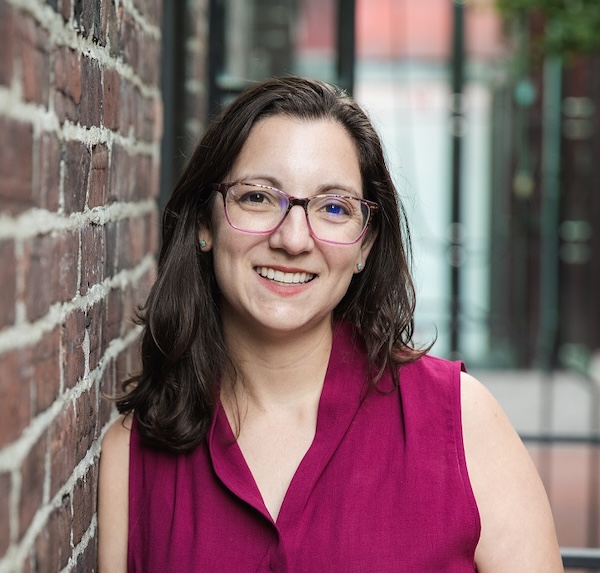
Daphna Kedem speaks at one of the weekly rallies she organizes to unite the local community and express solidarity with the Israeli hostages being held by Hamas (photo by Pat Johnson)
Until recently, Daphna Kedem was a single mom with two jobs, an Israeli-Canadian who came to Vancouver in 2011. Upset by political and social developments in her homeland, she mobilized a local branch of the global activist movement UnXeptable. Then, on Oct. 7, driven by grief and an inability to sit idly, she became the face of weekly vigils for Israel’s hostages, terror victims and families.
UnXeptable is, according to its website, “a grassroots movement launched by Israeli expats in support of a democratic Israel.” The group mobilized around the world against the “judicial reforms” of the current government, which critics say would fundamentally undermine the democratic nature of the state.
The Vancouver activists were meeting weekly and, in the hours after the Oct. 7 terror attacks, it was immediately evident that there was a need for people to come together. Community organizations, she said, were waiting until the close of Shabbat to announce a community response.
“I said, no, we can’t wait,” Kedem told the Independent. “In the Jewish tradition, a war or a crisis like this is beyond Shabbat. You can actually break Shabbat if it’s very important.”
In her capacity as an individual – not on behalf of UnXeptable or any other organization – Kedem brought the community together at the Vancouver Art Gallery on Oct. 9 and has continued, with a few exceptions, at that location every Sunday since. (Conflicting events have resulted in shifting locations a few times and there were no rallies on Dec. 24 or 31.)
Kedem doesn’t recall specifically making the decision to hold a weekly event, nor would she have imagined it would go on so long.
“I don’t know how it came about but I just said, let’s do this every Sunday at 2 p.m. until all the hostages are released and, unbelievably, we are here six months after,” she said.
Kedem works for a Vancouver company specializing in products for chiropractors, massage therapists and other medical professionals, and she is also an entrepreneur who bakes pies and sells them at farmer’s markets. The weekly rallies have become effectively a third job. On top of all this, she is also deeply committed to animal rights, being a local organizer for a California-based global animal movement called Direct Action Everywhere.
At the weekly rally at the Vancouver Art Gallery April 21, Daphna Kedem leads the call to release the Israeli hostages. (photo by Pat Johnson)
Kedem laments that attendance at the rallies has dropped off – it is challenging to keep audiences engaged week after week. She notes that she hears some people in the community talking worriedly about the size of anti-Israel rallies, but then does not see those faces at her Sunday gatherings.
“For me, it should not happen because it’s like saying we are giving up on the hostages,” she said of the declining numbers. “It’s like saying this is our new normal, and it shouldn’t be this way.”
Kedem, who was born and raised in Israel, lived in London, England, in her 20s. When she decided she and her daughter, who is now a student at Western University, in Ontario, needed a change, she considered Berlin, which has a large Israeli expat community, but decided an English-speaking city would be better. Her experience of London had been one of bigoted locals with unwelcoming attitudes toward “bloody foreigners” and she is not enamoured of the political climate in the United States. Australia and New Zealand seemed too far away.
“I had friends that were moving to Vancouver and I said, OK, I can get a tourist visa for a year and, if things don’t work out, we can always have an experience of a year in Canada,” she said. “That’s how it started.”
Bringing the community together on behalf of Israeli hostages, victims of terror and their families takes effort and volunteers, Kedem said, but it is also a vital source of empowerment and comfort for her and all who attend.
“It’s necessary that we unite in common as a community,” she said. “It is for the solidarity with the hostages but the other thing is just being together, the community in Vancouver. People need to feel a part of something and, for the past six months, it has been created. People find a safe space and a safe space can grow with more people coming out.”
Kedem has a lot on her plate. Rather than adding to her stress, though, the weekly rallies are a comfort. She said, “It’s helping me because I have to do something.”
Ilan Pilo, left, and Rafi Yablonsky of the Canadian Shaare Zedek Hospital Foundation. (photo from CSZHF)
In Jerusalem, Yad Vashem stands as the foremost memorial centre to the Holocaust, dedicated to the millions of Jews murdered during the Shoah. Across the street, as if in defiant answer to the past, is one of the world’s busiest maternity centres, where 22,000 newborns meet the world every year, strengthening the future of the Jewish people.
The maternity section is just one of Shaare Zedek Medical Centre’s many specialized departments, advancing health not only at the start of life but all through the lifespan of patients. Shaare Zedek is home to an emergency preparedness and disaster response centre. It offers a one-stop multidisciplinary and comprehensive diagnostic breast health centre. There are departments focusing on heart health, medical genetics, digestive diseases, oncology and an array of other specializations – more than 30 in-patient and 70 out-patient departments in all. The hospital sees a million patients annually and has 1,000 beds. Located in the centre of west Jerusalem, it is, among so much else, a teaching and research facility.
Western Canadians will likely be hearing more about this particular facility as the Canadian Shaare Zedek Hospital Foundation has just opened its first office in this part of the country. But, while the organization may be a newcomer as a physical presence in Vancouver’s Jewish community, it will be a familiar face sharing the Shaare Zedek story.
Ilan Pilo, who served as shaliach (emissary) and regional executive director of Jewish National Fund of Canada from 2013 to 2021, has returned from Israel as the Western Canada executive director for the Canadian Shaare Zedek Hospital Foundation.
“I was thrilled and honoured to be offered the opportunity to be the first to launch the Western office in Canada,” Pilo said.
During his time back in Israel, Pilo served as principal of a postsecondary trades and skills school and, most recently, ran the campaign for Yariv Fisher, who won an upset victory to become mayor of Herzliya, north of Tel Aviv. Municipal elections across Israel were delayed twice due to the war and, almost immediately after seeing his candidate elected, Pilo jumped on a plane and headed for Canada, spending 10 days in Toronto orienting to his new role before landing in Vancouver in March.
The hospital is 120 years old and was founded to ensure medical adherence to halachah (Jewish law), providing appropriate care for Orthodox Jews in the pre-state era. While it still provides everything religious Jews need, including minyanim, it is also, Pilo said, a “safe zone” for all people, regardless of ethnicity, nationality or religion.
“When you look at the population in Jerusalem, you see that there are one million people – 300,000 of them are ultra-Orthodox, 400,000 are Arabs and the rest are, let’s say, secular Jews,” Pilo said. “It’s the most interesting and complex mix of people.”
That diversity is reflected not only in the patients but in the doctors and staff, Pilo said.
Right now, the hospital’s specialists in trauma are dealing with soldiers and civilians injured in the war. Since Oct. 7, Shaare Zedek has treated 300 wounded civilians and more than 700 Israel Defence Forces soldiers. In addition, hospitals in the north and the south of Israel have transferred 60 of their neonatal intensive care unit patients out of conflict regions to Shaare Zedek, where the NICU is housed in completely sheltered areas.
Rafi Yablonsky, national executive director of the Canadian Shaare Zedek Hospital Foundation, said he and the foundation’s board decided to expand operations across Western Canada because of the region’s philanthropic and Zionistic reputation.
“We hope that more Canadians learn about the transformative and world-leading work of Shaare Zedek Medical Centre in Jerusalem,” he said. “Our goal is to grow our donor base and volunteer base with business and philanthropic leaders out West.”
This is not the first time Pilo and Yablonsky have worked together.
“Ilan and I were colleagues when we worked at JNF Canada together,” he said. “I witnessed firsthand how Ilan is highly skilled as a world-class fundraiser, also motivating groups of volunteers to do their part in our community.
“Shaare Zedek is a public hospital that is privately funded,” said Yablonsky, “and it receives very limited support from the Israeli government to upgrade equipment and technology, develop groundbreaking international research and ensure state-of-the-art medical training is available to staff. As such, the hospital relies heavily on the generosity of donors around the world to supplement $30 million needed annually.”
My new favourite dessert: Inbal Baum’s Coconut Cream Malabi. Baum is one of the contributors to June Hersh’s new digital cookbook, Cooking for a Cause. (photo by Ingrid Weisenbach)
I have a new favourite dessert: malabi. At least Inbal Baum’s Coconut Cream Malabi. Baum is one of more than 70 cooks, bloggers and others who have contributed to June Hersh’s new digital cookbook, Cooking for a Cause. All proceeds from the book’s sale support Leket Israel, whose focus is “rescuing healthy, surplus food and delivering it to those in need through partner nonprofit organizations.”
“By purchasing this digital cookbook,” notes Leket’s promotional material, “you will not only be supporting Leket Israel’s routine food rescue operations, distributing fresh, nutritious, surplus food to over 330,000 people in need each week, but you will also be part of Leket’s emergency relief campaign, providing much needed assistance to displaced Israelis throughout the country as well as to the Israeli farming community who has been significantly impacted by the ongoing war.”
Hersh has written several cookbooks “with a charitable flavour,” supporting various causes. She contributes to food blogs and magazines, appears on radio and TV, and gives talks on the importance of preserving Jewish food memory. Cooking for a Cause is a response to the Oct. 7 terror attacks, and Hersh and Leket Israel “reached out to everyone we could think of who has made an impact in the world of Jewish food,” writes Hersh in the introduction. “Additionally, we approached those incredibly outspoken Jewish and non-Jewish supporters who have taken a stand and used their moral compass to point the way. The response was overwhelming!”
The result is a unique cookbook that is interesting both for its recipes and its stories – each entry tells users a bit about the contributor and/or the food being presented, and there are eye-catching colour photos throughout. The cookbook “is not arranged from starters to desserts and it is not consistent in its format,” writes Hersh. “I say this not as an apology but with pride, as this book is deliberately different. It reflects a cacophony of voices that have come together to support Leket and the people of Israel. Each contributor presents their connection to Jewish food and expresses it with a different perspective, writing style and point of view. You, the reader, benefit from diverse cooking techniques, interpretations of Jewish cuisine and fresh commentary with each recipe.”
Recipes that caught my eye as I skimmed through the book included Vegetarian Stuffed Cabbage Rolls (Holishkes) by writer Joe Baur; Pandora’s Chicken with Artichokes, Oregano, Olives and Sundried Tomatoes by Joan Nathan, “award-winning ‘godmother’ of Jewish food”; Aunt Rini’s Tahini Cookies by Elise Addlem, founder of Feminists Against Antisemitism; and Olio Egg Salad by Ben Poremba, who “infuses his Israeli-Moroccan heritage into all his restaurants.”
I have bookmarked these recipes for future cooking/baking sessions, and will certainly try others as well. Between the Jewish Independent’s Passover and Israel special issues, I only had time to try out three recipes. In addition to Coconut Cream Malabi, which Baum writes was inspired by “Our Chef Sevim [Zakuto], with her Turkish-Jewish roots, [who] shared the cherished recipe from her grandmother,” I made Rachel Simons’ Fennel and Herb Salad (Simons is a co-founder of the company Seed+Mill) and award-winning chef and restaurateur Jonathan Waxman’s Steelhead Trout with Vermouth, Baby Sorrel, Chanterelles and Fingerlings.
The salad was as big of a hit as the malabi, and I enjoyed the meal part of the trout recipe but wasn’t so keen on the sauce, which contained vermouth. Not being a lover of vermouth, I had put the sauce on the side, and I thought the food was better without it. When I make the fish again, I’ll try to halve the vermouth or reduce it on the stove to see if that makes it taste less sharp.
COCONUT CREAM MALABI (by Inbal Baum)
1 can coconut cream (fat content should be greater than 14% for the best results) 3 tbsp sugar 3 tbsp cornstarch 1/3 cup of water 1 tsp of vanilla extract, or rose or orange blossom water crushed (or chopped) nuts, to taste desiccated coconut, for serving pomegranate molasses and/or silan, for serving optional toppings: chopped seasonal fruit (strawberries, apricots, mango)
In a small saucepan, combine the coconut milk and sugar. Bring to a gentle boil. Meanwhile, in a small bowl, mix the cornstarch and water until well combined. Slowly add the cornstarch to the saucepan, continuously stirring.
Over medium heat, continue stirring until the pudding thickens – this may take 3 to 5 minutes. If needed to thicken, add additional cornstarch in small amounts until the mixture begins to thicken.
Mix in the vanilla extract, orange blossom or rose water, then pour or ladle into four small bowls.
Allow to cool before serving (approximately one hour, but can be less).
When ready to serve, top with a layer of pomegranate molasses or silan (date honey), desiccated coconut and ground nuts.
FENNEL AND HERB SALAD (by Rachel Simons; 4 servings; 30 minutes to prepare)
1 fennel bulb, very thinly sliced crosswise juice of 1 lemon 1 cup cold water 1/2 cup fresh mint leaves, roughly chopped 1/2 cup fresh parsley leaves, roughly chopped 1 tbsp white wine vinegar 2 tbsp extra virgin olive oil 1 tsp flaky sea salt 1/8 tsp ground black pepper 1 cup parmesan cheese, thinly shaved (optional)
Place the sliced fennel into a bowl with the lemon juice and cold water. Let sit for about 10 to 15 minutes. Drain the fennel.
In a large bowl, mix the fennel, mint leaves, parsley leaves, white wine vinegar, olive oil, salt, pepper and parmesan (if using). Mix to combine well. Serve the salad cold.
STEELHEAD TROUT WITH VERMOUTH, BABY SORREL, CHANTERELLES AND FINGERLINGS (by Jonathan Waxman; serves 4)
4 x 4.5-ounce skin-on, boneless steelhead trout fillets 1/2 cup white vermouth 2 tbsp butter 2 tbsp olive oil 1 cup baby sorrel 1 cup cream 1 cup sliced raw fingerling potatoes 1 cup button chanterelle mushrooms
Season steelhead with sea salt and fresh ground white pepper.
Cook the potatoes in simmering salted water for 12 minutes. Set aside.
Wash mushrooms.
In a sauté pan, add 1 tbsp olive oil and 1 tbsp butter, heat to sizzling, add the trout, skin side down and sauté for 2 minutes.
When skin is crispy, turn over and add remaining olive oil and butter. Then add the potatoes and chanterelles to pan. Cook over medium heat for 5 to 8 minutes.
Remove steelhead to a warm platter. Ensure potatoes and chanterelles are cooked, add them to the fish platter.
Add the vermouth to pan and then add the cream. Turn off heat and add the sorrel leaves.
Taste sauce for seasoning and gently coat the potatoes and chanterelles with sauce. Serve hot.
* * *
To purchase Cooking for a Cause, go to chef.leket.org. For more on Leket Israel – including how you could join the organization’s approximately 54,000 annual volunteers “in gleaning, sorting and packaging rescued food for the Israelis in need” – visit leket.org.
Lisa and Andrew Altow with their family on visitors day at Camp Solomon Schechter in 2013. (photo from the Altow family)
On May 5, Camp Solomon Schechter will honour four long-time relationships that were built at the camp. Part of its 70th-anniversary celebrations, there will be three separate events in three different cities – Portland, Seattle and Vancouver – on the same day. Those being honoured include Vancouverites Lisa and Andrew Altow, and Yvonne Rosenberg.
“One of the most special things about camp is the lifelong friendships that it creates and the geographic area that it spans,” Zach Duitch, executive director of Camp Solomon Schechter, told the Independent. “We say camp friends are forever friends and we know that having Jewish friendships throughout your life is one of the most significant and important relationships we have. This is what builds Jewish community.”
Of this year’s honourees, he said, “We have a friendship that has spanned three generations and two countries, from Portland to BC, Yvonne and Sharon [Stern] – they went to camp together, their children went to camp together, their grandchildren go to camp together. We have two relationships that are marriages from camp, the Korches [Melissa and Matt] and the Altows. And we have a beautiful friendship of four friends from four different communities who have stayed friends throughout their lifetime”: Eva Corets, Rochelle Huppin, Wendy Rosen and Karen Twain.
Sharon Stern, left, and Yvonne Rosenberg met in the early 1960s at Camp Solomon Schechter and have been friends ever since. (photo from CSS)
In previous years, Camp Solomon Schechter has awarded the Migdal Or Award to individuals who have provided a “spark of light that guides the way for others to follow.” The inspiration for the award and its first recipients, in 2020, were camp founders Rabbi Joshua and Goldie Stampfer (z”l). While an award won’t be given out this year, the 70th anniversary Schechter Spark will reflect the Stampfers’ “legacy, virtue and commitment to Jewish life and camping.”
Camp Solomon Schechter started in 1954, near Echo Lake, in Washington. The first year, 25 campers attended a one-week session; the next year, 40 campers attended a two-week session.
The camp moved to Whidbey Island in 1958 but outgrew that space within 10 years. With the help again of Seattle Rabbi Joseph Wagner, one of the camp’s founders, as well as Harry Sherman and Rabbi Zev Solomon from Vancouver, BC, a camp property in the Olympia area was found, and it was for sale.
“Rabbi Stampfer immediately called the number and spoke with the owner, Helen Shank,” reads the Our History page of the CSS website. “And, for $300,000, the 200-acre property could be owned by Camp Solomon Schechter. Each of the rabbis from the major cities (Portland, Seattle and Vancouver) committed to raising $100,000 from their communities, and they were able to accomplish the goal in time for summer 1969.”
CSS is still located at the site near Olympia, with some 600 campers and more than 100 staff attending annually, in addition to the Stampfer Retreat Centre and OSPREY Camp (an outdoor education program).
Seventy years is a special anniversary in Judaism.
“The number 70 is considered a lifetime, so much so that 13 years into the second lifetime, at the age of 83, many Jews will have a second bar or bat mitzvah,” explained Duitch. “Where does that number come from? A midrashic tale tells us that there was an old man planting a carob tree by the side of the road when a traveler walked by. The traveler asked the man, ‘Why are you planting that tree? It will never bear fruit in your lifetime.’ The man responded, ‘I’m doing it for the next generation.’ And so, the legend goes, it takes a carob tree 70 years from seed to fruit and that’s where we get that idea of a lifetime. So, this year, at Schechter Spark, we are celebrating our first lifetime and raising funds for our next lifetime.”
“We are looking forward to being at the event with many of our good friends and all our kids,” Andrew Altow told the Independent. He and Lisa attended CSS in the mid-to-late-1970s. “I was a camper,” he said. “Lisa was a camper and, later, a counselor.”
After their first year at CSS, Andrew said there were a couple of reasons for wanting to return for another summer. “First, all our Jewish friends from all the cities – Vancouver, Seattle, Portland, Spokane – that went every year. Second, the ruach [spirit], the amazing sense of Judaism and fun together.”
Looking back now some 50 years later, Andrew said, “CSS played a massive role for us. Because of our CSS lifelong camp friendships, we met in our 20s at a party in Bellevue [Washington] and fell in love and got married a few years later – Lisa was from Bellevue and I was from Vancouver. Because of CSS, we maintained a meaningful connection with camp and eventually each of our four kids attended CSS and have made their own lifelong friends.”
Andrew and Lisa have each, at one time or another, served on the CSS board or a board committee.
“CSS has been a Jewish string that has connected us to our Judaism and to Israel in a positive and meaningful way, for which we are extremely grateful,” said Andrew. “Mostly, it’s been the amazing people involved with CSS, whether they be staff or volunteers, each one amazing in their passion for CSS and their genuine love for this magical camp, its mission, its values.”
It was “incredibly important” that their kids also go to Camp Solomon Schechter, said Andrew. “Each child – Josh, Lynne, Joey and Ari – got something different out of camp but their experience reinforced their Judaism and their connection to Israel.
“One summer, it was very special to have all four kids and my nephew from Toronto to attend in the same summer session – five Altows at one session. We were so proud to see how close they all were and continue to be. We believe CSS was an incredible positive influence on all of them.”
Humbled to be one of the Schechter Spark 24 honourees, Andrew said, “In a world today full of hate, full of antisemitism, full of turmoil worldwide, CSS is an oasis of safety for Judaism to shine through our children and teach them the beautiful tenets of Judaism so our children, and future children, can continue to repair the world as our faith illustrates.”
To read about the other Schechter Spark 2024honourees and to RSVP for the (free) local May 5 event at Tap & Barrel in Olympic Village, go to campschechter.org/spark-24. Vancouver co-chairs are Elana Bick and Sheldon Franken, and the special guest will be camp director Manda Graziel.
Thanks to CSS’s 2024 Matchmakers, any new donation to the camp will be matched dollar-for-dollar, up to $218,000. Visit campschechter.com to donate.
Rabbi Carey Brown of Temple Sholom (photo from templesholom.ca)
Rabbi Carey Brown of Temple Sholom will be part of the next cohort of Shalom Hartman Institute’s Rabbinic Leadership Initiative (RLI).
The intensive three-year fellowship program immerses North American rabbis of all denominations in the highest levels of Jewish learning, equipping them to meet contemporary challenges with ever-increasing intellectual and moral sophistication. It is one of the few structured frameworks for ongoing rabbinic study, enrichment and intellectual leadership training. In addition to rigorous study, the program fosters a deep sense of community for diverse rabbis in an environment of open dialogue, collaboration, peer-learning and personal support. The next cohort begins next month.
Participants in the Human Library event at the Isaac Waldman Jewish Public Library on April 7. (photo from Waldman Library)
Jewish Independent publisher Cynthia Ramsay (inset, middle) was one of the “books.” (photo from Waldman Library)
The Human Library event at the Isaac Waldman Jewish Public Library on April 7 drew a diversity of “human books” (volunteers who shared some of their life experiences) and readers (people who came out to learn about those experiences). Titles included Police Officer; Coping with Dementia: A Mother/Son Story; More than just MS; Brain Cancer Survivor; Your Jewish Community Newspaper; and Partners in Care. Books and readers gathered at the library, had snacks and shmoozed, before participating in three separate reading sessions over the course of the afternoon. The purpose of the event is to connect one-on-one or few-on-one with individuals from different cultural backgrounds and lifestyles, celebrating our differences and fostering understanding.
גם יוצאי איראנים בוונקובר תומכים בקריאה לחמאס לשחרר את בני הערובה (רוני רחמני)
המועצה של מוסלמים נגד אנטישמיות ארגנה במרכז טורונטו כנס מיוחד לאור העליה בגל האנטישמיות נגד יהודים. באירוע של הארגון הבינלאומי שמושבו בטורונטו השתתפו למעלה מארבע מאות איש. הארגון מחויב להיאבק בטרור בקיצוניות, כולל אנטישמיות נגד יהודים
המשתתפים הביעו את תמיכתם ביהודים במלחמה נגד תופעת האנטישמיות שהולכת ומתגברת בעת הזו, לאור המלחמה של צה”ל בעזה מול ארגון הטרור של החמאס. באירוע דנו בדרכים השונות להילחם באנטישמיות בתוך הקהילות השונות. בין המשתתפים היו חברת הפרלמנט מטעם המפלגה השמרנית של קנדה, מליסה לנצמן, הפרשן בנושאים הפוליטיים זוהדי ג’אסר, הסופר רהיל ראזה, חבר מועצת עיריית טורונטו גולדי ג’מארי ומנכ”לית המועצה של המוסלמים שריל סאפריה. מרבית הפעילים במועצה של המוסלמים נגד אנטישמיות הם יוצאי איראן שעזבו את המדינה עם עלייתו לשלטון של חומייני
חברי המועצה והאורחים בכינוס ציינו שיש לבצע תוכנית פעולה מהותית הכוללת שישה חלקים. ובהם: דרישה מהחמאס לשחרר את כל בני הערובה שהוא מחזיק בעזה מאז השבעה באוקטובר, להסיר את המימון של ממשלת קנדה לסוכנות הסעד של האו”ם – אונר”א. וכן להכריז על חייל משמרות המהפכה האסלאמית האיראנית כישות טרור. עוד הוזכר בכינוס כי יש להרים את הקול ולבקר את אלה המשבחים את האנטישמיות, הג’נוסייד של החאמס והזוועות המיניות שביצע ארגון הטרור בשבעה באוקטובר בישראל. אורחי הכנס הזכירו כי על המוסדות השונים ברחבי העולם ובהם האו”ם לנקוט עמדה חד משמעית נגד האלימות המינית הבלתי ניתנת לערעור שנעשתה לנשים, ילדים וגברים על ידי מחבלי החמאס – בשבעה באוקטובר. זו בעייה חמורה בחברה האנושית שלנו שיש הרואים בפעולות אלו של החאמס כהתנגדות לכיבוש. עוד הוזכר כי האשמה לאירועי השבעה באוקטובר מוטלת בעיקר על שלטון האייתולות באיראן ועל קהילות מוסלמיות במדינות שונות שמעודדות אנטישמיות ללא הפסק
ארגון מועצת המוסלמים נגד אנטישמיות מציין כי האנטישמיות היא תופעה ייחודית נפוצה, שינאה מתמשכת וקטלנית שנכנסה למסגרות תרבותיות, דתיות ופוליטיות שונות ומרובות בכל רחבי העולם. לפי סקרים אחרונים, רעיונות ותחושות אנטישמיות מאומצים כיום בדרגות שונות על ידי כרבע מאוכלוסיית העולם
ארגון מועצת המוסלמים מכיר באיום המיוחד הנשקף מן העליה המטאורית של האנטישמיות העולמית במאה העשרים ואחת. לעתים קרובות רצח או חיסול בכוונה תחילה או בביטוי, הוא מייצג שילוב חסר תקדים של הזנים המוכרים יותר של אנטישמיות המקודמים באידיאולוגיות ימין קיצוני, שמאל איסלאמיסטיות. האנטישמיות נחשבת על ידי מומחים לרעילה הרבה יותר מסך חלקיה, התפשטות האנטישמיות העכשווית הואצה על ידי הגלובליזציה והופעת הטכנולוגיות של המאה העשרים ואחת
ארגון מועצת המוסלמים תומך בהגדרה הבינלאומית לזכר השואה של האנטישמיות. הגדרה זו היא המקובלת ביותר בעולם לאנטישמיות והיא אומצה ואושרה על ידי ארבעים ושלוש מדינות כולל קנדה
מועצת המוסלמים מחויבת לפעול עם קבוצות דומות כדי לאתגר את האנטישמיות בכל מקום שבו היא עלולה להופיע. הארגון ימשיך ביוזמות חינוכיות, חקיקתיות, ומדיניות להשיג את המטרות שלו. כמוסלמים מכל הקשת המוסלמית והפוליטית, הארגון יהווה, יגייס ויזרז קול מוסלמי מובהק להתמודד עם האנטישמיות, שהשתרשה עמוקות ונותרה אתגר קשה בעולם המוסלמי הרחב. הארגון יתמוך במאמצים של ארגונים מוסלמים במדינות בעלות רוב מוסלמי ובמקהלה הולכות וגוברת של מנהיגים, סופרים ותיאולוגים מוסלמים אשר נטלו על עצמם יוזמות להתעמת עם האנטישמיות, שהורשתה לחגוג בקהילות. אנו כמוסלמים נתעמת עם התופעה וקידום המערכתי של האנטישמיות על ידי קיצונים איסלאמיסטים מכל הסוגים, שעבורם הדמוניזציה ושנאת היהודים הם עמוד מרכזי באמונתם
Shai DeLuca and Alexandra Smith flew in Sunday from Toronto to address Vancouver’s weekly vigil for Israeli hostages on the six-month anniversary of the atrocities committed on Oct. 7. (photo by Pat Johnson)
Unity, defiance and determination were the overriding messages at the community rally Sunday, April 7, marking six months since the atrocities of Oct. 7.
“Our hearts are heavy with the weight of loss and sorrow,” said Michael Sachs, regional director of the Jewish National Fund of Canada. As Israelis were called up for service at the start of that war, another battle began in the diaspora, he said.
“Jews worldwide were drafted for a different, yet related, war,” said Sachs. “In the wake of Oct. 7, we witnessed a disturbing and radical rise in antisemitism and Jew-hatred right here in Canada.”
Canada today does not resemble the Canada of Oct. 6, he said, as anti-Jewish ideas and actions have “emerged from the alley and are now openly displayed on our streets and threatening the very fabric of our society.
“We should always draw strength from the resilience and courage of the survivors,” Sachs said. The souls of those murdered that day, he said, live on “in our commitment to build a world with compassion, justice, that will triumph over the cruelty and ignorance that we are seeing.
“The brave soldiers, of all faiths, who have made the ultimate sacrifice in defence of Israel – we mourn you and we will never forget you,” said Sachs.
The Jewish response to evil is goodness, he said.
“In the face of their darkness, let us shine our light on them by rejecting forces of division, and continue to embrace the power of the unity of our community and our amazing allies,” he said. “Let us stand together, hand in hand, to be the hope and strength to the families of those held hostage. Let us show the world that our Zionism – not the Zionism that they have created – our Zionism, our love of Israel, is stronger than any hate they can throw at us.”
Aron Csaplaros, BC regional manager of B’nai Brith Canada, recalled his own family’s history.
“For hundreds of years, we have overcome expulsions, pogroms, massacres,” he said. “During the Holocaust, my grandmother spent months hidden in a dark basement, constantly hearing the footsteps of Nazi officers walking above her head, knowing that she could be found and murdered at any minute. But she, like Jews have done throughout our history, survived. She is here today standing in the crowd and we, the Jewish people, are still here, stronger and more united in our resolve than ever.”
He reiterated the demand of the weekly events, that the hostages be released, and added that Hamas should accept its defeat and unconditionally surrender to facilitate a new era of peace between the Palestinian and Israeli people.
“We will never stop fighting those who wish to destroy us,” Csaplaros said. “And we will not stop fighting to defend our indigenous homeland, the land of Israel.”
Until the hostages are released, he said, “We will not stop rallying. We will not stop marching. We will not stop advocating and we will not stop calling on our elected leaders in government to act until every single one of our brothers and sisters held hostage is safely returned.”
Calls for the return of the hostages being held by Hamas rang through the streets of Vancouver Sunday. (photo by Pat Johnson)
Shai DeLuca, an interior designer who lives in Toronto and Israel, is a familiar face to audiences of Toronto’s CityTV and Global television. During the Hamas war in 2014, he pivoted to being a voice for Israel and has led battles against anti-Zionist campaigns in Toronto. He said he was nonchalant when he awoke to alerts on Oct. 7. But, as he and his husband took refuge in a shelter, he realized this was not routine.
“I have lived through enough attacks, hundreds upon hundreds of Hamas rocket attacks throughout my life, to know that this felt different,” said DeLuca.
Soon, Israeli phones were lighting up with push notifications, videos and images showing murder, rape and other atrocities.
“It was from numbers we did not recognize,” he said. “Only later did we find out that these were targeted push notifications from Hamas.”
Last week, DeLuca was back in Israel and visited the site of the Nova music festival, where hundreds were murdered. The site is about 15 minutes from his family home.
He spoke with Rotem, a young woman who had been a vocal advocate for reconciliation between Israelis and Palestinians. She had spent 30 hours in a safe room with her children before the terrorists gave up and sought out easier prey.
That day, Rotem told DeLuca, was “the day that I realized they really don’t care who we are.”
“A Jew is a Jew,” she told him. “They want us all dead.”
Many of Israel’s most avid peace activists lived on the kibbutzim that were attacked.
“The belief that one day we would have peace with our neighbours wasn’t something she could foresee anymore and that was heartbreaking to see,” said DeLuca. “She had strived to work toward a better tomorrow for all and was met with the worst massacre of the Jewish people since the Holocaust, on her community specifically…. A community that employed Gaza workers and worked daily to build bridges. That bridge no longer exists, she said, they torched it.”
Now, in the diaspora, Jews are faced with what DeLuca equates to the antisemitic marches of the 1930s and ’40s.
“We have never been able to depend on others,” he said. “Our history has proven that.… The difference today, unlike times past, is that we have our home to go to. While the hate marches we seerepeatedly across cities and across countries call to deny the existence of the only indigenous home the Jewish people have ever known, they continue to prove why its existence is so very important.”
Alexandra Smith, director of End Jew Hatred Canada, came with DeLuca from Toronto on a delayed flight, arriving just in time for the event.
“Today, we are called upon not only to demand the immediate and unconditional release of those unjustly held, but to reaffirm our commitment to each other as members of a shared community, a shared nation, a shared destiny and, indeed, a shared humanity,” said Smith.
“Starting on Oct. 8, for many in the Jewish community, the open, brazen, unashamed Jew-hatred exhibited on college campuses and on our streets came as a terrible shock and a deep sense of betrayal,” she said. “But, for those of us who have been working in this space for a length of time, it came as no surprise. Antisemitism has always been there, only hidden under wraps. It took a war in the Middle East for it to rear its ugly head. It’s not an exaggeration to call this a profound crisis. In moments of crisis, however, the strength of a community is seen not only in its leaders but in the spirit of its people. Unity is our beacon of hope. Shoulder to shoulder, regardless of backgrounds, beliefs and life experiences, we embody the resilience that has helped communities throughout history overcome adversity.”
Rabbi Andrew Rosenblatt of Congregation Schara Tzedeck chanted El Moleh Rachamim, invoking the name of Elad Katzir, a hostage whose body was recovered by Israeli soldiers the day before the rally. Rabbi Susie Tendler of Beth Tikvah in Richmond said the prayer for the hostages.
Members of the Clore & Roll Ensemble will perform in Vancouver on May 13. (photo from Clore Centre)
Every year, it is sobering to experience the transition from Yom Hazikaron, the day of remembrance for Israel’s fallen soldiers and victims of terrorism, into Yom Ha’atzmaut, the celebration of Israel’s Independence Day. This year, it will be even more so. And it will be especially poignant, given that the musical group headlining the local community gathering on May 13 is an ensemble from Kfar Blum, a kibbutz in the Galilee Panhandle, in northern Israel, where some 60,000 people have been evacuated because of the threats posed by Hezbollah in Lebanon.
The Clore & Roll Ensemble is an initiative of the music school of the Clore Centre for the Performing Arts, which also has a dance and theatre school. The centre was established in 1996 and approximately 1,000 students (which include adults) study there. They come from kibbutzim and moshavim in the area, as well as Druze and Arab towns.
“I’m glad to say that the conflict doesn’t get inside the centre,” Telem Chorin, chief executive officer of the Clore Centre and director of the ensemble, told the Independent. “Music is an international language and also an emotional language that connects people,” he said.
While the Clore Centre’s offerings remain afterschool programs, the centre has played a more important role in students’ lives since the Oct. 7 terror attacks that led to the current war.
“For some kids, the Clore is like a second home,” said Chorin. “Because, for some students, it is a more stable place than the hotel they were evacuated to, or the school that is currently closed or working partially.”
Despite being displaced, ensemble members have been coming together weekly to practise for the show in Vancouver. Rehearsals are at the centre.
“Last week, we had matriculation exams in dance and, during April and May, we will have matriculation exams in music playing,” said Chorin. “It is interesting to see how committed the students are to performing arts subjects even in such a period, and how much effort they have to invest – time, long journeys, sometimes even risking [their safety] and coming to Kfar Blum, even though it is relatively more dangerous here than in their homes or the hotels they have moved to. This shows how important it is to them and how much they don’t give up on it despite everything, and maybe even this is what keeps them ‘sane’ amidst all the chaos currently prevailing in the north.”
Some members of the ensemble have been playing together for more than five years in different capacities, but the group that is coming to Vancouver has only been playing together for the past three months, said Chorin. Due to the war and the evacuations, the group had to rebuild. “We’ve added additional musicians to the band so that you will have an amazing show!” he said.
Coming to Vancouver are Menachem Ofri (17, singer), Yaron Shir (18, singer), Kachtan Aviv (17, flute), Maman Moria (17, alto saxophone), Moyal Ido (17, tenor saxophone), Shem Tov Ido (19, trombone), Kovesh Gil (24, drums), Primor Adi (17, electric guitar), Fitzer Tal (16, piano) and Deutscher Goni (16, bass guitar). Also coming are Ziv Greenberg (music director), Ferry Stefan (dance teacher and dancer), Malki Smadar (administrative manager) and Kashri Noam (technical manager).
“Ofri, Ido Shem-Tov, Aviv and Noam were evacuated from their homes, and they are coming from all over the country to the rehearsals at the centre – sometimes, under rocket attacks!” said Chorin, who will join the band in the performance, on clarinet.
“Some of the students have already appeared in Edmonton and Calgary,” he said. “I have performed in Edmonton, Calgary, Windsor and Hamilton, but this is my first time in Vancouver and I am very excited! Some of the students were in Vancouver on student exchanges with their schools in Israel.”
Of what it means for the Clore & Roll ensemble to play a Yom Ha’atzmaut concert in the diaspora, Chorin said, “It is a great pride and honour to represent the state of Israel in general, and the Upper Galilee in particular, in such a show, on the eve of Independence Day, in a challenging time like now.”
The ensemble will present a wide-ranging repertoire.
“We are going to play modern Israeli songs (Idan Raichel, Mizrachit [Israeli pop]), classic Israeli songs and also some songs in English,” said Chorin. “A very diverse and happy program.”
“Bringing the Clore ensemble serves as a reminder of the unbreakable bond we share across borders,” said Dafna Silberstein, associate director of Israel connections and partnerships at the Jewish Federation of Greater Vancouver. “It is also an amazing opportunity for the ensemble of teens and young adults to take a break from what they have been through for the past six months. And, for us, it feels like it is exactly what we need this year: coming together as a community united for and with our brothers and sisters in Israel.”
Jewish Federation has supported the Clore Centre as part of the Coast-to-Coast Federations’ Collective and independently, “as the centre is in our partnership region of Kiryat Shmona and the Galilee Panhandle,” explained Silberstein.
“We have wanted to bring the Clore ensemble for awhile now, to showcase the impact our support has had on its students and have been waiting for the right opportunity,” she said, noting that it is “with mixed emotions” that Oct. 7 created that opportunity.
“This year, the commemoration of Israel’s 76th Independence Day holds an even deeper meaning and significance,” said Silberstein. “It is an opportunity to stand together in solidarity and celebrate our shared values. Considering the spike in antisemitism, the need for community unity has become more important than ever.”
For tickets ($18) to the May 13, 7:30 p.m., concert at Congregation Beth Israel, as well as information about other Israel@76 activities, visit jewishvancouver.com/israelhere.
A “Toronto for Palestine” protest Oct. 28, 2023. In the last six months, across Canada, such protests have often featured calls for violence against or the death of Jews. (photo by Sikander Iqbal)
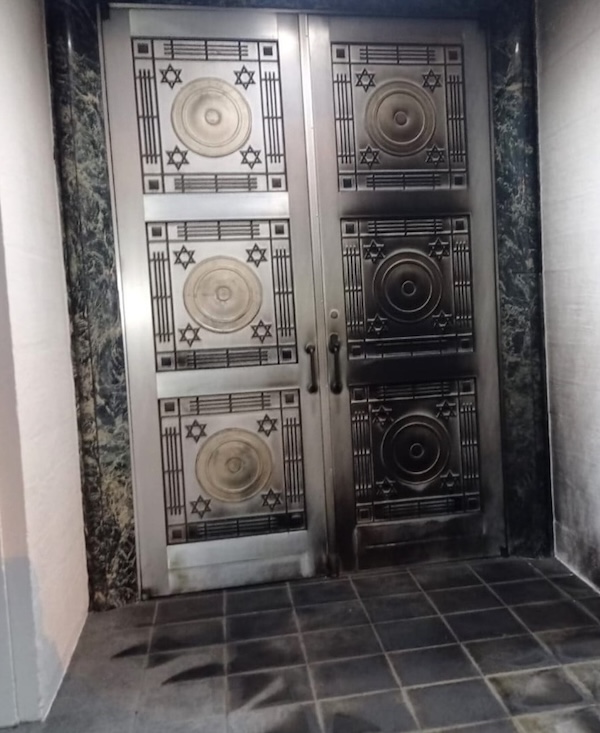
In the past six months, protesters have targeted Jewish community buildings and synagogues in Montreal and the Toronto area. Jewish student group Hillel has also been a prime target for anti-Israel and anti-Jewish sentiment at Canadian universities, including in Vancouver. Similar protests caused the Art Gallery of Ontario to cancel an event with the Canadian and Italian prime ministers over security concerns. A man in Vancouver was charged with hate-related crimes over the defacing of Israeli hostage posters.
These are just a few examples of organized anti-Israel protests, often with calls for violence against or the death of Jews, on the streets and campuses across the country. Much of this activity is met with silence or borderline anti-Jewish remarks from many elected officials and leaders.
Trans and queer rights are also under attack in Canada with the premier of Alberta’s recent announcement of sweeping new anti-trans policies and Saskatchewan Premier Scott Moe’s use last year of the notwithstanding clause in the Charter to push through a law requiring parental consent for children under 16 who want to change their names or pronouns at school.
The confluence of these events and the ongoing need to carefully navigate the intersectionality of their identities has left many queer Jews feeling isolated, tired and disappointed.
Queer communities in Canada have long trended toward a pro-Palestinian point of view, often reflected in clashes over whether certain Jewish groups should be allowed to march in pride parades, Aviva Rathbone, board chair of JQT, a Vancouver-based Jewish queer and trans organization, told the Independent.
“Right now, what it means is that many of the Jews in the queer community, especially Israelis, but also Jews who would maybe call themselves Zionists or who feel complex about the situation in Israel and Gaza, are not welcome in queer communities,” she said.
“I did not know there was such thing as an anti-Zionist Jew until I moved to Canada,” said Ari Fremder, a 33-year-old who works in Vancouver’s animation industry. Fremder is originally from Zimbabwe.
As a trans person who is also autistic and introverted, Fremder said, they don’t leave their house very often anymore because of the anti-Jewish protests, posters and stickers – that frequently incite violence against Jews – in their neighbourhood.
They used to go to local queer events but said they don’t feel safe anymore, as many groups are pro-Palestinian and openly state Zionists are not welcome.
“I feel a lot safer being queer in the Jewish community than I feel safe being Jewish in the queer community,” said Jessie, a 21-year-old student and environmental activist in Ontario, who asked not to use their real name.
As one of few Jewish queer people in Halifax, Schuyler H. Smith said they are facing “more hate” than they’ve ever faced in that city.
The 33-year-old diversity consultant agreed that it’s more comfortable to be part of a Jewish than a queer community right now. They will, often with trepidation, reach out privately when they see antisemitic comments and remarks from queer community members, to try to dispel myths about Jews as white colonialists or as non-indigenous to Israel, for example.
Smith hopes one-on-ones can make people think twice before posting negative comments or memes about Jews.
Anti-trans policies in Alberta and Saskatchewan, attacks and protests at drag queen story times and other “parental rights”actions across the country are also taking a toll on members of the LGBTQ2S+ community.
“I’m scared, honestly, for young trans people who need this care and are being interfered with by politicians,” said Cas Allen, a 21-year-old university student in Victoria who says access to hormone blockers changed his life when he was 15.
Ezra, a 39-year-old trans teacher in Calgary, who prefers not to use his real name, said the government is pushing a lot of misinformation, but he’s heartened by the pushback from the queer community.
He’s committed to being a visible queer influence in his school, which has a high number of new Canadian immigrants.
“If there were any queer kids in the class, they could see themselves reflected,” he said, “and [I can give] them a safe adult to confide in [while] they decided who they are.”
Allen, who grew up in a religious Jewish family in Alberta, said since he transitioned, he has “recreated” his queer Jewish identity “from the ground up” but he’s once again finding it “complicated and messy” to reconcile both those parts of himself.
He said he feels isolated and unable to talk about his feelings regarding Israel and his Jewishness to the LGBTQ2S+ people he knows. He said the only person he can really confide in is his twin sister.
Queer spaces on university campuses tend to be very pro-Palestinian and are forcing students to choose between their Jewishness and being queer, said Rabbi Seth Goren, executive director of Jewish student group Hillel Ontario, which has a presence at nine universities in the province.
“I think that’s a choice that queer Jewish students shouldn’t have to make,” he said.
Many Jewish students feel like there is no place where the conflict isn’t swirling around them, added Rabbi Kylynn Cohen of Hillel BC. She said she’s had to help students who, after Oct. 7, couldn’t go to classes because of the anti-Jewish rhetoric, both from student groups and in classrooms.
Cohen said she sees more Jewish students hanging out in the Hillel building on the University of British Columbia campus, seeing it as a safe space. Many queer students have told her they go to straight bars to unwind now rather than congregating in gay spaces.
From Vancouver to Halifax, many queer Jews are feeling unsafe and isolated because of the increase in anti-Jewish and anti-trans sentiment since the Oct. 7 Hamas terror attack on Israel and the ensuing Israel-Hamas war. (photo by Maximilian Ruther / Pexels)
Many student-run groups and education-related unions have come out with strong anti-Israel statements. Six Canadian universities are facing class action lawsuits over anti-Jewish hate speech, threats against Jewish students on campus, and the silencing of Jewish voices.
There are also dozens of reports of Jewish students being shouted at, punched and spat on by anti-Israel protesters at universities across the country. Ontario student Jessie said, even though they’re at a university with a large Jewish population, there is constantly an “uncomfortableness” between their two intersecting identities.
Like many LGBTQ2S+ Jews, their stance on Israel is multi-faceted but they said they’re frustrated and have lost friends in the queer community who aren’t open to the nuances of how different Jewish people are feeling or to seeing the Jewish community as anything other than homogenous “white settler colonialist[s].”
Jessie wears a Star of David necklace but said they now often hide or remove it, including during their local drag king performances at which other performers have made pro-Palestinian tributes. They say they’d be “canceled” if they shared their support for the hostages or Israeli citizens during a show.
“There’s no space even for me to mourn or to acknowledge my feelings and what’s happening,” said Jessie.
There are, however, some Jewish queers for whom the past few months have been a time of solidarity and community building.
Non-binary Toronto artist Sadie Epstein-Fine said they are Jewish but were raised as an anti-Zionist. They’re a member of a group called Jews Say No to Genocide, whose membership is almost all queer Jews. Since Oct. 7, they say they’ve been “entirely surrounded by queer Jews” in a busy, activist environment.
They admit to looking white and acknowledge the privilege that brings, also recognizing that antisemitism is on the rise but saying they’ve been fortunate not to have felt it personally.
“We’re more concerned about Palestinian safety than we are about our safety,” Epstein-Fine said of their group members.
Beyond campuses, the past six months have seen bomb threats and attacks against Jewish schools and businesses, as well antisemitic graffiti and a rising number of other hate crimes aimed at Jews across the country. Police forces in some cities have enlarged their hate crimes units and set up hate-crime reporting centres in Jewish areas.
Darren Sukonick, 53, a Toronto businessman who has been involved with Jewish charities and community groups for decades, said he was surprised and disappointed at how widespread and swift anti-Jewish sentiment was across Canada after Oct. 7. He said he never thought he’d ever experience levels of hate like he’s seeing now.
“It was like being on a hike, turning over a log and seeing all this vermin crawling out from under it. That’s what it felt like,” he said.
On the other hand, Sukonick said many non-Jewish friends have reached out and shown support.
Calgary teacher Ezra said he frequently hears racist and hate speech about Jews, but not aimed at him, from his Grade 7 students. When he hears it, he addresses it with the kids in an effort to get them to see different points of view.
Sometimes, it’s easier to get out of bed and deal with all the negativity being hurled at both the trans and Jewish communities, said Ezra. Other days, he said, it takes a greater toll on his mental health.
Gail J. Cohenis an award-winning Toronto-based writer, editor and communicator.