Past, present & future

Jewish tradition says that all Jews were at Sinai. The people of Israel who fled Egypt received the Torah, but not just the travelers from the Exodus story were there. In the Jewish narrative, the handing down of the word was so definitive and essential that even Jews not yet in existence – up to the present day and on into forever – were said to have been present when Moses descended from the mountain. So profound was this moment that every Jew in all of eternity needed to be there to witness it.

Talk about togetherness! A people who humour portrays as intrinsically divided – “two Jews, three opinions”; the lone Jew rescued from the desert island who had built two synagogues (“The one I attend and the one I’d never set foot in”); “Everyone to the right of me is meshugenah, everyone to the left of me is a goy”; the jokes are endless – all in the same place at the same time, all united (well, except for the little golden calf incident).

It is tempting to imagine the Jewish people today as more divided than ever, at least in recent memory, especially in contrast with the aforementioned story of togetherness across all time and space. The various divisions in the local and global Jewish community are exacerbated by significant divisions in the body politic in Israel.

It may be true. Perspective on the forest is difficult when you are surrounded by trees. The present reality depends on the future. If the current political situation in Israel proves to be an aberration – if the proposed judicial reforms were to fail, say, and attempts to impose a more permanent intolerant conservative and religious imprint should falter – future Jews might look back on this moment as just one of Jewish history’s eras of communal discord. On the other hand, the future may cite this critical moment as a turning point.

There have been many turning points in Jewish history, of course. The Exodus was a pretty big one. Another big one was the declaration of the state of Israel, tangibly marked by the signing of the Declaration of Independence. And there have been many more turning points in between.

In an article recently, the chairman of the World Zionist Organization, Yaakov Hagoel, makes an interesting historical connection. Like the unity at Sinai, he argues that all Jews were present in Tel Aviv on that day in May 1948, each adding their name to that historic scroll.

“Beside the 37 actual signatures on it,” he writes, “there are millions more invisible signatures. Everyone has signed the Declaration. Each of us with his own special pen, values, stories and hopes. Over the years, we learned to unite around the Declaration, adding more and more signatures. Today, the Declaration is the basis of Israeli identity for all.”

The Declaration is indeed a model of compromise and inclusion. Notably, the inclusion of the “Rock of Israel,” which could be interpreted as God by the religious or literally as the rock, the land itself, for those of a less traditional bent.

Today, some enemies (and, frankly, some friends) depict Zionism as inherently a right-wing ideology. Of course, it is not. The belief that Jews have the right to national self-determination transcends politics. Zionism is not left, right, centre or limited to any other segment. It is a universal belief, inclusive of all who believe in the right of Jews to be “a free people in our own land.”

This is a pretty idea, easier in theory than in practice. Recently in this space, we lamented the large number of Israelis who say they are prepared to abandon the enterprise and leave Israel. We cannot judge people for the choices they make in their lives. Israel is not an easy place to live. Most, if not all, of us reading this right now do not live in Israel. We can, though, do everything in our power to advance an Israel and a Zionism that is inclusive … a Zionism that recognizes the diversity – as well as the unity, obscure though it may seem at times – among the Jewish people. We can commit what voice and power we have to advancing an Israel that not only encourages those already there to stay, but makes it a welcoming homeland for Jews everywhere, both in the present and in the future. Even, we might add, an Israel that is welcoming to Jews of the past – that is, respectful of the diversity they represented. The 37 diverse Jews who put pen to parchment 75 years ago represented the spectrum of Jewish ideas and visions at the time. The least we can do is attempt to do the same.

VIFF 2023 ticket giveaway

A still from the film Kidnapped, which is set in 19th-century Italy. In it, a 6-year-old Jewish child is abducted by papal soldiers who inform his parents that the boy was secretly baptized by a maid. If they want him back, they must convert to Catholicism. In the meantime, the boy will be educated in the Vatican at the feet of Pope Pius IX (Paolo Pierobon). There’s an international outcry, but even as the Church loses political ground with the emergence of an Italian state, the Pope remains adamant: the child has been saved.

Marco Bellocchio (The Traitor, Dormant Beauty and Exterior Night) seizes on this true story to mount a fierce denunciation of antisemitism and the excesses of the Catholic Church, as well as to chronicle a pivotal chapter in Italian history.

Email editor@jewishindependent.ca by Sept. 27 for a chance to win two vouchers to see the Jewish Independent-sponsored film Kidnapped at the Vancouver International Film Festival Sept. 28, Oct. 3 or Oct. 6.

Dialogue on democracy

Next week, Temple Sholom and UnXeptable Vancouver, with Israeli protest group Safeguarding our Shared Home and US-based registered charity America-Israel Democracy Coalition, will host a discussion about how the Jewish community in Vancouver can support the pro-democracy protest efforts in Israel.

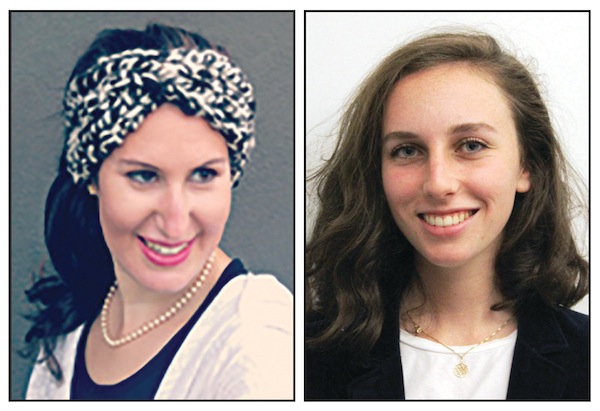
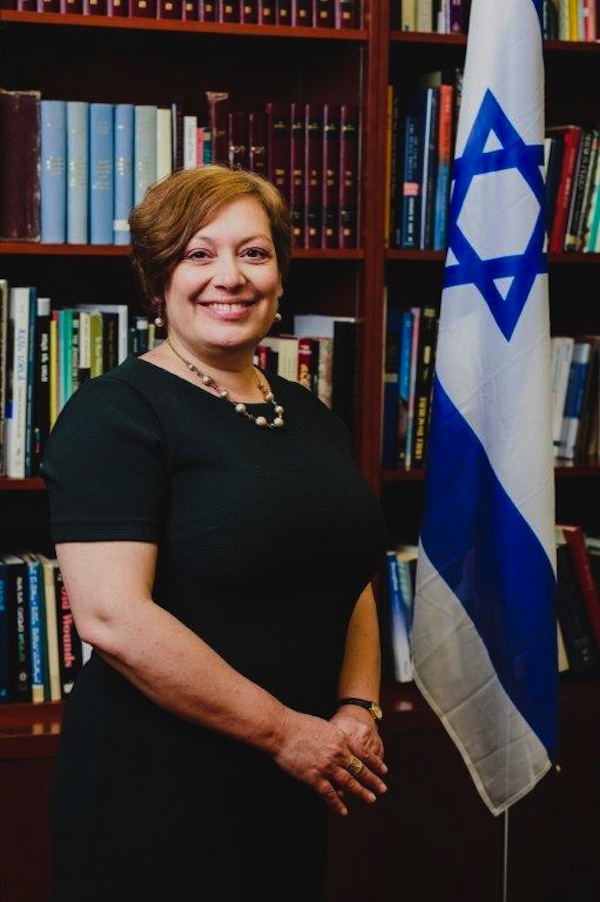
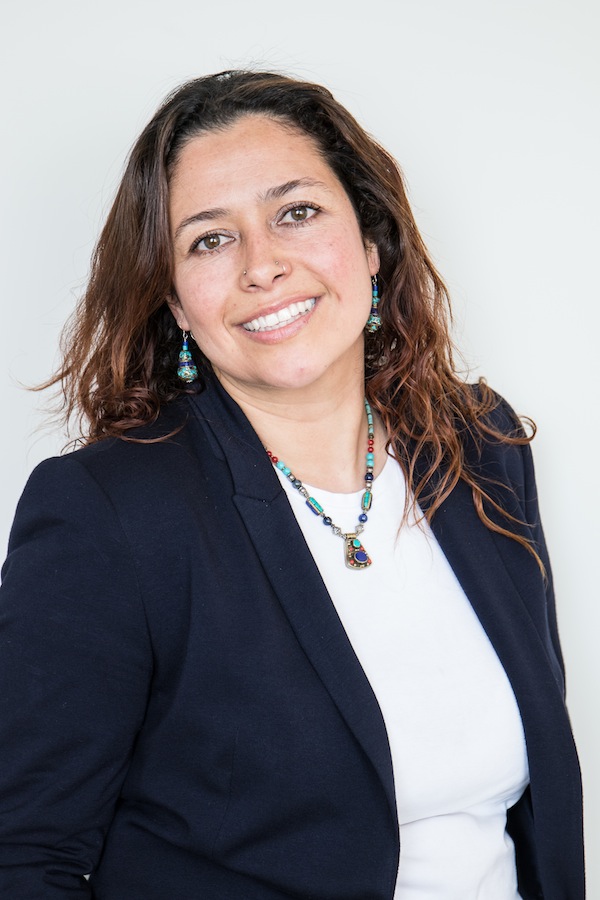
The event, scheduled to take place at Temple Sholom on Sept. 26, beginning at 7 p.m., will feature a discussion with Michal Muszkat-Barkan, PhD, of Safeguarding Our Shared Home, and Ora Peled Nakash of the America-Israel Democracy Coalition. Attendees will hear their perspectives and engage in a dialogue about the efforts by the Israeli democracy movement to build a strong civil society upholding Israel’s Declaration of Independence and its commitments to Jewish history, Jewish values, democracy, equality and justice.

Israel’s pro-democracy movement brings together nearly 200 different organizations. These organizations span various facets of Israeli society, including religious and secular groups, LGBTQ+ and women’s rights advocates, military veterans, medical professionals, anti-occupation activists, and many community-specific groups.

“The pro-democracy movement isn’t about politics, it is about the soul of the country,” said Jonathan Barsade, president of the America-Israel Democracy Coalition. “In modern history, the soul of Israel has been a critical element for the well-being of the Jewish community worldwide. That is why it is so important for the Israeli movement to engage and include the international Jewish community in this momentous event.”

In partnership with JSpaceCanada, Arza Canada, Ameinu Canada and the New Israel Fund of Canada, the gathering at Temple Sholom mirrors in many ways the inclusivity of Israel’s pro-democracy movement, by bringing together the leading organizations of progressive Jewry in Canada to engage in dialogue at a critical time in the history of the Israel-Canada relationship. It will be the first opportunity in Canada for Canadian Jews to meet with Israeli protest leaders live and in-person.

“We are honoured to host this event at Temple Sholom, which provides a platform for open dialogue and the exchange of ideas,” said Rabbi Dan Moskovitz of Temple Sholom. “By bringing together these influential Israeli protest leaders and showcasing the multifaceted nature of Israel’s pro-democracy movement, we aim to promote understanding and empathy while answering their call for solidarity from diaspora Jews.”

Daphna Kedem, lead organizer of UnXeptable Vancouver, added, “as an Israeli expat and proud member of the Vancouver Jewish community, I know how much pain both these communities feel about the current political climate in Israel. It is my hope that, through listening to those on the ground most affected by the potential regime change in Israel, we can work together – diaspora and Israeli Jews – to keep Israel Jewish and democratic, as stated in its Declaration of Independence.”

The Sept. 26 event is open to the public, and all interested individuals are encouraged to attend. Admission is free, and light refreshments will be provided following the discussion. All those wishing to attend should RSVP at bit.ly/SaveIsraeliDemocracy.

– Courtesy Maytal Kowalski, Press Pause Collective

A land of contradictions

Sorour Abdollahi’s solo exhibit Intersecting Landscapes is now at Zack Gallery. (photo by Olga Livshin)

Over the years, Iranian-Canadian artist Sorour Abdollahi has participated in several group shows at Zack Gallery, but the current exhibition, Intersecting Landscapes, which opened on Sept. 7, is her first solo show here.

“Sorour is definitely not the first non-Jewish artist with a solo show at the Zack,” said gallery director Hope Forstenzer. For years, the mission of the Zack Gallery, which is in the Jewish Community Centre of Greater Vancouver, has been to showcase Jewish artists and art dedicated to Jewish themes, she said. Non-Jewish artists were not excluded, but they usually appeared in group shows.

“The big difference in the past few years,” said Forstenzer, “has been an expansion of the definition of a Jewish theme to include a wider variety of human universal experiences that reflect on Jewish cultural history and traditions.… Sorour’s work, while not as overtly Jewish as some, addresses the concept of diaspora and its impact on culture and memory. When we made the decision to show her work, it was based on the concept of a cultural nostalgia for home as an inherently Jewish theme. And the response to it, so far, has borne that out – it has had a very strong emotional impact on the community here at the JCC and has already engendered discussion of the Jewish diaspora.”

Abdollahi has been a professional artist all her life. “I’ve always painted, since I was a child,” she told the Independent.

She received her art education in Iran, and her first solo art show happened there in 1987. A successful artist, working in mixed media and acrylics, she regularly exhibited in Iran, participating in multiple group and solo shows in various cities, including Tehran and Isfahan. The only big gap in her exhibiting schedule occurred when she immigrated to Canada. “We came here in 2000,” she said. “We did it for the children.”

Like all immigrants, she struggled with the new language and new culture. “It was several years later, when my children grew older, that I enrolled in Emily Carr [University of Art + Design] part time,” she recalled. “I wanted to become familiar with the local art scene, with the educators and the artists. I wanted to become a part of the local artistic community. And it worked beautifully. My friendships with wonderful Vancouver artists Devora and Sidi Schaffer stem from those days.”

Five years after her immigration, Abdollahi felt immersed enough in the British Columbia art vista to open her own studio and gallery in Yaletown.

“People would pass my gallery on the street, and some would come in,” she said. “They asked questions. I felt that my art connected.”

That connection gave her the courage to join the Eastside Culture Crawl – the biggest visual art festival in Vancouver – 10 years ago.

Abdollahi’s current show at the Zack represents the scope of her art perfectly. It consists of old and new paintings from several different series. A blend of abstract and figurative art, her paintings are airy and bright. Most of them have vague architectural connotations and employ a predominantly blue and green palette reminiscent of spring and rebirth. The abstract forms, sometimes utterly modern, often reveal faint outlines of ruins, shimmering in the mist, in the background.

“I grew up in the land of contradictions, where a traditional way of living juxtaposed a modern, Western lifestyle,” she said. “Those contradictions manifested in the landscape surrounding me, the historical against the contemporary, with layers of change and transformation.”

Immigration to a new country profoundly impacts her imagery.

“In my paintings, I examine the relationship between memories and the external landscape,” she said. “My Iranian background and my Canadian experience have had an enormous influence on my works. They inspired a negotiation between the modern and the ancient, the old and the new, the West and the East. Ancient ruins and Persian architecture play a pivotal role, too. They have enabled me to express the conflict and the negotiation process that often exists between two different cultures or societies. While the ruins speak of a mysterious, pure and mystical past, they also illustrate the corrosive effect of time and modernity, the constant reconfiguration of a country’s landscape, architecture and culture. The dripping paint in many of my pictures also illuminates the process of renewal. The old slides down, while the new grows over it. My paintings attempt to form a bridge between the past and the present.”

Two of the paintings particularly stand out. “The Magical Carpet” is a collage, full of the whimsical patterns, warm hues and bright shapes of a traditional eastern bazaar, with the artist’s customary ruins in the background.

Another painting, “Letters from Beyond”, with its strong punch of red paint, uses fragments of writing that are wholly imaginary. “The language and the letters in that writing don’t belong to any nation,” Abdollahi said. “I created it because I believe that we are all the same people. We should have no borders and no different languages separating us. That’s why I wanted to have a show here, at the Jewish Community Centre. I feel like my art is a link that connects us all.”

Abdollahi’s works can be found in private collections in Canada, the United States, the United Kingdom, France, Australia, Saudi Arabia and Iran.

Intersecting Landscapes runs until Oct. 12. For more information, visit sorourart.wordpress.com.

Olga Livshin is a Vancouver freelance writer. She can be reached at olgagodim@gmail.com.

Love and relationships

Hosted by Chabad Richmond, Aleeza Ben Shalom, star of the Netflix series Jewish Matchmaking, will take centre stage in-person for a one-night-only event on Nov. 27 at the River Rock Show Theatre. (photo from Chabad Richmond)

Remember the famous song from Fiddler on the Roof: “Matchmaker, matchmaker, make me a match, find me a find, catch me a catch”?  Well, fast forward a century, and things haven’t really changed that much. Jewish singles are still searching for their bashert, except they’re getting tired of swiping right or left to find their soulmate, so they’re turning to the ages-old tradition of matchmaking. Enter the world’s most famous Jewish matchmaker – Aleeza Ben Shalom.

Hosted by Chabad Richmond, Ben Shalom, star of the Netflix series Jewish Matchmaking, will take centre stage in-person for a one-night-only event on Nov. 27 at the River Rock Show Theatre.

Attendees will get an exclusive behind-the-scenes look at this hit TV reality show (signed for another year), discover secrets to successful relationships, and explore the intricate art of finding the perfect match. Ben Shalom – a self-described “marriage-minded mentor,” matchmaker and dating coach – will share her passion and insights into love, relationships and the basic Jewish values that inspire her to transform Jewish singles into Jewish couples.

“The time-honoured tradition of matchmaking, going back to the beginning of our people, has been central to bringing together Jewish couples and building Jewish homes. Focusing on core values that guide Jewish life, matchmaking ensures the continuity of our people for generations to come,” said Rabbi Yechiel Baitelman, director of Chabad Richmond. “In a world where everyone has spent the last three years getting very comfortable in isolation, the hurdles and opportunities for people to connect have been challenging. Never have I had so many people of all ages reach out to me asking me to make a match!”

Baitelman joked that matchmaking wasn’t covered in rabbinical school, but he views matchmaking as an emerging growth area in our community.

Ben Shalom, who has ushered at least 200 couples to the chuppah (wedding canopy) during her 15 years as a matchmaker, guides individuals of all ages on their quest for love and companionship. With her unique blend of warmth, humour and wisdom, she is committed to the matchmaking process. She adapts the model of formal Orthodox matchmaking (known as “shidduch dating”) to Jewish singles from all religious backgrounds, including secular, Reform, Conservative and Orthodox, from across Israel, Australia, the United Kingdom, the United States and Canada. She’s out to show the world that Jewish matchmaking is not some antiquated practice, but rather a relevant and successful process for lots of singles. She admits that it’s no easy task, but believes it’s worth the effort.

Born and raised in suburban Philadelphia in a secular Jewish home, Ben Shalom has been happily living in an Orthodox Jewish marriage for more than 20 years. She and her husband, Gershon, moved to Israel in 2021. They have five children and Ben Shalom entered the world of matchmaking in her 20s, when she was looking for a job that would give her a flexible schedule around childcare.

Tickets to hear Ben Shalom are $54 for general seating and $90 for preferred seating. Also, consider a VIP sponsorship opportunity at chai ($1,800), double chai ($3,600), triple chai ($5,400), $10,000 or $18,000. This inNludes a personal meet and greet with Ben Shalom over cocktails, forshpeis (appetizers) and conversation.

For more information, call 604-277-6427. Register for this exclusive event at chabadrichmond.com/matchmaker.

– Courtesy Chabad Richmond

Elana Wenner joins museum

Elana Wenner (photo from LinkedIn)

Elana Wenner, who became the director of programming and development at the Jewish Museum and Archives of BC (JMABC) on Aug. 1, brings an enthusiasm and desire to make the stories of the local Jewish community better known and more meaningful.

Born and raised in Vancouver, one of Wenner’s aims is to stress the stories of Jewish people in British Columbia and how all can benefit from, and are connected to, those first Jews who came to the province.

“The story is not just history, it is an ongoing, living story that we are all part of,” she said. “It is something that includes every single Jewish person in BC. We are preserving, maintaining and sharing the stories, but I would also add … we are helping to create new ones.”

Before working at JMABC, Wenner, who obtained a bachelor’s and a master’s in Jewish studies from McGill and Concordia, respectively, taught at King David High School and Vancouver Talmud Torah, schools she herself attended growing up here.

“Coming into this job combines my two-dimensional interest in history and my interest in education, and bringing stories to life to not just children but anyone who is interested,” she said.

Another of Wenner’s goals at the museum is to make exhibits not merely interesting but accessible and enjoyable, believing people will remember things when they feel a strong emotional connection with it.

“My philosophy of education is always about interactive, experiential education – things that people can actually be a part of and interact with instead of just being part of an audience,” she explained. “The idea is people will come, interact and engage with the story and be able to walk away with a piece of it that is a part of them.”

Wenner’s experience as a teacher will help in dealing with any possible challenges the new position may bring, she said. “I have discovered that teaching is a great place to figure out things because it includes the skills one needs for any other job.”

Since starting in August, Wenner has been busy researching places and venues, interacting with current donors, making sure that members are keeping up with their annual contribution and seeking donors elsewhere, as well as handling grant applications and marketing. She is also managing the JMABC social media accounts and providing informational fliers about the museum to synagogues during the High Holiday season.

“I am trying to get awareness of who we are, as many people did not know there is a Jewish museum in Vancouver and I would like the word out there that we exist because we have a lot to share,” she said.

“The history of Jewish Vancouver is such a good story and it deserves to be told [but] so many people just don’t know about it,” she added. “I am lucky to be one of the few who has spent some time digging deeper into this story.”

Wenner herself descends from a family that has been in Canada a long time by local Jewish standards – her ancestors arrived in Saskatchewan in 1888 – and that, she said, helped spark her interest in history and, specifically, Jewish history.

“My ancestors took photos of everything on a Brownie camera,” she recalled. “They developed their own film and it’s almost as if some of them are selfies. They were taking photos of casual life. It is rare to find non-formal photos of that period. You see what life was like, you see how people dressed.”

Daniella Givon, president of JMABC, said of Wenner’s arrival at the museum, “The board of JMABC is very excited to welcome Elana. Elana is full of energy and has a vision for the organization and her role in it. She has been familiar with JMABC since a young age, and has always cared about the organization. We feel fortunate to have her aboard.”

JMABC has several events scheduled for the coming year. On Nov. 21, the museum will hold its annual general meeting, which will feature the launch of Land of Hope: Documents on the Canadian Jewish Experience (1627-1923), edited by Richard Menkis and Pierre Anctil.

Later this fall, in partnership with Jewish Family Services, JMABC will put together the Supper Club, a series of dinners designed to share food and stories that reflect the diversity of the Jewish community in the province. Past menus have included Sephardi meatballs, namoura (orange cake) and Syrian-Argentinian fusion.

For the spring, Wenner is planning a pop-up exhibit that will showcase the original JMABC collection, when it used to be situated at the Jewish Community Centre of Greater Vancouver.  “We are hoping to revamp the exhibit and connect the story to where the Jewish community in Vancouver is today,” she said.

During warmer periods of the year, JMABC will continue to offer historic walking tours of Mountain View Cemetery and the Oakridge, Strathcona and Gastown neighbourhoods.

To find out more and to view current online exhibits, visit jewishmuseum.ca.

Sam Margolis has written for the Globe and Mail, the National Post, UPI and MSNBC.

New librarian at Waldman

Jill Pineau (photo from Waldman Library)

The Isaac Waldman Jewish Public Library welcomed Jill Pineau as its new head librarian in August. She takes over the position from Maiya Letourneau, who is now a teacher/librarian at King David High School.

“It’s been a lot of fast-paced learning. Maiya has helped to make the transition as seamless as possible and I really admire the way she ran the library for the last two years,” Pineau said in a recent interview with theIndependent.

“The library’s staff, Megan Rodgers and Anita Brown, our dedicated volunteers and all of the staff at the Jewish Community Centre of Greater Vancouver (JCCGV) have also been very supportive,” said Pineau. “The Waldman Library is well-loved and well-used by community members and managing it is a big role for anyone to take on, but I’m so happy to be in a role that I know will challenge me to learn something new every day, and I’m really enjoying the work so far.”

As she settles in, Pineau will be drafting a strategic plan to work on priorities for the next year. Fundraising, she noted, remains a continual project for the library, as it relies on donors to provide resources and services to the community. Each year, the library runs a telethon in August and a book sale in February. To this, Pineau hopes to add a third fundraiser in an effort to sustain a steady stream of donations.

Further, she intends to offer compelling programs and services that meet the needs of library patrons. She would like to expand the library’s collection with titles by Indigenous and LGBTQ2S+ authors, along with more children’s books for the library’s storytime programming.

“I also want to focus on marketing and outreach efforts geared towards the wider public to attract new users into the library,” said Pineau, who is currently arranging to have a few fall events up and running. “Waldman Library could be a great resource for non-Jewish Vancouverites to learn about Jewish history and topics, and I’d love to see it used that way a little bit more in the future.”

Born in Alberta, Pineau grew up in Mattawa, a small town in northeastern Ontario. She moved to Kingston, where she studied at Queen’s University before moving to Vancouver in 2021 to attend the University of British Columbia.

“I was attracted to UBC’s Master of Library and Information Studies (MLIS) program because I was looking for a way to get into the information field, and I really wanted to try out life in BC. I love research, project management, connecting with people and having autonomy in my day-to-day work, and the program was very in line with these interests,” she said.

Though still early in her career, Pineau brings a range of skills and experience to the job. She has held research assistant positions for various nonprofit organizations and the City of Kingston. While pursuing her MLIS degree, she worked in two special libraries, spending a year managing projects at the Ministry of Municipal Affairs Library in Victoria and completing a practicum credit at Lululemon’s Raw Materials Library, a library of fabric and related items.

“Special libraries are unique because they serve a specific user group or purpose, often through a special collection,” Pineau explained. “That focus allows for interesting projects and interactions.

“I love Waldman Library, and I would classify it as a special library because about 90% of its holdings are by Jewish authors or relate to Jewish history and topics. We also have a large collection of Hebrew books. But the library is still very much a public library, open to all and aiming to serve its community thoughtfully. In this way, it’s a very dynamic and exciting place to work for me.”

Pineau also has spent time as a journalist, first with the community paper in Mattawa, then with Queen’s Journal while in university. When the pandemic started in 2020, she freelanced for the Kingston Local and the Kingstonist.

“I loved the autonomy that type of work afforded me, but I had a mind to continue developing and focusing my career and that’s what ultimately brought me to graduate school,” she said.

Established in 1994, the Waldman Library is located on the second floor of the Vancouver JCC and is open Sunday from 10 a.m. to 2 p.m. and Monday to Thursday from 10 a.m. to 6 p.m. The library maintains six computers, which are open to users.

In the past 12 months, more than 4,500 visitors came to the library to read, study, work, play and socialize, said Pineau. During this period, close to 3,600 books, DVDs and other materials were checked out, and the library added 475 titles to its collection. Overall, the library has more than 15,000 titles in its collection.

In acknowledging the support of the community, Pineau said, “I want to say thank you to all of the library’s patrons, who have been so kind and welcoming over the last few weeks. It’s been lovely connecting with a new community – I’m very happy to be here.”

Sam Margolis has written for the Globe and Mail, the National Post, UPI and MSNBC.

Tulchinsky at VPL as 2023 writer in residence

Vancouver Public Library’s 2023 writer in residence is Vancouver author Aren X. Tulchinsky, the writer formerly known as Karen X. Tulchinsky.

Tulchinsky is a novelist, screenwriter, video editor and writing mentor, and an out and proud member of the LGBTQ2S+ community. He is the recipient of awards such as the One Book One Vancouver Prize and Vancity Book Prize for his written works, which include The Five Books of Moses Lapinsky, In Her Nature, Love Ruins Everything and Love and Other Ruins.

He has also written for and edited on numerous television series, including The Nature of Things for CBC. His short film, Ms. Thing, has screened internationally in more than 50 film festivals and won the Audience Choice Award at the Queer Fruits Film Festival in Australia.

“My passion has always been to tell stories, especially stories set in communities that have been historically underrepresented in Canadian literature,” said Tulchinsky. “I am Jewish from a working-class background. I came out as a lesbian as a teenager, and now identify as a transgender man. As a member of several marginalized communities, I have always written from the heart and I welcome the opportunity to mentor emerging writers on their own journeys – especially those from underrepresented communities, such as BIPOC and LGBTQ2S+ writers.”

This fall, Tulchinsky will work directly with aspiring writers through a series of writing workshops, individual consults and special events at the library. He’ll also be working on a new novel, Second Son, which follows a transgender man who is grieving the premature death of his father, coming to terms with the loss of his only brother 10 years earlier, and learning to love himself in the process.

Find out more at vpl.ca/writer.

– Courtesy Vancouver Public Library

A heartwarming gathering

Aug. 29-30, 17 families – each serving as Chabad shluchim (emissaries) – came together for an event known as a Kinus Hakhel. (photo from Chabad Lubavitch BC)

In a display of unity and camaraderie, 17 families – each serving the Jewish population across British Columbia as Chabad shluchim (emissaries) – came together Aug. 29 and 30 (12 and 13 of Elul) for an event known as a Kinus Hakhel. It was a celebration of shared purpose and a recommitment to serving the community.

Representatives from Chabad in Victoria, Nanaimo, Richmond, Surrey, Coquitlam, the University of British Columbia, Downtown Vancouver, Kitsilano and Kelowna joined the central Chabad Lubavitch BC in this heartwarming event. The theme of “sheves achim gam yachad” (“dwelling together in unity”) permeated the atmosphere with feelings of support for one another. It served as a reminder of the strength that arises from collaboration and left a mark on all those present.

Chabad today is the largest Jewish organization in British Columbia, with a presence in 10 cities across the province, 11 synagogues, 17 permanent rabbis and rebbetzins, three mikvahs, eight supplementary Hebrew schools, four Camp Gan Israel summer camps, dozens of weekly Torah classes, private counseling and social services.

Rabbi Yitzchok Wineberg, the head shaliach of British Columbia, reflected on the past 50 years of Chabad’s presence here. He congratulated all the shluchim for their dedication and hard work, acknowledging the efforts they have invested in reaching out to every Jew, no matter their affiliation or background, and establishing communities all over the province.

Rabbi Avraham Feigelstock, av beis din (the rabbi presiding over the religious court), director of BCK and one of the senior shluchim in British Columbia, took the opportunity to encourage the establishment of a vaad hapo’el, a permanent action committee, to take the inspiration from the Kinus and use it as a positive force for expansion.

The Kinus also featured an all-night farbrengen (spiritual gathering) led by Rabbi Sholom B. Levitin, regional director of Chabad-Lubavitch in the Pacific Northwest, lasting from 9 p.m. until 6 a.m., where participants engaged in discussions and spiritual connection.

In the spirit of this Hakhel year (an assembly that takes place every seven years), with the call of uniting men, women and children, a children’s program ran throughout the entire two days with more than 60 young shluchim participating. A special thanks goes to Tamara Feigelstock, who ensured that the youngest members of the shluchim had an enriching experience.

The Kinus wrapped up with a banquet. Featured speakers were Rabbi Yechiel Baitelman (Chabad Richmond) and Rabbi Shmuly Hecht (Chabad of the Okanagan Valley), plus a special Zoom address by Rabbi Moshe Kotlarsky, vice-chair of Merkos L’Inyonei Chinuch, the educational arm of Chabad Lubavitch worldwide.

An unexpected, moving moment came at the banquet when Arnold Silber, Chabad’s first friend and supporter in British Columbia, took the stage. With emotion, he shared his deep connection to Chabad and to the Jewish community. He announced, “Don’t worry about paying for this gathering; I will cover the entire bill.” His generosity underscored the sense of unity and support that defined the event.

Silber also reflected on the past 50 years and expressed pride on his association with Chabad. He spoke metaphorically about how he had planted a tree a half-century ago and now sees a thriving forest. The growth and impact of Chabad in British Columbia fills him with joy and nachas (pride), he said. He pledged to continue and expand his support and partnership with Chabad’s “army of light and kindness” in the province. And he shared his vision of building an even stronger, more vibrant Jewish community in the future.

The Kinus Hakhel took place thanks to the dedicated efforts of Rabbi Dovid and Chaya Rosenfeld, co-directors of the central Chabad in BC, and the various planning committees. For the men’s program, that was Rabbi Meir Kaplan (Chabad of Vancouver Island), Rabbi Benzi Shemtov (Chabad of Nanaimo) and Rabbi Mottel Gurevitz (Chabad of Coquitlam). For the women’s events, Blumie Shemtov (Chabad of Nanaimo) and Rivki Yeshayahu (Kitsilano) coordinated the program, and the youth program was planned by Esti Loeub (Chabad of UBC) and Rivky Varnai (Richmond). Special thanks to Henia Wineberg (Lubavitch BC) and Chanie Baitelman (Chabad Richmond) for the beautiful setup.

As the shluchim of British Columbia left the gathering, they carried with them not only a renewed sense of unity but also a strengthened commitment to their shared mission. This gathering in Vancouver wasn’t just an event; it was a celebration of community, purpose and the enduring spirit of Chabad.

– Courtesy Chabad Lubavitch BC

Six weeks of fun

More than 200 kids went to Camp Gan Israel this summer. (photo from Camp Gan Israel)

More than 200 children attended Camp Gan Israel this summer. They had a varied schedule, with baking, crafts, skateboarding, swimming, sports and field trips to such places as Stable Harvest Farm, Wild Play Adventure Park, Playland, Science World and Sasamat Lake. A special highlight was the camp’s theme song and dance, which was picked up by almost 400 Camp Gan Israel’s around the globe.

“Camp shows children that Judaism is fun, joyful and alive,” said camp director Chaya Rosenfeld. “The staff set an amazing example of being proud and enthusiastic about their Judaism and there is no substitute for a camp experience.”

Seventeen staff members were flown in from California, New Jersey, Florida, Ohio, New York, Montreal and Toronto.

Rabbi Dovid Rosenfeld of Lubavitch BC added, “The cost-of-living crisis is really hitting families hard. Almost 90% of the campers received a discount to attend camp, with a percentage receiving a full scholarship. No one is turned away for financial reasons and we are really grateful to our supporters for giving the children the opportunity to experience the summer of a lifetime.”

– Courtesy Camp Gan Israel