

Israel faces an existential threat that has nothing to do with Hamas, Hezbollah or Iran, says Avital Blonder.
The country’s housing crisis, widening economic disparities and entrenched poverty threaten Israel’s future from within, according to Blonder, founder and chief executive officer of Manof, a nonprofit organization pioneering a new approach to urban renewal, who was in Vancouver recently.
“As much as Israel has its own threats, and God knows in the past year we’ve witnessed them, the external threats are not the only ones out there,” she told the Independent. “If Israel won’t solve these issues over time, this will ruin the country from within, because people won’t be able to continue being Israelis, not because of politics, just because of survival.”
Manof is attempting to address the crisis by bringing together housing development, social services and neighbourhood revitalization in some of Israel’s poorest communities. The organization operates primarily in the country’s northern and southern peripheries, where low property values, inadequate infrastructure and limited economic opportunities have created a cycle of poverty that conventional real estate development has little incentive to address.
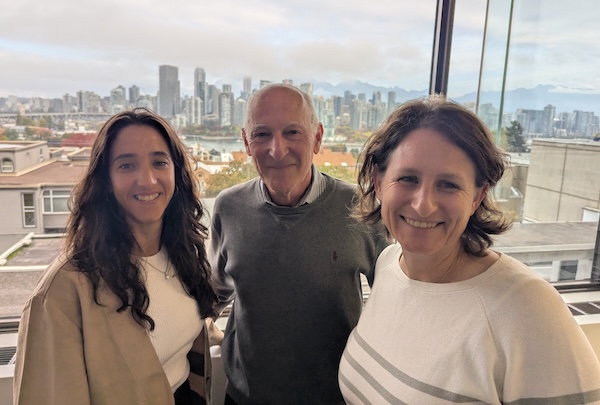
Blonder said Israel once had one of the world’s most ambitious public housing programs. In its early decades, the government built more than 200,000 apartments, making the young country a world leader in public housing per capita, she said.
Beginning in the 1980s, however, the government gradually withdrew from housing, selling units to tenants at discounted prices without establishing adequate alternatives to ensure affordable housing remained available. The results, she argues, have been disastrous. Blonder estimated that more than half of Israelis spend more than half their income on housing, with the proportion rising to 60% or 70% among the lowest-income households.
Housing pressures are especially acute outside Israel’s major economic centres, she said. Large industries and high-paying jobs remain concentrated in the Tel Aviv region, while inadequate transportation and limited investment have left many northern and southern communities struggling. Over decades, said Blonder, these circumstances have produced increasingly segregated neighbourhoods where poverty becomes entrenched and low property values discourage redevelopment.
This is where Manof intervenes.

“We’re a not-for-profit development company that basically leads developments in underserved neighbourhoods where there is a high concentration of people living in poverty and low land values,” she said.
A conventional developer may see little opportunity for profit. Manof sees an opportunity for social transformation. Its approach, which draws on models already established in North America and Europe, rests on three interconnected pillars.
The first is housing. Manof initiates redevelopment projects in which aging apartment buildings are demolished and replaced with modern buildings containing substantially more housing units. The organization currently has approximately 3,000 units in development, with a goal of reaching 4,000.
The second pillar is social mobility. Manof provides neighbourhood residents with free assistance accessing government benefits, tax credits and programs for which they qualify but may not know about or understand how to obtain. It also helps residents improve their employment prospects, particularly individuals and families facing barriers such as limited education or Hebrew-language proficiency. Many residents are immigrants from Ethiopia, the former Soviet Union or North Africa, or are members of Israel’s Arab communities. Manof measures the results of these interventions in practical terms, including the additional income generated for households through benefits and better employment.
The third pillar is improving the neighbourhood itself. This means better schools, community centres, parks, cultural opportunities and public spaces. The intention is not simply to replace deteriorating buildings with new apartments, but to create thriving, mixed-income communities where existing residents can remain and benefit from improvements. The organization’s social services extend to all neighbourhood residents, not just those whose buildings are being redeveloped.
Each neighbourhood could ultimately attract approximately $200 million CAD in real estate investment, Blonder estimated.
Manof’s model also addresses another increasingly urgent problem: physical safety. Israeli law has required reinforced residential safe rooms, known as mamads, in new construction since 1990; older buildings generally lack them. Because low-income Israelis disproportionately inhabit older neighbourhoods, Blonder said fewer than a quarter have access to adequate residential safe rooms. The recent years of war and missile attacks have made that deficiency especially alarming.
“Up until a few years ago, I would say that the biggest added value of the work that we create is quality of life and social mobility opportunity,” she said. “In the past three years, after everything we went through, it’s also about life itself.”
Manof’s financing model combines philanthropy, impact investment, private-sector development and government support. Blonder said the organization seeks approximately $4 million CAD for the first five years of each project. Half supports social services through philanthropy, while the other half consists of impact-investment loans that finance planning, zoning and other preliminary development work.
Once projects become financially viable, private developers provide equity and assume responsibility for construction, supported by conventional financing and Manof’s impact-investment participation. Government contributions are expected to account for approximately 3% of the total development cost.
Rather than replacing government, Blonder hopes Manof can demonstrate successful approaches that governments and private developers will then support and expand.
“Our role is to bear the risk on our shoulders through philanthropy,” she said, so that, over time, others will have an incentive to participate.
Manof’s Vancouver visit was part of a North American outreach tour that also included Seattle, Chicago, Milwaukee, New York, Baltimore and New Jersey. The organization has received support from Vancouver’s Ronald S. Roadburg Foundation. Blonder hopes to develop additional relationships with Canadian Jewish philanthropists, real estate developers and other professionals.
There are several ways Canadians can contribute, she said, beyond conventional charitable donations. Canadian developers could potentially participate in projects, while professionals with experience in housing, urban planning, finance and community development could contribute expertise.
Heni Bizawi, who works in resource development and partnerships at Manof, emphasized that the organization’s work offers a hopeful counterpoint to the relentless news of war and insecurity.
“There are people in Israel that are still keeping up and holding the hope and wanting to live better,” Bizawi said.
She described the work as an expression of tikkun olam and a commitment to building stronger communities.
For Blonder, the undertaking represents a continuation of the pioneering spirit that established Israel.
The first generations of Zionist pioneers, she explained, had the task of establishing a Jewish state. Today’s generations must ensure that the state lives up to the values on which it was founded.
“Our role, whether it’s the 2.0 or 3.0 version of it, is to make sure that it actually meets the vision of what a Jewish state should be,” she said.
That includes ensuring that nobody is left behind because of their economic circumstances.
“And, when it comes to the current Jewish state, we’re not meeting these values,” she said.
Nevertheless, Blonder is optimistic that Israel’s problems can be solved.
“We’re nine or 10 million people. It’s not such a big community. These are solvable issues,” she said. “It just needs to be taken care of properly, holistically and in a strategic way that shows that philanthropy can really make a difference.”
The challenge for Jewish communities abroad, she suggested, is to consider how the philanthropic traditions that helped establish Israel can now be adapted to strengthen the society that has emerged. After generations of raising money to build a Jewish homeland, the next challenge may be ensuring that all its citizens can afford to live in it.
More information is available at manofhome.org.