

Skip to content
  • Home
  • Subscribe / donate
  • Events calendar
  • Business Directory
  • FAQ
  • News
    • Local
    • National
    • Israel
    • World
    • עניין בחדשות
      A roundup of news in Canada and further afield, in Hebrew.
  • Opinion
    • From the JI
    • Op-Ed
  • Arts & Culture
    • Performing Arts
    • Music
    • Books
    • Visual Arts
    • TV & Film
  • Life
    • Celebrating the Holidays
    • Travel
    • The Daily Snooze
      Cartoons by Jacob Samuel
    • Mystery Photo
      Help the JI and JMABC fill in the gaps in our archives.
  • Community Links
    • Organizations, Etc.
    • Other News Sources & Blogs
  • JI Chai Celebration
  • JI@88! video

Recent Posts

  • JSA leads BC-wide campaign
  • Hamas a “net disaster”
  • Does Bill C-9 matter?
  • What belonging means
  • Make time to congratulate
  • Connecting with nature
  • Mikvah at Chabad now open
  • Whistler welcomes Chabad
  • Companionship is vital
  • Preserving our stories
  • Bard’s varied play mix
  • Sokoloff releases new album
  • Defying expectations
  • Group buying platform wins
  • Community milestones … July 2026
  • The first Jew buried in BC
  • SFU honours Gloria Gutman
  • Lifting people’s spirits
  • Wedding a ray of light
  • Indigeneity and Zionism
  • Rule of law broken: councilor
  • Football and its roles
  • The burden of defence
  • Fish Café returns after fire
  • All right in what goes wrong
  • Nuns & mermaids at TUTS
  • Camp offers holiday retreat
  • Students and mentors inspire
  • Once-in-a-lifetime trip
  • 100 dancers, one heart
  • Money for the sciences
  • What “Jewish food” means
  • Have a cookie, schnitzel too
  • Federation now across BC
  • Israel fighting for its existence
  • Deal strengthens Iran

Archives

Follow @JewishIndie
image - CJN box ad Rockowers 2026
photo - The parking lot at the Rambam Health Care Campus is a dual-purpose facility capable of converting into a fortified 2,000-bed underground hospital in times of conflict

Haifa’s Rambam practises medicine without borders

The parking lot at the Rambam Health Care Campus is a dual-purpose facility capable of converting into a fortified 2,000-bed underground hospital in times of conflict. (photo from Rambam Health Care Campus)

Not unexpectedly, southern Israel suffered more than other areas of the Jewish state during this summer’s conflict with Hamas. Yet up in northern Israel, 30 doctors from the Haifa-based Rambam Health Care Campus (RHCC) were drafted into the Israel Defence Forces (IDF).

“Israel is a small country, so everything affects you whether you are in the conflict or not,” Prof. Rafael (Rafi) Beyar, a renowned cardiologist and the director general of RHCC, told this reporter.

Now, in the aftermath of the 50-day summer war, RHCC is proving that medicine has “no borders,” in Beyar’s words. The week of this interview, doctors at the hospital conducted a successful kidney transplant on a 14-year-old boy from Gaza.
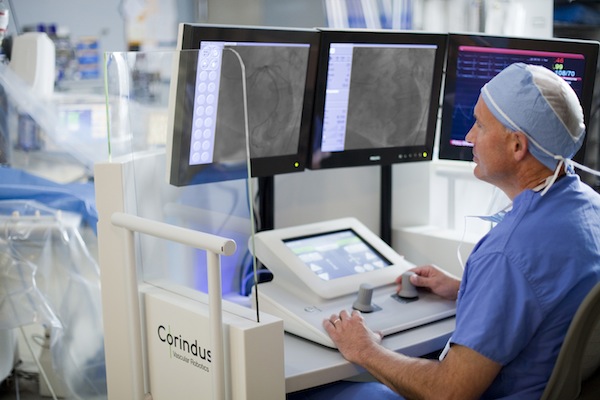
photo - The robotic catheterization system allows the doctor to open heart blockages and implant stents in patients remotely
The robotic catheterization system allows the doctor to open heart blockages and implant stents in patients remotely. (photo from Rambam Health Care Campus)

The largest hospital in northern Israel, RHCC serves more than two million residents and functions as the primary medical facility for the Northern Command of the IDF. In addition to treating Gazan patients and training Palestinian physicians, the hospital is receiving wounded Syrian refugees.

Many of RHCC’s Gazan patients are children facing cancer and kidney diseases.

“These kids don’t have any other solutions,” Beyar said.

While suffering from kidney failure, the Gaza boy treated this week also had a blood condition that obstructed some of his blood vessels. Doctors first needed to check for useable blood vessels, and only then could they transplant his sister’s kidney into his body. When it became clear that the boy’s functioning blood vessels could not sustain the new kidney, doctors implanted a synthetic connector that saved his life.

On the Syrian front, RHCC has received nearly 100 wounded refugees over the past few months. IDF soldiers provide the necessary immediate treatment for injured refugees at the Israel-Syria border in the Golan Heights, and then bring them to the hospital. Most of the Syrian patients have sustained injuries from shock, bombs and other blasts. When they are treated and recover, most return to Syria, but some don’t want to go back, said Beyar.

Like the patients from Syria, most of the Gazan patients are thankful for the treatment they receive from RHCC. Although Beyar doesn’t know what happens to the patients once they return to Gaza, he said, “Someone who is treated and whose life is saved knows how to appreciate that.” Beyar added that he believes Israeli medical treatment of Gazans “has a long-term impact” on how Palestinian civilians view Israel.

Read more at jns.org.

Print/Email
Format ImagePosted on September 19, 2014September 18, 2014Author Alina Dain Sharon JNS.ORGCategories WorldTags Gaza, Palestinians, Rafael Beyar, Rafi Beyar, Rambam Health Care Campus, RHCC, Syria

Post navigation

Previous Previous post: Reflecting on these Days of Awe
Next Next post: Israel-Hamas talks necessary to rebuild Gaza
Proudly powered by WordPress