Skip to content
  • Home
  • Subscribe / donate
  • Events calendar
  • Business Directory
  • FAQ
  • News
    • Local
    • National
    • Israel
    • World
    • עניין בחדשות
      A roundup of news in Canada and further afield, in Hebrew.
  • Opinion
    • From the JI
    • Op-Ed
  • Arts & Culture
    • Performing Arts
    • Music
    • Books
    • Visual Arts
    • TV & Film
  • Life
    • Celebrating the Holidays
    • Travel
    • The Daily Snooze
      Cartoons by Jacob Samuel
    • Mystery Photo
      Help the JI and JMABC fill in the gaps in our archives.
  • Community Links
    • Organizations, Etc.
    • Other News Sources & Blogs
  • JI Chai Celebration
  • JI@88! video

Recent Posts

  • SFU honours Gloria Gutman
  • Lifting people’s spirits
  • Wedding a ray of light
  • Indigeneity and Zionism
  • Rule of law broken: councilor
  • Football and its roles
  • The burden of defence
  • Fish Café returns after fire
  • All right in what goes wrong
  • Nuns & mermaids at TUTS
  • Camp offers holiday retreat
  • Students and mentors inspire
  • Once-in-a-lifetime trip
  • 100 dancers, one heart
  • Money for the sciences
  • What “Jewish food” means
  • Have a cookie, schnitzel too
  • Federation now across BC
  • Israel fighting for its existence
  • Deal strengthens Iran
  • Patriotic belonging diminishes
  • A campaign to engage
  • Upstanders’ first live event
  • Responding to Carney
  • Having your own home
  • Music a family tradition
  • Musical to warm heart
  • Community milestones … June 2026
  • Sharing her passion for Israel
  • Or Shalom reopens its doors
  • JFS from past to future
  • Need holistic approach
  • Sharing stories, advice
  • Journalist shares fears
  • Skills to live together
  • Road to independence

Archives

Follow @JewishIndie
image - CJN box ad Rockowers 2026

Category: Local

A solemn anniversary

The Vancouver and Victoria Jewish communities will each hold a memorial ceremony Oct. 7 to honour and remember the victims of the attacks on Israel a year ago. 

Led by the Rabbinical Association of Vancouver (RAV) and in partnership with the Jewish Federation of Greater Vancouver and many others, an evening event in Vancouver will be an opportunity for people of all ages to come together.

A special gathering for young adults will take place from 6 to 7 p.m., providing a space for reflection and connection. The main ceremony will begin at 7 p.m., and will include what is being described as a poignant tribute led by our community’s rabbis. The location of the event will be emailed upon registration. Register at  jewishvancouver.com/october-7th-memorial.

Following the ceremony, Jewish Family Services will offer “living rooms,” in both Hebrew and English, where attendees can share their thoughts and find comfort. An Israeli sing-along will also take place, with the intention of helping participants find strength in unity and to support one another.

Relatives of Oct. 7 victims will present representative stories of the heroes and victims and organizers are planning interactive elements so participants can actively memorialize. There is an intention to ensure that all the victims’ names, as well as fallen soldiers’ names, can be articulated in the course of the program. 

Politics – local or international – are to be kept out of the program. Elected officials may attend but the focus is on memorializing and honouring the dead.

While Oct. 7 created an unprecedented new world, in many ways, there is a precedent for the sort of memorial event planned, according to Beth Israel’s Rabbi Jonathan Infeld, who is head of RAV.

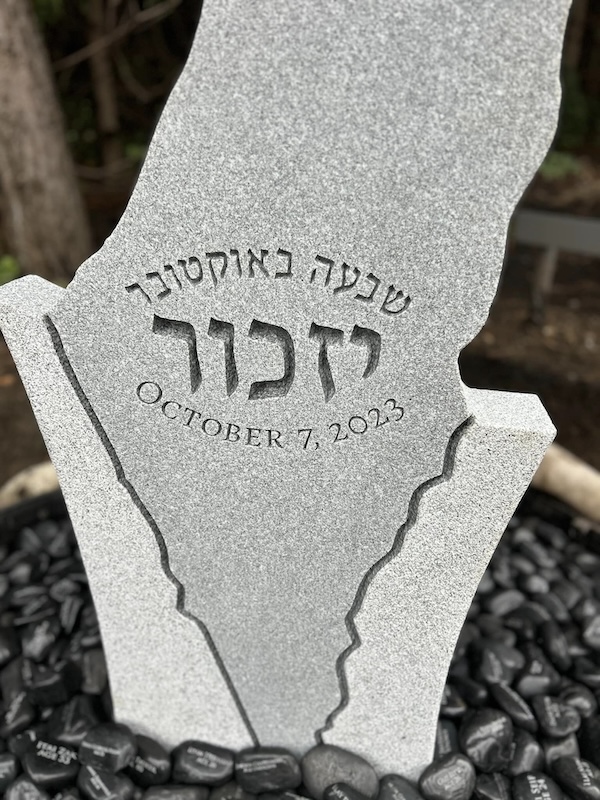
The Yizkor service will be the template for this commemoration, said Infeld.

“We know that the Yizkor service is something that the synagogue-going Jew can relate to, but we know that not all the members of our community go to synagogue on a regular basis,” he said. “We want to make sure that it works for everyone. Yizkor is the framework, but there will be creative pieces in it as well that will work for everyone in the community.”

As the anniversary approaches, Infeld said the community should be “thinking first and foremost of the memory of those who were murdered in this horrific, horrible terror attack.”

There are 97 hostages still being held in captivity in Gaza of the more than 240 Israelis and others kidnapped by Hamas on Oct. 7. (Four other hostages have been held since 2014/15.)

People need to be reminded of the absolute necessity to support the people of Israel at this moment, and to support fellow Jews here in Canada and around the world against the rise of antisemitism, said Infeld. “We would like to see everyone really rally together and gather together to support each other and to show our support for Israel and the Jewish people, and to comfort each other as well.”

A memorial in Victoria will take place at the same time on Oct. 7, at the Esquimalt Gorge Pavilion. Pre-registration is mandatory at jewishvictoria.ca.

On Sept. 28, as part of Beth Israel’s Selichot service, Rabbi Infeld will lead a conversation with Thomas Hand, whose daughter, Emily, was a hostage in Gaza. Emily, who turned 9 in captivity, was kidnapped along with her friend and the friend’s mother. The two girls were released in November. Hand will talk about the “spiritual, emotional and moral roller coaster” of his daughter’s captivity and eventual freedom.

Posted on September 20, 2024September 18, 2024Author Pat JohnsonCategories LocalTags commemoration, hostages, Israel-Hamas war, Jewish Federation of Greater Vancouver, Jonathan Infeld, memorial, Oct. 7, Rabbinical Association of Vancouver, RAV, terrorism, Vancouver, Victoria, Yizkor
Building on a legacy of hope

Building on a legacy of hope

Dr. Oheneba Boachie, left, and Dr. Rick Hodes, centre, with patients. The JDC spine program in Ethiopia is seeing patients full-time and has evaluated more than 5,000 patients with spine deformities. (photo from Gary Segal)

The two previous Bring Back Hope events “were vital to getting us to where we are now,” Dr. Rick Hodes, American Jewish Joint Distribution Committee (JDC) medical director for Ethiopia, told the Independent. “They raised interest in our work and the financial gifts we received allowed us to expand, to operate on hundreds more patients, and to become the most important spine centre in the entire country of 120 million.”

Bring Back Hope III will take place Oct. 22 at the JW Marriott Parq Vancouver. The event, which was conceived by local businessman and philanthropist Gary Segal, will honour Hodes and raise funds to secure Hodes’ legacy by establishing a dedicated spine centre in Ethiopia and training doctors and medical staff.

Segal met Hodes on a Jewish Federation of Greater Vancouver/ JDC trip to Ethiopia in 2007. From Hodes, Segal learned about Tesfaye Anagaw, then a teenager, who had an extreme deformity in his spine that could not be operated on in Africa. Segal managed to get Anagaw the life-saving surgery he needed at Vancouver General Hospital in 2009. The experience inspired Segal to help others in similar circumstances by supporting Hodes’ work. Segal launched the Bring Back Hope Initiative (BBH) in 2012.

It wasn’t intended to be annual event, Segal told the Independent. “As a new cause with its somewhat unique origin, it took some time and thoughtful analysis to deploy the funds in a strategic manner – not just to fund the immediate and ongoing need for life-saving spine deformity surgeries, but also to increase training and capacity within Ethiopia. In addition to BBH working with JDC, the newly established BBH partnership with the UBC Branch for Global Surgical Care was unfolding methodically.

“As a result, the appropriate timing for BBH II just naturally turned out to be a five-year anniversary of the initial launch. With the similarly inspiring and even larger amount of funds raised at BBH II, I would say that, around three years later, the rumblings of a BBH III 10-year anniversary event began running through my head, only to be derailed by a couple of unforeseen ‘best laid plans of mice and men going awry’ events: COVID, followed by an outbreak of civil unrest and war in Ethiopia. So, here we are.”

One of the prominent aspects of Hodes’ work, which has been highlighted at previous BBH events, is the interfaith cooperation.

“It is not exactly a revelation to say that extremism, especially of political and religious beliefs, has historically led to much discord in the world,” said Segal. “In stark contrast, underpinning these BBH events, you have this remarkable story – rare humanitarian Jewish physician Dr. Rick Hodes, partnering with devout Baptist Ghanian-born spine surgeon Dr. [Oheneba] Boachie, working with the Catholic nuns of Mother Teresa mission in Addis Ababa, saving Muslim and Christian children. What an uplifting and powerful example of what interfaith cooperation can achieve.”

photo - From left to right: Dr. Oheneba Boachie, Gary Segal and Dr. Rick Hodes in the clinic office in Addis Ababa, Ethiopia
From left to right: Dr. Oheneba Boachie, Gary Segal and Dr. Rick Hodes in the clinic office in Addis Ababa, Ethiopia. (photo from Gary Segal)

An important development since the first BBH event is that the Ethiopian Ministry of Health has recognized the importance of the spine program.

Boachie and Hodes have been working together for almost 20 years, having met in 2005.

“In spring of 2006, we sent five patients and one staff person to Accra, Ghana. At the same time, Dr. Boachie and his team arrived from New York, and they operated on our patients and many others,” said Hodes. “The Ethiopian government was not making spine a priority, but now that we are seeing patients full-time and have evaluated well over 5,000 patients with spine deformities, they realize that this is a major cause of disability. They now are in favour of a national spine centre and are working with us to get this done. Their endorsement has shown us, and our donors, that we have ‘buy-in’ from the Ethiopian government.”

While the majority of surgeries took place in Ethiopia this year, Hodes said, “We also send patients to FOCOS Hospital in Ghana and Ganga Hospital in India for traction and for surgery. 

“We are sending Ethiopian surgeons to India for training, as well. Over the years, the majority of our difficult surgeries have been performed in Ghana, often preceded by months of ambulatory traction. Having our own centre will allow us to provide better care and to be in control of the process and the facility.”

Currently, they operate in a government hospital as well as in a private Christian hospital, said Hodes, “but we believe that a full-time, 100%-spine centre would provide better care to Ethiopians suffering from spine issues.

“I am the main doctor in the clinic, but, in the end, this must be a program run by Ethiopians for Ethiopians,” he stressed. “A national spine centre will allow this to happen. This means having a dedicated facility, as well as fully trained Ethiopian physicians, nurses, physical therapists and others to be able to evaluate, treat, operate on and rehabilitate our patients. It is a great opportunity to provide great care to our patients, and I would love to find an Ethiopian doctor to direct it.”

Hodes was in Vancouver more than once this summer, talking about his hopes for the spine program.

“I was here,” he said, “meeting people, speaking about my work and trying to interest people in our activities in Ethiopia, which involve identifying patients, evaluating and treating them, choosing people for surgery, coordinating care and arranging surgeries – and following them afterwards for years,” as care needs don’t end after the surgery is complete.

“The Dr. Rick Hodes/JDC spine program – over the last 20 years, part of JDC’s tikkun olam non-sectarian work – has not only saved and transformed countless lives, but has also served as an inspiring example and message to both the Jewish and non-Jewish world,” said Segal, who has been on the JDC board since 2012.

Hodes has been recognized for his work in various ways. Most recently, he was given the 2024 Walter P. Blount Award by the Scoliosis Research Society, whose membership “includes over 1,000 of the world’s leading spine surgeons, researchers, physician assistants and orthotists who are involved in research and treatment of spinal deformities.” The award honours “an individual who has provided outstanding service for those with spinal deformities, through their generous actions out of a sense of service to larger social and professional goals.” 

Segal and others have called Hodes “tireless” in his humanitarian work.

“I am surrounded by suffering, and it is my challenge to deal with this daily, to provide compassionate care and to raise funds for all of this,” Hodes told the Independent. “I realize that I can only help a small percent of the people who seek my care, and have to deal with that. I am motivated by my goal of helping people for whom there is no other alternative. It’s not easy. I lose sleep over this. It is never-ending.”

Hodes will return to Vancouver for BBB III. Also attending, said Segal, will be “Tesfaye, with his wife and son (whom I can’t wait to meet for the first time); two other patients whose lives were transformed through the Dr. Rick Hodes/JDC spine program; some JDC professionals from the USA, Israel and Ethiopia; and a senior Ministry of Health individual. There is also a special entertainment surprise with its own unique story and link to the evening.”

For tickets to BBH III, visit bringbackhope.com. 

Format ImagePosted on September 20, 2024September 18, 2024Author Cynthia RamsayCategories LocalTags American Jewish Joint Distribution Committee, BBH, Bring Back Hope, Ethiopia, fundraising, Gary Segal, humanitarian aid, JDC, philanthropy, Rick Hodes, spine surgery
Israeli envoy hopeful

Israeli envoy hopeful

Iddo Moed, Israel’s ambassador to Canada, was in British Columbia to promote partnerships. (photo by Pat Johnson)

Iddo Moed, Israel’s ambassador to Canada, was in Vancouver last week, meeting with businesspeople, university administrators and the Jewish community. It was his second visit to Vancouver since his appointment as ambassador a year ago.

Moed hopes to establish and expand collaborations between Israeli and Canadian academic institutions in the fields of medicine, agriculture, artificial intelligence, cybersecurity and applied research in many disciplines, as well as introduce business leaders from both countries to one another to encourage possible partnerships. He plans to bring some of the leading figures in various Israeli sectors on a cross-Canada road show, possibly early in 2025.

In a discussion with the Jewish Independent and three other media outlets, the ambassador focused on antisemitism in Canada and especially the climate on campuses. 

“Most disturbing me at this time is the rise of antisemitism in Canada,” he said. “It’s something that is beyond what has happened in the past.… I am concerned because I see that Jewish communities feel less protected. Jewish students at universities feel intimidated. They don’t want to go to campus or they want to hide their identity and I think this is wrong.”

He has met with university administrators – he took heart in the resounding rejection of an anti-Israel motion by the University of British Columbia senate earlier this year – and discussed with them the need to balance academic freedom with security for Jewish, Israeli and all students.

Moed urges Canadian students to make a more thorough investigation of the roots of the current conflict and not mistake the current war as a battle between Israelis and Palestinians.

“At this point in time, we’re fighting against something else, against Hamas, against hatred,” he said. “I would challenge students to look at … both sides and try to understand.”

When speaking with students, Moed said, he emphasizes stories of coexistence in Israel.

On Oct. 7, he noted, many of the ambulances that day were driven by Arab first responders, because it was a Jewish holiday. 

“Those Arab drivers that were caught by the Hamas terrorists were executed because [the terrorists] felt – just like they killed Israeli Jewish [people] – these are Israelis,” he said. “The solidarity in Israel is something that passes much of media’s attention.”

The ambassador also urges students and anyone who is engaging in discussion of the conflict to understand what the combatants represent.

“Hamas doesn’t want any deviance from their core concept of how religions should be practised,” he said. “So, there is no room for LGBTQ and there is no Queers for Palestine among Palestinians. It doesn’t exist because they don’t let them. It’s forbidden to be gay there.”

Overseas activists would do well to speak to people in the region, Moed said.

“I wish that people here would communicate with peers in the Middle East, Jews and non-Jews, hear from them, to educate themselves. That’s very, very important at this time.”

The ambassador acknowledged that relations between Israel and Canada have always been strong, but that the current conflict is causing diplomatic friction.

“The relations have always been very good and strong because they are based on a very solid foundation of shared values between Canada and Israel and that has been the case since Canada officially recognized Israel 75 years ago,” he said. “What we have today … is a growing distance between how both our countries see the conflict in the Middle East. Israel is fighting for its survival. Canada has become more and more critical of, and concerned about, the situation when it comes to the Palestinians.

“We have very good channels of communication and those are very solid and strong,” he said. “Right now, a year from the massacres [of Oct. 7] and when there are still 101 hostages being held in Gaza for which we will continue to fight until they will all come back home, dead or alive, the relations are strained by the fact that both our countries don’t always see eye-to-eye on how Israel is defending itself against a concerted effort by Iran, directly through its proxies, to annihilate the state of Israel.”

Moed, who was born in Amsterdam, has had diplomatic postings in the Netherlands, the Dominican Republic, Singapore and the People’s Republic of China, and he has held senior positions in the foreign ministry in Israel.

These are unprecedented times, he said, but he is confident that the situation will improve for Israelis and Jews.

“It will take time, but I’m very hopeful,” he said. “Humanity always prevails. It takes more time, but it does prevail. So, I’m hopeful. Yes, I’m an optimist.”

Format ImagePosted on September 20, 2024September 18, 2024Author Pat JohnsonCategories LocalTags ambassador, antisemitism, campuses, diplomacy, global politics, Iddo Moed, Israel, Israel-Hamas war, Oct. 7
Moss takes the helm of JSA

Moss takes the helm of JSA

Jeff Moss (photo from JSA)

This summer, Jeff Moss became the first executive director of the Jewish Seniors Alliance of Greater Vancouver. Moss has long served the local community, following the example of his parents, who were deeply involved in building the Jewish community in Richmond.

The father of three adult children, Moss was co-chair of Richmond Jewish Day School, where, he said, the board took an active role, which helped him build a solid understanding of how an involved board could work alongside professional management. Moss spent three decades in the private sector before leaving to work at United Way British Columbia and then making his way to JSA.

“I reached out to United Way for an opportunity to become a campaign manager,” Moss told the Independent. “I went into work helping them with fundraising and campaign management, telling their story. And I had the opportunity to connect with a lot of great people and got some experience working in nonprofits. I had really wanted to get engaged with the nonprofit world. My desire was to go out and make an impact in the community.

“Then, Oct. 7 happened,” he said, “and I felt very strongly that I wanted to make an impact on the Jewish world if I could. So, I began to look for opportunities to serve in Jewish nonprofits and, eventually, the opportunity with JSA came along.”

Moss says that the executive director role has allowed him to tie his experiences of leading an organization and fundraising together. Further, it is an opportunity to bring his commitment to the community and bring a positive effect for those in need. He is thankful for the framework the late Serge Haber, JSA founder and often its guiding light, set in place.

“It is a great opportunity for me personally, and I hope I am able to meet the needs of JSA as we look to build upon the incredible successes that Serge and his team had built in terms of being able to create this organization,” Moss said, adding that he is intent on bolstering the pillars of the organization: peer support, education, outreach and advocacy.

“After 20 years of success so far, the way I see it, my role is to make sure that, as an organization, we are set up for the next 20 years,” he said.

Moss, who started the new position on July 2, praised the “incredible” board members at JSA and is planning to connect more with the organization’s stakeholders – that is, the community partners, donors and staff – to make sure they get the support they need. He looks forward to the future of JSA and its ability to have a beneficial influence in the Jewish community and the community at large.  

“I am trying to ensure that we are going to be set for building out the structures that are needed to grow and be a sustainable organization,” he explained. “I want to continue the amazing work we are doing and enhance it – and to make sure that we are able to meet the needs of our growing seniors community.

“We are eager to connect with more volunteers in our Jewish community for our friendly visitor and peer support programs, and to connect with more Jewish senior clients to be matched in our seniors programs. We would like to extend beyond our current geographic reach, as our advocacy and outreach work is province-wide.”

The positive role JSA has goes well beyond the 140 clients and 100 volunteers who offer peer support – it impacts people’s family and friends, as well, Moss said. “The support we provide reduces the needs of others within the community, it makes it easier for kids and relatives to know there is additional home support for their loved ones.”

JSA also publishes Senior Line. With more than 4,000 copies per print run, JSA is hoping to expand the magazine’s presence into more seniors residences, through Vancouver Coastal and Fraser Health, and province-wide.  JSA recently updated its website, which includes archives of the magazine going back several years.

Moss said JSA is “grateful to the Ronald S. Roadburg Foundation for supporting JSA’s organizational restructuring, and to all our valued donors who have been keen to help us along the way. We look forward to continuing to work and partner with them and other community organizations to meet the goals and objectives that we all set out.”

According to JSA’s mission statement, a senior is a person aged 55+. Those who volunteer for peer services are all 55+ but anyone who wishes to participate in the Friendly Visitor Program needs only to be 18 or older.

JSA will hold its annual general meeting on Nov. 3. The proceedings will include the recognition of former BC seniors advocate Isobel MacKenzie and retiring MLA Selina Robinson for their work on behalf of seniors.  

This year’s JSA Fall Symposium will take place Nov. 17 and will feature Dan Levitt, current BC seniors advocate.

For more information, visit jsalliance.org. 

Sam Margolis has written for the Globe and Mail, the National Post, UPI and MSNBC.

Format ImagePosted on September 20, 2024September 18, 2024Author Sam MargolisCategories LocalTags advocacy, Isobel Mackenzie, Jeff Moss, Jewish Seniors Alliance, JSA, outreach, peer support, Selina Robinson, seniors
Hillel BC’s new leader

Hillel BC’s new leader

Ohad Gavrieli (photo from Hillel BC)

Ohad Gavrieli is applying his multi-disciplinary background and extensive organizational experience as the new executive director of Hillel BC. This summer, the organization bid farewell to Rob Philipp and welcomed Gavrieli as its head.

“Hillel BC is based on the Vancouver campus of the University of British Columbia (UBC), but our outreach and programs span multiple campuses across the province,” Gavrieli told the Independent. “We are lucky to be able to work with so many Jewish students throughout BC. Our work is incredibly meaningful and touches on so many aspects of student life.”

Born in Switzerland, where his father was completing his PhD studies, Gavrieli’s family returned to Israel when he was 9 months old. He spent his early childhood on a kibbutz in northern Israel before moving to Kiryat Tivon, a small town near Haifa, at the age of 10.

During his youth, Gavrieli was a passionate musician, playing the tuba and eventually performing with the Israel Defence Forces Orchestra for part of his service. He later pursued a bachelor of arts in sociology and Middle Eastern studies at Ben-Gurion University of the Negev (BGU), which is where he first became involved with Hillel. 

“My role as a project coordinator involved engaging both the student and local communities in Be’er Sheva,” said Gavrieli. “The goal was to enhance the area’s vibrancy through initiatives like musical collaborations.” 

Gavrieli’s work at BGU proved instrumental to his future, as it was there he first forged connections with Hillel International and the Jewish Agency for Israel.

“That’s ultimately what led me to Vancouver,” he said. 

In 2010, shortly after Vancouver hosted the Winter Olympics and Winter Paralympic Games, Gavrieli moved to the city to serve as the Israeli emissary for the Vancouver Hillel Foundation. It was during this tenure that he met his future wife. 

“My first memory of the city is the Stanley Cup riots – a surprising contrast to the peaceful reputation of Canada and its laid-back culture,” said Gavrieli. “It reminded me of the intensity and vibrancy back in Israel.” 

When his role as emissary came to an end, Gavrieli was accepted into the master of business administration program at Simon Fraser University (SFU) and he worked as a project manager in the tech industry after graduating. He left tech to accept a new role with Hillel, ultimately progressing from operations and finance director to assistant director and, now, executive director.

Gavrieli’s days at Hillel BC are varied and challenging. He is primarily focused on student safety, combating antisemitism and engaging with community supporters and partners. Hillel BC supports students at UBC, SFU, University of Victoria, Langara College, Emily Carr University of Art + Design and BC Institute of Technology. Plans are underway to further expand its operations to the UBC Okanagan campus in Kelowna.

Gavrieli works closely with university administrators across all six campuses to foster a safer and more welcoming campus environment.

“I am fortunate to work with an incredibly talented and dedicated team, though we are small,” he said. “We are committed to creating a warm and welcoming space for our students, while also offering programming that aligns with our pluralistic and inclusive mandate. The challenges our Jewish community faces are significant, and these challenges are often first experienced on campus. Our focus is on supporting our students, helping them feel proud of their Jewish identity and strengthening their community connections.”

Hillel BC strives to promote Jewish life on campuses and beyond, offering an environment for students to explore their Jewish identity in a pluralistic and inclusive community. The organization also fosters dialogue on Judaism and Israel, collaborates on social action projects and celebrates Jewish holidays. It partners with various university groups, faculty and other student clubs to present relevant topics and develop programs in conjunction with other Jewish community organizations.

Sam Margolis has written for the Globe and Mail, the National Post, UPI and MSNBC.

Format ImagePosted on September 20, 2024September 18, 2024Author Sam MargolisCategories LocalTags campuses, education, Hillel BC, Ohad Gavrieli, safety, student support
Combining fun and learning

Combining fun and learning

Campers and staff of this summer’s Camp Gan Israel Kelowna. (photo from Chabad Okanagan)

Camp Gan Israel (CGI) Kelowna campers experienced a summer packed with joy, adventure and Jewish education.

The first week of camp was filled with activities that combined fun with learning about Jewish holidays and traditions. The children baked challah for Shabbat, shaped honey jugs and played at the splash park with the shofar sound for Rosh Hashanah. They created stained glass art for Passover, made edible sukkot (huts) and enjoyed playing “Just 4 Fun” for the holiday of Sukkot. Campers also made candied apples for the High Holidays and dressed up for Purim with a photobooth and kosher hunt, all while receiving education about these special days.

In the second week, campers continued to explore and learn with a variety of activities. They went to Energyplex, enjoyed rock climbing, fruit picking, bowling, science experiments, beading, and visiting the aviation museum. Each activity was paired with lessons about Jewish heroes like Abraham, Jacob, Joseph, Esther and Moses, allowing the children to connect their experiences to the teachings of Judaism’s greats.

Campers were provided freshly made, nutritious lunches every day, helping them stay energized and ready for all the adventures. The staff did a fantastic job ensuring every child had a safe, memorable, fun and enriching experience, while making new friends along the way.

With more than 20 campers and five staff, this has been the largest Camp Gan Israel Kelowna season yet! One parent shared in a video interview that his daughter told him it was the best camp she had ever attended. Another grandparent expressed regret for not having sent her granddaughter the year prior, as well, only hearing about the camp’s wonderful reputation afterward. 

To keep the Camp Gan Israel spirit alive throughout the year, there will be JewQ sessions on Mondays, where the children will continue their Jewish learning journey with dinner, study and fun. For more information on this and other camp and Chabad Okanagan activities and events, visit jewishokanagan.com. 

– Courtesy Chabad Okanagan

Format ImagePosted on September 20, 2024September 18, 2024Author Chabad OkanaganCategories LocalTags camp, Camp Gan Israel, Chabad, education, Judaism, summer
Tournament expands

Tournament expands

Weizmann Institute’s International Physics Tournament – the “Safe-Cracking Tournament” – is open to students in grades 11 and 12. (photo from Weizmann Canada)

Registration is now open for the Weizmann Institute’s International Physics Tournament. New this year – teams from Western Canada will be able to compete. A Zoom information session is scheduled for Sept. 23.

“Each spring, for the past 29 years, teams of highly talented high school students from around the world arrive at the Davidson Institute of Science Education, the educational arm of the Weizmann Institute of Science in Israel, to take part in the international physics tournament, commonly known as the ‘Safe-Cracking Tournament,’” Morgan Leibner, annual and education programs officer at Weizmann Canada, told the Independent.

In the competition, teams of high school students (grades 11 and 12) design and build a safe that has a locking mechanism based on principles of physics. “Teams are challenged to put their knowledge to the test, where they break into each other’s safes by solving the physics riddles,” explained Leibner.

“Throughout the tournament, participants gain experience in building systems that they invent,” she said. “It is a unique opportunity for students to put physical principles and their imagination into practice – it is a totally different, enjoyable, exciting and encouraging way of learning physics and collaboration, with the goal of competing internationally at the finals.”

While the finals take place in Israel – or online, as they did this year because of the war – there are semi-finals in Canada. They’ve usually taken place in Montreal, with school teams from Montreal and Toronto competing.

“This year, our goal is to expand the program to include a West Coast tournament, which will take place in Vancouver,” said Leibner. “We anticipate teams participating from Vancouver, Calgary and Winnipeg. One winning team will be selected from the West Coast and a second team will be selected from the East Coast to represent Canada at the finals in Israel.”

The registration deadline is Oct. 9 and, once accepted, “teams are required to check in with Weizmann Canada staff every one to two weeks to discuss their work, as well as their challenges and successes,” Leibner said. There are various milestones teams must meet by certain dates, with the semi-finals taking place in Montreal and Vancouver in early February, and the finals at the institute March 23-27, situation permitting.

photo - Teams of three to five compete regionally for a chance to reach the finals in Israel.
Teams of three to five compete regionally for a chance to reach the finals in Israel. (photo from Weizmann Canada)

“The finals have been conducted virtually when circumstances make it unsafe for students to travel to the institute,” said Leibner. “In that case, students submit a video of their safe to the judges, explaining the locking mechanism and the physics principles required to open the safe successfully. The students’ videos are judged on roughly the same criteria and a winner is announced at a virtual Zoom session.”

The 2024 virtual closing ceremony can be watched at youtube.com/watch?v=InI8CDoDqDk.

Weizmann Institute of Science has hosted various versions of the high school physics tournament since 1973. “In fact, the winner of the first-ever physics tournament is Dan Gelbart – a notable Canada-based engineer and inventor. He won the tournament at the age of 16 with an original motor he designed and built himself using spare materials, some even sourced from his mother’s kitchen!” said Leibner.

Gelbart, who was born in Germany and raised in Israel, has lived in Canada since the 1970s. Based in Vancouver, he co-founded Creo, a local printing technology company that was bought by Eastman Kodak Co. in 2005, and he has co-founded several other companies. According to a profile on the Weizmann Institute’s website, Gelbart has registered some 145 patents. He also has volunteered as an adjunct professor at the University of British Columbia and has a YouTube channel – the most recent video, which was posted a couple of years ago, is a tour of his workshop and its instruments.

Typically, the physics tournament attracts between 200 and 300 participants a year, from Israel, Canada and other countries.

“The international tournament offers students an incredible opportunity to meet similarly scientific-minded youths from across the world,” said Leibner. “The tournament also offers a teacher development conference for the physics teachers accompanying teams to the tournament.”

photo - “The international tournament offers students an incredible opportunity to meet similarly scientific-minded youths from across the world,” according to Morgan Leibner, annual and education programs officer at Weizmann Canada
“The international tournament offers students an incredible opportunity to meet similarly scientific-minded youths from across the world,” according to Morgan Leibner, annual and education programs officer at Weizmann Canada. (photo from Weizmann Canada)

Participants work in teams of three to five students and their local teacher/mentor – who is the one who must submit the team’s registration – coordinates with the tournament’s physics consultant throughout the process. The team’s safe is judged on its quality and complexity; team members’ level of understanding of the physics concepts being employed is key, as are the esthetics and originality of the safe they build.

“Local mentors are past participants of the physics tournament themselves,” said Leibner. “They have firsthand knowledge of the competition, what is required to build the safe, and what it is like to compete in the tournament. They have also participated in other educational opportunities at Weizmann Institute in Israel and have experienced living on campus and working with the community of scientists. Our mentors have a deep love and appreciation for science and an understanding that promoting STEM in education is incredibly important.”

For information on the tournament and to submit an application, visit weizmann.ca/physics.

Format ImagePosted on September 13, 2024September 11, 2024Author Cynthia RamsayCategories LocalTags competition, education, high school, Israel, Morgan Leibner, physics, safe-cracking, science, STEM, Weizmann Institute
Family hopes to save lives

Family hopes to save lives

At the Sept. 26 event Bridging Hope, which takes place at King David High School, Noah Bogdonov, left, and his parents, David Bogdonov and Elana Epstein, will speak about their family’s experience with addiction. (photo from Bogdonov-Epsteins)

“We want to share our experience, strength and hope with addiction,” said David Bogdonov about what he and his wife, Elana Epstein, and their son, Noah Bogdonov, will talk about on Sept. 26 at Bridging Hope: Science and Testimonial in the Fight Against Addiction.

The Independent spoke with the Bogdonov-Epsteins recently, to get to know them a bit before the event, which is being presented by Canadian Friends of the Hebrew University of Jerusalem, King David High School and Vancouver Talmud Torah.

David is an engineer and works for a company that builds waterparks, while Elana, who has a social work background, has been a yoga teacher for about 20 years and a wellness/spiritual coach for about 15 years. “Currently, I am supporting a ton of moms in the addiction community,” she said.

The couple has three sons. “Boys R Us” quipped David. “Noah is the firstborn, at 28 years old; Tal is our second, at 24; and Benjamin is our youngest, at 22.”

It was in October 2022 that they became sure that Noah was struggling with addiction. “Before that,” said Elana, “about three or four months before the ‘awakened moment,’ we knew that he had been struggling but he was telling us he had gotten it under control, not to worry, then it went downhill, crashing very fast.

“He started in high school – not unlike the vast majority of kids in high school – using weed and alcohol,” she said. “We didn’t like it, but we assumed it was part of his teenage years and that he would grow out of it and come to his own realization of how to find balance in life and, sadly, that never happened.”

Initially, it was Noah’s friends who tried to help.

“They held an informal intervention and asked him to get it under control,” said David. “That was in May of ’22, and that’s when we became aware of it, but he pulled the wool over our eyes and convinced us that he had it all under control. That’s when we started to make sense of all the red flags we had seen for a long time.”

Months later, when David and Elana were in Whistler, Noah was slower than usual to respond to a text message. “I woke up one morning and said that we need to go home, something is not right. He was staying at my brother’s apartment, who was away, and we knew. I said, we need to go, and we went, and we found him, and he was in dire straits,” said Elana. “But, he said, ‘I don’t want to live like this anymore.’ We asked, ‘Does that mean treatment?’ He said, ‘Yeah.’ We got the ball rolling, and he went right in, no hesitation, no more denial. He was ready, we were ready, and that was the beginning of the rest of his life.”

It’s been almost two years since Noah has been in treatment. He spent about 100 days at the Last Door Addiction Recovery Treatment Centre, in New Westminster, then was in transition housing, where he had a relapse that lasted two months, said David. It’s been 16 months since Noah’s relapse.

“David and I never stopped going to the weekly meetings, doing our own work,” said Elana, even while Noah was relapsing. The Last Door has family group meetings, which they’ve been attending regularly since Noah was two weeks into treatment, said David, calling their participation in the group a “very key element” of their own recovery.

Noah is working at Maintain Recovery, a sober living house, which he manages. “It’s a common story for many recovering addicts to get immersed in the life of recovery,” said David. “They often start to work in the organizations and so on. It’s part of what keeps them clean and keeps them on the path, which is really wonderful to watch.”

David and Elana are being so open about their family’s experiences because, said David, “We take quite seriously that part of the overdose crisis is caused by the stigma surrounding drug addition and we subscribe to the notion that addiction is a disease and should be treated like any other disease. You don’t shame someone for having cancer, you shouldn’t shame someone for having the disease of addiction. So, we are both passionate about that.”

“For me,” added Elana, “it goes beyond the stigma…. I really feel like if there were more language, more community, more education, more connection around this, you know, if I had had someone … approach me and say, listen, this is what addiction looks like, your son seems to be starting down a path that gets worse before it gets better…. In Noah’s life, we had no knowledge of addiction, we did not know what it looked like, we were totally blindsided,” she said.

“We don’t have trauma, there was no story he was hiding and trying to make peace with,” added Elana. “He was a boy who got caught up in using recreational drugs, like everyone else, [but] he was the one who was the addict who couldn’t stop. The moment when, with Noah’s permission, it became clear that we had a role to play in our community, where there’s a lot of shame and we don’t talk about it, so the kid dies. That’s not, on my watch, ever going to happen. If I can touch one family’s life because of our story, I will continue to do this till the day I die.”

Bridging Hope takes place at King David High School. Discussing the science of addiction will be Dr. Yaron Finkelstein, a professor of pediatrics, pharmacology and toxicology at the University of Toronto and a staff physician at the Hospital for Sick Children (known as SickKids); Dr. Yonatan Kupchik, senior lecturer and director, department of medical neurobiology, Institute for Medical Research Israel-Canada (IMRIC), Centre for Addiction Research (ICARe), the Hebrew University of Jerusalem; and Dr. Rami Yaka, head of HU’s School of Pharmacy. For tickets to the event ($18), visit register.cfhu.org/bridginghope. 

Format ImagePosted on September 13, 2024September 11, 2024Author Cynthia RamsayCategories LocalTags addiction, awareness, Bridging Hope, Canadian Friends of the Hebrew University, CFHU, David Bogdonov, Elana Epstein, health care, KDHS, King David High School, mental health, Noah Bogdonov, science, Vancouver Talmud Torah, VTT
Pondering your vote choice

Pondering your vote choice

The Centre for Israel and Jewish Affairs has developed an online “election hub” for navigating the issues.

Topics that might be considered “Jewish issues” in a political context are generally more federal in nature. Foreign affairs as they relate to Israel are top of mind for Jewish voters, as are things like hate crimes and discrimination, which fall under criminal law and national legislation.

Jewish advocacy organizations, of course, have generally stressed that all issues are Jewish issues in that they affect Jewish citizens. Jewish values of tikkun olam and social justice more broadly have often guided Jewish voters and their constituent agencies to emphasize initiatives like poverty reduction, housing and social welfare, as well as multicultural harmony.

The British Columbia election Oct. 19 has perhaps been imbued with added relevance for Jewish voters given events of the past months. Public security, which is a responsibility of all levels of government, has been front of mind for Jewish individuals and agencies because of the spike in antisemitic rhetoric, threats and incidents, especially since the Oct. 7 terror attacks in Israel of a year ago. Not unrelatedly, the removal of the Jewish community’s voice in government, former cabinet minister Selina Robinson, over remarks about the historic nature of the land on which Israel was reestablished, and her subsequent resignation from the BC New Democratic Party caucus, has to some extent undermined the relationship between the current government and many members of the Jewish community.

The Centre for Israel and Jewish Affairs has developed an online “election hub” for navigating the issues.

“Jewish voters in BC have several things to consider when they cast their ballot,” Nico Slobinsky, vice-president for the Pacific region of CIJA, told the Independent in a statement. “This election season falls in the middle of the Jewish High Holy Days and the first anniversary of the Oct. 7 terrorist attacks committed by Hamas. During this time, it is important that we consider policies that strengthen family, community and safety for all that are targeted by hate. I encourage community members to educate themselves on the party platforms and to get involved in the democratic process by voting and volunteering.”

CIJA’s online resource includes information on voting, links to the platforms of the political parties and detailed information on issues CIJA and its constituents have identified as priorities.

“Our community is stronger when we all practise our democratic duty and vote!” said Slobinsky.

Among the topics CIJA identifies is the implementation of mandatory Holocaust education in the province’s educational curriculum. A year ago, the province committed to making education about the Holocaust mandatory in Grade 10. Until now, it was theoretically possible for a BC student to graduate without learning anything about the Shoah. CIJA contends that Holocaust education “meaningfully reinforces ‘never again,’ and encourages responsible citizenship for all British Columbians.”

Relatedly, CIJA is calling on the next government to collect and publish data pertaining to hateful incidents or cases of discrimination reported in the province’s kindergarten to Grade 12 education system and to implement training programs for all staff in BC schools around various manifestations of hatred.

On hate crime and related incidents, CIJA is asking the government to mandate the public reporting of hate incidents by every police force across the province, a step they say would assist investigators in tracking offenders, as well as helping develop and implement strategies to keep communities safe. These data, CIJA suggests, should be disclosed in an annual report from the relevant government departments.

The government should also provide additional resources to strengthen existing police hate crime units and to fund the establishment of such units where they do not yet exist. Special emphasis should be placed on online hate, the resource hub recommends, as this is where individuals are often incited to carry out real-world hate crimes.

Crown prosecutors should be trained, and policy directives updated, to emphasize the public interest in addressing hate-motivated crimes, CIJA recommends. They also urge the government to increase support for safety and security at cultural and religious institutions where existing programs are not currently covering all expenses, including at places of worship, community centres, childcare facilities and summer camps.

On other issues, CIJA continues to press for continued and expanded government commitments to culturally appropriate long-term care, while also making life more affordable for seniors aging in place by reducing the costs of home care, renovations and health services not covered by the provincial health funding system. CIJA recommends more funding for culturally appropriate adult day centres and programming to prevent social isolation.

On the always relevant topic of real estate and affordability, CIJA calls on the future government to permanently exempt nonprofit housing societies from the obligation to pay the property transfer tax and to work with municipalities to adopt the provincial government’s housing income limits for units where a tenant’s rent is based on income. 

Adopting a transparent standard for determining affordability, according to CIJA, would make it easier for not-for-profit affordable housing organizations to navigate municipal regulations. CIJA also recommends the government work with housing providers to ensure affordable housing options that accommodate ethnocultural communities, families, seniors, single parents, persons with disabilities and those with complex care needs.

Additional issues addressed in CIJA’s election hub include implementing a living wage strategy for frontline workers and ensuring adequate consultation with small employers and the not-for-profit sector. 

“Whether they are single- or two-parent families, the government should ensure that these families earn enough to provide necessities including food, shelter, clothing, transportation and childcare,” the resource says. “Consultation will ensure that small employers and not-for-profits are adequately supported.”

CIJA calls for more affordable childcare spaces. More “culturally sensitive, high-quality, affordable childcare spaces would allow more parents to work outside the home and better support families financially,” says the guide.

The organization also calls for increased program funding and supports so families that have children with disabilities, children and youth with support needs and complex medical needs have timely, universal and portable access to care. 

“This care includes early intervention assessments, family respite, medical and in-home support, and resources in schools,” says CIJA.

They recommend making the full amount of the $300 temporary income and disability assistance supplement permanent and to explore further increases, including to the annual earnings exemption. They urge the government to provide equitable and stable access to funding for ethnocultural service agencies that provide culturally appropriate food dignity programs, including for children and youth who do not have access to an affordable school lunch program.

In addition, CIJA calls on the government to lead a trade mission to Israel, inviting business leaders, policymakers, and provincial and municipal representatives to build relationships with Israel’s tech industry and learn best practices. 

The election hub is online at www.cija.ca/bc_election_hub. Watch for more BC election coverage in upcoming issues of the Independent. 

Format ImagePosted on September 13, 2024July 21, 2025Author Pat JohnsonCategories LocalTags BC elections, British Columbia, Centre for Israel and Jewish Affairs, CIJA, elections, Nico Slobinsky, policy issues
Fundraiser for Emanu-El @ 160

Fundraiser for Emanu-El @ 160

(photos courtesy Emanu-El)

Gregor Craigie, host of CBC Radio One’s On the Island, interviews Eleanor Wachtel at Congregation Emanu-El on Sept. 15, at 2 p.m., about her career helming the CBC’s premier literary program, Writers & Company.  During her 33-year tenure with the show, Wachtel spoke with a Who’s Who of authors, including Saul Bellow, Michael Ondaatje, Mordecai Richler, John le Carré and Kazuo Ishiguro.

“[Eleanor’s] sense of respect, her tact, her utter lack of obsequiousness . . . and her uncanny ability to ask difficult questions have endeared her to readers and listeners,” said Canadian writer Carol Shields, whose book, The Stone Diaries, won the Pulitzer Prize for fiction in 1995.

Craigie is both an author and an expert interviewer in his own right. A journalist for more than 25 years, his most recent book, Our Crumbling Foundation, which examines Canada’s housing crisis, is a national bestseller.

The event is part of Emanu-El’s 160th anniversary celebrations, and is a fundraiser for the synagogue, which is undergoing structural and other renovations. Tickets ($36) can be purchased at ticketowl.io/cevbc.

– Courtesy Congregation Emanu-El

Format ImagePosted on September 13, 2024September 11, 2024Author Congregation Emanu-ElCategories Books, LocalTags CBC, Eleanor Wachtel, Emanu-El, fundraiser, Gregor Craigie, restoration

Posts pagination

Previous page Page 1 … Page 31 Page 32 Page 33 … Page 182 Next page
Proudly powered by WordPress