Physical Address
304 North Cardinal St.
Dorchester Center, MA 02124
Physical Address
304 North Cardinal St.
Dorchester Center, MA 02124

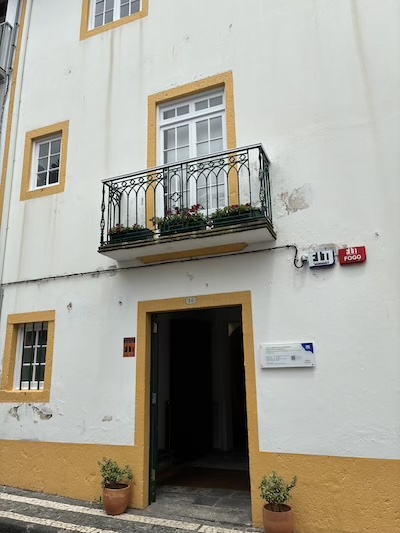
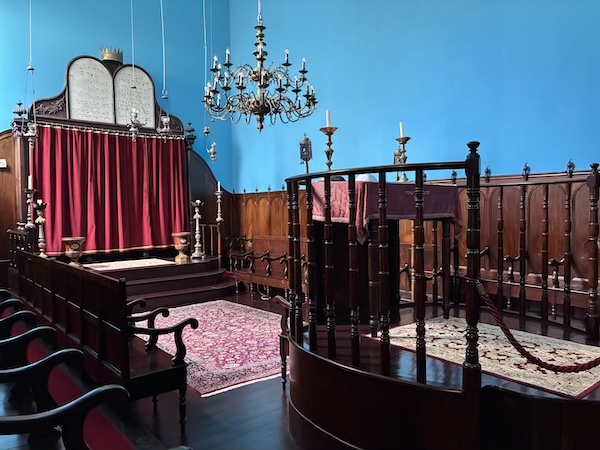
I’m looking at the stone floor of what used to be a mikvah (ritual bath), inside the Sahar Hassamaim Synagogue on the island of Sao Miguel in the Portuguese Azores. In the room next door, the synagogue has been restored to its former beauty after years of neglect, and though it can now be booked for private Jewish ceremonies, it’s just a museum for the most part. Jewish life on this island came to a halt some 60 years ago.
The synagogue, founded in 1836, was one of six synagogues on Sao Miguel in 1848, its heyday, when 250 Jews lived here. But Jewish presence here dates to 1558, when 14 Jews called the island home. Few in number, they attracted lots of attention – none of it the kind they wanted.
The Inquisition came to the Azores three times: in 1578, 1592 and 1619. The museum documents the unfortunate fate of Antonio Borges, a 38-year-old Jewish doctor from Ponta Delgada, who, in 1559, was burned at the stake for the crime of being Jewish. This “crime” constituted 32% of all complaints during the Inquisition and 120 Azoreans were accused of Jewish practices.
Amazingly, Jewish life on this dot of volcanic land 1,815 kilometres from mainland Portugal persisted. The Inquisition ended in 1821 and, after a liberal regime was established in Portugal, the Azores again became attractive to Jews who were very active in trade.
Jewish families were at the helm of the island’s biggest enterprises, a position they occupy to this day. In 1864, Jose Bensaude arranged the first export of pineapples from the island. He co-founded the Micaelense Tobacco Factory and his family members continued his entrepreneurial legacy. They founded the Azorean Insurance Company, opened a school of engineering, purchased Terra Nostra Park, a botanical garden in the parish of Furnas that’s now one of the island’s top destinations, and co-founded SATA, the Azores’ regional airline. They own Bensaude Hotels, a major local hospitality chain, and are involved in the sectors of shipping, logistics, retail, wholesale, energy, automotive and environmental services. Their footprint, in short, is everywhere.
Still, by 1920, there weren’t enough Jews to make a minyan. After Samuel Albo, the last rabbi, died, his two granddaughters lived in the Sahar Hassamaim Synagogue building until the 1960s. Then it sat derelict until 2009, when restoration began. Today, a closet contains empty wine bottles from long-gone Kiddushes, while another chest on display contains pages torn from prayer books.
In 1997, teenage boys exploring a cave in Rabo de Peixe, a parish on the island, discovered a buried, 300-year-old Moroccan Sephardic Torah scroll. The scroll is carefully preserved in a vault at Ponta Delgada’s regional archive and, unless you’ve requested admission well ahead, there’s no easy access.
I visited Sao Miguel with high school friends in June. The island, smack dab in the middle of nowhere, was a midpoint between our homes in Israel and Vancouver. It’s one of the Azores’ nine volcanic islands and, the moment you set foot on it, the three volcanoes that are still active – meaning, they’ve erupted in the last 10,000 years – demand respect. Like slumbering dragons just below the surface of the earth, they belch gas and dribble hot water, constantly making their presence known.
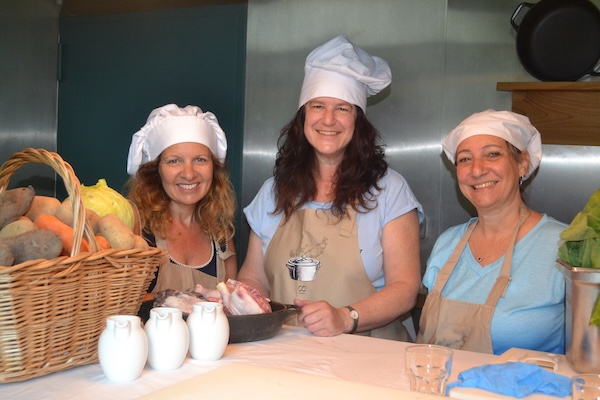
On a week-long visit, we found ourselves surrounded by geothermal energy. We joined locals for a blissful dip in steaming thermal pools, emerging relaxed and sleepy. We donned aprons and met a chef in Furnas parish to learn about cozido, a traditional meaty stew cooked for hours by geothermal steam in holes in the ground. We walked on beaches, watching waves crash onto black volcanic sand, and peered over steep cliffs, where eruptions many years ago left jumbles of black basalt lava rocks. And we drove the winding roads of Sao Miguel, amazed to see smoke emanating from the ground in numerous places as geothermal heat found new escape routes.
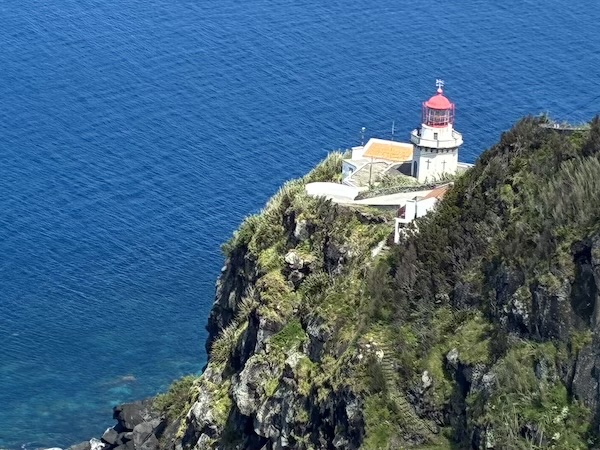
The island is a stunning mass of greenery, with soaring mountains and lush, grassy slopes, where cows graze peacefully. There are spectacular views around every turn. We pulled over at vistas, gazing at the Atlantic Ocean stretching into the distance. Around us, tree-size ferns unfurled tendrils and hydrangea bushes proliferated like weeds, filling the island with colour. The scenery is so primeval and Jurassic, you half expect to see a dinosaur lumbering across the land.
The most fascinating parish on Sao Miguel is Furnas, a centuries-old, picturesque town located in a valley inside a massive volcanic crater. We walked through Caldeiras das Furnas, a park in the village centre, where scalding hot water bubbles and splashes furiously. Steam emanates from manholes, gutters and grates and the smell of sulphur hangs heavy in the air. Lava is just 100 to 200 metres below the surface, a constant reminder that this volcano is active. Mesmerized, we watched the bubbling water erupt from the ground and flow through streams that run through the town.
At the magnificent botanical garden at Parque Terra Nostra, we explored garden trails dotted with trees from all over the world. The 31-acre garden began in 1775 and its giant sequoias, ancient ginkgo biloba and English oaks, planted as seedlings 250 years ago, are still flourishing. On a jeep tour, our guide Pedro Vieira described his love for the island. “Life here is so much simpler than in a big city,” he reflected. “People are always friendly and relaxed, and the quality of life is fantastic.”
Vieira’s ancestors arrived more than 500 years ago and he’s never even considered leaving. We wondered if he had any Jewish blood in his ancestry, since, according to a 2004 population genetics study, 13.4% of the male lineages in the Azores belong to a Y-chromosome marker often associated with Sephardic Jewish and Middle Eastern ancestry.
As we drove along the picturesque, narrow country roads, past small parishes that date back centuries, it wasn’t hard to see why he loved this place so fervently.
Sao Miguel pulsates with activity, above and below the surface, the volcanos raising their heads at unexpected intervals as if to say, “Never forget, I am here.” For three friends on a long-awaited reunion, we left awestruck and inspired by the timeless beauty of this fiercely tectonic island.
Lauren Kramer, an award-winning writer and editor, lives in Richmond.
If You Go
Stay: Octant Hotels (octanthotels.com) offers premier accommodation on Sao Miguel, with two hotels, in Furnas and Ponta Delgada. Both offer beautiful rooms with full breakfasts, exceptional restaurants and thermal pools. At Octant Furnas, guests can book a cozido cooking experience that culminates in an evening cozido meal in the restaurant.
Play: 4X4Azores (4x4azores.com) offers guided ATV and buggy tours of the island, with vehicles equipped for steep dirt roads not easily accessible by car. Vila Watersports offers snorkeling, sailing and nature-focused boat tours around Vila Franca islet.
Getting There: Sao Miguel is an accessible destination, with direct, five-hour flights from Toronto.