Physical Address
304 North Cardinal St.
Dorchester Center, MA 02124
Physical Address
304 North Cardinal St.
Dorchester Center, MA 02124


Every Jewish New Year, just before we stand to hear the sound of the shofar, I get nervous for the blower. What if they can’t produce the sound? I remember a Rosh Hashanah when this occurred, and the red, exasperated face of the blower as he tried repeatedly to produce sound. He got it in the end, but, as the minutes ticked by, the entire congregation was perspiring with anxiety on his behalf.
“It’s a very awe-inspiring part of the service, and we’re cognizant of that. We take our job very seriously,” said Gordon Cherry, who has been a Temple Sholom shofar blower for 40 years. A professional trombonist, he still needs to practise before Rosh Hashanah rolls around each year, and the tradition of blowing the shofar at morning services during the month of Elul is the perfect preparation.
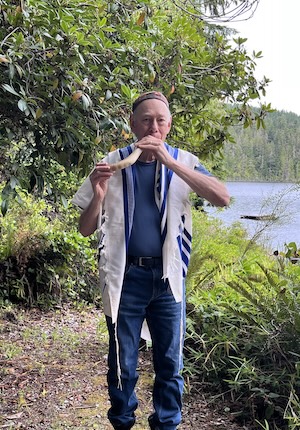
“Our religion is so practical, because, by starting on the first of Elul, it’s a wake-up for the holidays, a way to get your chops in shape for the big day,” he said. “The practise has to do with the lips and lungs, because our lip muscles are small and the opening of the shofar is small. If you picked up a shofar and blew, you’d just get air. But when you do it daily at services and you practise at home, too, you’re going to get in pretty good shape.”
At Chabad Richmond, Rabbi Yechiel Baitelman has been blowing the shofar for years. “The ability is primarily technique, like any wind instrument,” he reflected. “Some shofars are a breeze to sound, others are more difficult, but you need strength in the tekiyah gedolah, the longest blast. The more air you can bring into your lungs, the longer the sound will be.”
There are specific rules about the proper sounding of the groupings, and the order and duration of each sound, he added. “It’s like playing in the orchestra. You might meddle with an instrument but, if you’re not well versed, you can’t join the orchestra. The same is true for Rosh Hashanah, where you have to play specific sounds and notes, and they’re very important.”
Cherry noted that shofars come in two types: the ram’s horn, which is J-shaped, and the kudu horn, which is longer and curly, requiring blowers to manage the air differently. There are also a couple of techniques to produce the sounds.
“The traditional way to blow is to play off the side of your lip, halfway between the centre and the corner, where the lip is a lot thinner,” he explained. “But about a third of blowers place the shofar in the centre of the lip.”
For Baitelman, the spiritual preparation prior to blowing the shofar is just as important as the physical. “With the sound of the shofar we are coronating G-d as the sovereign for another year, and the person sounding the shofar is the representative of that declaration,” he said. “It’s a heavy and serious responsibility. It’s not about showmanship, but about the awesome moment of Rosh Hashanah.
“Practising is important, and I review the laws of what happens if you make a mistake, because mistakes happen,” he added. “But it’s mostly about the spirituality and awesomeness of the moment.”
Lauren Kramer, an award-winning writer and editor, lives in Richmond.