Physical Address
304 North Cardinal St.
Dorchester Center, MA 02124
Physical Address
304 North Cardinal St.
Dorchester Center, MA 02124

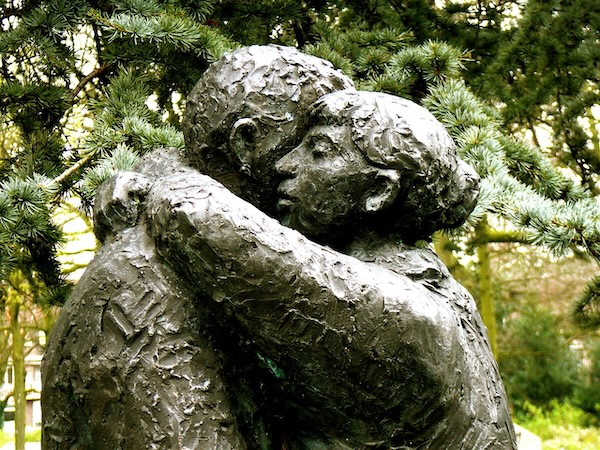
As Yom Kippur approaches, teshuvah, forgiveness, looms large on Jewish minds. It’s a time to think about wounds we may have inflicted on others and fractured relationships. What’s our responsibility to apologize? Where should we be mending bridges?
These fractures are more widespread than we might realize. In his book Fault Lines: Fractured Families and How to Mend Them, Karl Pillemer, a Cornell University sociologist, notes that, in the United States, 25% of the population is estranged from or has cut ties with a close relative at any one time, and 10% is estranged from a parent or child. The most common quarrels, he found, were over money and inheritance, but other frequently occurring conflicts were rooted in animosity with in-laws, problematic childhoods, divorce, and lifestyle or value differences.
While we can’t generalize these findings across Canada, there’s also no reason to believe that our southern neighbours’ relationships are all that unique.
“I’ve definitely seen the acrimoniousness in family relationships increase over the time I’ve been a rabbi,” said Rabbi Jonathan Infeld of Congregation Beth Israel. “I think it has a lot to do with COVID and the breaking of social connections, combined with online communication. When we hide our messaging behind a computer screen, many people feel free to say things they’d never dream of saying to a loved one in person or on the phone. Every step away from someone in a physical manner in the real world offers a mask that gives us a feeling of anonymity, and more freedom to use harsher and more difficult words.”
Yom Kippur is an opportunity to swallow your pride and admit your faults, he continued. “Even if someone else has wronged you, sometimes you have to overlook that and ask, what do I have to change? That’s assuming we’re not talking about a dangerous or highly toxic relationship – just a non-amicable one.
“The High Holidays are about mending that which is broken, and bringing wholeness back to the relationship. Demanding that someone else make the first step is not the way to make it happen. The only person we can try to begin to control is ourselves, and without the expectation that it will be reciprocal.”
Rabbi Yechiel Baitelman of Chabad Richmond noted there are three steps involved in requesting forgiveness on Yom Kippur: an acknowledgment of the wrongdoing, an expression of regret and a resolve not to repeat the wrongdoing.
“While the highest level of forgiveness is about reestablishing a relationship that once was, we all need to think about what we’re ready for,” said Baitelman. “It can be a lifelong process to rebuild and reestablish a relationship, and it takes humility and introspection. Humility is an element of greatness, an ability to transcend the self and see something bigger than me and my pain.”
Temple Sholom’s Rabbi Dan Moskovitz reminds his congregants that forgiveness is a gift they give to themselves.
“It allows us to put down the burden of carrying that anger, resentment and hurt. If we can put it down, we allow ourselves to not have to shlep that baggage into the new year,” he said.
“It may be in our self-interest to find a way to come to peace with a sibling, close friend or family member so we can move on in our life,” he continued. “And there may be parts of that relationship that are worth salvaging.”
Pillemer’s research found that family estrangement can have devastating consequences affecting all family members involved, and lead to depression and anxiety. By pulling others into the argument, it can cause a severing of the ties, emotional support and resources family members give one another to help them cope with difficult times.
“A lot of times, stuff comes up when someone dies and there’s a feeling that we have to carry that resentment in honour of the deceased,” Moskovitz reflected. “We shouldn’t carry the anger of others. Anger should be buried and joy and gladness should be carried.”
When the transgression is outright abusive, the rules can change. The question is, where does the line defining abuse begin? It’s a powerful term and, today, it tends to be used rather easily.
“People have become unfamiliar with interpersonal relationships because they have so few real life, face-to-face experiences, and that means we have less empathy for others,” Moskovitz said.
“If you can’t place yourself into someone else’s shoes because you don’t have any lived experience that’s relatable, then you quickly jump to concluding that ‘what’s happening to me is outside of the bounds and should be prevented from happening,’” the rabbi explained. “Many people today live in a virtual world, which has a lot more barriers. You can unfriend someone, mute them, cancel them or ghost them. In real life, it doesn’t work like that, especially when you have to sit with someone at the family table.”
The solution, he says, is to live more in relationships with others in the real world.
“We get better at being with people the more we are with people, and that’s where synagogue and community are so important,” said Moskovitz. “In many ways, they’re a resistance movement to society today.”
In considering what we can do to avoid a conflict or resolve it, Infeld advises never sending a negative emotional email or text to a friend or loved one.
“If you have something that’s difficult to say, always call or meet in person. Communicating emotions online is damaging to relationships,” he said. “It puts up social walls and barriers, instead of creating a social connection.”
Mending bridges, especially estrangement with friends or family members who were once beloved, can be beneficial for everyone, Pillemer notes. He suggests that those interested in reconciling focus on moving forward instead of rehashing the argument. They should ask what they can accept from the relationship at a minimum, and consider a periodic outreach to build bridges – not a one-time offer. Finally, for relationships that have been hurtful or injurious, it might make sense to set a boundary that will guide behaviour moving forward.
Crucially, Pillemer’s findings show that those who found a path to reconciliation were usually happy with the result.
Lauren Kramer, an award-winning writer and editor, lives in Richmond.