
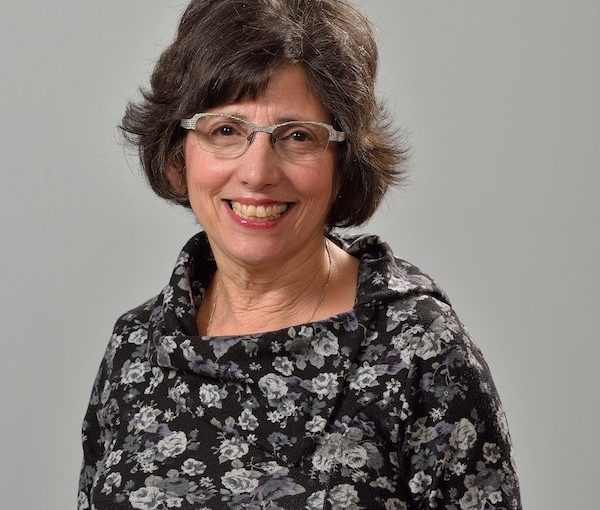
Dr. Cheryl Rockman-Greenberg (photo from Rockman-Greenberg)
In the 1970s, when Dr. Cheryl Rockman-Greenberg was eyeing the budding field of genetics as a career, she had to become a pediatric doctor first. Now, Rockman-Greenberg counts her clinical background as a blessing, one that, today, geneticists no longer require.
“Having a strong background in clinical medicine certainly always helped me in my career, because the kind of genetics I was always interested in was in rare metabolic diseases,” said Rockman-Greenberg. “These are diseases often caused by enzyme deficiencies that go by very elaborate names. Having a good foundation in clinical medicine through pediatrics certainly helped me.”
Rockman-Greenberg, who lives in Winnipeg, was invited to speak at the city’s Congregation Shaarey Zedek Sisterhood Interfaith Luncheon on April 30.
“I learned that the luncheon was spearheaded through the sisterhood in many ways to promote information sharing between the faiths,” she said, noting that a purpose of the event is education and “to look at how we can build bridges between people of different faiths and not build walls.”
“From a global perspective,” she said, “I think it fits the themes of the interfaith luncheon. And, from a Jewish perspective, I’ve certainly been involved over the years, particularly with the National Council of Jewish Women, of increasing awareness of the importance of genes for health, and bringing together some of the advocacy groups in rare genetic disorders.
“I helped the National Council put out a brochure on carrier testing on new genetic disorders in the Ashkenazi Jewish population that has been extremely well-received worldwide. This information is always evolving.”
At the luncheon, Rockman-Greenberg was planning to discuss, among other things, Bill S-201, also known as the Genetic Non-Discrimination Act, which passed into law in Canada in 2017, though it is still being challenged by insurance companies in Quebec.
“This is a remarkable act in the sense that it does protect Canadians from the use of genetic test results outside of medical care and medical research,” Rockman-Greenberg told the Independent. “In other words, genetic test results do not have to be disclosed to insurance companies or employers. We’re one of many countries who have such legislation in place, and many people here have worked for years and years lobbying for similar legislation for Canada.”
Methods of genetic testing continue to advance, said Rockman-Greenberg. Tests that were nonexistent or very complicated to administer as recently as two decades ago can now be done quickly and inexpensively.
“The evolution has dramatically changed over the past 10 years, particularly in the sense that the techniques we use to diagnose genetic disease have dramatically changed – from studying one gene at a time, to being able to sequence the entire genome of an individual,” she explained.
When Rockman-Greenberg refers to “new genetics,” she is referring to the ability to offer state-of-the-art, revolutionary genetic testing that was not possible just 10 years ago. It is this access that Rockman-Greenberg is lobbying for now.
“Everybody doesn’t have the same access to the testing in Canada,” she said. “It’s certainly not uniform from province to province or within provinces. So, many people are very committed to ensuring there are strategies in place to promote fairness.
“Notwithstanding that, the legislation is going to protect people against disclosing information that is already in place. I think we are ahead of the game because we have this in place. But, we are not ahead of the game in making sure people are going to have access to new diagnostic testing and new therapeutics in a way that’s going to be equal across the board.”
Rockman-Greenberg’s focus on rare metabolic diseases means that she has witnessed firsthand the struggles to get specialty drugs approved through a system focused on the big diseases, such as diabetes and cancer.
“You may get a new drug for diabetes that will be approved and available for patients very quickly, whereas some of the new drugs for other diseases I treat can take years and years before they go through the approval process,” she said.
Rockman-Greenberg thought that the topic was an appropriate one for an interfaith gathering, “as everybody having the same chance to be successful is very important to me. I work with families and patient support groups to help remove barriers and help people feel empowered.”
She said, “There are many challenges in dealing with rare diseases and I try to work both sides: the patient side, as well as advocate for changes at the government level, to make sure there is fairness in access to new therapies.”
Rebeca Kuropatwa is a Winnipeg freelance writer.