
Left and right have effectively ceased to exist as relevant categories in Israeli politics, with the ballot question in Tuesday’s election having come down to a single question: Bibi: yes or no? The two primary electoral blocs were divided on the core issue of whether Binyamin Netanyahu’s vision for Israelis is or is not the right one.
While the question seems simple – support or oppose the incumbent – voters made their decisions based on myriad existential questions that expose divisions in Israeli society that go far deeper than disagreements over leadership. The country’s political paralysis reflects fundamentally different understandings of what Israel is, what threatens it and what its future should look like.
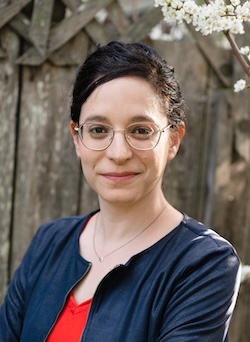
Dr. Masua Sagiv, a senior faculty member at the Shalom Hartman Institute in Jerusalem and academic adviser to its Centre for Shared Society, spoke at Vancouver’s Temple Sholom Oct. 14, explaining the faultlines reflected by the 37 parties on the ballot. The election, she said, pit competing political blocs against one another in an emotional struggle over national security, political accountability for the Oct. 7 catastrophe, democracy and the rule of law, the role of religion in the state, military service and the obligations of citizenship, Jewish and Arab identities and coexistence, the meaning of Zionism, and, ultimately, who belongs in Israel and what kind of country it should become.
The Independent went to press Tuesday shortly after exit polls indicated that Netanyahu’s Likud party had won the most seats (24), though his bloc would be unlikely to form a government. There are 120 Knesset seats, requiring a stable government to pull together at least 61 votes. Channel 12 predicted that the pro-Netanyahu bloc would get 50 seats, while the opposition bloc would likely take 52. The remaining seats were predicted to split between the Arab Joint List (11) and the primarily Arab Ra’am (seven). The arithmetic portends challenges for either bloc to form a stable coalition. The exit polls from Kan, the public broadcaster, and Channel 13 placed the opposition bloc with 53 and the pro-Netanyahu group with 50, suggesting little substantive difference.
This outcome is a consequence of divisions that have become so embedded in Israeli society that traditional political compromise has grown exceedingly difficult, according to Sagiv’s pre-election assessment.
For Netanyahu’s opponents, Sagiv explained, the Oct. 7 disaster symbolizes the breakdown of government institutions and the failure of political leadership. In the aftermath of the attacks, civil society organizations and ordinary Israelis assumed responsibilities that should have belonged to the state: helping survivors, evacuees and families while government institutions struggled to respond. Three years later, Sagiv noted, Netanyahu had not accepted personal responsibility for the failures, and a national commission of inquiry had not been established.
But Netanyahu’s supporters interpret the events differently. For them, the terror attack represented the beginning of Israel’s military response and Netanyahu’s determination to confront Hamas, Hezbollah and Iran despite ferocious international pressure. According to this narrative, which Sagiv noted she was describing, not endorsing, Netanyahu alone understands the magnitude of the threats facing Israel and possesses the resolve to defeat them.
The catch-22 that faced anti-Netanyahu parties and their messaging was that focusing on the security failures of Oct. 7 would remind voters of their country’s vulnerability, driving them to seek a party and leader who would advance a militarily strong Israel that bucks global condemnations. In other words, the more the opposition focused on the security failures of the incumbent government, the more they could drive voters right into the arms of Netanyahu’s more hardline bloc.
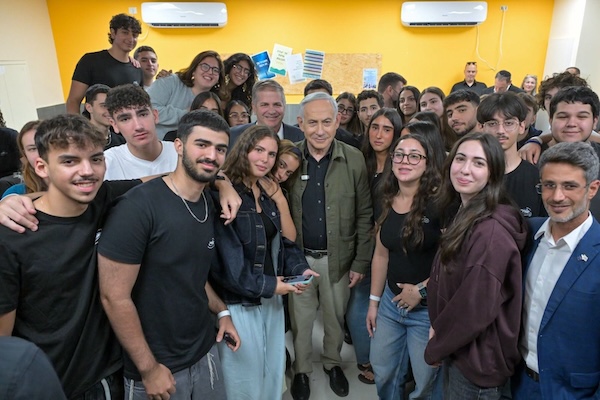
Sagiv noted that the Oct. 7 attacks ushered in a brief period of national unity, when bitter divisions around judicial reforms appeared to dissolve. That unity has deteriorated, she said, describing a political environment in which opponents regard one another not merely as adversaries but as existential enemies.
“In a healthy democracy, we should want our election campaigns to be characterized by disagreement rather than by unity,” she said. Disagreement, she argued, allows citizens to evaluate competing policies. But Israeli politics has become so emotionally charged that disagreement is frequently interpreted as betrayal, she said, and compromise itself has become suspect.
Another central election issue, Sagiv said, involved the meaning of Zionism and the obligations of citizenship.
The longstanding exemption of many ultra-Orthodox citizens from military service has become increasingly contentious following years of war and enormous sacrifices by reservists and their families. The debate extends beyond conscription to Haredi participation in the workforce and the distribution of economic responsibilities.
“Are you a part of this country?” Sagiv asked, articulating the questions she believes many Israelis are posing. “Do you care what happens to us?”
The issue complicated Netanyahu’s political position because his coalition depended heavily on two ultra-Orthodox parties, Shas and United Torah Judaism.
Israel’s Arab parties are likely to be decisive in determining what happens now.
Sagiv distinguished between the Joint List, which emphasizes Palestinian identity and opposition to Israeli policies toward Palestinians, and Ra’am, led by Mansour Abbas.
Ra’am, she said, has adopted a pragmatic approach centred on improving conditions for Arab citizens, including combating organized crime and discrimination. Abbas previously participated in a governing coalition and has expressed a willingness to do so again. Sagiv described him as one of Israel’s most consequential recent political innovators, while acknowledging that many Israelis remain suspicious of his intentions.
She also highlighted Ra’am’s selection of former senior police official Yoav Segalovich, a Jewish Zionist, as the second-place candidate on their party list, after the leader himself. The appointment represented an unusual attempt to build a political partnership across entrenched Jewish-Arab divisions.
With neither Netanyahu’s coalition nor the opposition attaining the 61 Knesset seats necessary for a majority, Sagiv outlined several possibilities.
A broad national unity government remains conceivable, but personal distrust between Netanyahu and opposition leaders presents formidable obstacles.
Another possibility is a further election, potentially leaving Netanyahu in office as caretaker prime minister. The possibility of political instability spurs reminders of the 2019-2022 period, when the country went through five elections in three-and-a-half years.
However, Sagiv identified a potential alternative she considered particularly significant: a minority government established by opposition parties with parliamentary support or abstentions from Arab legislators. Such an arrangement could allow opposition leaders to assume power without commanding an outright majority.
An early priority, Sagiv suggested, would likely be establishing a national inquiry into Oct. 7. The government might subsequently seek additional parliamentary partners or demonstrate an alternative style of leadership before another election.
Sagiv stressed that the political uncertainty reflects something more profound than coalition mathematics. Israelis, she said, are asking where they fit in – or don’t.
“Do I, for example, as a liberal, have a future in this country? Do I have a place in this country?” she asked. “And I want to tell you … the other side is asking itself the same question.”
Despite the divisions, Sagiv expressed cautious optimism about Israel’s capacity to change.