
Staff and lay leaders from about 140 Jewish federations across North America, including British Columbia, gathered in Washington, DC, this month, against a backdrop of war and political uncertainty in Israel, an antisemitism crisis across North America, and expanding divisions in American politics around Israel and Jews.
Despite the challenges, the messages emerging from the Jewish Federations of North America’s 2026 General Assembly were determination, persistence and pride. Speakers challenged Jewish leaders to move beyond crisis management and build communities confident enough to thrive. Sessions ranged from high-level diplomacy to conversations about schooling, philanthropy and identity.
Eric Fingerhut, chief executive officer of JFNA, urged organizations accustomed to emergency response to sustain the long work of education, encouraging travel to Israel and not letting up on Jewish engagement. Security for schools, synagogues and communal institutions is indispensable, but should not become the sole focus of Jewish communal work, he argued.
The political uncertainties were starkest in a discussion featuring former US secretaries of state Mike Pompeo, who was in the role during President Donald Trump’s first term, and Antony Blinken, who served under Joe Biden. Both affirmed the enduring importance of American-Israeli security cooperation but diverged over how to deal with Iran and secure a more stable Middle East.
Pompeo argued that the Iranian regime should face sustained pressure without concessions, and that agreements with Arab states need not wait for resolution of the Palestinian question. Blinken favoured pressures aimed at negotiation and argued that expanding regional normalization, particularly with Saudi Arabia, would eventually require meaningful progress toward Palestinian self-determination. He warned that Israel must translate military victories into sustainable diplomatic gains.
The two also differed in their emphasis on Gaza. Pompeo urged audiences not to blur the moral difference between Hamas’s attacks and Israel’s military response. Blinken affirmed Israel’s right to respond to Oct. 7, while insisting that Palestinian civilian suffering and the conduct of Israeli operations are legitimate subjects of scrutiny. Both recognized the threat posed by distorted information and a contentious, deteriorating public debate.
Democratic strategist David Axelrod and conservative journalist and commentator Eliana Johnson warned against reading too much into the US midterm election results and described antisemitic pressures within their respective political camps. Axelrod stressed that criticism of Israeli policy must remain possible. Johnson acknowledged isolationist and conspiratorial voices on the American right.
In a separate discussion, Republican strategist Karl Rove called on both parties to challenge bigoted candidates before they win nominations and urged Jewish communities to enlist non-Jewish allies.
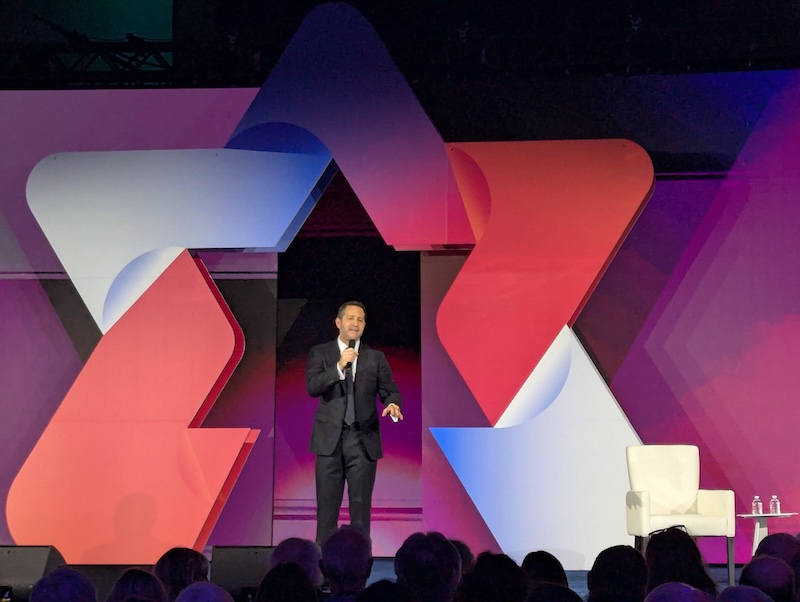
A panel on Israel’s election saw Israeli journalist Nadav Eyal argue that the results are evidence of a demand for new leadership and warn that diminishing American popular support could threaten Israel’s future. Former Knesset member Ruth Wasserman Lande highlighted the significance of Arab-Israeli political participation and the need for national cohesion. Journalist Ariel Kahana argued that an inconclusive result made a broad unity government preferable to a fragile coalition, while maintaining that Israel could endure even without American backing.
The Conservative Party of Canada’s deputy leader, Melissa Lantsman, called the struggle against antisemitism a test of democratic citizenship.
“I think it’s my job to convince Canada to protect itself,” she said, arguing that intimidation, selective law enforcement and the failure to uphold civic freedoms threaten society as a whole.
British writer and commentator Douglas Murray likewise advised audiences to recognize antisemitism across the ideological spectrum rather than defend offenders in one’s own political camp.
Canadian political consultant Chad Rogers drew a line between actual threats, which require security and enforcement, and differences of opinion, which require patient advocacy. His prescription is simple: invite people to Shabbat dinner, cultivate relationships with neighbours and political leaders, and learn how to “friend-raise” rather than merely fundraise.
Institutionally, JFNA outlined plans to strengthen that work. Its Frontline initiative aims to add 100 advocacy professionals across North America to an existing network of more than 150, with work spanning school and campus issues, government relations, interfaith partnerships and security funding. The goal is to build relationships before emergencies erupt, rather than improvising only after a crisis.
The assembly also emphasized the Jewish world’s obligations beyond North America. Maj.-Gen. Doron Almog, executive chairman of the Jewish Agency for Israel, and J. David Heller, chair of the agency’s board of governors, highlighted efforts to revive Israel’s north and south, and emphasized aliyah, portraying newcomers not only as immigrants but as contributors to schools, local economies and communities recovering from war. Stories from Bnei Menashe olim from India gave that mission a personal face.
A presentation about Ukraine reminded delegates of the needs of vulnerable Jews in war zones outside Israel. Federation-supported welfare services continue to deliver food, medicine, home care and companionship amid Russian drone and missile attacks.
The case for investing in identity as well as safety was made by actor Selma Blair, who was interviewed by former JFNA chair Julie Platt. Blair credited her Jewish day-school education in Detroit with giving her an enduring sense of belonging and described the personal and professional costs she said followed her public stance after Oct. 7. Her story underscored the importance of schools and communal spaces that nurture Jewish pride before it is challenged. Blair also made an emotional reflection on a recent incident in which she was arrested after a flight during which she allegedly injured flight attendants. A spokesperson for Blair has said that the actor, who lives with multiple sclerosis, had missed several doses of a medication that manages neurological symptoms.
Comedian Modi Rosenfeld portrayed comedy as a way to gather Jews and non-Jews, build relationships and make room for joy. His counsel to the audience was straightforward: “Be a proud Jew and be you.”
JFNA board chair Gary Torgow argued that Jewish destiny cannot be defined by any single election. A rabbinic reflection drew on the obligation to be one another’s keeper, even amid profound disagreement. The idea was echoed throughout the conference: unity does not require uniformity, but rather responsibility for one another.
Ezra Shanken, chief executive officer of the Jewish Federation of British Columbia, told the Independent that the annual assembly is “one of the few places where leaders and changemakers from across the Jewish world can come together, learn from one another, and renew their commitment to building vibrant and resilient communities.”
Mijal Ben-Dori, chief planning officer for JFBC, presented in a GA session. She called the conference “an invaluable opportunity to understand the key issues shaping organized Jewish life across North America, and to learn who is leading the way in each area.”
She added, “With so many Israelis in attendance this year, it was also a powerful reminder of how deeply connected we are – Canadians, Americans, Israelis and Jews around the world. I’m coming home with fresh ideas and new partnerships that will strengthen our work across British Columbia.”