
Our lives began in the same place in the mid-1950s, went in separate directions, with some overlap, then came together again when we both decided to make Israel home.
My friend Pnina’s parents made aliyah to a small moshav shitufi (semi-communal settlement) in Israel called Timorim – they arrived together with her father’s family, from South Africa. My parents made aliyah from Canada, and joined the largely South African crowd there. Pnina and I were both born at Kaplan Hospital (now Medical Centre) in Rehovot.
In September 1960, my parents returned to Canada, to Halifax, intending for it to be a temporary move. They had work, they studied at Dalhousie University. I was educated in Halifax and then Montreal at public schools. My parents, now in their 90s, a brother and a handful of relatives live in Toronto, but I’ve no other remaining connections in Canada.
Pnina’s father was a shaliach (emissary) for the Bnei Zion youth movement. Her family left Israel for Vancouver, then went to Edmonton, where she started Grade 1. They returned to Israel for a few years, then back to Canada, revolving between Calgary and Edmonton. She did a few primary grades at the regional school near Timorim, some in Western Canada. Between the two countries, she absorbed and internalized both mentalities and cultures, in almost equal measure.
At age 13, by then in Montreal, Pnina was told that, this time, they were staying in Canada for good. She was distraught and deeply disappointed not to be reunited with her childhood friends at the moshav. However, now, many years later, she maintains close contact with high school friends; her two younger sisters live in Toronto.
Our parents shared many friends, all active in Zionist youth groups like Habonim or Young Judaea. In 1969/’70, our fathers worked in Montreal offices down the hall from each other. We began to spend major Jewish holidays together. Discussions about Israel and South Africa were pretty much the main topics.
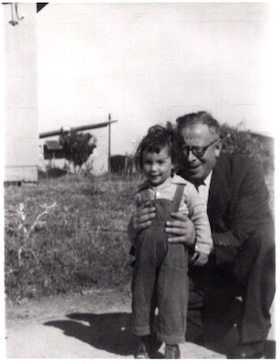
In 1972, when I was 14, my parents sent me to Israel; I knew basic Hebrew. Pnina’s parents also sent her to Israel that summer; she was going to a place she knew, where grandparents, cousins and childhood friends awaited.
We flew there together, in late June. Pnina was 17 and had to produce a deferment from army service. Customs officials assumed I did too. They demanded I show my documents, which I did not have. It mattered not that my Canadian passport and Israeli laissez-passer (provisional travel document) indicated I was well below recruitment age. Pnina sorted things out with her fluent Hebrew. What a welcome!
First impressions: outside Lod Airport (now Ben Gurion Airport), I noticed a long line of Mercedes-Benz taxis and many Volkswagens. I was astounded as I knew no Jews who drove German cars. Next, a road sign to Ramla. Another to Ramallah. Little did I know the difference. First time ever seeing a palm tree.
Total immersion left me smitten with an Israel that an organized tour could never have shown me. I saw the place where I’d spent my infancy and met people whom my parents spoke of endlessly. It took supreme effort to learn Hebrew and go with the flow – the kids my age were not the friendliest, but I enjoyed the sounds and sights during my visit.
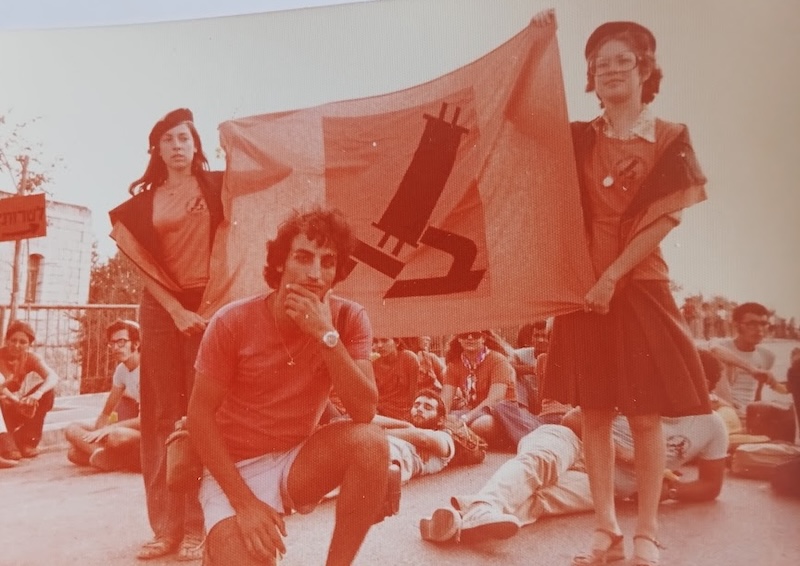
After high school, I left the turmoil of Quebec. In returning to Israel, I believed I was coming to a utopian society. Fired up with Zionist ideology and loads of enthusiasm, I attended a general studies program at Bar-Ilan University. I liked the social scene and excursions, including a trip to Sinai, which I had visited in 1972. I proudly led the BIU contingent, holding the university’s banner, during the annual Sukkot March to Jerusalem. Most of the other students were Americans, some were from Europe, South Africa and South America. My roommate was an Israeli girl, a few years older, very serious, who often invited me to her home near Pardes Hanna-Karkur.
In 1980, Pnina and I lived in the same residence for single olim, one founded and subsidized by the Canadian United Israel Appeal. It was an innovative idea, as rentals were as hard to find as decent landlords. We lived across the hall for about a year and had some nice times.
Pnina had returned to Israel after completing her degree at McGill University. She pursued an academic track, studying and working at Hebrew University. We both married, had children, moved around, kept in touch. Five decades later, we again live in the same neighbourhood. Our lives and lifestyles are very different, yet, whenever we get together, we pick up easily. We both hail from homes where English was spoken, and grew up with deeply rooted Jewish values, mine a little more observant.
Recently, marking our more than 50 years in Israel, we reflected on the many challenges we’ve faced in our personal, professional and social lives. We both have dealt with the geographic distance between us and our immediate family who remained in Canada. That has impacted our relationships with them – not celebrating birthdays, special occasions and holidays together, and living in completely different societies. There have been many long, expensive flights for both sides.
While both Pnina and I are Canadian and Israeli, our adult lives have been lived only in Israel. I haven’t got a clue how to buy a house, take out car insurance or find a doctor or much else in Canada.
Our children are fully Israeli and do not regard themselves as anything but Israeli. I will always relate better to “Anglos,” as we call ourselves, or other veteran olim (immigrants). I’ll never be completely Israeli, no matter how well I speak Hebrew or how well I hold my own on the roads here. I can’t be, and don’t want or need to be. There are aspects of my Canadian upbringing I like and have kept.
As families everywhere experience, we have lived through a range of highs and lows, on personal and national levels. Life in Israel is dynamic – never dull, often challenging. The choice made half a century ago was a clear and certain one, and it’s for life.
Adina Horwich was born in Israel to Canadian parents. In 1960, the family returned to Canada, first living in Halifax, then in a Montreal suburb. In 1975, at age 17, Horwich made aliyah, and has lived mostly in the Jerusalem area. She won a Rockower Award for journalistic excellence in covering Zionism, aliyah and Israel for her article “Immigration challenges.”