

I bought the cookbook Tahini Baby a couple of months ago. I’ve made six recipes to date and have already repeated two of them – to share with friends. For the first time in a long time, there are a few home-made, healthy meals in our freezer, as I didn’t feel like doing the math required to make just enough for dinner. I had no problem, however, doubling the cookie recipe both times I made it – so flippin’ good.
Written by Eden Grinshpan, with Rachel Holzman, and with photography by Chris Bernabeo, Tahini Baby is the ideal gift for the foodie in your life, who will enjoy, as the book’s subtitle says, “bright, everyday recipes that happen to be vegetarian.” Everything I’ve made so far has been relatively simple and incredibly flavourful.
This is Grinshpan’s second cookbook. Her first was Eating Out Loud and her goal with it was to “inspire people to get into the kitchen and just loosen up,” she writes in the intro to her new book. “I wanted everyone to see how easy it is to create bold, fresh dishes that don’t take themselves too seriously and use only grocery standbys and a handful of Middle Eastern staples.”
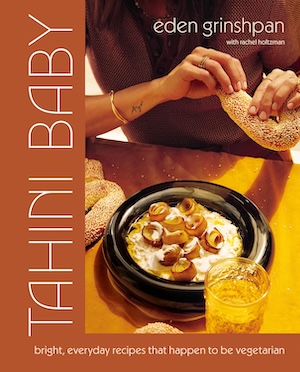
With Tahini Baby, Grinshpan offers “more simple recipes that can be endlessly mixed and matched for meals and leftovers, more fun with new Middle Eastern and Mediterranean ingredients and condiments (and more love for those I already covered in the first book), especially tahini. But also I am a Tahini Baby; these flavours and culinary traditions are what I was raised on both in my Toronto home and during my summers in Israel.”
I have reviewed several cookbooks over the years, and this is one of the best. As it happens, in the first chapter, where Grinshpan lays out the many items she suggests should form your pantry – from Aleppo pepper through za’atar – she recommends two brands of tahini: Seed + Mill and Soom. The founders of both companies have published cookbooks that I own and love: Rachel Simons’ Sesame (jewishindependent.ca/sesames-breadth-and-depth) and Amy Zitelman’s The Tahini Table (jewishindependent.ca/tahinis-tastiness-versatility), respectively. Perhaps that’s why we already had 11 of the 16 Middle Eastern spices in Grinshpan’s ideal pantry.
Having those ingredients at hand helped the cooking go smoothly and, as I said, everything I’ve made so far has tasted so good: Fast ’n’ Fresh Harissa; Cabbage Salad with Sumac and Dill; Fennel Seed Pistachio Dukkah; Summertime (or Anytime) Stewed Veggie Couscous; Harira; and All-Day Fennel and Sesame Shortbread Cookies. I made the dukkah (a condiment made with chopped nuts and spices) because it was one of my favourites from Sesame, and Grinshpan’s version had a completely different palate than the one I’ve made from that book. Both make for an indulgent breakfast, on toast with labneh, olive oil or tahini, and a drizzle of honey for those of us who like a little sweetness. Using Tahini Baby, I look forward to expanding my dukkah use and making Grinshpan’s Plum and Baby Gem Salad with Burrata, Pickled Shallots and Dukkah, and her Spicy Green Rice with Dukkah.
There are more than 100 recipes in Tahini Baby. Space allows here for the sharing of only two of them, so I’ve chosen the two I’ve made twice already. If you want to impress at a potluck, either of these will do it. You can purchase both of Grinshpan’s cookbooks, as well as other merch, and check out a ton of her recipes, at edeneats.com.
CABBAGE SALAD WITH SUMAC AND DILL
dressing
1/4 cup extra-virgin olive oil
2 tbsp red wine vinegar
grated zest and juice of 1 lemon
1 tbsp ground sumac, plus more for serving
1 tbsp honey
2 tsp kosher salt
1/2 medium garlic clove, grated
salad
1/2 medium head red cabbage, halved and finely sliced
1/2 cup chopped fresh dill
1/3 cup roasted salted sunflower seeds
1/3 cup dried fruit, such as raisins, currants or cranberries (optional)
1. In a medium bowl, whisk together the dressing ingredients: olive oil, vinegar, lemon zest and juice, sumac, honey, salt and garlic. Set aside.
2. In a serving bowl, toss together the cabbage, dill, sunflower seeds and dried fruit (if using). Pour the vinaigrette over the salad and give another toss to mix well. Sprinkle with a bit more sumac and serve.
3. Store in a sealed container in the fridge for up to 3 days.
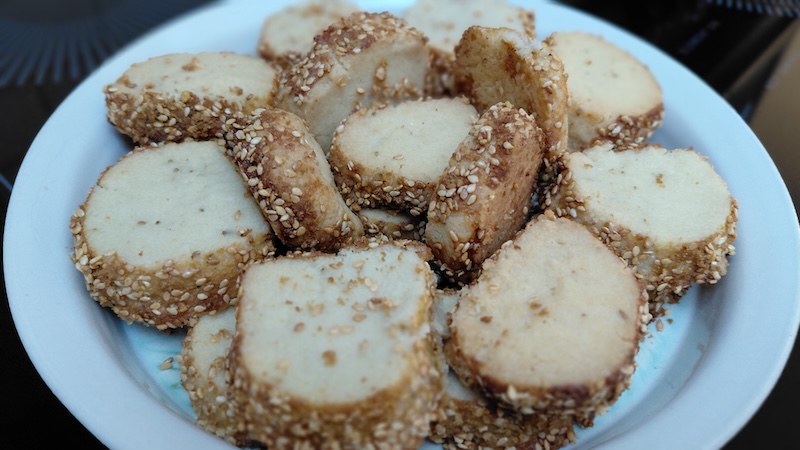
ALL-DAY FENNEL AND SESAME SHORTBREAD COOKIES
2/3 cup granulated sugar
1 tsp fennel seeds
1 1/2 cups all-purpose flour
1 tsp kosher salt
10 tbsp unsalted butter
1/4 cup tahini
1 large egg
2 tbsp demerara sugar
2 tbsp sesame seeds
1. In a high-speed blender, combine the granulated sugar and fennel and blend until fragrant and well incorporated, about 10 seconds.
2. In a medium bowl, whisk together the fennel sugar, flour and salt. Set aside.
3. Melt the butter in a small pan over medium heat, swirling occasionally. Remove from the heat and let cool slightly, about 5 minutes.
4. Whisk in the tahini, then transfer the mixture to the bowl with the dry ingredients. Stir to combine, then use your hands to press the dough into a ball as best you can (it may be a little crumbly, but that’s OK!).
5. Turn out the dough onto a 12-inch [I needed a few inches more] piece of plastic wrap. Add a second piece of plastic wrap on top, then gently roll the dough into a roughly 1 1/2-inch-thick log. Enclose the dough in plastic and refrigerate until firm, about 2 hours [about a half-hour less worked better for me, as the dough was firm but easier to cut].
6. Preheat the oven to 350˚F. Line a baking sheet with parchment paper.
7. In a small bowl, use a fork to beat the egg. On a large [flat] plate, stir together the demerara sugar and sesame seeds.
8. Brush the outside of the dough with the egg, then roll it in the sesame sugar. Slice the log into 3/4-inch-thick rounds and arrange them on the prepared baking sheet.
9. Bake for 15 to 20 minutes, until the edges are just beginning to brown.
10. Store the cookies in a sealed container at room temperature for up to 1 week [though they will be eaten well before then].