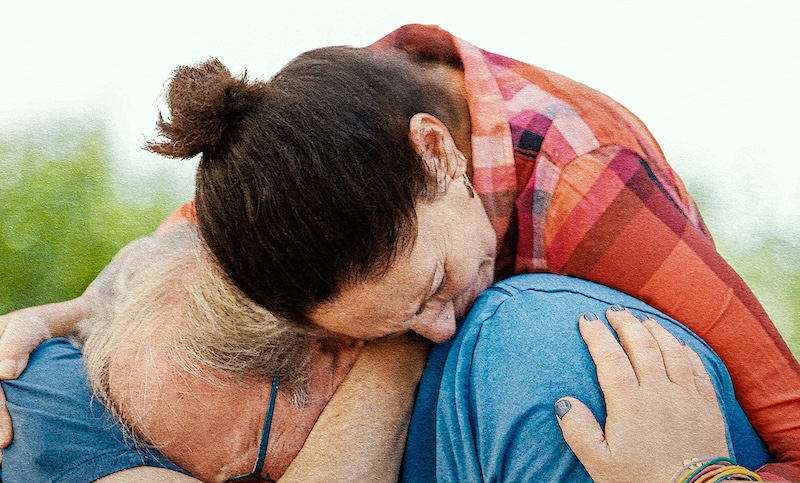

Holding Liat, a documentary that follows a family of victims of the 2023 Hamas attacks, was screened at the University of Victoria on Oct. 20, more than seven months after it was pulled from presentation at an independent movie house on campus due to objections from protesters.
On Oct. 7, 2023, Aviv and Liat Atzili lived with their three children on Kibbutz Nir Oz in southern Israel. Aviv was killed during the Hamas attacks; his body was recovered in June 2025. Liat spent 54 days in captivity and was released on Nov. 23, 2023. Their children all survived.
The film was originally scheduled for March 4 and 5 at Cinecenta, the UVic movie theatre that presents independent, documentary and international cinema. On March 4, Cinecenta posted an alert on its Instagram page, noting that the Holding Liat screening would be canceled.
Cinecenta’s decision was lambasted by Jewish groups and some faculty. Former BC Green Party leader Andrew Weaver, a professor of earth and ocean sciences at the university, said at the time, “Antisemitism is alive and well at UVic. The irony of the viewing being canceled by so-called ‘pro-Palestinian’ supporters is mind-numbing. They were obviously too lazy to even take the time to see what it was about.”
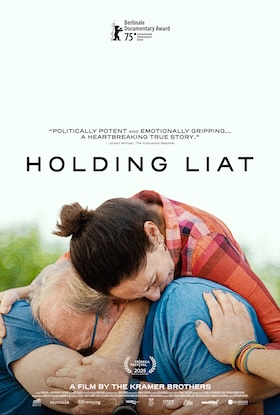
Holding Liat is often sharply critical of the Israeli government. Liat’s father, Yehuda Beinin, says in the film, “We are being led by crazy people, whether it is on the Israeli side or the Palestinian side. And the result is all this death.”
Beinin has publicly campaigned against the Gaza War, as has Liat. Other family members in the film take a more hawkish stance, and that internal squabble, at a time of heightened anguish, is brought front and centre on the screen.
Directed by Brandon Kramer and produced by Darren Aronofsky, Holding Liat won the Berlinale Documentary Film Award at the 2025 Berlin International Film Festival.
In addressing the reasons to show the film several months after its initial cancelation, Lincoln Shlensky, a professor of English at UVic, said, on behalf of the organizers, “We believe that universities should be a place where difficult works can be seen, discussed and debated even when they provoke strong disagreement. That commitment to open intellectual exchange is an important part of why we’re here tonight.”
The film, he added, which tells the story of one family dealing with the trauma of having a member taken as a hostage, is not meant to represent the entirety of the Israeli, Jewish or Palestinian experiences, or the conflict as a whole.
“It is a reminder that those most directly affected by Oct. 7, including survivors and their families, do not all understand these events in the same way,” Shlensky said. “Their perspectives may challenge our own assumptions, and taking their experiences seriously doesn’t require us to agree with their political conclusions.”
Joel Beinin, Liat’s uncle, spoke to Andrew Wender, a professor of history and political science at UVic, following the screening. Beinin, a professor of Middle East history at Stanford University, appears briefly in the film.
“My family is never going to recover from what happened on Oct. 7. We’ve lost Aviv; that’s irreparable. But even Liat, who survived in good form…. Not all hostages were treated as well as she was,” Beinin said, when asked how the family was coping. “But it’s also worth saying that the family grew from the experience. Liat and my brother have joined the Bereaved Family’s Forum.”
Beinin describes the family in Israel as “lefty,” but not activist before Oct. 7. Becoming more involved has helped the family maintain a sense of purpose and a belief that what happened can be turned into something better in the future, he said. Liat has since moved back to Kibbutz Nir Oz.
Beinin said his ideas of the ethical imperatives Israel should follow going forward are largely aligned with the beliefs of Yehuda and Liat.
“Everyone who lives between the river and the sea should have a life of dignity, security, equality and equal opportunity,” he said.
On the value of Holding Liat, Beinin said, “It’s a film about how people who care very deeply about each other and who have been and will continue to be connected … despite having differing opinions about what all of it means and how they all experience it.”
Victoria’s Congregation Emanu-El co-sponsored the screening with the Jewish Academic Hub, a new initiative at UVic’s Centre for Studies in Religion and Society that brings together scholars and community members for discussion of Jewish life, culture, history and contemporary issues. Support also came from the departments of history and English. Lead funding came from the Leonard and Lois Laser Family Foundation.
On Oct. 21, Beinin joined members of Emanu-El for a discussion of the film.
As with a June 14 talk by New Zealand academic Sheree Trotter at UVic on Jewish indigeneity in Israel, the screening of Holding Liat did not receive full audiovisual service from the university. According to one of the organizers, staff were concerned about the possible tenor of the event, so the equipment was dropped off and a staff person was only intermittently available.
Sam Margolis has written for the Globe and Mail, the National Post, UPI and MSNBC