
Amir Tibon, a journalist and opinion editor for Israel’s Haaretz, expected the final tally in Israel’s Oct. 27 election to be close. “I think there is a tribal outlook on politics all over the world today,” he said in an Oct. 11 webinar hosted by Canadian Friends of Peace Now. “People experience politics like watching a sports game.
“People root for their team,” he said. “And, even if their team is in a disastrous situation, they tend to remain loyal. They don’t switch so easily. It’s bad that this is the way things work, but we have to come to terms with it.”
Nevertheless, Tibon thought that the opposition bloc in Israel would win the most seats in the election. The biggest question was whether this eclectic group, made up of different political forces eager to replace Binyamin Netanyahu and his allies, could turn that plurality into a coalition able to govern.
According to Tibon, in the five elections between 2019 and 2022, Netanyahu, his Likud party and elected representatives from the far-right and ultra-Orthodox obtained a majority only once. “In each of those election cycles, Netanyahu would basically lose,” noted Tibon. “His bloc of parties would fail to win a majority, but the opposition would then fail to form a government because of stark ideological differences within it.”
The Israeli opposition parties, according to Tibon, are united on certain principles, such as rejecting the “corrupt politics” of Netanyahu and Likud; political appointments that bring, in Tibon’s words, dysfunction and chaos; and extremism.
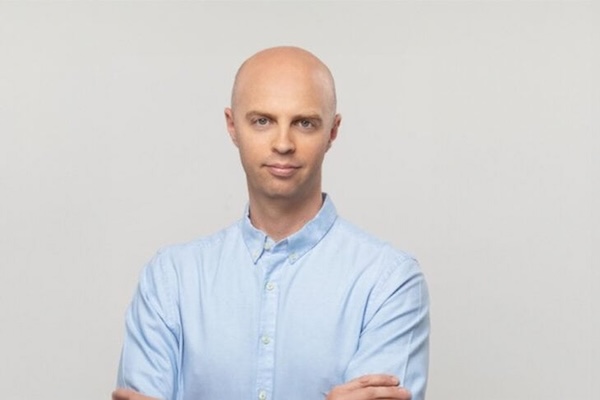
Tibon pointed out that right-wing members of the opposition bloc, like Naftali Bennett and Avigdor Liberman, are hawkish on national security but not populist. He thought any differences among parties could be bridged and that a non-Netanyahu-led coalition could become a governing one.
The topic of settler violence in the West Bank was discussed. In Tibon’s view, the issue goes beyond politics to the competency of governance.
“When people go and burn homes in Palestinian villages, and the police do not get involved and the military does not stop it, to me, it’s the same thing as you have crime that is getting out of control in the Negev,” Tibon said. “You have an all-time high of murder events and an all-time high of people dying in traffic accidents. It all comes down to one thing: it’s a dysfunctional, chaotic government that cannot perform the most basic duties of a state, and this is a huge problem because it’s going to hurt everybody.”
In addition to his remarks about Netanyahu, Tibon criticized Mahmoud Abbas, president of the Palestinian Authority, for holding on to power far longer than he should and for not serving the interests of his people.
“Both of them share a catastrophic failure against Hamas,” he said. Abbas failed in 2007, when Hamas took over Gaza, said Tibon, whereas Netanyahu failed against Hamas on Oct. 7, 2023, and is still failing because, three years later, Hamas remains in control of Gaza.
“They are getting control of a lot of the aid that’s coming in,” said Tibon. “They are stealing a lot of it. They are selling it on the black market and making millions of dollars from it, and they are still an evil organization that is beating down on the population there and holding a dictatorial rule.”
Tibon and his family were living in Kibbutz Nahal Oz when Hamas attacked on Oct. 7. The family hid in their safe room, as terrorists killed several of their neighbours, until his father, Noam, a retired Israel Defence Forces general, managed to reach the house and help the family escape.
This story was shared in The Road Between Us: The Ultimate Rescue, a 2025 documentary by Canadian filmmaker Barry Avrich. In 2024, Tibon published The Gates of Gaza: A Story of Betrayal, Survival and Hope in Israel’s Borderlands, about Oct. 7 and what led up to the attacks. This past August, Tibon and his family returned to live in Nahal Oz.
Haaretz has launched a weekly Canada-focused newsletter “to bring the conversations together and make us more relevant to the Canadian audience, but also reflect what’s happening here in Israel,” said Tibon. To subscribe, visit haaretz.com/newsletter and scroll down.
Canadian lawyer and commentator Stephen Pincus moderated the Oct. 11 online event. Novelist Gabriella Goliger, national chair of Canadian Friends of Peace Now (peacenowcanada.org), introduced Tibon.
Sam Margolis has written for the Globe and Mail, the National Post, UPI and MSNBC.