Physical Address
304 North Cardinal St.
Dorchester Center, MA 02124
Physical Address
304 North Cardinal St.
Dorchester Center, MA 02124

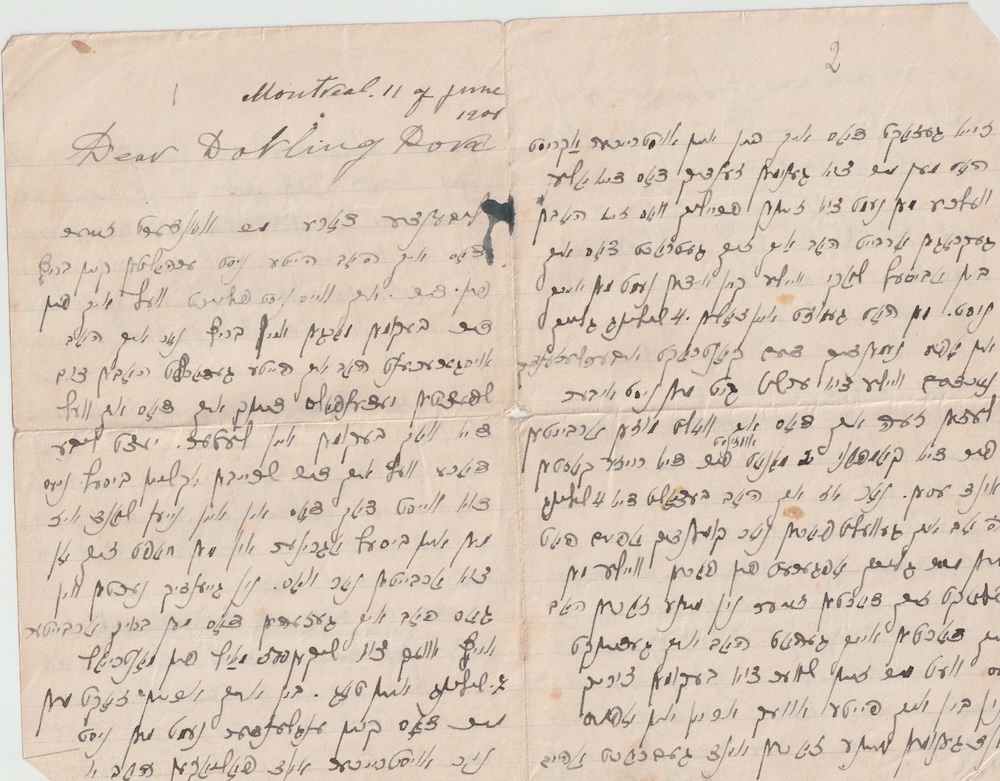
Going through his storage unit in Vancouver, Paul Levine found a box that would let him reconstruct a piece of history nobody in the family could have told him. It contained more than 100 letters written between his great-grandparents, Sam and Dora Diamondstein, between 1901 and 1926. About half of them were in Yiddish – a language nobody in his family can read. The letters had been sitting there for decades, passed from relative to relative without anyone quite able to do anything with them.
Levine and a technical collaborator, Fernando Medrano, started experimenting with AI to see whether it could read the Yiddish, and whether a reconstruction of any kind was even possible. The early results were not encouraging. Run the same page through different AI transcription systems and the readings differed – not occasionally, but constantly. Worse, when a word was genuinely illegible, every system had the same instinct: guess, smoothly and confidently, rather than say so.
“AI was the least trustworthy part of this whole process,” Levine said, “and treating it that way is the only reason any of this is usable.”
An AI transcription that quietly invents a plausible-sounding word where the ink has faded doesn’t look like an error. It looks like history. Few people fact-check a sentence that reads confidently – so the project was built around the assumption that AI would get things wrong, rather than the hope that it wouldn’t. Every page went through multiple independent AI systems, compared line by line. Where they agreed, the reading could be trusted. Where they diverged, or where every system came up blank, the record was left to say so plainly.
This verification process – slow, repetitive and deliberately suspicious of its own tools – is what eventually turned a box of illegible paper into a full transcription and translation of the archive. This then became something no single letter could be on its own: a story pieced together out of 100 fragments.
Levine and Medrano cross-referenced the letters against genealogical records and built a full interactive website, aboxofletters.com, where the translated letters provide the background for a fully reconstructed family history. What came out of that process is a detailed narrative of two people’s lives across nearly three decades, based almost entirely on their own words.
The story starts in Latvia. Sam and Dora both came from the same shtetl in Korsovka (now called Karsava). Sam left in 1901, traveling alone to Montreal, while Dora’s family made its way to England. From there, the letters spend years on a real flirtation with staying in North America for good. Sam considers a Canadian government homestead grant, then Winnipeg, then Minnesota, then Chicago, working through jobs that didn’t last on wages that didn’t stretch – 25 cents a day at first, by his own account – against a hiring market that turned him away more than once for being a foreign Jew. One of the earliest letters, from June 1901, has him explaining almost in passing how he got hired at all: turned away once, he told the next hiring office he was an Austrian Christian, and they believed him.
In the years after his 1901 emigration, none of the American or Canadian options worked out and, by 1908, Sam gave up on North America and sailed for London – this was the decision, the letters make clear, that determines the rest of the story.
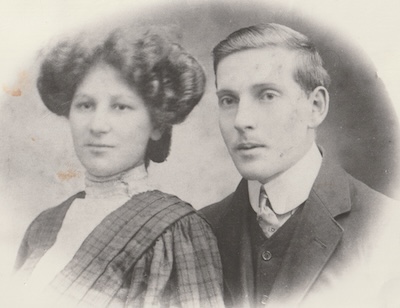
Sam and Dora married in 1911, having courted almost entirely by letter across an ocean for a decade. They settled into the world the rest of the archive is about: a fur-trading business Sam built on Fashion Street, in Brick Lane, in London’s Jewish East End, and the family they raised around it. One wartime letter has Sam watching a German Zeppelin get shot down over Cuffley in 1916, returning in the same paragraph to asking after the children at the seaside. By the 1920s, the business was buying furs by the thousand on regular trips to Paris and Leipzig, and the letters fall into their own steady rhythm – a cheque folded into an envelope, the same handful of questions about the children, asked and answered, week after week, for the better part of a decade.
This story has come together from more than 100 separate pieces, half of them in a language the family had already lost.
“That’s the part of this I’m actually proud of,” Levine said of the project’s insistence on noting what it still doesn’t know, even now.
AI helped him, carefully and skeptically, give a Jewish family back nearly 30 years of its history. History that otherwise would have stayed exactly what it had been for decades: a box full of letters nobody could read.
The full archive is at aboxofletters.com.
– Courtesy aboxofletters.com