Physical Address
304 North Cardinal St.
Dorchester Center, MA 02124
Physical Address
304 North Cardinal St.
Dorchester Center, MA 02124

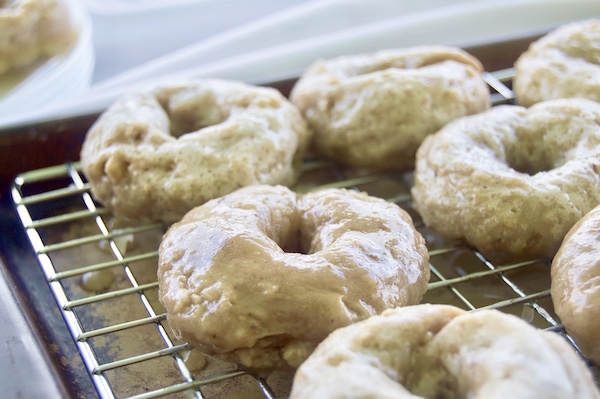
Syrian doughnuts can be made with a hole, or not. And they are topped with lemon or another type of glaze or syrup, rather than having a jelly filling. (photo from vegankinda.wordpress.com)
One of the things I have enjoyed the most as a food writer is learning the different customs of Jews from around the world. When it comes to doughnuts, all the communities make a dough dessert fried in oil, but there are differences.
Dov Noy, who was an Israeli folklorist and ethnologist, related a Bukhharian fable, which says that the first sufganiya was a sweet given to Adam and Eve as compensation after their expulsion from the Garden of Eden. He says the word sufganiya comes from the Hebrew word sof (meaning end), gan (meaning garden) and Ya (meaning G-d). Thus, the word means, the end of G-d’s garden. According to Noy, this fable was created at the beginning of the 20th century, since sufganiya was a new Hebrew word coined by pioneers.
Some consider sufganiyot, which means sponge-like, to be reminiscent of the sweet, spongy cookies that have been popular along the Mediterranean since the time of the Maccabees. Hebrew dictionaries say the word actually comes from the Greek word sufgan, meaning puffed and fried.
A few months ago, I happened to stop at a vendor in Machane Yehuda, the Jewish market where I shop and lead weekly walks, to ask about a pastry he was selling. He told me it was shvinze. Many years ago, a neighbour had given me her mother’s receipt for shvinze and I share it with you here.
I’ve also included a recipe from another neighbour, who made a similar type of dessert that she learned from her mother, who came from Syria. And the third recipe is for traditional Israeli doughnuts that can be filled or left plain. Talia was 5-and-a-half years old when she gave me this recipe – today, she is the mother of four, a tour guide married to a photographer, and living in the scene of the Chanukah story, Modi’in.
MOROCCAN SHVINZE
1 2/3 tbsp yeast
1/4 cup lukewarm water
a pinch salt
4 cups flour
oil
honey or confectioners’ sugar
SYRIAN ZINGOLE
2 tsp yeast
a few spoons warm water
2 cups flour
1 1/2 cups water
oil
icing:
1 cup sugar
1 cup water
1 1/2 tbsp lemon juice
TALIA’S SUFGANIYOT FOR JUNIOR COOKS
3 1/2 cups flour
1 1/2 cups plain yogurt
2 eggs
2 tbsp sugar
a pinch salt
1/2 tsp vanilla
oil
Sybil Kaplan is a journalist, editor of nine kosher cookbooks (working on a 10th) and a food writer living in Jerusalem. She leads English-language Shuk Walks in Machane Yehuda.