Skip to content
  • Home
  • Subscribe / donate
  • Events calendar
  • Business Directory
  • FAQ
  • News
    • Local
    • National
    • Israel
    • World
    • עניין בחדשות
      A roundup of news in Canada and further afield, in Hebrew.
  • Opinion
    • From the JI
    • Op-Ed
  • Arts & Culture
    • Performing Arts
    • Music
    • Books
    • Visual Arts
    • TV & Film
  • Life
    • Celebrating the Holidays
    • Travel
    • The Daily Snooze
      Cartoons by Jacob Samuel
    • Mystery Photo
      Help the JI and JMABC fill in the gaps in our archives.
  • Community Links
    • Organizations, Etc.
    • Other News Sources & Blogs
  • JI Chai Celebration
  • JI@88! video

Recent Posts

  • Legal help for students
  • Revisiting myth of Lilith
  • Wrong person rebuked
  • Canada’s mixed messages
  • Questions for museum
  • Symposium on antizionism
  • Making soccer political
  • CJPAC lauds Pulver’s impact
  • City recognizes Vrba’s legacy  
  • Organ donation saves lives
  • Theodore’s March premiere
  • A healing Shabbaton
  • Supplying healthy food
  • A chime of metal tags
  • Yellowknife seder a first
  • Ishai energizes, unifies
  • A Lag b’Omer to remember
  • Expanding the healing
  • Hannah Senesh – a unique hero
  • Community milestones … May 2026
  • Sharing her testimony
  • Fall fight takes leap forward
  • The balancing of rights
  • Multiple Tony n’ Tina roles
  • Stories of trauma, resilience
  • Celebrate our culture
  • A responsibility to help
  • What wellness means at JCC
  • Together in mourning
  • Downhill after Trump?
  • Birth control even easier now
  • Eco-Sisters mentorship
  • Unexpected discoveries
  • Study’s results hopeful
  • Bad behaviour affects us all
  • Thankful for the police

Archives

Follow @JewishIndie
image - The CJN - Visit Us Banner - 300x600 - 101625

Tag: abuse

Keeping children safe

Keeping children safe

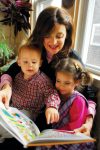
Bracha Goetz reads from one of her recent books to her two grandchildren. (photo from Bracha Goetz)

Many of us were raised to not talk to and be wary of strangers, but the sad fact is that kids are much more likely to be taken advantage of or abused by someone they know and think they can trust. This reality was the driving force behind Bracha Goetz’s book Let’s Stay Safe, which was published in English in 2011, and just came out in Yiddish this summer, as Zai Gezunt.

Born in Queens, N.Y., Goetz graduated from Harvard and started on the road to becoming a psychiatrist before heading to Israel for what was to be one summer. However, while in Israel, she become observant, and ended up staying. There, she did a further 11 years of study, got married and had a family.

Goetz and her family have since moved to Baltimore, where she coordinates a Jewish Big Brother Big Sister (JBBBS) program. As well, she writes children’s books and, to date, has published 36 of them. “They are all spiritual children’s books,” she said. “Originally, I was just writing Jewish children’s books, but now I’m also writing spiritual children’s books for anybody.

“I always wanted to write spiritual books for everyone, but I just recently found a publisher that was interested. It’s not easy. It took a long time, but I’m very happy to do that, because, although these are Jewish concepts, they are also actually universal concepts that I’d love to share with any child.

“I try to write books that I wished I could have read as a child, to answer the spiritual questions I had as a child that weren’t answered,” she continued. “They were answered for me when I was 22, but I try to write about the deepest spiritual concepts on a simple level so any child can understand them. I also try to do it in a joyful, delightful way, so that it can go right into their soul.”

In her role at JBBBS, Goetz witnesses firsthand how sexual abuse affected children. This made her think about how she was teaching her own children about such dangers.

“I realized that I didn’t raise my children with an awareness about it,” she said. “I taught my children about ‘stranger danger,’ but, when they were little, we weren’t as aware as we are today that, with most sexual abuse, the perpetrators are known to the children; that’s how they get access. It’s rare that it’s a stranger. It’s most commonly someone the child already knows. There was no book like this in the Orthodox community and some of the books (in the general community) are not culturally relevant for Orthodox people.”
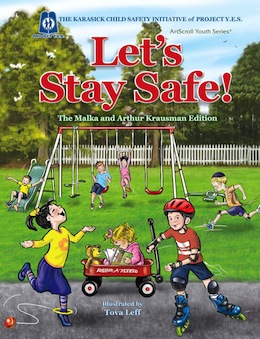
photo - Let’s Stay Safe, which was published in English in 2011, and just came out in Yiddish this summer, as Zai Gezunt
Let’s Stay Safe, which was published in English in 2011, and just came out in Yiddish this summer, as Zai Gezunt.

Goetz wanted to write a book that would be accepted by the Orthodox Jewish community specifically, as the subject tends to be less discussed in these communities. So, she wrote Let’s Stay Safe, but could not find a publisher. That is, not until Rabbi Yakov Horowitz, dean and founder of Yeshiva Darchei Noam in Monsey, N.Y., agreed to help and got the book accepted by ArtScroll.

“He really worked at it, and it was a really groundbreaking book,” said Goetz. “There was nothing like it out there. We wanted readers to understand that these were additional normative safety rules that needed to be adhered to by children to be safe. Of course, the book is also for parents, because, when parents read it to their children, they also gain an awareness.

“It’s not a good idea to leave the safety responsibility of children up to the children. It’s the parents’ responsibility. But, the parents also need to teach the awareness to their children and remind them about it every so often. As they come upon new circumstances, they need to review the guidelines.”

To take the book a step further, especially in Chassidic communities, Horowitz spearheaded a Yiddish version. “In certain Chassidic communities,” explained Goetz, “their mother tongue is Yiddish. We wanted to reach as many people as possible, so that they would bring this book into their homes and share it with their children. Even the pictures were altered to be more Chassidic-looking. We don’t want anything to stop the Yiddish-speaking population from getting this information.”

One of the concepts Goetz wanted to stress in the book was that children speak with a parent even if somebody touched them inappropriately a long time ago. It is important for these experiences to be told, she said, so that survivors can heal, and also so that the perpetrators cannot continue abusing children.

Another concept she wanted to convey clearly is not to trust someone just because she or he is dressed in Orthodox clothing, as that does not automatically mean they are safe people.

“There’s one picture of an older teenaged boy at a camp,” Goetz said, by way of example. “Many times, it’s a familial problem, where it’s an older brother, an uncle, a step-brother who is the perpetrator. Just this week, I was in a community different than I was usually in, but the people knew I was the author of the book … and, this happens a lot, people come to me with questions. I was outside watching my grandchildren and a mother came by and said, ‘Does this seem right? There’s a teenaged boy and he’s playing with all these little children. He’s playing ball with them. He doesn’t live in this community. And why is he here? He’s Orthodox, as well, just as the children, but he didn’t know any of them. Why was he playing with them?’ I said that’s definitely a red flag.

“This kind of awareness was not typical before the Let’s Stay Safe book was published. The incident illustrates the impact that the book has had. Now, there is a general awareness in our community, because there has been consciousness-raising on the issue of child sexual abuse.”

Books written by Goetz are appropriate for kids ages 2 and up, but are better starting at the ages of 3 or 4.

“This book is often read to 4- to 8-year-olds but, the truth is, older children love reading this book, too,” said Goetz. “And what I find so interesting is that a lot of children tell me it’s their favourite book of mine, which I never expected because it’s all about rules and guidelines. But, they love it. It gives them a sense of safety and security, and children ask for it as their bedtime story.”

Other books written by Goetz touch upon topics like eating healthily (and enjoying it), teaching children sensitivity, and teaching people how to interact more naturally with children with special needs.

Rebeca Kuropatwa is a Winnipeg freelance writer.

Format ImagePosted on November 10, 2017November 9, 2017Author Rebeca KuropatwaCategories BooksTags abuse, children's books, health
Trying to prevent child abuse

Trying to prevent child abuse

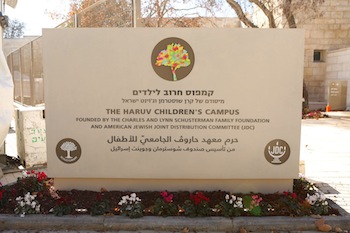
The Haruv Children’s Campus at Hebrew University of Jerusalem at Mount Scopus is the first-ever global centre combining research and treatment of child abuse. (photo by Dror Sithakol from facebook.com/schustermanfamilyfoundation)

The first-ever global centre combining research and treatment of child abuse opened Jan. 9 at Hebrew University of Jerusalem at Mount Scopus. The Haruv Children’s Campus brings together for the first time, in one location, a comprehensive array of services for abused and neglected children, including emergency treatment, therapeutic facilities and child advocacy assistance.

Haruv campus houses seven organizations working on all aspects of identifying, diagnosing and treating children, allowing for increased cooperation and coordination. It is also home to a world-class research centre and training services for a wide range of professionals.

This multi-disciplinary campus provides a holistic, child-centred approach to treating, studying and addressing the global issue of child abuse and creates new opportunities for collaboration between institutes and organizations in Israel and around the world. Partnering with the new campus are Hebrew University and the Hadassah Medical Centre.

“Child abuse and neglect occurs in all sectors of society and has a destructive impact on growth and development,” said Prof. Asher Ben-Arieh, director of the Haruv Institute. “We are striving to create the first-ever comprehensive research and treatment centre for maltreated children, based on the widely admired university hospital model. The campus will attract top researchers, professionals and students from Israel and abroad, creating opportunities to affect real change for at-risk children.”

According to the World Health Organization, every fourth child worldwide is a victim of child abuse. Within Israel, about 400,000 youth are considered at-risk for child abuse. In 2015, there were an estimated 44,000 new cases of child abuse reported, with every third Israeli child suffering some form of neglect, 11% involving sexual abuse and 20% involving children with special needs. The problem is so acute that child services workers routinely deal with unmanageable levels of caseloads.

photo - Haruv campus at Hebrew U is based on university research model
Haruv campus at Hebrew U is based on university research model. (photo by Dror Sithakol from facebook.com/schustermanfamilyfoundation)

The Mount Scopus campus was chosen for its strategic location and general accessibility. The site also offers proximity to the ultra-Orthodox and Arab communities, which predominate in nearby residential areas, and the centre will bring a culturally sensitive approach to its work with these populations.

Leading the initiative is the Haruv Institute, with the support of the Charles and Lynn Schusterman Family Foundation, Joint Distribution Committee-Israel, the Ministry of Welfare and Social Affairs, the National Insurance Institute and the Jerusalem Municipality Welfare Services.

The campus will house several organizations devoted to dealing with child abuse, including the Schusterman Emergency Centre, the Beit Lynn Child Protection Centre, the Israel National Council for the Child, the Centre for Treatment of Sexually Abused Children, the Israel Medical Stimulation Centre, the Municipal Child Welfare Centre and the Goshen Program for Comprehensive Child Health.

“Ever since its founding in 2007, Haruv has served as a beacon of hope and a source of strength for victims of child abuse and their families. It has been a forceful advocate for those least able to defend themselves, and it has trained thousands of professionals responsible for preventing and treating abuse and neglect,” said Lynn Schusterman, founder and co-chair of the Schusterman Family Foundation. “The opening of the Haruv Children’s Campus ushers in the next phase of this critically important mission and is a striking example of how Haruv has grown to become an international centre of excellence in its field. We are proud to have partnered with others to make the new centre a reality and look forward to continuing to help Haruv establish itself as the preeminent organization in the prevention and treatment of child abuse and neglect.”

The planning and design of the campus reflects its emphasis on addressing the needs of children and families. Throughout the campus, calming elements have been introduced, such as water, pastoral greenery and play areas created from natural materials. The interior spaces have colourful playrooms, work areas that provide privacy, and a school and kindergarten for children at the emergency centre.

“The opening of the Haruv Campus for Children in Jerusalem is not just a major step in the treatment and prevention of child abuse and neglect in Israel and beyond. It champions a holistic approach ensuring critical players in this field can learn from and inform each other’s success, something we understand full well from our own work in Israel,” said David Schizer, chief executive officer the American Jewish Joint Distribution Committee. “We’re proud of our partnership with the Haruv Institute and the Schusterman Family Foundation to once again foster innovation of new program models to support Israel’s most vulnerable and of the larger effort to provide a safer and brighter future for children and families who will benefit from the one-of-a kind Haruv campus.”

Format ImagePosted on January 27, 2017January 27, 2017Author Puder PRCategories IsraelTags abuse, children's health, Haruv, Hebrew University, Israel
JNF hosts Israel’s Rasnic

JNF hosts Israel’s Rasnic

At the Jewish National Fund, Pacific Region, Negev Dinner on April 10, left to right, are Ruth Rasnic, dinner honoree Shirley Barnett and B.C. Premier Christy Clark. (photo from JNF Pacific Region)

When many people think of feminism, it’s likely they connect it with the second half of the last century – names like Germaine Greer and Betty Friedan, who garnered followers in the 1970s for their discussion of equality and freedom.

Some will think of the suffrage movement at the beginning of the past century, which struggled to get women the vote.

But feminism for Ruth Rasnic means safety from harm, respect at home.

Rasnic is a much-decorated social activist recognized in her home of Israel for the work she started in the 1970s creating the organization No to Violence Against Women. She was also a founding member of Ratz, a political party that focused on human and civil rights, and, in 2008, she was appointed by former prime minister Ehud Olmert to his advisory council for women’s stature. She was awarded the Israel Prize for lifetime achievement in 2009, joining the ranks of Golda Meir, Abba Eban and Amos Oz.

Established by Rasnic in 1978, No to Violence Against Women provides emergency housing for victims of physical or psychological abuse. It also runs a 24-hour hotline and advocates for women’s rights.

Rasnic was in Vancouver recently to promote the collaboration between No to Violence Against Women and the Jewish National Fund, Pacific Region (JNF) to raise funds to rebuild a shelter in Rishon Le Zion. The goal is $1.5 million Cdn.

“By building shelters like the Rishon Le Zion shelter, giving women and children a safe haven, support, empowerment, legal aid, we enable them to carve a different future for themselves and their children,” Rasnic said.

The shelters provide victims of domestic violence with a safe environment in which to get a fresh start. They are provided with clothing, access to therapy, employment and assistance in finding new housing. A 24-hour housemother ensures that someone is with the women all the time. To ensure security for the women and their children, they are housed in a shelter that is not within their own city.

“Most women are in shock when they come to the shelter,” said Rasnic. “They have nothing. They may be haggard, malnourished, suffering from PTSD. Within a week, they are physically changed.”

Israel particularly faces challenges servicing victims of domestic violence because many women are new immigrants from Ethiopia, Eritrea and Sudan, and don’t speak common languages. Many have no national status and are not medically insured.

“These are some of the harrowing things we have in the shelters,” she said. “Seven to eight percent of our residents are women, with children often, who are stateless and have no status in Israel. We are now working with the government to ensure that while these women are at the shelter, they can get medical aid.”

Rasnic said that legislation around this problem should be passed after Passover.

Rasnic was a guest of honor at the JNF Negev Dinner on April 10, and the next day visited King David High School to speak to the students. She is adamant that education has to be a key factor in making any difference in abuse toward women.

“No male baby is born a violent man. No female baby is born a victim,” she told the audience at the Negev Dinner. “These are societal norms learned in the home, school and army.”

She has even produced a book, The Shelter is My Home, which is written looking at life in a shelter through a child’s eyes.

“Nobody can take out an insurance policy for their daughters,” Rasnic said. “This is our joint responsibility.”

Beyond the issues for which she’s best known, Rasnic also feels strongly about other social issues in her hometown of Herzliya. She has worked on no-smoking campaigns, which included a free course for those wanting to quit; she has worked to get better access for people with disabilities to public areas in city; and she helped transform a kindergarten space into a drop-in health centre for teens.

At a national level, Rasnic is troubled by laws still on the books that require a woman to get her husband’s signed agreement in the case of abortion or a get (Jewish divorce document).

“Oh, talk about the get,” Rasnic said, her whole body seeming to stiffen at the thought. “Rabbis have to find a solution to the get. They must do it. My own daughter’s husband wouldn’t give her a get for three years.”

While in Vancouver, Rasnic remarked on the federal government’s new cabinet, which comprises 50% women, and Christy Clark being British Columbia’s premier.

“I think it’s wonderful,” she said. “I think it will make a better society. I don’t think women are cleverer than men – I think we’re sensitized to different issues that men have simply ignored.”

No to Violence Against Women has three shelters in Israel, in Hadera, Herzliya and Rishon Le Zion. The fundraising efforts spearheaded by Rasnic are to rebuild the shelter in Rishon Le Zion, to be renamed the Vancouver Shelter. The cause was chosen as the beneficiary of the Negev Dinner by this year’s honoree, Shirley Barnett. To donate to the campaign, visit jnf.ca/index.php/vancouver/campaigns/negev-campaign.

Baila Lazarus is a freelance writer and media trainer in Vancouver. Her consulting work can be seen at phase2coaching.com.

Format ImagePosted on April 22, 2016April 20, 2016Author Baila LazarusCategories Israel, LocalTags abuse, Israel, JNF, Rasnic, shelter, women

Posts pagination

Previous page Page 1 Page 2
Proudly powered by WordPress