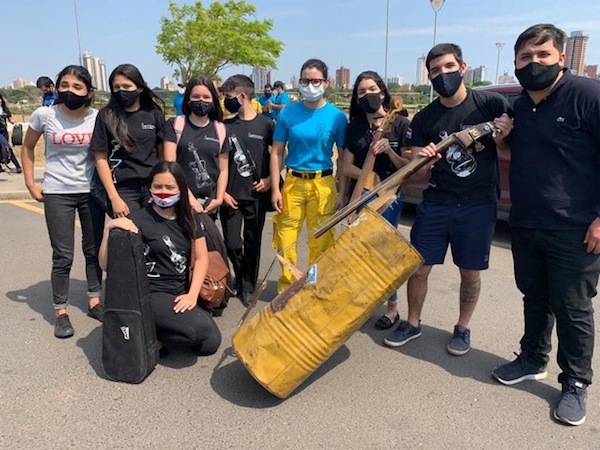
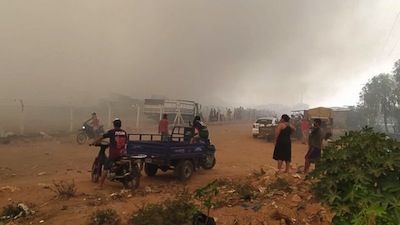
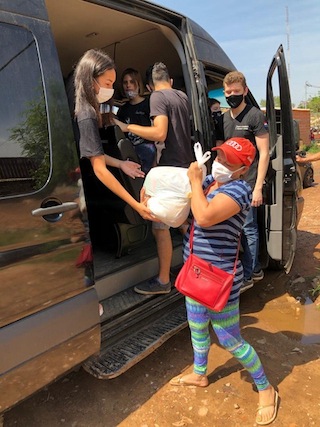
Members of the Recycled Orchestra of Cateura, Paraguay, are among those helping provide relief services during COVID-19 and after a devastating fire. (photo from IBB)
Times are tough for everyone, but that hasn’t stopped one Vancouver group from organizing an urgent fundraising drive to support an orchestra that is a testament to the transformative power of music.
Instruments Beyond Borders (IBB) is a registered Vancouver-based charity that supports music education in disadvantaged communities. The group is raising funds to support the Recycled Orchestra of Cateura, Paraguay (aka the Landfill Harmonic) as they are dealing with two major crises: not only the COVID-19 pandemic, but a devastating fire in the landfill, next to which they reside.
Since 2014, IBB has delivered donated instruments and funds to the Recycled Orchestra, which was borne out of a desire to teach music to eager children living in the marginalized landfill community of Cateura.
Compounding the hardships wrought by the pandemic, the Cateura landfill recently suffered a major fire, resulting in the destruction of many of the orchestra families’ homes. (photo from IBB)
The Recycled Orchestra of Cateura is internationally renowned, performing all over the world with their instruments made out of recycled materials from the neighbouring landfill. They deliver a resounding message of environmental stewardship and hope and endurance in the face of poverty.
The pandemic has suspended the capacity of the orchestra to travel internationally – which was a major source of their revenue. Compounding the hardships wrought by the pandemic, the Cateura landfill recently suffered a major fire, resulting in the destruction of many of the orchestra families’ homes. Consequently, this has all but eliminated the opportunity of the parents to derive much-needed income from the gathering of saleable recyclables from the landfill.
The students of the Recycled Orchestra, along with the Orchestra’s Parents Association, have become the hub of relief services. (photo from IBB)
In 2014, IBB donated $10,000 towards the building of a music school in Cateura. Fortunately, the school was not damaged by the fire, and today it is temporarily being used as a food relief centre – for the preparation and distribution of upwards of 5,000 meals daily to the devastated local community. Incredibly, the students of the Recycled Orchestra, along with the Orchestra’s Parents Association, have become the hub of relief services.
In the midst of these crises, Favio Chavez, the orchestra’s founder and director, is determined to keep both the orchestra and the hope of music alive, and to support the orchestra’s education program.
The IBB fundraising drive aims to assist the orchestra recover from these dire circumstances. To jumpstart this urgent appeal, the Ben and Esther Dayson Charitable Foundation has pledged to match the first $5,000 donated.
The Recycled Orchestra was the subject of an award-winning 2016 feature film Landfill Harmonic, the trailer for which can be watched on YouTube. Donations can be made at instrumentsbeyondborders.org.
Rabbi Dr. Yosef Wosk speaks at a Vancouver Public Library event in 2017. (photo by Cynthia Ramsay)
The Order of Canada is one of our country’s highest civilian honours. Its companions, officers and members take to heart the motto of the order: “Desiderantes meliorem patriam” (“They desire a better country”).
Created in 1967, the Order of Canada recognizes outstanding achievement, dedication to the community and service to the nation. Appointments are made by the governor general on the recommendation of the Advisory Council for the Order of Canada. This year, among the 114 new appointees, are Vancouver Jewish community members Dr. Carol Herbert and Rabbi Dr. Yosef Wosk. Each recipient will be invited to accept their insignia at a ceremony to be held at a later date.
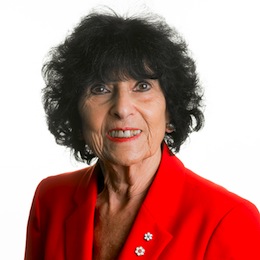
Herbert was appointed a Member of the Order of Canada for her contributions to the fields of clinical and academic medicine, as a family physician, medical educator, researcher and administrator. She and three colleagues were appointed.
“The appointment of Drs. B. Lynn Beattie, Joseph Connors, Carol Herbert and Roger Wong to the Order of Canada is a demonstration of their incredible commitment to the health and well-being of all Canadians,” said Dr. Dermot Kelleher, dean of the University of British Columbia’s faculty of medicine and vice-president, health, at UBC, said in a press release. “We are very proud of each of their contributions, and deeply moved by their passion for improving the lives of patients and families here in B.C., and across the nation.”
Herbert, an adjunct professor in the School of Population and Public Health, “is internationally known for her leadership in primary care research, and for her work in clinical health promotion, patient-physician decision-making, and participatory action research with Indigenous communities, focused on diabetes and on environmental effects on human health,” notes the UBC release. “She was formerly head of the department of family practice, founding head of the division of behavioural medicine and a founder of the UBC Institute of Health Promotion Research.”
This only touches on Herbert’s extensive experience. She also was dean of medicine and dentistry at Western University in London, Ont., from 1999 to 2010, was a practising family physician from 1970 to 2013, and has been involved in medical education since 1971.
Yosef Wosk, PhD, was appointed Officer of the Order of Canada for his far-reaching contributions to his community as a scholar, educator and writer, and for his generous philanthropy. BC Booklook (bcbooklook.com/2020/11/27/41941) cites the governor general: “Yosef Wosk is a Renaissance man of the 21st century. A rabbi, scholar, businessman and art collector, he is a revered educator and community activist who inspired many to become engaged in global issues and local challenges. Former director of interdisciplinary programs in continuing studies at Simon Fraser University, he founded the Philosophers’ Café and the Canadian Academy of Independent Scholars. A poet, explorer and dedicated philanthropist involved with museums, the arts, social services, publishing, nature and heritage conservation, he has endowed hundreds of libraries worldwide.”
Wosk has established more than 400 libraries, including 20 libraries in remote Himalayan villages and 37 in Jewish communities throughout the world. (See jewishindependent.ca/many-milestones-for-wosk-in-2019.) He has supported a range of local building preservation, public garden and other civic enhancement projects. He has helped fund the production of more than 250 books and videos, and has written numerous works, most recently Memories of Jewish Poland: The 1932 Photographs of Nachum Tim Gidal and the forthcoming GIDAL: The Letters of Tim Gidal and Yosef Wosk (Douglas & McIntyre, 2021). He supports several literature, writing, poetry, art and design initiatives, and is founding benefactor of the Dance Centre.
In addition to other honours, Wosk has received the Queen’s Golden and Diamond Jubilee Medals and a Mayor’s Arts Award, as well as the Order of British Columbia.
***
As part of its belief in and commitment to supporting emerging architecture practitioners, the Arthur Erickson Foundation and the Yosef Wosk Family Foundation recently announced a $110,000 donation to Indspire – Canada’s national, award-winning Indigenous registered charity – in support of Indigenous youth in Canada. The donation will fund an awards program focused on increasing Indigenous student success by growing the number of Indigenous architects and landscape architects in Canada.
Central to Arthur Erickson’s work as an architect and theorist was his belief in and commitment to education and research. Having served on the faculties of architecture at the University of Oregon and the University of British Columbia, Erickson understood the need of each generation to contribute to the training of the next. One of the ways the foundation honours Erickson’s belief is by working with donors to develop prizes and scholarships intended to reward and assist students studying architecture and landscape architecture.
“The Arthur Erickson Foundation and Yosef Wosk Family Foundation, along with Indspire, are pleased to announce the establishment of an awards program supporting Indigenous education in architecture and landscape architecture,” said Michael Prokopow, vice-president (East) Arthur Erickson Foundation. “The organizations recognize the profound importance of the shared work of decolonization and reconciliation in Canada for the transformation of society. These awards recognize the deep power of Indigenous thinking and wisdom around the making of habitation and space for well-being across generations and the vitally important stewardship of the natural world.”
Mike DeGagné, president and chief executive officer of Indspire, stated, “This new investment is a significant step in supporting First Nations, Inuit and Métis architecture and landscape architecture students to achieve their potential through education and training. They can in turn enrich their communities and create positive change in Canada. We are grateful for the support of the Arthur Erickson Foundation and the Yosef Wosk Family Foundation for investing in Indigenous achievement and education.”
***
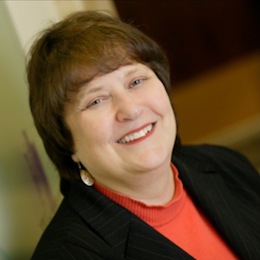
Dr. Gloria Gutman (photo from sfu.ca)
Simon Fraser University Gerontology Research Centre (GRC) founder Dr. Gloria Gutman and her team – Avantika Vashisht, Taranjot Kaur, Mojgan Karbakhsh, Ryan Churchill and Amir Moztarzadeh – received the Best Paper Award at the International Conference on Gerontechnology, held Nov. 25-27. SFUGero tweeted the news Dec. 1, noting that the paper was a “[f]easibility study of a digital screen-based calming device for managing BPSD [behavioural and psychological symptoms of dementia] during bathing in a long-term care setting.”
A brief biography for Gutman, PhD, appears on the conference website. She is president of the North American chapter of the International Society for Gerontechnology, vice-president of the International Longevity Centre-Canada, past-president of the Canadian Association on Gerontology and the International Association of Gerontology and Geriatrics. She is co-editor (with Andrew Sixsmith) of Technologies for Active Aging (Springer, 2013) and has published widely on seniors housing, long-term care, health promotion, prevention of elder abuse, and seniors and disasters. She is on the advisory of MindfulGarden Digital Health and is the principal investigator on the first feasibility clinical studies for MindfulGarden, which is a digital treatment of hyperactive dementia in long-term care setting. She established the GRC and department of gerontology at SFU and is recipient of many awards and honours, including the Order of Canada.
***
The third edition of the Western Canada Jewish Book Awards, presented by the Cherie Smith JCC Jewish Book Festival in Vancouver, took place Dec. 6. Daniella Givon, chair of the awards committee, opened the evening on Zoom and the five honours were awarded by five different presenters.
Winning the Nancy Richler Memorial Prize for Fiction was Rhea Tregebov for Rue des Rosiers, in which a young Canadian woman’s search for her own identity brings her to Paris in 1982, and face-to-face with the terror of an age-old enemy. Tregebov (Vancouver) is the author of fiction, poetry and children’s picture books. She is associate professor emerita in the University of British Columbia creative writing program.
The Pinsky Givon Family Prize for nonfiction went to Naomi K. Lewis for Tiny Lights for Travellers. When her marriage suddenly ends, and a diary documenting her beloved Opa’s escape from Nazi-occupied Netherlands in the summer of 1942 is discovered, Lewis decides to retrace his journey to freedom. Lewis (Calgary) is the author of the novel Cricket in a Fist and the short story collection I Know Who You Remind Me Of.
Ellen Schwartz was awarded the Diamond Foundation Prize for children’s and youth literature for The Princess Dolls, a story about friendship between a Jewish girl and a Japanese girl, set against the backdrop of 1942 Vancouver. Schwartz (Burnaby) is the author of 17 children’s books, including Abby’s Birds and Mr. Belinsky’s Bagels.
The Lohn Foundation Prize for poetry was given to Alex Leslie for Vancouver for Beginners. In this collection, the nostalgia of place is dissected through the mapping of a city, where readers are led past surrealist development proposals, post-apocalyptic postcards and childhood landmarks long gone. Leslie (Vancouver) is the author of two short story collections and the winner of the 2015 Dayne Ogilvie Prize for LGBTQ Emerging Writers.
The Kahn Family Foundation Prize for writing about the Holocaust was given to Olga Campbell for A Whisper Across Time, a personal and moving story of her family’s experience of the Holocaust through prose, art and poetry, creating a multi-dimensional snapshot of losses and intergenerational trauma. Campbell is a visual artist whose media include photography, sculpture, mixed media painting and digital photo collage.
The jury for the 2020 Western Canada Jewish Book Awards comprised Shula Banchik, arts and culture manager of the Calgary JCC; Judy Kornfeld, former librarian at Langara College; Els Kushner, author and librarian; Norman Ravvin, writer, critic and Concordia University professor; and Laurie Ricou, professor emeritus of English at UBC.
After short acceptance speeches and readings from the authors, Dana Camil Hewitt, director of the JCC Jewish Book Festival, concluded the evening thanking the sponsors, the judges, the awards committee and the extended virtual audience, and inviting everyone to purchase and enjoy the books.
On Nov. 18, the Jewish Museum and Archives of British Columbia held its annual general meeting and JMABC president Carol Herbert gave the following report, which has been edited for length.
What a roller coaster the last months have been! We are most grateful to our three dedicated staff members Marcy Babins, Alysa Routtenberg and Michael Schwartz, who reacted to the pandemic crisis promptly and creatively…. The staff have successfully sought out financial resources from government and granting agencies to allow us to continue our operations, supplemented by the generosity of our members when we put out a special call for donations. We are most grateful to those of you who responded, and especially to those of you who are Sustainers of the Archives.
The board has had a busy year…. We adopted a strategic communications plan prepared by Michael and the development committee, which states our vision and values. We completed and submitted a letter of intent to Federation and JCC to indicate our wish to relocate within the new campus when it is built. The board also endorsed an anti-racism statement, which was posted on our website in response to the troubling events of last summer, and since then has developed a policy on advocacy. A major focus for the board has been the plan for our 50th anniversary celebration of the Jewish Historical Society, which operates as the JMABC….
I have particularly appreciated the support of the executive committee, Daniella Givon, Michael Levy, Phil Sanderson and Perry Seidelman. The finance committee was activated after last year’s AGM, a programs committee has been established…. The Scribe committee has also been active, supporting the production of the 2020-21 issue on Jewish Education in British Columbia: K-12, and reviewing topics for future Scribes…. While we were unable to hold live events from early in March, staff continued to work on expanding the archival collection and preparing the 2020 Scribe, and they have conducted virtual programs…. While we have even been able to sustain some volunteer activity, only 72 hours have been logged since March of the total of 323.5 hours for the year, far less than usual…. Michael and Alysa have been able to recruit terrific students and interns to work with them virtually….
We reactivated the Council of Governors and we are most grateful to the stalwart supporters who serve as advisers to the board. Chaired by our past president, Perry, the council members are Gary Averbach, Isabelle Diamond, Mariette Doduck, Michael Geller, Bill Gruenthal, Richard Menkis and Ronnie Tessler…. We are most grateful to the board members who have continued to serve during these difficult times. We thank departing members Jerry Berkson (2018-20) and Ralph Swartz (2019-20), who served on the finance committee. We also thank Bill Gruenthal, who leaves the board after 22 years of service, though we are very happy that he will continue to serve on the Council of Governors. Three new individuals … are on the board slate….
Helen Aqua is a second-generation, Canadian-born Vancouverite…. Looking back in time has always interested Helen and, at one point, she volunteered as a docent with the Delta Museum and Archives, delivering local history talks to Grade 3 Delta schoolchildren in their classrooms…. After 17 years with Scouts Canada as a cub pack leader, member of the district service team and then the regional service team, Helen returned to school in 1985, earning a diploma in information systems and records management from Douglas College. Many interesting work opportunities resulted, culminating as the office coordinator for Immigrant Services Society’s Drake Street Settlement Services location. Post-retirement … Helen spent four years taking courses on end-of-life studies at Simon Fraser University, which led her to seek qualification as a death doula and then an advance care planning facilitator….
Lianna Philipp grew up in Vancouver and attended Richmond Jewish Day School as well as King David High School. She lived in Kingston, Ont., where she obtained a BComm at Queen’s University and returned to Vancouver to complete her CPA designation. Lianna currently serves on the board of the Jewish Federation of Greater Vancouver and Temple Sholom Synagogue. She is passionate about engaging the next generation of Jewish leaders to help ensure a strong future for our community….
Barb Schober was born in the former Czechoslovakia but grew up in North Delta. She is currently a graduate student in the history department at the University of British Columbia, with a special interest in the history of Vancouver’s Jewish community. She is well-acquainted with the JMABC in that capacity, having made extensive use of the community records during some of her previous work on Holocaust commemoration and Jewish women’s groups. She is working on her PhD thesis, which is about Jewish immigration to Vancouver from Russia and the Soviet Union. She is also the student member of UBC’s faculty of arts Holocaust education committee.
[The AGM marks the official launch of] our 50th anniversary celebration, which will continue throughout 2021. Our first event is the speaker [who] will follow our AGM, Elizabeth Shaffer, who will talk about dialogue and disruption in contemporary museums, particularly in the context of anti-racism and human rights. [See story on page 12.] We will continue with the launch of the 2020-21 Scribe…. Plans are also underway for a photo exhibit from Ronnie Tessler’s fantastic collection that she donated to the archives, for a children’s art contest that we hope will engage young families, and for a gala launch event in November 2021 for the 50th anniversary commemorative book, which will be an overview of 160 years of Jewish history across British Columbia with lots of historical photos…. On our website [jewishmuseum.ca] you will find a sponsorship brochure, which details 50th anniversary and ongoing projects and programs….
Again, let me emphasize that we want every Jewish person in British Columbia to know that JMABC is your organization, keeping the record of community-building that has been accomplished by an array of individuals and families. Our watchwords are diversity and inclusion…. As Perry reminded us every year in his president’s remarks, make sure to seek out your own family stories and don’t throw away family photos and memorabilia. Every one of your stories matters. We will be delighted to interview you so that your oral narrative can be included in our archives – just contact us.
A memorandum of understanding (MOU) between Gratz College in Melrose Park, Pa., and Carleton University in Ottawa, promises to enhance the academic reach of both institutions. Signed by Gratz president Paul Finkelman and Carleton president Benoit-Antoine Bacon, the MOU forges a collaboration between the two schools, with a focus on Holocaust studies and international engagement. Possible ventures include the exchange of faculty and staff, student exchange programs, and joint research projects.
“We are honoured and excited to develop a partnership with one the great universities in Canada,” Finkelman said. “The collaboration will make Gratz and Carleton stronger institutions by complementing each other’s programs and strengthening international cooperation in higher education.”
Finkelman noted that “this year, 2020, Gratz is 125 years old, and signing this agreement is a wonderful way to conclude our anniversary year.”
“This international partnership focused on Holocaust studies will greatly benefit students and researchers at both Carleton University and Gratz College,” Bacon said. “This important work will advance the priorities of Carleton’s new Strategic Integrated Plan, International Strategic Plan and brand new Equity, Diversity and Inclusion Action Plan. As the world awaits the return of international travel and cross-border cooperation, we look forward to further engaging with the remarkable team at Gratz College.”
Under the MOU, Gratz will work directly with Carleton’s Max and Tessie Zelikovitz Centre for Jewish Studies. Gratz faculty and students will have access to Carleton’s libraries and archives, as well as opportunities to join the Zelikovitz Centre as research affiliates.
“These opportunities for Gratz faculty and graduate students will enhance our vibrant masters and doctoral programs by offering additional scholarly opportunities,” said Honour Moore, dean of the college.
In exchange, Carleton faculty and students will have access to Gratz’s Holocaust Oral History Archive, which houses one of the largest collections of audiotaped testimony in the United States and is a contributing organization to both the U.S. Holocaust Memorial Museum and Yad Vashem.
“As a small institution, Gratz values academic partnerships that can enrich our students’ learning opportunities in significant ways,” said Ruth Sandberg, director of Gratz’s Jewish-Christian Studies Program. “We are eager to take advantage of what Carleton has to offer us, including ways in which our students can interact with each other, ways in which our faculty members could partner with each other, and ways in which Gratz can become regular participants in the many notable lectures and discussions offered through the Zelikovitz Centre.”
Bacon and Finkelman signed the MOU during a virtual ceremony Dec. 8. The agenda also included remarks from Sandberg and Deidre Butler, director of the Zelikovitz Centre.
“From our first conversations with Gratz leadership, we found true colleagues,” Butler said. “We look forward to strengthening this community by engaging with Gratz faculty and students through a variety of venues.”
The virtual signing ceremony set the tone for the partnership, said Karen Schwartz, associate vice-president of research at Carleton and the university’s international liaison officer. Ahead of the ceremony, faculty members and administrators from both institutions began collaborating by joining each other’s online lectures and discussions.
“Due to the COVID-19 pandemic, it has become even more important – regardless of how challenging – to not only keep in touch with our preexisting international partners, but to continue establishing new ones as well,” Schwartz said. “Holding a virtual MOU signing is certainly not the same as an in-person event on campus, but it is the next best thing. And so, in this spirit, we are excited to make official our partnership with Gratz College. It will allow students and faculty from both institutions to share academic resources and conduct joint research to advance Holocaust education.”
Gratz College, a private nonprofit institution, is accredited by the Middle States Commission on Higher Education. Founded in 1895, it is the oldest independent college for Jewish studies in North America. Today, Gratz enrols a diverse population of students from around the world, with many programs that reflect its historic focus on Jewish studies and education.
Located in Canada’s capital city, Carleton University provides more than 30,000 students from every province and more than 100 countries with academic opportunities in more than 65 programs of study, including public affairs, journalism, engineering, high technology and international studies.
ממשלת קנדה מתחילה בימים אלה להפעיל את מערך המסובך והמורכב של החיסון נגד נגיף הקורונה. מדובר בחיסון של ענקית התרופות האמריקנית פייזר וחברת הטכנולוגיות הגרמנית ביונטק. קנדה הייתה אפוא המדינה השנייה בעולם שהעניקה אישור רגולטורי לשימוש בחיסון של פייזר וביונטק, ועוד לפני ארצות הברית.
רשויות הבריאות של קנדה העניקו ביום רביעי בשבוע שעבר את האישור לשימוש בחיסון לנגיף קורונה של החברות פייזר וביונטק. הלת’ קנדה – הסוכנות האחראית על הרגולציה של תרופות, פרסמה הודעה רשמית באתר האינטרנט שלה כי החיסון יעיל ובטוח לשימוש. קנדה צפויה לקבל כמאתיים וחמישים אלף מנות חיסון של פייזר ויביונטק במהלך חודש זה (דצמבר), ועוד כארבע מיליון מנות חיסון עד חודש מרץ שנה הבאה.
האישור ניתן במסגרת מדיניות זמנית (חדשה) שמאפשרת אישור מואץ של תרופות. זאת, בדומה לאישורי החירום שמעניק האף.די.אי – מינהל המזון והתרופות של ארה”ב. אגב הסוכנות האמריקנית העניקה את האישור שלה לשימוש בחיסון של פייזר ויביונטק בסוף השבוע האחרון.
אישור לחיסון נסמך על ראיות לכך שהוא בטוח, יעיל ובאיכות טובה, כתבה הסוכנות הלת’ קנדה. יצוין כי ממשלת קנדה הליברלית בראשות ראש הממשלה, ג’סטין טרודו, רכשה בסך הכל עשרים מיליון מנות מהחיסון של פייזר וביונטק, המספיקות לחסן עשרה מיליון תושבים. לקנדה שמורה האופציה לרכוש חמישים ושש מיליון מנות חיסון נוספות מפייזר וביונטק. הסוכנות הקנדית הלת’ קנדה בוחנת בימים אלה עוד שלושה חיסונים אחרים, בהם החיסון של חברת מודרנה האמריקנית. חשוב לזכור שממשלת קנדה הזמינה יותר מנות חיסון לנפש מכל מדינה אחרת בעולם.
פקידים קנדים אמרו כי במסגרת הסכם הרכישה עם פייזר וביונטק, מנות החיסון לא יכלו להישלח לקנדה עד לקבלת האישור – שכאמור התקבל בשבוע שעבר. טרודו מצידו אמר כי קנדה תחל לקבל את המשלוח הראשון כבר בשבוע זה, בכפוף לקבלת האישור של הלת’ קנדה. רשויות הבריאות של עשר הפרובינציות ושלוש הטריטוריות של קנדה, יעניקו את החיסונים בחינם לתושביהן. רשויות הבריאות שלהן הן אלה שיחליטו באופן עצמאי איך יקוצו החיסונים בשטחים שלהן – כאשר בשלב זה מספר מנות החיסון של פייזר וביונטק הוא נמוך ביותר.
אונטריו: יוחלף השם של רחוב הקרוי על שמו של קצין נאצי
ארגון בני ברית קנדה ניהל מאבק ממושך במשך שנים, לשנות את שמו של רחוב בעיר אייקס שבמחוז אונטריו, הנושא את שמו של נאצי. למעלה מאלף חתימות הושגו על ידי בני ברית ומועצת העירייה הסכימה להתחיל בהליך לשינוי השם.
הרחוב שמעורר סערה באייאקס, קרוי עד היום על שמו של קצין חיל הים הנאצי, הנס לנגדורף. כאמור לאחר קמפיין ממושך של בני ברית קנדה אישרה מועצת העיר את החלפת השם. יצויין כי לישיבת מועצת העיר הגיע ניצול שואה שהעיד ממושכות על הזוועות של הנאצים.
נציג ארגון בני ברית בקנדה מייקל מוסטין, אמר בסיפוק כי אישור ההחלטה לשינוי שם הרחוב, דווקא בתקופה כזו של התגברות התפרצויות האנטישמיות בקנדה, מהווה בשורה וקרן אור.
קצת הסיטוריה: שהמייסדים של ארגון בני ברית היו שנים עשר מהגרים יהודים מגרמניה, שהקימו את הסניף הראשון בארצות הברית. מטרתם הייתה לאחד את עם ישראל באשר הוא נמצא. כיום הארגון פעיל במספר גדול של מדינות ברחבי העולם. הוא עוסק במגוון רחב של פעילויות חברתיות, רווחה, פעילות למען זכויות האדם, התנגדות למיסיון, והתנגדות לגזענות ואנטישמיות.
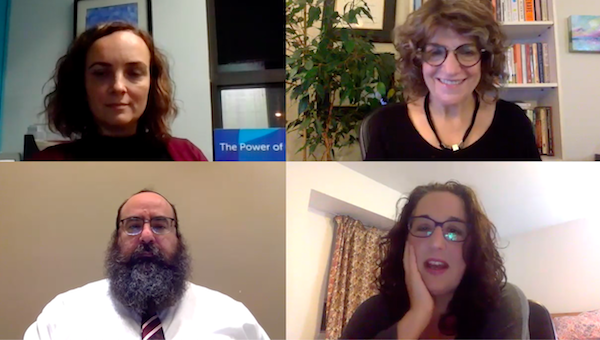
Clockwise from the top left: Tanja Demajo, Shelley Karrel, Amanda Haymond Malul and Rabbi Yechiel Baitelman participate in a JACS Vancouver panel discussion Oct. 15.
“When someone comes through the door and says, ‘I’m an addict. I’m a recovering addict,’ do they feel judged or do they feel accepted? Do they feel that we are putting them in a box, giving them a label?” asked Rabbi Yechiel Baitelman in a recent community discussion. “We have to identify the illness, there’s no question about that. But, is that the only way to view a human being? I think to respect every human being for their humanity, that’s what people are really craving – respect and love.”
Baitelman, director of Chabad Richmond, was one of three panelists on the topic Building Safe and Inclusive Spaces for Those Affected by Addiction and Mental Illness. He was joined by Tanja Demajo, chief executive officer of Jewish Family Services (JFS), and Amanda Haymond Malul, a community member in recovery, in the Oct. 15 event presented by Jewish Addiction Community Services (JACS) Vancouver. JACS Vancouver’s Shelley Karrel moderated the conversation.
Haymond Malul would like to see more community discussions on addiction and people being taught acceptance. She spoke of the need to “have support from the religious leaders of the community, from every single agency in the community, to start talking about it – make it acceptable, educate.” (See jewishindependent.ca/help-repair-the-world.)
And we need to ensure that what we are teaching is in line with our actions, said Demajo. “If we talk to children about acceptance, but we don’t actually practise that, that’s creating double standards where we talk about certain things, but that’s not what people experience,” she said. This could be damaging, she said, to people who “really need that support and want to trust.”
We must see each member of the community as a human being, said Baitelman. Love is important, but, he said, “Love is on my terms, respect is on your terms. If I love you, it’s more a reflection of who I am. But, if I respect you, it’s more of a reflection of how I see you, what you are about – and I think that’s really important. Respect the humanity. If you can love them, that’s even greater. But respect is more fundamental.”
When Karrel asked panelists for tangible ways in which people could be more accepting and inclusive, with love and respect, Demajo said agencies are overwhelmed with the number of people needing support. She said it is up to each of us to connect on a personal level with others, accepting that it will take time for them to trust us enough to share.
“You have to build a relationship, and a relationship is not built overnight,” said Demajo. “I had a client who I often think of, a person who spent a number of years [in the] Downtown Eastside being homeless, not having pretty much anything in his life…. He would come to see me … and we would speak about books, because he was a huge reader and I love reading. It took him six months until he really started talking about things that were going on in his life and what he actually needed, and we started working from there. Now, he has a regular life. He has a home. He brought his family back. He is working. So, things are in a place that he wanted … a number of years ago. Recovery is a process of being vulnerable and, so, if social services don’t have the time to invest in people, I think we are setting ourselves up for a really huge failure.”
All panelists agreed that having a drop-in centre with people who understand is absolutely essential and that, while professional support would be ideal, it is not essential. To be kind, respectful and loving, you do not need to be a professional, they said.
While there are recovery clubs in the general community, Haymond Malul said it would be great if there were also one in the Jewish community – “having a safe place for people to come and be able to drop in, and know that this is the Hillel House of Recovery,” she said.
However, having a community place might inhibit some people from coming out, due to fear of being exposed, warned Demajo. “The other piece is that I do feel that what Amanda has done tonight, speaking of her own experience and being in the community, and [talking about] some of the things that were helpful for her, is important to start with; having those opportunities to open up the conversation – not just for me, in a professional role, but from a personal place – because that is where the relationship happens. I do believe that is the core of whatever we come up with – the core is the relationship.”
Each of us is deserving of respect, regardless of our achievements, successes, failures or addictions, stressed Baitelman. “The fact that you were created by G-d makes you worthy of the highest form of respect and no judgment,” he said.
“Why would I not be involved with somebody who’s in recovery?” asked the rabbi. “After all, these people are accountable. They’re working on character development and are improving certain areas of their lives that they have the courage to acknowledge need to be corrected. They’re actively making amends with people around them. They are working on a conscious relationship with G-d rather than on other forms of success that society often judges success by. This is really an achievement.
“How many of us would like to change even one iota of our character, and people in recovery have changed more than one iota. They have made an incredible change, which is so admirable and should command respect. I think that’s part of the attitude that should be helpful in the broader community, and how we act with people, and the stigma.”
Karrel closed the discussion by giving a brief synopsis of JACS and its services. “We are working to diminish the stigma of addiction,” she told the Independent after the event. “Let’s keep this conversation going so we all feel we belong in our community.”
Dr. Rumman Chowdhury, chief executive officer and founder of Parity, gave the keynote address at the Simces & Rabkin Family Dialogue on Human Rights. (photo from rummanchowdhury.com)
Data and social scientist Dr. Rumman Chowdhury provided a wide-ranging analysis on the state of artificial intelligence and the implications it has on human rights in a Nov. 19 talk. The virtual event was organized by the Canadian Museum for Human Rights in Winnipeg and Vancouver’s Zena Simces and Dr. Simon Rabkin for the second annual Simces & Rabkin Family Dialogue on Human Rights.
“We still need human beings thinking even if AI systems – no matter how sophisticated they are – are telling us things and giving us input,” said Chowdhury, who is the chief executive officer and founder of Parity, a company that strives to help businesses maintain high ethical standards in their use of AI.
A common misperception of AI is that it looks like futuristic humanoids or robots, like, for example, the ones in Björk’s 1999 video for her song “All is Full of Love.” But, said Chowdhury, artificial intelligence is instead computer code, algorithms or programming language – and it has limitations.
“Cars do not drive us. We drive cars. We should not look at AI as though we are not part of the discussion,” she said.
In her presentation Nov. 19 at the Simces & Rabkin Family Dialogue on Human Rights, Dr. Rumman Chowdhury highlighted the 2006 Montreal Declaration of Human Rights.
The 2006 Montreal Declaration of Human Rights has served as an important framework in the age of artificial intelligence. The central tenets of that declaration include well-being, respect for autonomy and democratic participation. Around those concepts, Chowdhury addressed human rights in the realms of health, education and privacy.
Pre-existing biases have permeated healthcare AI, she said, citing the example of a complicated algorithm from care provider Optum that prioritized less sick white patients over more sick African-American patients.
“Historically, doctors have ignored or downplayed symptoms in Black patients and given preferential treatment to white patients – this is literally in the data,” explained Chowdhury. “Taking that data and putting it into an algorithm simply trains it to repeat the same actions that are baked into the historical record.”
Other reports have shown that an algorithm used in one region kept Black patients from getting kidney transplants, leading to patient deaths, and that COVID-19 relief allocations based on AI were disproportionately underfunding minority communities.
“All algorithms have bias because there is no perfect way to predict the future. The problem occurs when the biases become systematic, when there is a pattern to them,” she said.
Chowdhury suggested that citizens have the right to know when algorithms are being used, so that the programs can be examined critically and beneficial outcomes to all people can be ensured, with potential harms being identified and corrected responsibly.
With respect to the increased use of technology in education, she asked, “Has AI ‘disrupted’ education or has it simply created a police state?” Here, too, she offered ample evidence of how technology has sometimes gone off course. For instance, she shared a news report from this spring from the United Kingdom, where an algorithm was used by the exam regulator Ofqual to determine the grades of students. For no apparent reason, the AI system downgraded the results of 40% of the students, mostly those in vulnerable economic situations.
Closer to home, a University of British Columbia professor, Ian Linkletter, was sued this year by the tech firm Proctorio for a series of tweets critical of its remote testing software, which the university was using. Linkletter shared his concerns that this kind of technology does not, in his mind, foster a love of learning in the way it monitors students and he called attention to the fact that a private company is collecting and storing data on individuals.
To combat the pernicious aspects of ed tech from bringing damaging consequences to schooling, Chowdhury thinks some fundamental questions should be asked. Namely, what is the purpose of educational technology in terms of the well-being of the student? How are students’ rights protected? How can the need to prevent the possibility that some students may cheat on exams be balanced with the rights of the majority of students?
“We are choosing technology that punishes rather than that which enables and nurtures,” she said.
Next came the issue of privacy, which, Chowdhury asserted, “is fascinating because we are seeing this happen in real-time. Increasingly, we have a blurred line between public and private.”
She distinguished between choices that a member of the public may have as a consumer in submitting personal data to a company like Amazon versus a government organization. While a person can decide not to purchase from a particular company, they cannot necessarily opt out of public services, which also gather personal information and use technology – and this is a “critical distinction.”
Chowdhury showed the audience a series of disturbing news stories from over the past couple of years. In 2018, the New Orleans Police Department, after years of denial, admitted to using AI that sifted through data from social media and criminal history to predict when a person would commit a crime. Another report came from the King’s Cross district of London, which has one of the highest concentrations of facial-recognition cameras of any region in the world outside of China, according to Chowdhury. The preponderance of surveillance technology in our daily lives, she warned, can bring about what has been deemed a “chilling effect,” or a reluctance to engage in legitimate protest or free speech, due to the fear of potential legal repercussions.
Then there are the types of surveillance used in workplaces. “More and more companies are introducing monitoring tech in order to ensure that their employees are not ‘cheating’ on the job,” she said. These technologies can intrude by secretly taking screenshots of a person’s computer while they are at work, and mapping the efficiency of employees through algorithms to determine who might need to be laid off.
“All this is happening at a time of a pandemic, when things are not normal. Instead of being treated as a useful contributor, these technologies make employees seem like they are the enemy,” said Chowdhury.
How do we enable the rights of both white- and blue-collar workers? she asked. How can we protect our right to peaceful and legitimate protest? How can AI be used in the future in a way that allows humans to reach their full potential?
In her closing remarks, Chowdhury asked, “What should AI learn from human rights?” She introduced the term “human centric” – “How can designers, developers and programmers appreciate the role of the human rights narrative in developing AI systems equitably?”
She concluded, “Human rights frameworks are the only ones that place humans first.”
Award-winning technology journalist and author Amber Mac moderated the lecture, which was opened by Angeliki Bogiatji, the interpretive program developer for the museum. Isha Khan, the museum’s new chief executive officer, welcomed viewers, while Simces gave opening remarks and Rabkin closed the broadcast.
Sam Margolishas written for the Globe and Mail, the National Post, UPI and MSNBC.
***
Note: This article has been corrected to reflect that it was technology journalist and author Amber Mac who moderated the lecture.
How Well Do Treatments Prevent COVID-19, Shingles, Heart Disease, Diabetes and Anything Else that Might Ail You? That was Dr. James McCormack’s topic at the Jewish Seniors Alliance fall symposium Nov. 22. And some 100 participants Zoomed in to hear his answers.
Gyda Chud, co-president of JSA, welcomed everyone and reviewed the organization’s foundational goals: outreach, advocacy and peer support. She thanked Jenn Propp, Liz Azeroual and Rita Propp for their hard work in facilitating the symposium, which emphasizes education and advocacy.
Marilyn Berger, past president of JSA, spoke a bit about McCormack’s background, noting how amazing his talk had been when he addressed the JSA a few years ago.
McCormack is a professor in the faculty of pharmaceutical sciences at the University of British Columbia, a podcast host and YouTube content creator. He began his remarks by mentioning his philosophical beliefs, which can be found in detail at therapeuticeducation.org. He emphasized that he receives no money from pharmaceutical companies and his only income is his salary from UBC. His medical podcast covers many topics, including nutrition (the Mediterranean diet is recommended) and anti-aging creams (they are all the same).
Regarding treatments and medications, McCormack recommends being skeptical and checking all information, as some are useful but many don’t work well. For example, many new drugs are not much better than those they are replacing, and many doses are too high. (See jewishindependent.ca/medical-myth-busting.)
The doctor shared a number of popular beliefs that are not supported by evidence and, indeed, which science indicates are not true. Examples included the following myths: it is not good to swim immediately after eating; sugar makes children hyperactive; you lose body heat through your head; eating carrots helps your eyesight; and spinach is strengthening.
Also, there is no evidence that you need to finish all medications, he said. For example, with antibiotics, if you are asymptomatic after 72 hours, you can stop taking them. Although we have some incredible medications, McCormack said the Golden Pill Award, given for breakthroughs in new medication, has not been awarded for the past eight years.
McCormack stated that “so-called diseases,” such as elevated blood pressure, bone density issues and high-glucose levels, should be identified as “risk factors,” rather than diseases. He also said many medications do not alter outcomes. It’s all about the numbers, what is the relative reduction of symptoms after taking certain medications. If the reduction is only two percent, is it worth taking a drug that has many side effects? he asked. He said, in the case of cardiovascular disease, following a Mediterranean diet and exercising may have more benefit than many drugs.
Regarding the serums for COVID-19, McCormack said the work has been outstanding and the oversight phenomenal. Vaccines for contagions are very important, he said.
McCormack concluded his talk by reminding us that tests and treatments can help and/or harm people. It is important to think for yourself, ask questions and have hope, he said, before responding to many audience questions.
Ken Levitt, past president of JSA, thanked McCormack for his presentation and for his emphasis on being alert about medications. The participant feedback was extremely positive.
Shanie Levinis an executive board member of Jewish Seniors Alliance and on the editorial board of Senior Line magazine.
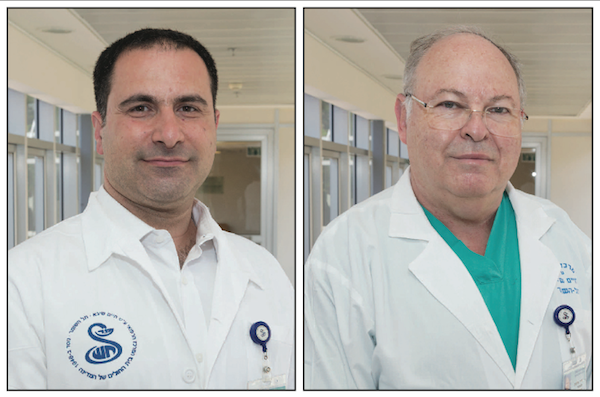
Dr. Liran Levy, left, and Dr. Milton Saute. (photo from IMP)
Sheba Medical Centre in Israel and Canada’s Toronto General Hospital are collaborating to advance the field of lung transplantation in Israel and to enhance medical education in both countries.
In the last year, Sheba’s Institute of Pulmonary Medicine has established a new lung transplant program, headed jointly by Dr. Liran Levy – who, in 2019, completed four years of clinical, research and surgical training at Toronto General – together with surgeon Dr. Milton Saute, an expert in lung transplantation. According to Sheba’s head of pulmonary medicine, Dr. Amir Onn, collaboration with Toronto General will “put Sheba on the map of lung transplantation,” due, in large part, to revolutionary technology that can increase the number of donor lungs by almost 50%.
Toronto General is renowned for having performed the world’s first successful lung transplant, in 1983. They have since expanded their lung transplantation program, both clinically and in terms of research. One of the most groundbreaking discoveries was made in 2013 by Dr. Marcelo Cypel, a staff thoracic surgeon at Toronto General and director of their ECLS (extracorporeal life-support) program. This technique, said Cypel, “effected a change in paradigm for how we do lung transplants.”
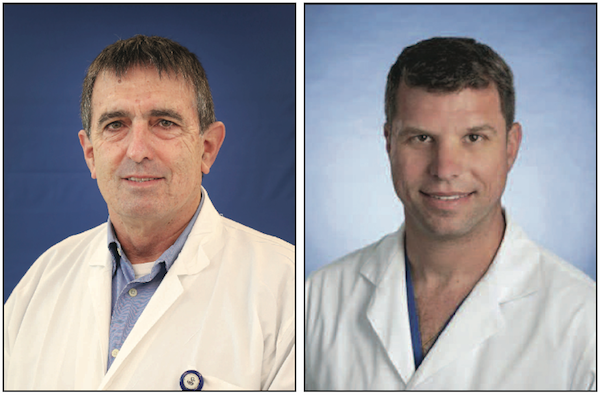
Dr. Amir Onn, left, and Dr. Marcelo Cypel. (photo from IMP)
The innovation, called ex vivo lung prefusion (EVLP), doubles the amount of time that the donor lungs can remain outside of the body. “Previously, donor lungs could be kept for only six to eight hours,” Cypel explained. “Patients had to uproot their lives to live near a transplant centre, and staff had to race against the clock to transfer the organ from the donor to the recipient, often forced to perform the complex surgery in the middle of the night.”
The valuable hours gained don’t just optimize the logistics of the operation, they actually allow for recovery of the organ itself.
“As a rule, over 80% of donor lungs are unsuitable for lung transplantation, due to poor functioning, infection, blood clots or injury,” said Cypel. By pumping a solution of oxygen, proteins and nutrients into the injured donor lungs, the EVLP system enables injured cells to heal themselves, or to be prepared for more sophisticated repair techniques. “The method doubled the number of lung transplants performed in Toronto in the last seven years,” he said.
With the help of Toronto General, Saute estimated that the EVLP program will become operational at Sheba by the middle of 2021. “We anticipate that [EVLP] will make a huge impact and significantly increase the pool of donors for lung transplantation in Israel, especially now, during COVID, with donors reduced by more than 50%,” he said.
According to Cypel, some of the reasons for the reduction in donor lungs during the pandemic include deaths that occur at home, due to reluctance of patients to seek hospital care, and the fewer car accidents (whose victims supply donor lungs) that occur while populations are in lockdown.
Collaboration will encompass clinical care, as well, including consultations regarding challenging patients, as well an exchange of trainees, in both directions. “We hope to send members of our team to Sheba to learn from their unique expertise,” Cypel said.
Onn added that COVID-19 has created new potential candidates for lung transplant. He is currently treating patients in Sheba’s designated post-COVID clinic who present with an unusual combination of symptoms – shortness of breath, chest pain and forgetfulness. Some, he said, have sustained irrevocable damage to the lungs.
A growing population of “COVID-19 survivors,” are being referred to the lung transplant centre. “We are in the process of identifying those who may be potential transplant cases,” said Levy.
Levy remarked that he is looking forward to working with his former colleagues and mentors from Toronto General. Looking back on his years spent in Canada with his wife and four children, he admitted that it was hard to leave. “The Jewish community made us feel very much at home, and we still miss Toronto,” he said. “But I think we have a very important mission here in Israel.”
When the teams from both hospitals met one year ago to discuss collaboration, Cypel and Saute were delighted to discover that they both hail from the same city in southern Brazil. “Although we didn’t meet in Brazil, Dr. Saute told me that he knew my grandparents quite well, and that was very emotional for me,” Cypel shared. Saute added that they both had the same mentor in thoracic surgery and, thus, “We have the same ideas.”
The scope of research and complexity of cases at Toronto General have made it a national and international source for discovery, education and patient care. Sheba Medical Centre, home to the ARC Innovation Centre, and where 25% of all clinical research in Israel takes place, has likewise distinguished itself in patient care, particularly in the era of COVID-19. Patients in both countries, and worldwide, can look forward to the fruits of this collaboration.
– Courtesy International Marketing and Promotion (IMP)
Israel’s Hula Valley is a major stopping place for migrating birds. (photo by D.J. Tiomkin)
Jay Shofet, the director of partnerships and development for the Society for the Protection of Nature in Israel (SPNI), presented an overview of the broad range of work his organization does in addressing environmental issues in the Holy Land during a Nov. 19 webinar hosted by the Jewish Community Centre of Victoria with the Canadian SPNI.
With 35,000 member households in Israel and thousands more around the world, SPNI is the largest Israeli group of its kind. It engages in environmental lobbying of the Knesset and hopes to foster a love of nature through its endeavours. SPNI has delivered environmental education in the Israeli school system and is known for promoting the country’s hiking trails.
Shofet began with the history of the environmental movement in Israel and the “traditional Jewish call for wise environmental stewardship of the land.” It was from this concept that SPNI was founded, in 1953, by a group of scientists, teachers and kibbutzniks who were trying to prevent the draining of swamps in the Hula Valley in northern Israel.
Among the highlights of SPNI’s history is an initiative it spearheaded in the 2000s: a cross-border and environmentally friendly cooperation with Jordan and Palestine to use barn owls rather than pesticides to reduce the rodent populations in agricultural lands.
Israel houses what the United Nations refers to as a “global biodiversity hotspot,” Shofet said. “It’s important to note that Israel is a land bridge between three continents and four climatic zones.”
The numbers of bird and animal species in Israel exceed that of the United Kingdom; the country is also home to a wide variety of flora. Species from Europe, North Africa and Asia commingle with those native to Israel and the eastern Mediterranean. And, each year, Israel is a major migration route for hundreds of millions of birds, including pelicans, which makes the country a destination for birders.
Elsewhere, SPNI has been active in stopping what it believes to be the wrong type of afforestation, the introduction of trees in areas to which they are not ideally suited and that infringe on the natural habitat, such as the batha, a unique Mediterranean scrubland, or what Shofet called “the Serengeti of Israel.”
SPNI is in charge of blazing and maintaining the Israel National Trail and other parts of the more than 10,000 kilometres of trail systems in the country. “It’s a rite of passage for young Israelis to hike the Trail,” Shofet said about the INT.
Recently, the organization has focused on maintaining what Shofet described as a “sustainability mindset.”
“Renewable energy, moving away from fossil fuels, is what the environmental movement is about today,” he said. “Climate change is the organizing principle of the movement…. Our bottom line is to find nature-based solutions to mitigate climate change.”
At the top of current environmental issues for Israel is land-use planning, said Shofet. One of the densest populations of the OECD countries, Israel confronts obstacles in the use of its land. In 2015, SPNI lobbied to stop a group of business and political powerhouses, including former United States vice-president Dick Cheney and media tycoon Rupert Murdoch, from fracking in the centre of Israel.
Shofet emphasized that densely packed, sustainable cities like Tel Aviv are at the heart of protecting Israel’s biodiversity. “This is the only way to keep the open spaces open and to keep nature well-protected,” he said.
“Not all of Israel has to look like Tel Aviv, but Israel does have to build its cities in a smarter way and avoid suburban sprawl,” he told the audience. “Suburban sprawl is killing our open spaces and making life less interesting for people. Cities can be the solution to the environment. If the world had the global footprint of New York City, there would be no global warming.”
A niche for SPNI is urban nature. Such spaces are needed in green cities, said Shofet. To demonstrate this, he showed slides of the Jerusalem Bird Observatory near the Knesset, a place where schoolchildren and tourists alike visit and learn about ornithology up close, and Gazelle Valley Park, also in Jerusalem, Israel’s first urban nature reserve.
The final part of Shofet’s talk touched on the work SPNI is doing during the pandemic to try and ban Israel’s currently legal hunting season. As a start, SPNI has succeeded in getting the Ministry of Environmental Protection to call the laughing dove and the quail endangered species.
SPNI is also rehabilitating the nation’s rivers, trying to protect the diverse number of species and habitats found in its sea, promoting the use of solar energy, working to ensure that Israel has clean and accessible beaches, and encouraging the planting of trees in a way that is mindful of the country’s ecosystem.
Shofet’s concluding remarks offered a hopeful note to the current global environmental situation and Israel’s role in it, pointing out that the entrepreneurial spirit of the start-up nation is well-suited to tackling the challenges of adapting to the green economy.